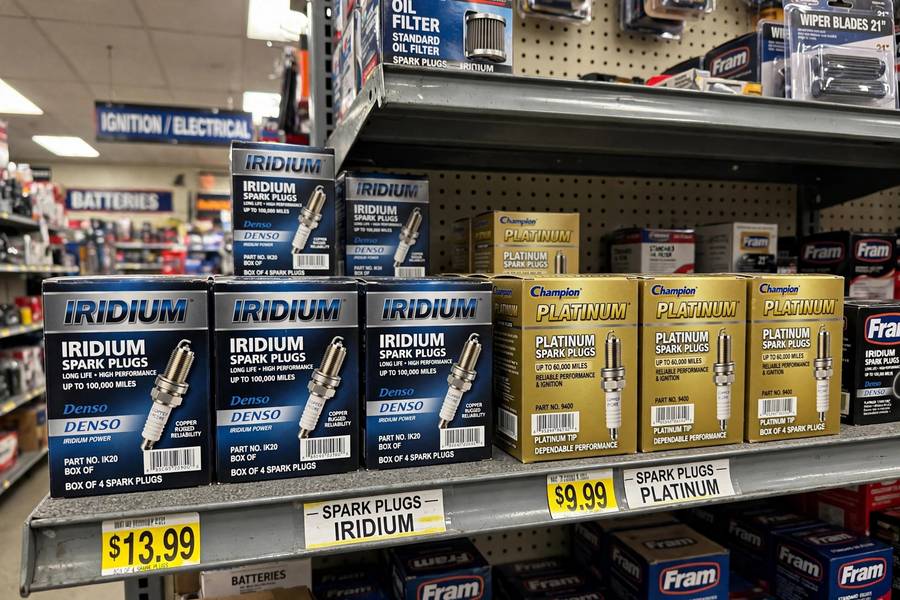
Walk into any auto parts store and the spark plug aisle presents you with a wall of small boxes at wildly different prices — $3 copper plugs next to $15 iridium ones — and the counter guy will happily sell you whichever you point at. Most people either grab the cheapest (mistake) or the most expensive (sometimes also a mistake). The real question isn’t which plug is “best” in the abstract — it’s which one your engine was designed for.
I’ve installed thousands of plugs over the years, and the iridium-versus-platinum debate comes up constantly. Here’s the honest breakdown: what each metal actually does, where each one wins, what they cost, and the simple rule that settles it for 95% of drivers.
Contents
- What the Metals Actually Do
- Iridium Plugs: The Details
- Platinum Plugs: The Details
- Head-to-Head: Longevity, Performance, Price
- The Double-Platinum Wrinkle
- Can You Upgrade? (And Should You?)
- The Simple Rule That Settles It
- What I Tell Customers: The Plug Swap Mistakes I See Every Week
What the Metals Actually Do
First, a misconception to kill: the precious metal doesn’t make the spark “stronger” in the way most people imagine. The spark’s energy comes from the ignition coil, not the plug. What the electrode material determines is how long the plug survives the incredibly violent environment of the combustion chamber — thousands of degrees, crushing pressure, thousands of sparks per minute.
Every spark vaporizes a microscopic bit of the electrode. Soft metals (nickel alloy in copper plugs) erode fast — the gap grows, the spark weakens, performance degrades. Hard, high-melting-point metals (platinum, iridium) erode slowly — the gap stays correct for far longer, so the plug performs consistently over a much longer life.
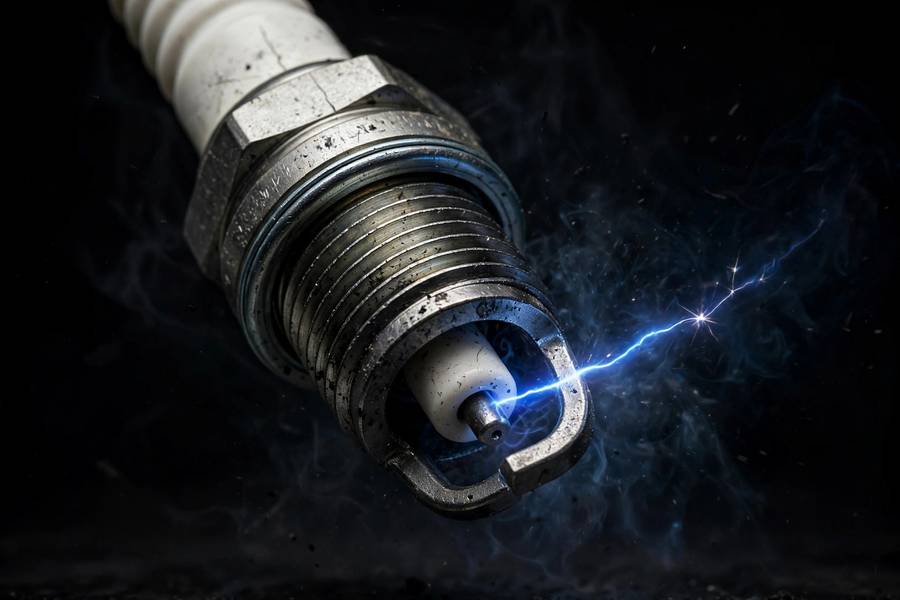
The secondary benefit: because iridium is so hard, manufacturers can make the center electrode extremely thin (0.4–0.6mm versus ~2mm for conventional plugs). That fine wire concentrates the electric field, which means the spark fires more reliably at lower voltage — easier cold starts, fewer misfires under load, less stress on the coils. It’s a genuine performance advantage, not just a longevity one.
Iridium Plugs: The Details
Iridium is one of the hardest, most heat-resistant metals used in any consumer product — melting point around 4,400°F (2,440°C), roughly 700°F higher than platinum. In plug terms, that means exceptional erosion resistance.
Typical service life: 80,000–120,000 miles. This is what most cars built since ~2010 came with from the factory.
The fine-wire advantage: the 0.4mm center electrode needs less voltage to fire, which reduces load on the ignition coils and improves combustion consistency — particularly noticeable in direct-injection and turbocharged engines that run higher cylinder pressures.
Cost: $8–$15 per plug typically, $12–$20 for specialty applications. A four-cylinder set runs $35–$60; a V8, $70–$120.
Handling caution: the fine iridium tip is brittle. Never re-gap with a traditional coin-style gapping tool — prying can snap the tip. Buy pre-gapped for your application. Also, many iridium plugs come with special coatings — check whether the manufacturer specifies no anti-seize (adding it changes the torque reading and can lead to over-tightening).
Platinum Plugs: The Details
Platinum was the first precious-metal plug material to go mainstream (1990s–2000s), and it was revolutionary at the time — it tripled service intervals overnight. It melts around 3,200°F (1,770°C): not as extreme as iridium, but vastly better than nickel alloy.
Typical service life: 60,000–100,000 miles.
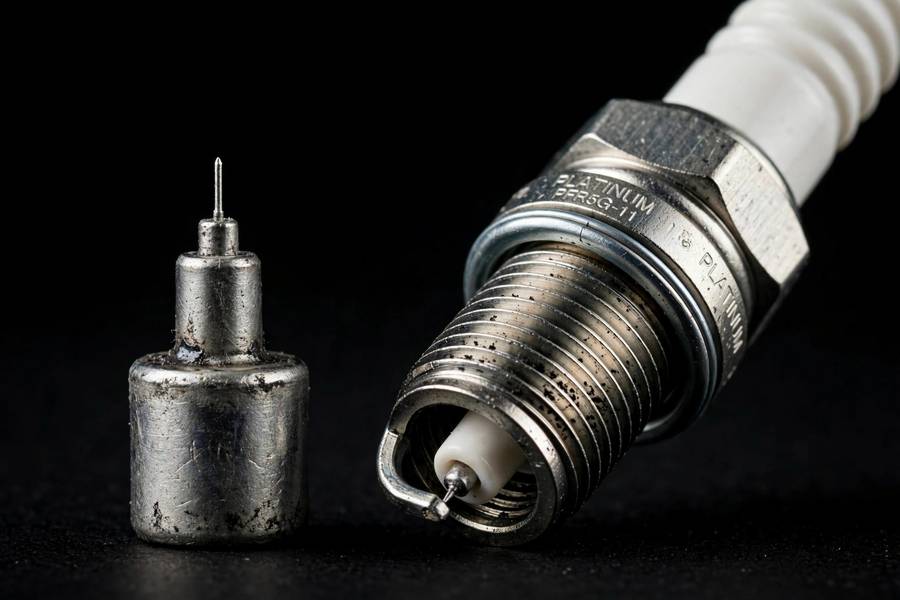
Electrode design: platinum plugs typically use a small platinum disc welded onto a conventional-diameter center electrode, rather than iridium’s fine-wire design. They don’t get the voltage-reduction benefit of the fine wire, but they’re less fragile to handle.
Cost: $5–$10 per plug — noticeably cheaper than iridium. A four-cylinder set runs $20–$40.
Where they still make sense: millions of cars from the 2000s and early 2010s spec platinum from the factory, and for those cars, platinum remains the correct, cost-effective choice. There’s no benefit to “upgrading” a car designed for platinum — the ignition system was calibrated around platinum’s characteristics.
Head-to-Head: Longevity, Performance, Price
| Iridium | Platinum | |
|---|---|---|
| Service life | 80,000–120,000 miles | 60,000–100,000 miles |
| Electrode | 0.4–0.6mm fine wire | Conventional + platinum disc |
| Voltage required | Lower (easier firing) | Standard |
| Cold-start performance | Slightly better | Good |
| Turbo/DI engines | Preferred (handles pressure) | Adequate |
| Fragility | Brittle tip — don’t re-gap | More forgiving |
| Cost per plug | $8–$15 | $5–$10 |
| Cost per 100k miles | Roughly equal (fewer changes) | Roughly equal (cheaper plugs, more changes) |
That last row surprises people: over 100,000 miles, the total cost is nearly a wash. Iridium plugs cost more but you change them once; platinum costs less but you might change them twice (or at least sooner). Factor in your time or the shop’s labor for the extra change, and iridium often wins on total cost.
Performance difference in a healthy engine: small but real. The fine-wire iridium plug fires more consistently under difficult conditions (cold starts, high boost, lean mixtures). On a stock daily driver, you’d struggle to feel the difference. On a turbocharged or high-compression engine working hard, the consistency matters more.
The Double-Platinum Wrinkle
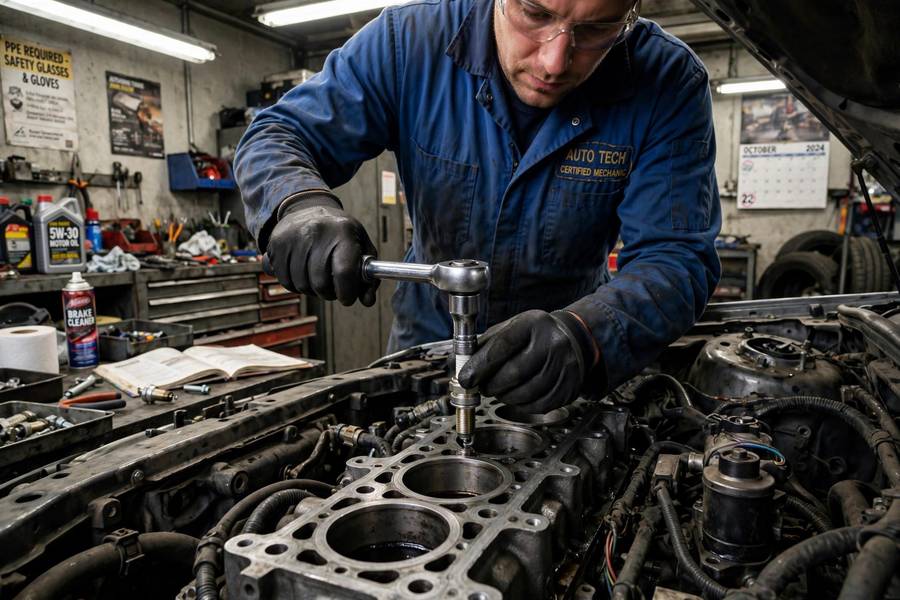
One complication: waste-spark ignition systems (common on many 2000s cars, where one coil fires two plugs simultaneously) wear both electrodes because the spark jumps in alternating directions. These systems need platinum on both the center and ground electrodes — “double platinum.”
This matters for the comparison because you cannot substitute single-platinum or standard iridium plugs in a waste-spark system — the unprotected electrode will erode rapidly. Double-platinum (or the iridium equivalent spec’d for the application) is mandatory. Always check: if your car has a waste-spark system, the plug must be rated for it. The owner’s manual or a plug catalog will specify.
Can You Upgrade? (And Should You?)
Platinum car → iridium plugs: generally fine and often beneficial, if the iridium plug matches your application (correct heat range, gap, thread, reach). You’ll get longer life and slightly better firing consistency. This is the most common “upgrade” and it’s legitimate.
Iridium car → platinum plugs: don’t. Downgrading shortens your service interval dramatically and the engine’s ignition calibration expects iridium’s firing characteristics. The few dollars saved per plug aren’t worth changing them twice as often.
Either → copper plugs: only for specific performance applications (high boost, nitrous) where copper’s superior heat transfer matters and frequent changes are accepted as routine. Never as a cost-saving measure on a modern daily driver.
The compatibility rule that overrides everything: match the plug to the application first — correct part number for your engine, correct heat range, correct gap. A perfectly matched platinum plug outperforms a mismatched iridium plug every time. Material is secondary to correct application.
The Simple Rule That Settles It
After all the technical detail, here’s the rule I gave customers for years:
Use whatever the manufacturer specified. If the manual says iridium, buy iridium. If it says platinum, platinum is correct and upgrading is optional, not necessary.
The engineers who designed your engine chose the plug material deliberately — matched to the ignition system’s voltage, the combustion chamber’s heat, and the intended service interval. Second-guessing them with a “better” plug rarely improves anything and sometimes causes problems (wrong heat range is the classic self-inflicted wound).
The only decisions you need to make: buy a reputable brand (NGK, Denso, Bosch, Champion, Autolite — the OEM suppliers, not mystery brands), match the exact part number, and change them on schedule. Do that, and the iridium-versus-platinum question answers itself — it’s printed in your owner’s manual. When the time comes, the replacement itself is a satisfying DIY job; my how to change spark plugs guide walks through it, and while you’re planning maintenance, how often to change engine oil pairs naturally with plug service.
Twelve dollars of iridium, correctly chosen and correctly installed, will fire tens of millions of times without complaint. That’s about as good a deal as car maintenance gets. And while you’re planning the job, checking your oil level at the same time costs nothing and keeps the whole maintenance picture in view.
What I Tell Customers: The Plug Swap Mistakes I See Every Week
Spark plugs are one of the simplest jobs on a car, which is exactly why they get botched so often. These are the mistakes I correct in my shop on a weekly basis — learn from other people’s tuition payments.
Gapping iridium plugs like it’s 1995. The iridium electrode is laser-welded and roughly the thickness of a human hair. Forcing a coin-style gapping tool across it can crack or dislodge the electrode, and the plug is ruined before it ever fires. Modern iridium and platinum plugs come pre-gapped from the factory — check the gap with a wire feeler gauge, and if it’s out of spec, exchange the plug rather than bending it.
Anti-seize on coated threads. Most modern plugs have a trivalent or zinc-chromate coating that acts as its own release agent. Adding anti-seize changes the thread friction, which means your torque wrench reading lies — you end up over-torquing and risking stripped threads or a cracked plug. If the plug box doesn’t ask for anti-seize, don’t add it.
The wrong heat range “upgrade.” A “colder” plug isn’t better, it’s just colder — it fouls in normal driving. Unless you’ve added forced induction or done serious engine work, the stock heat range is the right one. The parts counter’s “performance” option is a solution to a problem you don’t have.
Mixing metals across cylinders. Iridium in three cylinders, platinum in the fourth, copper in the other two because “they were on sale.” Different metals wear at different rates and fire slightly differently — the engine computer notices, and you get misfire codes that chase you for months. One plug type, all cylinders, every time.
Over-torquing with the impact gun. A plug needs roughly 15–25 ft-lbs depending on the engine — snug, not structural. I’ve extracted more than one plug that snapped off in the head because somebody treated it like a lug nut. Hand-thread it first to avoid cross-threading, then finish with a torque wrench.
None of these mistakes cost more than a few minutes to avoid. All of them cost real money to fix.
Frequently Asked Questions
Iridium lasts longer (80,000–120,000 vs 60,000–100,000 miles) and fires more consistently thanks to its fine-wire electrode. But “better” depends on your car — use whatever the manufacturer specified. Upgrading a platinum-spec car to iridium is fine; downgrading an iridium-spec car to platinum is not recommended.
Usually yes over the long run. Iridium plugs cost $8–$15 each versus $5–$10 for platinum, but you change them less often — so the cost per 100,000 miles is roughly equal, and you save the labor/time of an extra change. They also perform slightly better in turbocharged engines.
Not recommended if your car came with iridium. The engine’s ignition system was calibrated for iridium’s firing characteristics, and platinum will wear out much sooner (60,000–100,000 vs 80,000–120,000 miles). The small savings aren’t worth the shorter interval.
Single platinum has the precious metal only on the center electrode; double platinum has it on both center and ground electrodes. Waste-spark ignition systems (one coil firing two plugs) need double platinum because the spark jumps in alternating directions, wearing both electrodes.
On a healthy engine with fresh plugs of either type, the difference is minimal. Iridium’s advantage is consistency over time — the fine-wire electrode maintains a correct gap and reliable spark far longer, so performance degrades more slowly between changes. Fresh plugs of the correct type matter far more than the metal.