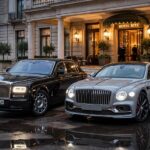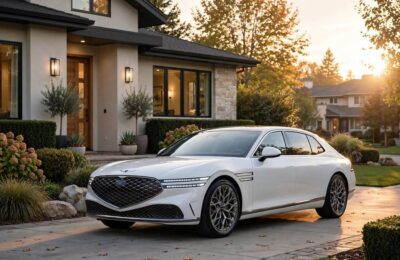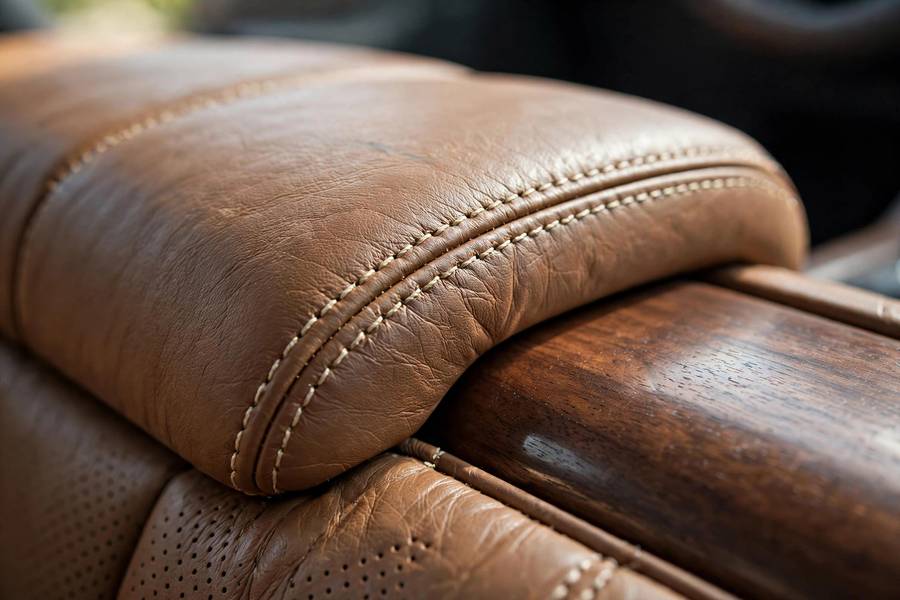
What makes a car luxurious? Ask ten people and you’ll get ten answers — leather, price, badge, technology. After a decade working on everything from Civics to Phantoms, I can tell you the real answer is more specific and more interesting: luxury is the systematic removal of effort, noise, and unpleasantness from the driving experience. Everything else is decoration.
Let me break down the actual ingredients — what manufacturers do, what it costs them, and how to tell real luxury from expensive marketing.
Contents
- The Real Definition: Absence of the Unpleasant
- Ingredient 1: Silence and Isolation
- Ingredient 2: Material Honesty
- Ingredient 3: Ride Quality
- Ingredient 4: Powertrain Refinement
- Ingredient 5: Craftsmanship and Fit
- Ingredient 6: Effortlessness
- Ingredient 7: Space and Proportion
- Ingredient 8: Restraint
- What Does NOT Make a Car Luxurious
- The Luxury Test: How to Judge Any Car
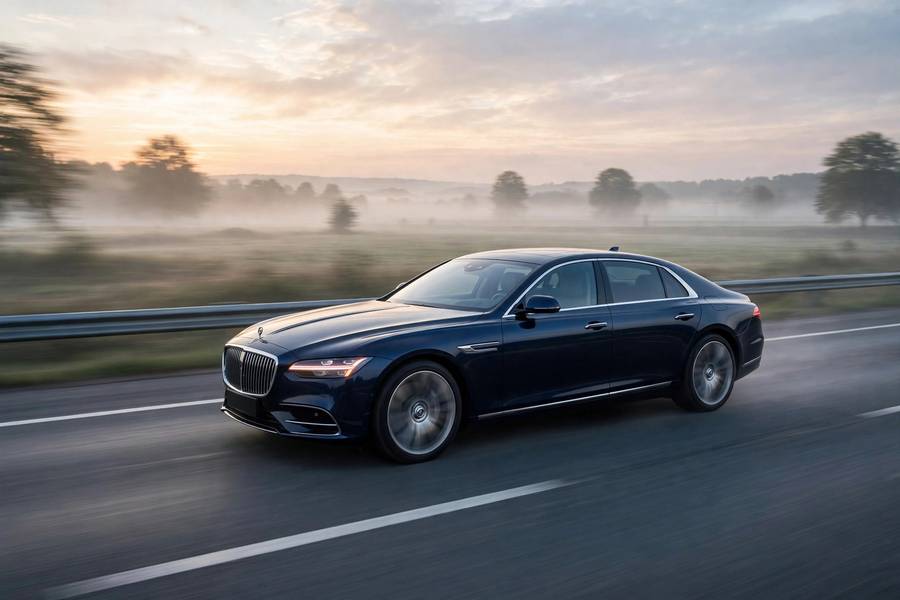
The Real Definition: Absence of the Unpleasant
Here’s the framework that explains everything: luxury is not the presence of nice things — it’s the absence of bad things.
Think about it. The Phantom’s defining characteristic isn’t the starlight headliner (nice, but decoration). It’s that you can’t hear the outside world. The S-Class’s magic isn’t the ambient lighting — it’s that the seat never makes your back hurt, the engine never intrudes, the ride never jars.
Every luxury feature, traced to its root, is the removal of something unpleasant: – Sound insulation removes noise – Good suspension removes harshness – Refined powertrains remove vibration and hesitation – Quality materials remove the cheap tactile sensations – Good ergonomics remove effort and discomfort
This is why a quiet, smooth $40,000 car can feel more luxurious than a loud, harsh $80,000 one. Luxury is subtraction, not addition. Remember that, and you’ll never be fooled by a features list again.
Ingredient 1: Silence and Isolation
The single biggest differentiator between luxury and non-luxury cars. Full stop.
Manufacturers achieve it through: – Acoustic glass — laminated windshields and side windows that block high-frequency noise – Sound insulation — hundreds of pounds of damping material in floors, doors, firewall, and headliner (the Phantom carries over 100kg) – Active noise cancellation — microphones and speakers that cancel low-frequency drone – Foam-filled tires — a ring of foam inside the tire absorbs cavity resonance – Aerodynamic refinement — flush glass, sealed gaps, underbody panels that eliminate wind whistle – Powertrain isolation — hydraulic engine mounts, insulated subframes
The result is measurable: a true luxury sedan cruises at 70 mph under 60 decibels — quieter than normal conversation. An economy car at the same speed is 70+ dB — ten times the sound energy (decibels are logarithmic).
How to judge it: On a test drive, turn everything off — radio, climate fan — and drive at highway speed. Listen. The luxury cars go silent. The pretenders just get quieter.
Ingredient 2: Material Honesty
Real luxury uses real materials where your hands land:
- Real wood — open-pore or polished veneers, book-matched, with visible grain. Not plastic with a wood photograph printed on it.
- Real metal — aluminum, knurled finishes, actual weight in the controls. Not chrome-painted plastic.
- Real leather — full-grain or top-grain hides, properly tanned, that age gracefully. Not “leatherette” or bonded scraps.
- Real stitching — thread you can feel, consistent and tight. Not molded ridges pretending to be seams.
Why does it matter? Because your hands know. Humans are extraordinarily sensitive to material quality through touch — we evolved handling natural materials for millions of years. Plastic that looks like wood fools the eye for a moment; it never fools the hand.
The honest-luxury test: close your eyes and touch everything within reach. The real luxury cars feel expensive blind. The fakes feel like… plastic.
Ingredient 3: Ride Quality
Luxury ride isn’t soft — it’s controlled. The distinction matters:
- Soft = wallowy, floaty, seasick. Bad.
- Controlled = absorbs bumps without drama, stays flat in corners, never crashes over sharp edges. Good.
The best systems (Mercedes E-Active Body Control, Rolls-Royce’s camera-scanning air suspension, Bentley’s 48V active anti-roll) read the road ahead and prepare the dampers before the bump arrives. The result feels like the road was smoothed specifically for you.
What ruins ride quality: oversized wheels with rubber-band tires (fashion over function — a 22″ wheel with 35-series tires will never ride like a 19″ with proper sidewalls), sport suspensions on luxury cars (a contradiction), and worn components (even the best air suspension rides terribly with a leaking strut — ask me how I know).
How to judge it: Drive over a rough road section, then a speed bump, then a highway expansion joint. The luxury car handles all three without a single harsh moment. One crash or thud = not luxury ride.
Ingredient 4: Powertrain Refinement
Luxury powertrains share one trait: you forget they’re there.
- Smoothness — no vibration at idle, no harshness under load. V12s and well-balanced V8s excel; some four-cylinders, no matter how powerful, never quite disappear.
- Silence — intake and exhaust tuned for refinement, not theater. (Sports cars do the opposite — that’s a different kind of luxury.)
- Effortlessness — abundant torque at low rpm, so the car never strains. A luxury car should never feel like it’s trying hard. Electric motors are naturally brilliant at this — instant, silent torque.
- Transmission invisibility — shifts you can’t feel. The best automatics (and single-speed EVs) make gear changes imperceptible.
This is why engine size used to correlate with luxury — big engines loaf along effortlessly while small ones strain. Electrification is rewriting this: a silent electric motor is arguably the most luxurious powertrain ever made.

Ingredient 5: Craftsmanship and Fit
The details you notice subconsciously:
- Panel gaps — consistent, tight, even. Run your finger along shut lines; luxury cars feel machined.
- Control weighting — knobs, stalks, and buttons with deliberate resistance. Not loose, not stiff — considered.
- Stitching consistency — straight lines, even spacing, no loose threads.
- Door closure — the sound and feel of a closing door tells you everything about build quality. Luxury doors close with a muted, solid thunk — never a tinny rattle.
- No squeaks or rattles — over time, this separates the truly well-built from the initially impressive. I’ve seen 10-year-old LS 400s rattle-free and 3-year-old “premium” cars buzzing like kazoos.
Craftsmanship is what you feel rather than see. It’s the reason a car can impress on the showroom floor and disappoint after six months — or vice versa.
Ingredient 6: Effortlessness
Luxury removes effort from every interaction:
- Power everything — but done well. Power-closing doors (Rolls-Royce), soft-close everything, powered tailgates that actually work smoothly.
- Intuitive controls — you shouldn’t need the manual to adjust the seats or climate. The best luxury cars are obvious; the worst bury basics in touchscreen menus.
- Driver assistance that assists — adaptive cruise that doesn’t ping-pong in the lane, parking systems that actually fit the car in the space. Bad assists create effort; good ones remove it.
- Keyless everything — approach, unlock, start, lock. The car should anticipate, not demand.
The anti-pattern: technology that adds steps. If adjusting the temperature takes three touchscreen taps instead of one knob turn, that’s not luxury — it’s a cost cut wearing a tech costume.
Ingredient 7: Space and Proportion
Luxury needs room — not just legroom numbers, but the feeling of space:
- Glass area — big windows, thin pillars, airy cabins feel luxurious; dark, bunker-like cabins feel claustrophobic regardless of materials.
- Seat comfort — width, cushioning, adjustability, and long-distance support. A luxury seat disappears beneath you; a bad one announces itself within an hour.
- Rear space — true luxury cars consider the rear passenger. Recline, legroom, and amenities back there signal that the car was designed for comfort, not just the driver.
- Proportion — long hoods, generous wheelbases, balanced overhangs. Luxury cars look settled — there’s a visual calm to good proportions that no amount of chrome can fake.
This is partly why sedans and large SUVs do luxury better than small cars — physics gives them more to work with.
Ingredient 8: Restraint
The final ingredient, and the rarest: knowing when to stop.
The most luxurious cabins aren’t the busiest — they’re the most considered. Rolls-Royce hides its screens. Lexus uses restraint as a design philosophy. The cars that age best, luxury-wise, are the ones that didn’t chase every trend.
Restraint shows in: – Design that doesn’t shout — confidence instead of aggression – Technology that’s available but not mandatory — screens that hide, assists that stay quiet until needed – Color and trim choices — the best luxury interiors are often the most subdued – Avoiding gimmicks — fragrance dispensers and light shows are fun; they’re not luxury
A car screaming “look how luxurious I am” is protesting too much. True luxury is quiet about itself — which brings us full circle to silence.
What Does NOT Make a Car Luxurious
Let me kill some myths:
- Price alone. A $90,000 performance car with a harsh ride and plastic interior isn’t luxurious — it’s expensive.
- Badge alone. Every brand has made cynical badge-engineered “luxury” models. The badge is a promise, not a delivery.
- Screen size. A 20-inch touchscreen doesn’t make a car luxurious. Often it means they deleted the buttons to save money.
- Feature count. Twenty massage modes don’t matter if the seat itself is uncomfortable. One perfectly-shaped seat beats ten mediocre ones with gadgets.
- Loud exhausts and sport modes. That’s performance theater — fun, but the opposite of luxury’s quiet effortlessness.
- Chrome and bling. Decoration without substance. The automotive equivalent of shouting.
The Luxury Test: How to Judge Any Car
Next time you evaluate a car — test drive, showroom, or used lot — run this five-minute test:
- The silence test: Everything off, highway speed. Listen.
- The blind touch test: Eyes closed, touch every surface within reach. Real or fake?
- The door test: Open and close every door. Solid thunk or tinny rattle?
- The bump test: Rough road, speed bump, expansion joint. Any harshness?
- The seat test: Sit for 10 minutes without adjusting. Comfortable or fidgety?
- The control test: Adjust climate, volume, and seats without looking. Intuitive or infuriating?
A car that passes all six is luxurious, regardless of badge or price. A car that fails three is pretending, regardless of badge or price.
That’s really what makes a car luxurious — not the marketing, not the price, not the badge. It’s the engineering discipline of removing everything unpleasant and the craftsmanship discipline of making everything you touch feel considered. Everything else is just the brochure.
For examples of cars that get it right, see most luxurious cars and my detailed look at luxury cars with the best interiors. And remember — all that refinement sits on mechanical foundations: AWD vs 4WD explained covers the drivetrain side of the equation.
Frequently Asked Questions
True luxury is the systematic removal of unpleasantness: silence and isolation, honest materials, controlled ride quality, refined powertrains, precise craftsmanship, effortlessness, space, and restraint. It’s subtraction, not addition.
No. A quiet, smooth $40,000 car can feel more luxurious than a harsh $80,000 performance car. Price correlates with luxury but doesn’t guarantee it — judge by silence, materials, ride, and craftsmanship, not the sticker.
Cabin silence and isolation — the biggest differentiator between luxury and non-luxury. After that: ride quality, seat comfort, and material honesty on the surfaces you actually touch.
No — screen size doesn’t equal luxury, and touchscreens often replace cheaper-to-make buttons. True luxury tech is intuitive and discreet; if adjusting temperature takes three taps instead of one knob turn, that’s a cost cut, not luxury.
Run the blind touch test (real materials feel expensive with eyes closed), the door-close test (solid thunk vs. rattle), the highway silence test, and check whether stitching is real thread or molded plastic. Fakes fail the hands, not the eyes.