The most reliable luxury cars of 2026 — every ranking claims to know, but most just repackage survey data. I see these cars on the lift, I see what breaks at 60,000 miles versus what breaks at 160,000, and I see the repair bills. That shop-floor perspective tells a different story than the brochures.
Here’s my honest ranking: which luxury cars actually hold up, which ones are reliable if maintained regardless of cost, and which ones to avoid without a warranty.
Contents
- How I Judge Reliability (Shop-Floor Method)
- Tier 1: The Actually Reliable
- Tier 2: Reliable If Maintained
- Tier 3: Lease It, Do Not Own It
- The Reliability Killers in Luxury Cars
- Powertrains to Trust, Powertrains to Question
- How to Make Any Luxury Car More Reliable
- The Warranty Question
How I Judge Reliability (Shop-Floor Method)
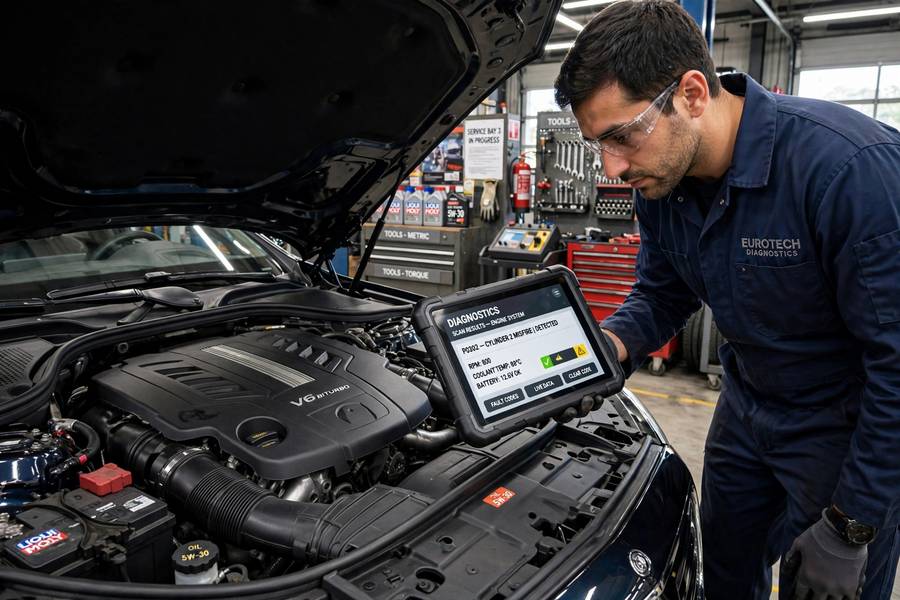
Surveys measure owner satisfaction and reported problems — useful, but skewed by expectations and dealer experiences. My method is simpler:
- What breaks, and when? A water pump at 120,000 miles is maintenance. A transmission at 60,000 is a reliability failure.
- What does it cost when it breaks? A $300 repair on a reliable car vs. a $3,000 repair on an “unreliable” one — but also a $3,000 repair on a car where everything else is bulletproof.
- Are failures pattern or random? Pattern failures (every N63 BMW V8 valve stem seal, every early Range Rover air suspension) tell you about design. Random failures tell you about luck.
- Can independents fix it? A car that’s reliable but dealer-only for repairs is still expensive to own.
With that framework, luxury reliability splits into three tiers — and the tiers matter more than individual rankings.
Tier 1: The Actually Reliable
These are luxury cars I’d recommend to my own family without caveats.
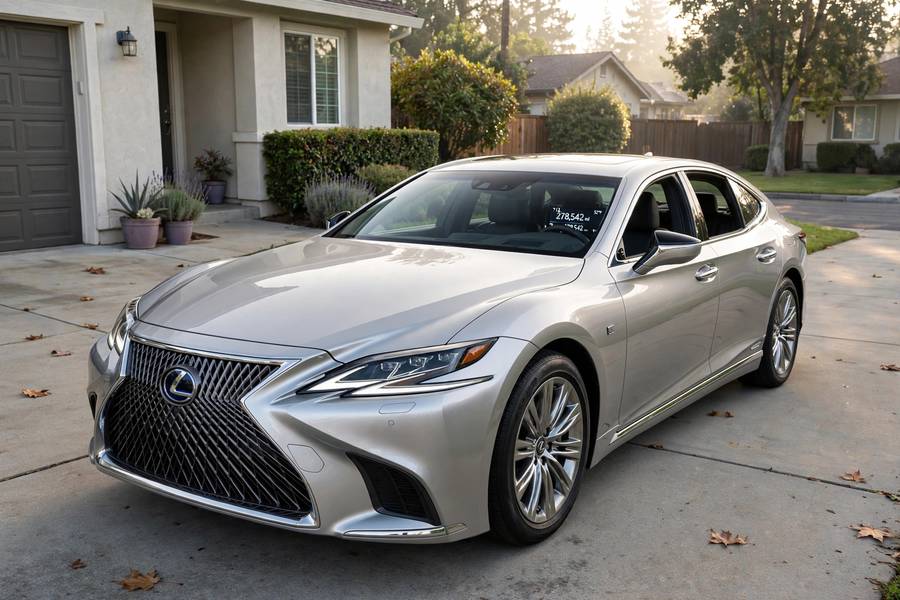
Lexus LS / ES / RX. The gold standard, and it’s not close. Toyota’s luxury division builds cars where 200,000 miles is unremarkable. The LS 500’s twin-turbo V6 is proven, the hybrid systems are the most durable in the industry, and the electronics just work. In a decade, I’ve seen fewer major Lexus failures than I see in a month of German cars. The interiors age gracefully, the paint holds up, and parts — while not cheap — are available and reasonable.
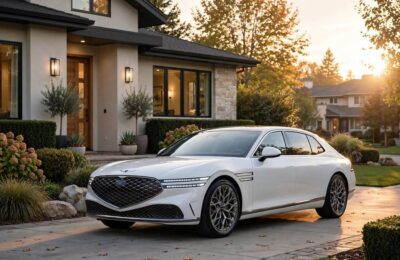
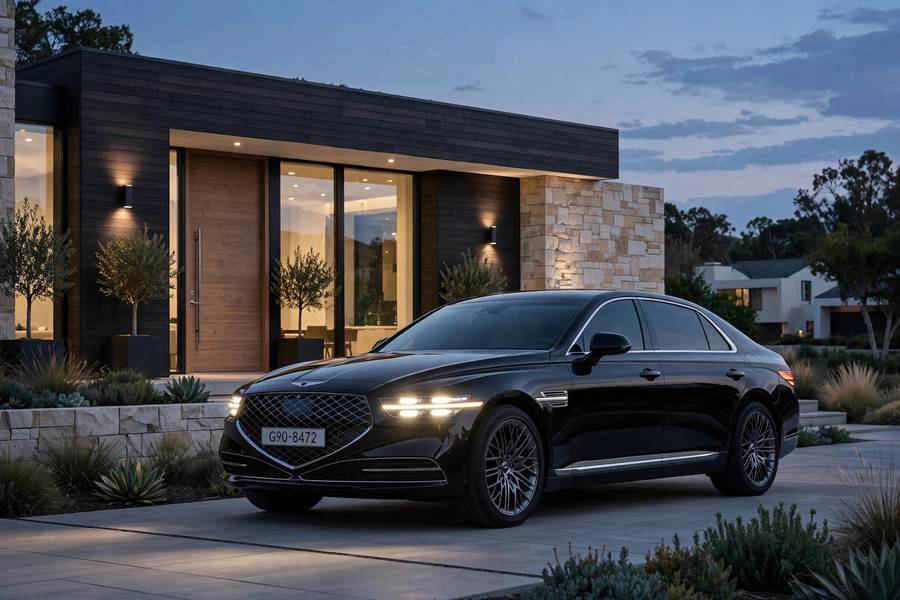
Genesis G80 / G90 / GV80. The disruptor that’s earned its reputation. Hyundai’s luxury arm over-engineered these cars to prove a point, and it shows: strong powertrains, excellent build quality, and a 10-year/100,000-mile powertrain warranty (in the US) that shows corporate confidence. Too new for 200,000-mile data, but everything I see at 60,000–100,000 miles is encouraging. The valet service model also means problems get fixed before owners notice them.
Acura (MDX, TLX, Integra). Honda’s luxury division doesn’t get the press, but the shop data is excellent. The SH-AWD system is robust, the engines are Honda-proven, and the electronics are simpler (and more reliable) than German equivalents. Less prestigious, more dependable — the rational luxury choice.
Lexus LX / GX. Body-on-frame SUVs that will outlive their owners. The LX 600’s twin-turbo V6 had early teething issues (since resolved); the GX 550 is a tank. If you want a luxury SUV that treats 150,000 miles as middle age, this is it.
Tier 2: Reliable If Maintained
These cars are well-engineered but demanding. Maintain them religiously — and budget accordingly — and they’ll serve beautifully. Neglect them and they’ll punish you.
Mercedes-Benz S-Class / E-Class. The engineering is superb; the complexity is the enemy. Air suspension, 48V systems, endless modules — each is reliable individually, but there are so many that something always needs attention. With full maintenance history and a warranty, an S-Class is a wonderful car. Without, it’s a $5,000 surprise waiting to happen. The powertrains (especially the inline-6 with EQ Boost) are strong; it’s the peripherals that cost.
BMW 5 Series / X5 (B58 engine models). The B58 inline-6 is BMW’s best engine in decades — genuinely robust. Cars built around it (540i, X5 40i) are solid if maintained. The problem children are the V8s (N63/S63 oil consumption, valve seals) and the early electric models. Stick to the six-cylinder, do the maintenance, and BMW ownership is far less scary than the reputation suggests.
Porsche Cayenne / Panamera (V6 models). Porsche build quality is exceptional, and the base V6 models are relatively straightforward. The V8s and hybrids add complexity and cost. Maintenance is expensive (Porsche tax on parts), but failures are less frequent than the Germans’ reputation implies — Porsches are engineered with unusual care.
Audi A6 / Q7 (3.0T models). The supercharged/turbocharged 3.0L V6 is Audi’s reliability sweet spot. Well-maintained examples are solid; neglected ones develop the full catalog of German-car issues (oil leaks, suspension wear, electronics gremlins). Buy on maintenance history, not mileage.
Range Rover (current generation). Improved significantly — the new models are better-built than their reputation suggests. But “better than the old ones” isn’t “Lexus.” Budget for maintenance, keep the warranty, and enjoy one of the finest SUVs made. Let the warranty lapse and roll the dice.
Tier 3: Lease It, Do Not Own It
Nothing wrong with these cars — they’re magnificent. But owning them out of warranty is a financial decision you should make with eyes open.
Range Rover SV / high-end Land Rovers (older). Pre-2022 models have the full catalog: air suspension failures, electrical gremlins, oil leaks. Beautiful, capable, and expensive to keep. Lease new, return, repeat.
BMW V8 models (N63/S63). Valve stem seals, oil consumption, cooling system issues — the hot-vee V8 packaging cooks everything around it. Thrilling engines with a maintenance appetite to match.
Mercedes AMG V8s (older M177/M178). Less problematic than BMW’s V8s, but AMG running costs (brakes, tires, services) are supercar-adjacent. Budget $3,000–$5,000/year in consumables alone before anything breaks.
Maserati (anything). Gorgeous, soulful, and built with Italian enthusiasm for everything except long-term durability. Depreciation is so severe that used prices tempt — resist unless you have a specialist nearby and a sense of humor about repair bills.
Anything with early-adopter tech. First-year air suspension designs, first-generation hybrids from luxury brands, brand-new EV platforms — let someone else debug them. Buy year three or later.
The Reliability Killers in Luxury Cars
Across all brands, the same systems cause the most pain:
- Air suspension. Wonderful when working; $1,500–$4,000 per corner when not. Compressors, struts, and valve blocks all fail eventually. Steel-spring models are dramatically cheaper to own.
- Complex electronics. More modules = more failure points. The S-Class has 100+ control units. Each is reliable; collectively, something’s always acting up.
- Turbocharged V8s in tight bays. Heat kills everything around it — seals, plastics, electronics. The hot-vee designs (turbos in the V) are worst.
- First-generation anything. New platforms, new powertrains, new tech — the debugging happens on early owners.
- Deferred maintenance. The #1 killer. Luxury cars punish neglect exponentially — a skipped $200 service becomes a $2,000 repair with depressing regularity.
Powertrains to Trust, Powertrains to Question
Trust: – Lexus/Toyota hybrids (the most proven electrified powertrains on earth) – BMW B58 inline-6 (the modern benchmark for German sixes) – Mercedes M256 inline-6 (strong, smooth, well-sorted) – Porsche base V6s (over-engineered, under-stressed) – Lexus twin-turbo V6 (proven in LS and LX)
Question (or budget for): – BMW N63/S63 V8s (oil consumption, heat-related failures) – Early turbo V8s from any brand (complexity + heat) – First-generation luxury EVs (battery and software unknowns at high mileage) – Anything Italian with more than 80,000 miles (beautiful, but…)
How to Make Any Luxury Car More Reliable
Regardless of what you buy:
- Follow the severe-duty maintenance schedule, not the “normal” one. Short trips, city driving, hot climates — that’s severe duty, and it’s most luxury owners.
- Fix small things immediately. Luxury cars cascade — a $150 cooling issue becomes a $4,000 engine issue if ignored.
- Use the specified fluids. Not “equivalent” — specified. German cars especially are calibrated for specific oil formulations.
- Drive it regularly. Garage queens develop seal, battery, and tire issues. Cars like to be driven.
- Find an independent specialist. Dealer labor rates ($180–$250/hour) make every repair painful. A good independent charges half and often knows the cars better.
- Warm it up gently, cool turbos down. Thirty seconds of gentle driving before boost, thirty seconds of idle after hard driving. Free engine life.
The Warranty Question
For Tier 1 cars, warranties are optional — nice but not necessary. For Tier 2, a manufacturer extended warranty (not third-party — read the exclusions) is smart money. For Tier 3, it’s mandatory — factor $3,000–$6,000 for a comprehensive extended warranty into the purchase price, or lease instead.
The math: one air suspension compressor replacement ($1,500–$2,500) or one major electronics repair ($2,000+) pays for years of warranty coverage. On complex luxury cars, the warranty isn’t gambling — it’s budgeting.
Bottom line: The most reliable luxury car is a Lexus. The most reliable interesting luxury car is a six-cylinder BMW or a Genesis. The least reliable way to own luxury is buying a complex German V8 out of warranty and skipping maintenance — which, unfortunately, is exactly what the used market tempts you to do.
For the full luxury-car picture, see most luxurious cars — and for the sedan-specific view, the most luxurious sedans of 2026 roundup has the details. The mechanicals underneath matter too: AWD vs 4WD explained covers drivetrain durability.

Frequently Asked Questions
Lexus — by a wide margin. Toyota-grade engineering, proven hybrid systems, and 200,000-mile durability are unmatched. Genesis and Acura are the next most reliable; German brands are reliable if maintained but far more expensive when things break.
Six-cylinder BMWs (B58 engine) are genuinely solid with proper maintenance. V8 models (N63/S63) have well-documented oil consumption and heat-related issues. BMW reliability is good if you choose the right engine and maintain it — bad if you don’t.
For Lexus/Genesis/Acura, optional. For German luxury cars, smart money — one air suspension or electronics repair pays for years of coverage. Buy manufacturer-backed warranties, not third-party ones with long exclusion lists.
Out-of-warranty Maseratis, older Range Rovers, and BMW V8 models top the expensive-to-own list — combining frequent issues with very high repair costs. They’re wonderful to lease new and punishing to own used without a warranty.
Yes — typically 2–4x economy cars. Budget $1,500–$3,000/year for Japanese luxury, $3,000–$6,000 for German, and $5,000–$10,000+ for ultra-luxury (Bentley, Rolls-Royce). Air suspension and complex electronics are the biggest cost drivers.