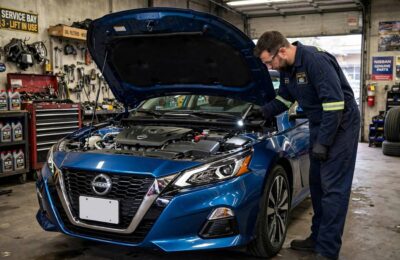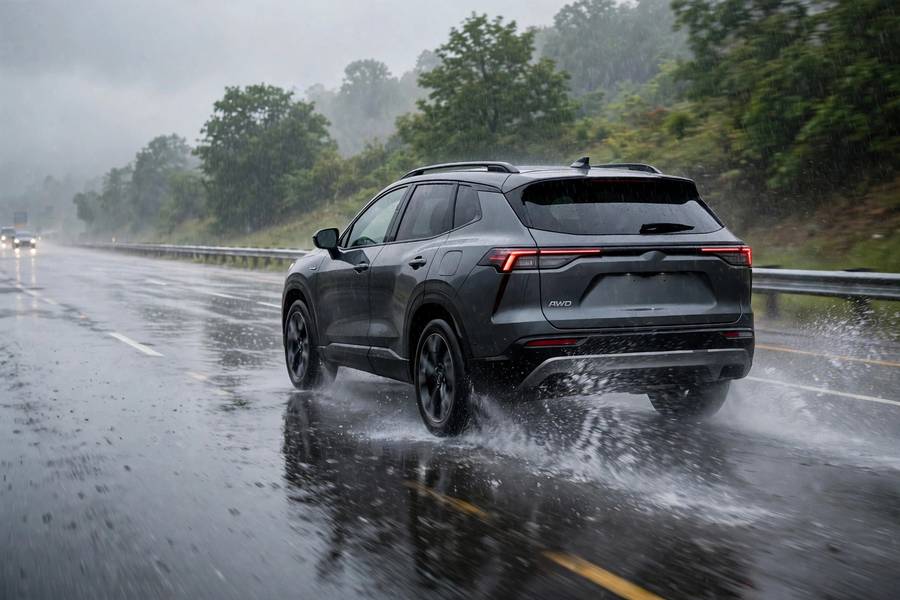
Two cars, both badged “AWD,” can have completely different drivetrains underneath — and I mean completely. One might drive all four wheels every second it’s moving; the other might be a front-wheel-drive car 95 percent of the time, only waking the rear wheels when things get slippery. Both are legitimately called AWD. Neither salesman will explain the difference unless you ask the right question. After years of servicing both types, here’s the real story: how each works, where each shines, where each fails, and which one you actually want. The broader drivetrain landscape is in my AWD vs 4WD guide.
Table of Contents
- The Core Difference in One Paragraph
- Full-Time AWD: How It Works
- Real-Time AWD: How It Works
- Traction Compared: Who Grips Better?
- Fuel Economy Compared
- Reliability and Repair Costs
- Driving Feel: Can You Tell the Difference?
- Which One Should You Buy?
- Frequently Asked Questions
The Core Difference in One Paragraph
Full-time AWD drives all four wheels continuously through a center differential that allows axle speed differences. Real-time AWD (also called on-demand or automatic AWD) drives two wheels most of the time and engages the other axle via an electronically controlled clutch pack only when wheel slip is detected. One is always working; the other is on standby. That single architectural choice — center differential versus clutch pack — explains every difference that follows: traction behavior, fuel economy, heat limits, maintenance, and repair bills.
Full-Time AWD: How It Works
Full-time AWD is the mechanical purist’s system. Engine power flows through the transmission to a center differential, which splits torque between the front and rear axles continuously — commonly with a rear bias like 40/60 or a balanced 50/50, depending on the design. The center diff allows the axles to rotate at different speeds, so cornering on dry pavement is completely natural. There are no clutches to engage, no computers deciding when to wake up the rear wheels. All four wheels are driven from the moment you pull out of the driveway.
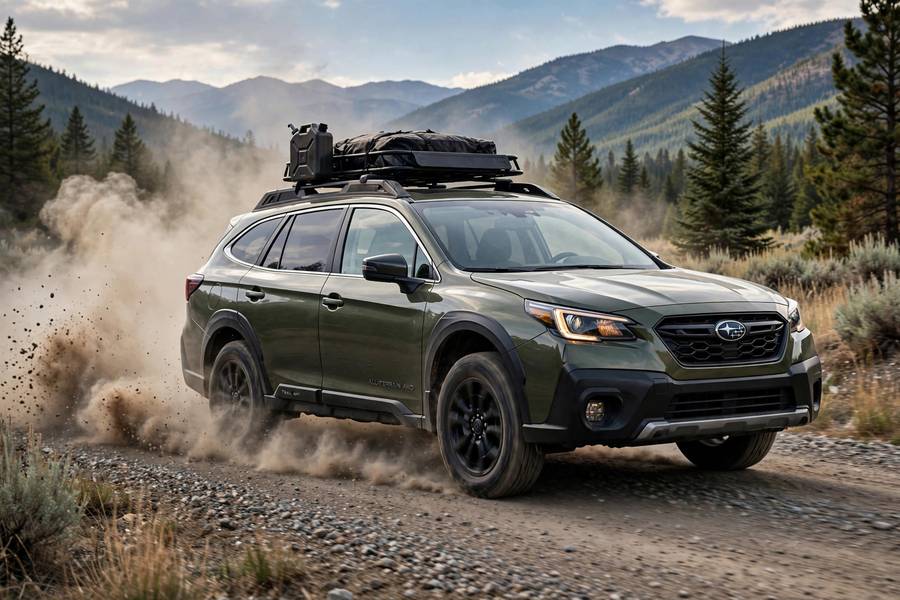
The center differential itself comes in flavors. Torsen-type mechanical diffs bias torque toward the axle with more grip using worm gears — no electronics, beautifully predictable. Planetary-gearset diffs split at a fixed ratio and lean on brake-based traction control to manage slip. Either way, the system is always on, always ready, with zero engagement delay. Subaru built its reputation on this architecture, and Audi’s classic Quattro is the other famous example. When people romanticize AWD, this is usually the system they’re romanticizing.
The full-time concept is borrowed straight from truck 4WD, so for the fundamentals, what all-wheel drive is is a good primer before comparing the two flavors.
Real-Time AWD: How It Works
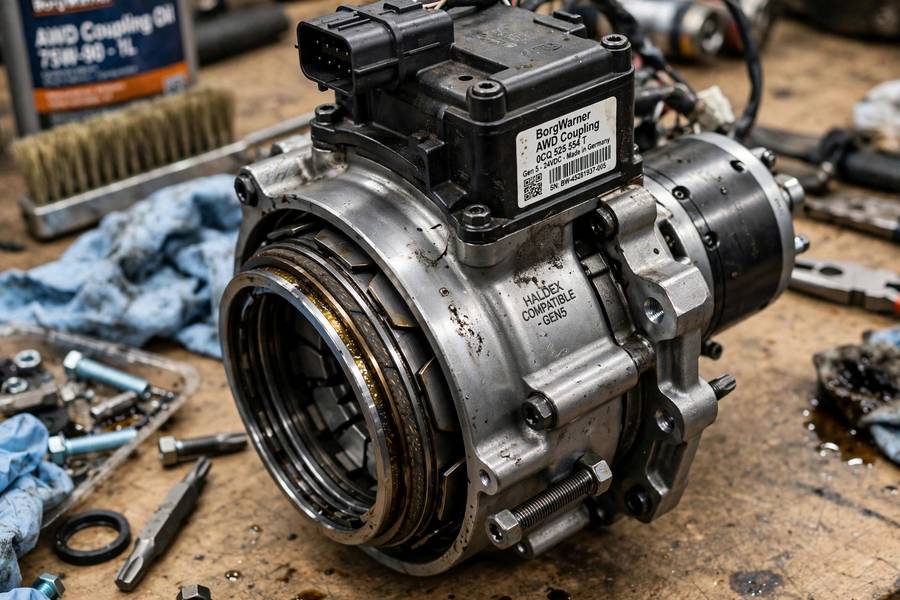
Real-time AWD is the pragmatist’s system. Most of the time, it’s a two-wheel-drive vehicle — usually front-wheel drive. Power flows from the transaxle to the front wheels, and a power take-off sends a driveshaft rearward to a clutch pack sitting ahead of the rear differential. That clutch pack is normally disengaged: the rear driveshaft may spin, but no meaningful torque reaches the rear wheels.
Wheel-speed sensors watch for slip hundreds of times per second. The instant the front wheels spin faster than the rears — the signature of lost traction — the computer engages the clutch pack, clamping it shut and sending up to 50 percent of torque rearward. Engagement takes roughly 100 to 200 milliseconds. When traction returns, the clutch pack releases and the car goes back to two-wheel drive. Honda’s Real Time AWD is the namesake, and most mainstream crossovers (RAV4, CR-V, Escape) use some version of this architecture.
The elegance is efficiency: you’re not spinning a fully loaded rear drivetrain most of the time, so fuel economy stays close to the 2WD version. The compromise is that the rear axle is reactive, not proactive — it arrives after slip begins, not before.
Traction Compared: Who Grips Better?
In most real-world slippery situations — rain, light snow, wet leaves, gravel — both systems perform well, and most drivers couldn’t tell them apart blindfolded. The differences emerge at the margins.
Full-time AWD has the edge in continuous low-traction driving: sustained snow, long slippery climbs, situations where traction is marginal for minutes rather than seconds. Because all four wheels are always driven, there’s no engagement delay and no cycling between 2WD and AWD as conditions fluctuate. The system is simply already there. It also handles the transition moments better — the patchy conditions where grip comes and goes, and a reactive system would be constantly engaging and disengaging.
Real-time AWD’s weakness is sustained slip. The clutch pack that engages the rear axle generates heat when it slips, and under prolonged slipping — rocking out of a snowbank, crawling up a long slippery grade, churning through deep slush — it can overheat. When it does, the system protects itself by reducing or cutting rear torque, sometimes with a dashboard warning, sometimes without. I’ve diagnosed “AWD system overheated” complaints that were really “driver asked a commuter crossover to do a truck’s job.” The system didn’t fail; the expectation did.
For the 95 percent of driving that’s just wet or lightly snowy roads, real-time AWD is entirely adequate. For the driver who faces serious winter regularly, full-time AWD’s always-on nature is worth seeking out.
Fuel Economy Compared
This is real-time AWD’s home turf. By disconnecting the rear axle most of the time, on-demand systems keep the EPA penalty to about 1 to 2 mpg versus the 2WD version — and in steady highway cruising, some systems with fully decoupling rear differentials get within a whisper of 2WD economy. The hardware is along for the ride, but it’s not under load.
Full-time AWD pays the full freight: 2 to 3 mpg penalty, all the time, because the center differential, rear driveshaft, and rear differential are always transmitting power. Over 12,000 miles a year, that’s roughly 30 to 50 extra gallons — $100 to $175 annually at typical fuel prices. Not ruinous, but real, and it never goes away no matter how gently you drive.
If fuel economy is a priority and your slippery driving is occasional rather than constant, real-time AWD is the rational choice. The math favors the system that sleeps most of the time.
Reliability and Repair Costs
Here’s where my shop experience gets opinionated. Full-time AWD’s center differential is a mature, mechanical component — Torsen diffs in particular are famously durable. The failure points are the usual suspects: fluid neglect (change it every 30,000 to 60,000 miles), worn bearings after high mileage, and the axle CV joints that work continuously. When a center diff does fail, it’s expensive — $1,500 to $2,500 — but failures are uncommon with maintained fluid.
Real-time AWD’s clutch pack is a wear item in a way a center differential isn’t. Every engagement cycles the clutch plates; heat accelerates wear. The rear coupling is the number one AWD repair I perform: symptoms are shuddering on turns, AWD warning lights, or a vehicle that’s mysteriously become front-wheel drive. Replacement runs $800 to $1,500. It’s not a flaw — it’s the design. Clutches wear; differentials (mostly) don’t.
The electronics differ too. Real-time AWD depends on wheel-speed sensors, the control module, and the clutch-pack actuator — more electrical failure points. Full-time mechanical systems have fewer sensors in the critical path. In my bays, electrical AWD faults outnumber mechanical ones about two to one, and they cluster in real-time systems.
Driving Feel: Can You Tell the Difference?
Honestly? Most of the time, no. Both systems are transparent in normal driving — that’s the design goal. But there are moments. A full-time AWD car feels planted and neutral pulling out of a wet intersection; the power is already everywhere. A real-time AWD car can show a heartbeat of front-wheel spin before the rear engages — a tiny chirp, a flicker of the traction light — then it grips and goes. It’s not a flaw, just a signature.
In corners, rear-biased full-time systems (and performance real-time systems that default rearward) feel more balanced, rotating willingly. Front-biased real-time systems feel like what they are: front-drivers with a safety net. Enthusiasts notice. Commuters don’t. And in snow, the full-time system’s seamlessness inspires more confidence — whether that confidence is always wise is a separate question I’ve addressed elsewhere.
Which One Should You Buy?
Buy full-time AWD if: you live with real winter (months of snow, not days); you drive mixed surfaces regularly; you keep vehicles long-term and value mechanical durability; you tow light loads in variable conditions; driving feel matters to you. It’s the set-and-forget system for serious conditions.
Buy real-time AWD if: your slippery driving is occasional (rain, light snow, gravel driveways); fuel economy matters; your budget favors mainstream crossovers (most are real-time); you understand the system’s limits and won’t ask it to crawl out of snowbanks for ten minutes. It’s the rational commuter choice — 90 percent of the benefit for 50 percent of the cost.
Either way, do the two things that matter more than the architecture: buy good tires, and change the drivetrain fluids on schedule. I’ve seen neglected full-time systems fail and maintained real-time systems run 200,000 miles. The badge doesn’t maintain itself.
Frequently Asked Questions
Full-time AWD drives all four wheels continuously through a center differential. Real-time (on-demand) AWD drives two wheels most of the time and engages the other axle via an electronic clutch pack only when wheel slip is detected — typically within 100-200 milliseconds.
For continuous slippery conditions and mechanical durability, yes — full-time AWD has no engagement delay and no clutch-pack heat limits. For fuel economy and occasional slippery driving, real-time AWD is the better value, costing only 1-2 mpg versus 2-3 mpg for full-time.
Yes. The clutch pack that engages the rear axle generates heat during sustained slip — rocking out of a snowbank, long slippery climbs, or deep slush. Overheated systems reduce or cut rear torque to protect themselves. It’s designed for intermittent slip, not continuous low-traction crawling.
Check your owner’s manual or the manufacturer’s specs: terms like “full-time,” “permanent,” or “Torsen/Quattro” indicate full-time AWD; “real-time,” “on-demand,” “automatic,” or “intelligent AWD” indicate a reactive clutch-pack system. Subaru and Audi Quattro models are famously full-time; most mainstream crossovers are real-time.
Both types need differential fluid changes every 30,000-60,000 miles and matched tires all around. Real-time systems add the rear coupling/clutch pack as a wear item — budget for its eventual replacement ($800-$1,500) over a long ownership, and avoid sustained slipping that overheats it.