Nobody buys a 4WD truck for its fuel economy, but everybody pays for the drivetrain at the pump — usually without knowing how much. The AWD-versus-4WD fuel question comes up in my shop constantly, usually from someone comparing window stickers: the AWD version of a crossover rated 2 mpg lower, the 4×4 truck rated 1 mpg lower than the 4×2. Those numbers are real, they’re measurable, and they compound over years of ownership. Here’s where the fuel goes, how much each system costs you, and what’s actually worth doing about it. The mechanical background is in my AWD vs 4WD comparison.
Table of Contents
- The Short Answer in MPG
- Where the Fuel Goes: Drivetrain Losses Explained
- AWD Fuel Economy: The Numbers
- 4WD Fuel Economy: The Numbers
- Weight: The Hidden Fuel Tax
- Tires: The MPG Killer Nobody Blames
- How to Minimize the Drivetrain Penalty
- Doing the Real Math on Your Wallet
- Frequently Asked Questions
The Short Answer in MPG
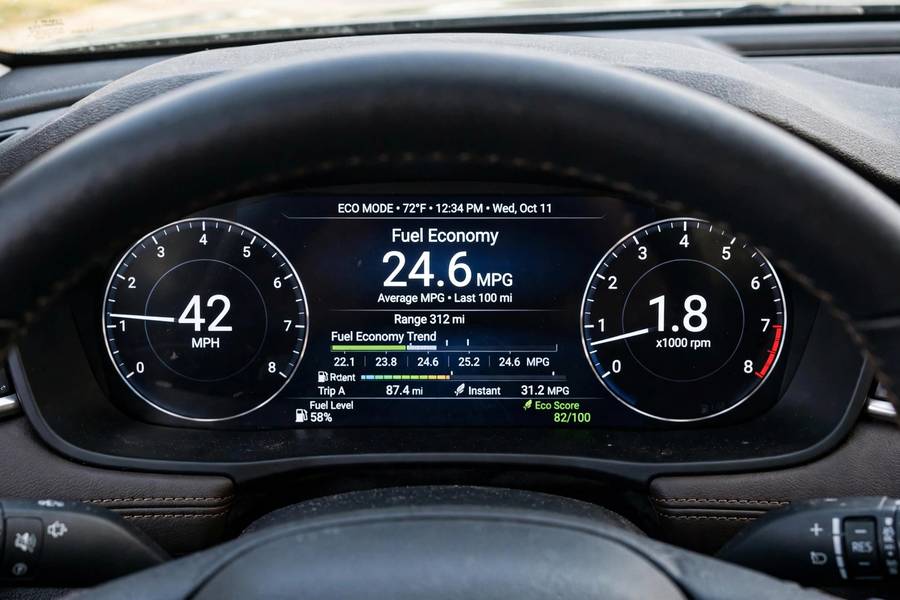
AWD typically costs 1 to 3 mpg compared to the front-wheel-drive version of the same vehicle. Part-time 4WD driven in 2WD mode costs roughly 0 to 1 mpg versus the 2WD truck (you’re carrying the hardware but not spinning most of it). Part-time 4WD driven in 4WD High costs 2 to 4 mpg versus 2WD mode. Full-time 4WD costs 1 to 3 mpg all the time, like AWD.
In percentage terms, expect a 5 to 10 percent fuel economy penalty for always-on all-wheel traction versus two-wheel drive. On a vehicle that gets 25 mpg, that’s 1.5 to 2.5 mpg. On a truck that gets 18 mpg, it’s 1 to 2 mpg. These are EPA-test deltas; real-world numbers vary with driving style, but the direction never does: more driven wheels, more fuel.
Where the Fuel Goes: Drivetrain Losses Explained
Every component between the engine and the tires consumes energy. Gears mesh with friction. Bearings roll with resistance. Seals drag. Gear oil gets churned — engineers call this “windage” and “churning loss,” and it’s real: spinning a differential through thick gear oil takes measurable power. A driven axle’s worth of hardware — driveshaft, differential, two axle shafts, four CV or U-joints — typically absorbs 2 to 4 percent of engine output just existing and spinning.
An always-on system spins all of that, all the time. A part-time system in 2WD disconnects most of it: the front driveshaft, differential, and axles sit idle (or freewheel), contributing only their weight, not their friction. That’s the entire fuel-economy story in one paragraph. It’s not mysterious — it’s just friction and mass, doing what friction and mass always do.
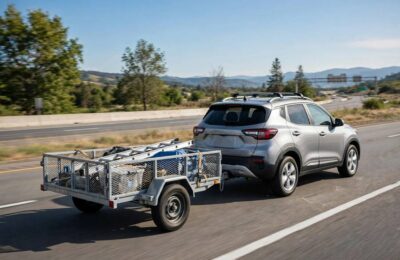
There’s a second-order effect too: drivetrain losses are roughly proportional to power transmitted, so the penalty grows when you’re working the vehicle hard. Towing, climbing grades, and aggressive acceleration all widen the gap between 2WD and all-wheel-drive fuel consumption. Gentle highway cruising narrows it.
To see where those losses come from mechanically, what all-wheel drive is walks through the extra hardware that’s always along for the ride.
AWD Fuel Economy: The Numbers
Full-time AWD is the thirstiest car-based configuration: the center differential, rear driveshaft, and rear differential spin continuously. Expect the full 2 to 3 mpg penalty versus the FWD version. Subaru’s lineup demonstrates this honestly — the AWD is standard, and the fuel economy simply reflects the hardware.
On-demand (real-time) AWD is cleverer. With the rear clutch pack disengaged, the rear driveshaft and differential are disconnected — some systems even use a disconnecting rear differential that fully decouples. Cruising economy approaches FWD levels; the penalty drops to 1 to 2 mpg in EPA testing and can be near zero in steady highway driving. But the moment the system engages — rain, snow, aggressive driving — you’re paying full AWD friction again. Real-world results depend on how often your driving triggers the rear axle.
Performance AWD with rear bias and torque vectoring sits at the thirsty end: 2 to 3 mpg penalty, plus the systems are usually paired with bigger engines and stickier tires that cost fuel independently. Nobody buys a torque-vectoring sports sedan for economy, but the drivetrain is part of the bill.
4WD Fuel Economy: The Numbers
Part-time 4WD in 2WD mode is the efficiency champion of the all-wheel world — because most of the time, it isn’t all-wheel drive. The front axle is disconnected at the transfer case (and at the hubs in older designs), so you’re spinning only the rear drivetrain. The penalty versus a true 2WD truck is just the weight of the carried hardware: typically 0 to 1 mpg. This is the honest answer I give truck buyers worried about fuel: drive it in 2WD and the 4×4 hardware barely costs you anything.
Engage 4WD High and the bill arrives: spinning the front driveshaft, differential, and axles under load costs 2 to 4 mpg versus 2WD mode. In 4WD Low, fuel economy becomes essentially unmeasurable — you’re crawling at walking pace with the engine working hard, and mpg figures are meaningless. Nobody tracks mpg in low range; you track hours and distance.
Full-time 4WD behaves like full-time AWD: 1 to 3 mpg penalty, always on, no 2WD escape. Land Cruiser owners know this going in — the capability is worth the fuel, and the fuel is simply part of the vehicle’s character.
Weight: The Hidden Fuel Tax
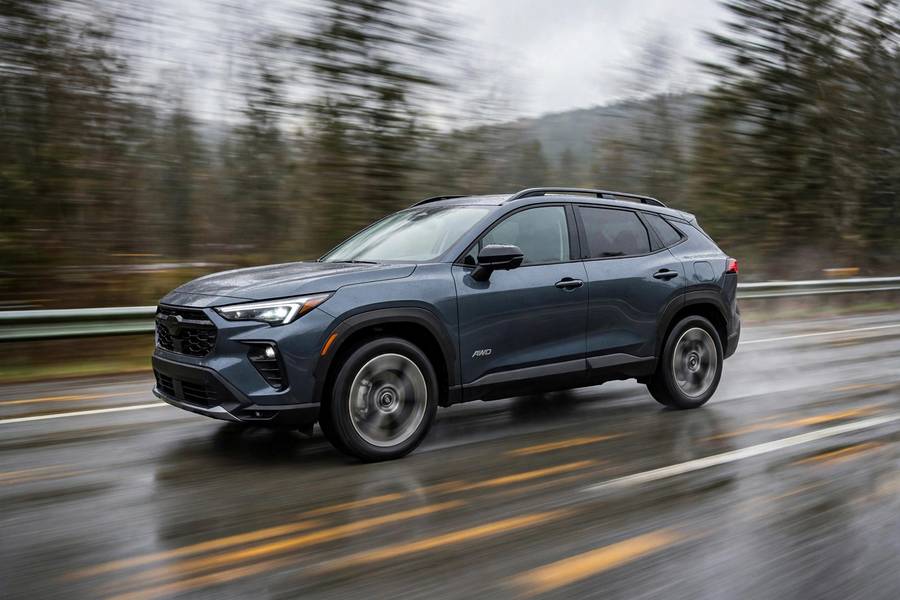
Beyond friction, there’s mass. A 4WD system — transfer case, front driveshaft, front differential, axle shafts, heavier front suspension — adds 200 to 400 pounds to a truck versus the 2WD version. An AWD system adds 150 to 250 pounds to a car or crossover. Every acceleration event, every hill, every stoplight pays for that mass in fuel.
The rule of thumb I use: every 100 pounds costs roughly 1 percent in fuel economy in mixed driving. So 300 pounds of 4WD hardware is ~3 percent — about 0.5 to 0.7 mpg on a 20-mpg truck — before you count a single spinning part. It’s not the biggest slice of the penalty, but it’s always there, even in 2WD mode, even parked. You can’t disconnect weight.
This is also why the fuel penalty feels worse in city driving than on the highway. Highway cruising is steady-state: mass matters little once you’re rolling. City driving is constant acceleration: mass matters enormously. The same 4WD truck might show a 1-mpg penalty on the highway and a 2-mpg penalty in town.
Tires: The MPG Killer Nobody Blames
Here’s the factor that dwarfs the drivetrain choice: tires. The all-terrain or mud-terrain tires that most 4WD trucks wear cost 2 to 4 mpg versus highway tires — as much as or more than the entire 4WD system. Aggressive tread patterns have higher rolling resistance; heavier tires have more rotational mass; and rotational mass counts roughly double compared to static weight because you’re spinning it, not just carrying it.
I see this constantly: a customer complains their 4×4 gets terrible mileage, and the truck is wearing 35-inch mud-terrains at 12 psi over stock pressure… actually no, usually over-inflated or under-inflated, it varies. The point stands: before blaming the transfer case, look at the tires. Switching from mud-terrains to highway all-terrains can recover 2+ mpg overnight — a bigger gain than any drivetrain mode change.
AWD crossovers suffer this too, mildly: the wider, stickier tires often fitted to AWD trims cost 1 mpg versus the base FWD’s eco tires. It’s baked into the trim comparison and rarely noticed.
How to Minimize the Drivetrain Penalty
Practical steps, in order of impact. First, use 2WD mode whenever the surface allows it — this is the single biggest lever for part-time 4WD owners, worth 2 to 4 mpg versus driving around in 4H “just in case.” Second, keep tires properly inflated: under-inflation by 5 psi can cost 1 mpg, and it hits heavier all-wheel-drive vehicles harder. Check pressures monthly; the door jamb sticker is the spec, not the tire sidewall.
Third, choose tires for your actual use. If 90 percent of your miles are highway, highway-terrain tires will save more fuel than any driving technique. Fourth, maintain the drivetrain: fresh differential and transfer case fluid reduces churning losses measurably — old, thick, contaminated fluid is measurably harder to spin through. Fifth, drive smoothly: the mass and friction penalties both scale with aggression, so gentle acceleration and steady speeds narrow every gap I’ve described.
What doesn’t help: aftermarket “fuel saver” gadgets, magic oil additives, or removing the front driveshaft (which unbalances the vehicle and can damage the transfer case). The physics is the physics.
Doing the Real Math on Your Wallet
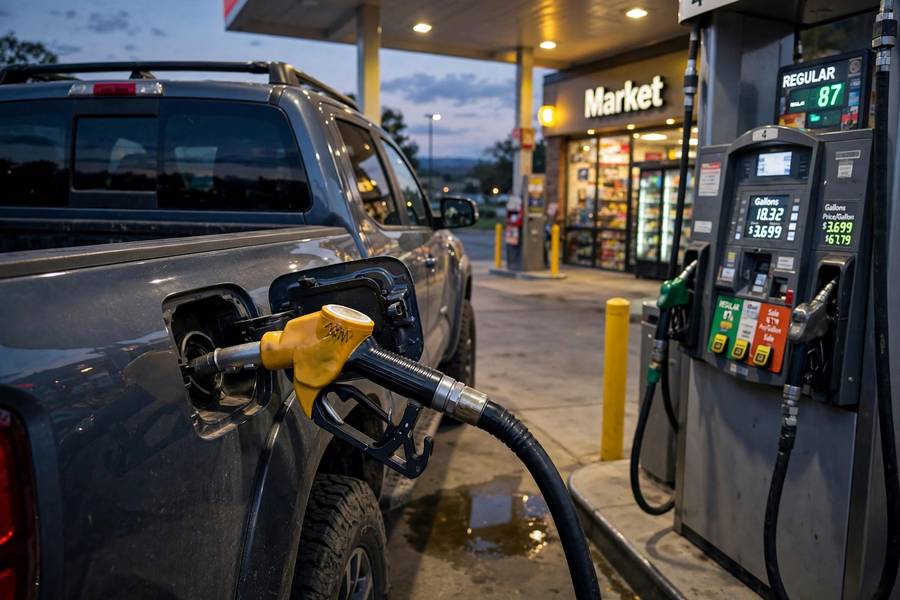
Let’s make it concrete. Take a crossover driven 12,000 miles a year. FWD version: 28 mpg combined. AWD version: 26 mpg. Annual fuel: 429 gallons vs 462 gallons — 33 gallons difference. At $3.50 a gallon, that’s about $115 a year, or under $10 a month. Over a 10-year ownership, roughly $1,150. That’s the real cost of AWD on a typical crossover: about a hundred bucks a year.
A truck: 12,000 miles, 20 mpg (2WD mode) vs 18 mpg (habitual 4H use). That’s 600 vs 667 gallons — 67 gallons, $235 a year. But driven properly in 2WD, the penalty nearly vanishes, and the “cost” becomes just the purchase price of the 4×4 option.
My take after twenty years: the fuel cost of AWD/4WD is real but modest — smaller than the tire choice, smaller than driving style, and far smaller than most buyers fear. Don’t let 1-2 mpg decide your drivetrain. Decide based on the traction you actually need, then manage the fuel with your right foot and your tire gauge.

Frequently Asked Questions
AWD typically costs 1-3 mpg versus the front-wheel-drive version of the same vehicle — about a 5-10% penalty. On-demand AWD systems that disconnect the rear axle cruise more efficiently (1-2 mpg penalty), while full-time AWD pays the full penalty continuously.
In 4WD High, yes — expect 2-4 mpg worse than 2WD mode from spinning the extra drivetrain hardware. But part-time 4WD driven in 2WD mode costs only 0-1 mpg versus a 2WD truck, since the front axle is disconnected. The key is using 2WD whenever the surface allows.
Extra drivetrain components — driveshaft, differentials, axle shafts — create friction and churning losses that consume 2-4% of engine output, plus 150-400 pounds of added weight. Every spinning part and every pound costs fuel, especially during acceleration.
Often, yes. Aggressive all-terrain or mud-terrain tires can cost 2-4 mpg versus highway tires — as much as the entire 4WD system. Under-inflated tires also hit harder on heavier AWD/4WD vehicles. Proper inflation and appropriate tires are the biggest fuel levers you control.
For most drivers, yes — the real cost is modest, roughly $100-235 per year for typical mileage. That’s small compared to the traction benefit in rain and snow. Choose your drivetrain based on the traction you need, and manage fuel costs with tire pressure, tire choice, and smooth driving.