Blank prompt boxes are intimidating. I keep a swipe file of prompts that worked — not to reuse blindly, but as starting points to twist into something mine. This is that file, cleaned up and organized: 40+ prompt ideas across styles and subjects, each one copy-paste ready and each one begging to be remixed. Steal them freely; the good stuff happens when you change three words and make them yours. If you want the theory behind writing prompts rather than borrowing them, how Midjourney works covers the mechanics — this is the idea buffet. And if you’re wondering whether any of this counts as real creativity, can AI make art takes that question on.
Table of Contents
- How to Use This List
- Portrait Prompt Ideas
- Landscape and Environment Ideas
- Character and Creature Ideas
- Abstract and Experimental Ideas
- Style-Mashup Ideas
- Everyday Object, Unreal Treatment
- Remix Formulas: Make Any Prompt Yours
- Frequently Asked Questions
How to Use This List
Three rules before you dive in:
- Copy, then change three things. A prompt copied verbatim teaches you nothing. Change the subject, the style, and one detail — now it’s yours and you’ve learned how the pieces interact.
- Read the structure, not just the words. Every prompt below follows a pattern: subject + details + style + mood/lighting. Once you see the pattern, you can build your own from scratch.
- Expect to iterate. The prompt is a starting bid, not a final answer. Generate, react, adjust one element, regenerate. The list gets you to a good first bid fast.
- Keep a remix journal. When a tweaked prompt produces something you love, save both versions with a note about what the change did. After a month you’ll have a personal reference worth more than any prompt list — including this one.
Parameters like --ar (aspect ratio) work on Midjourney; adapt or drop them for other tools. The words are the portable part.
Portrait Prompt Ideas
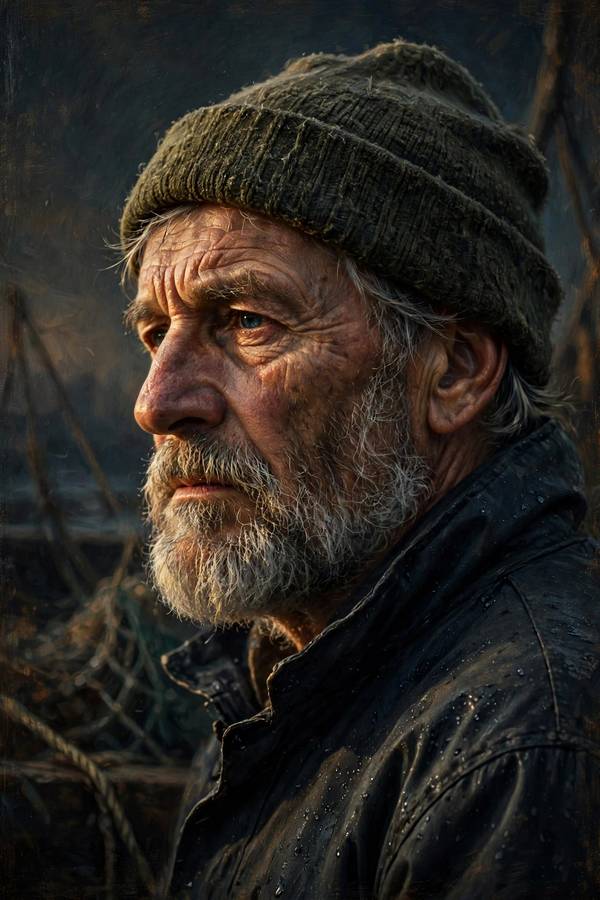
weathered fisherman portrait, deep wrinkles, salt-and-pepper beard, stormy gray eyes, dramatic side lighting, oil painting, dark backgroundelegant elderly woman with silver braids, traditional embroidered shawl, warm window light, photorealistic, shallow depth of fieldcyberpunk street vendor, neon face tattoos, rain-soaked jacket, glowing market stalls behind, cinematic, blade runner moodrenaissance-style portrait of a young astronomer, holding a brass telescope, star charts on the wall, chiaroscuro lightingtribal warrior queen, intricate face paint, feathered headdress, golden hour savanna, epic fantasy illustrationmelancholy clown removing makeup in a dressing room mirror, single bare bulb, film noir photography, black and whiteVictorian botanist with magnifying glass, surrounded by pressed flowers and specimen jars, cozy study, painterly detailastronaut portrait with cracked helmet visor reflecting Earth, dramatic, photorealistic space photography
Portraits are the best prompt-training ground because faces punish vagueness — you’ll learn fast what “detailed” actually needs to mean.
Landscape and Environment Ideas
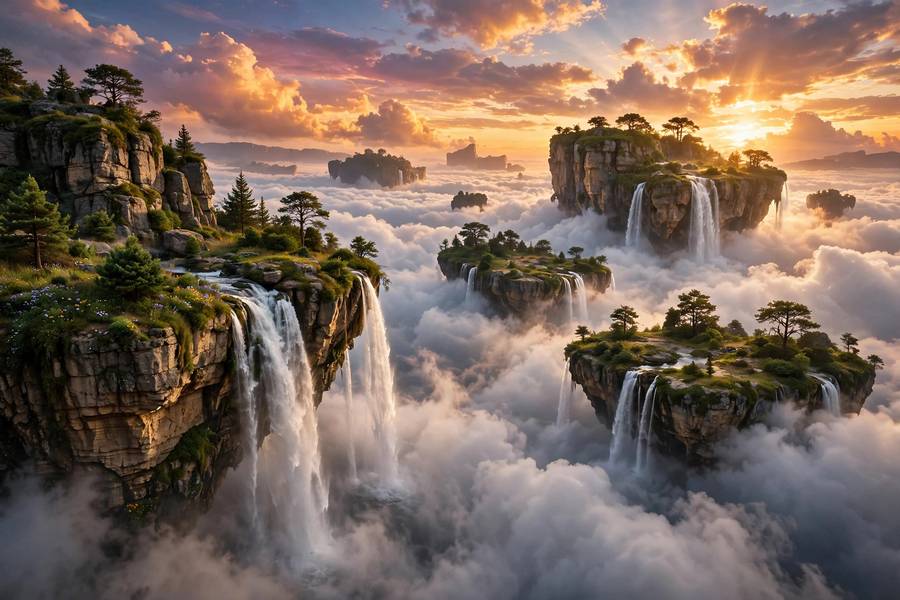
floating islands with waterfalls pouring into clouds, tiny airships between them, sunset, epic fantasy matte paintingabandoned art deco train station reclaimed by jungle, light shafts through broken roof, moss and ferns, photorealistictiny cozy cabin on a cliff edge above a stormy sea, one warm window glowing, dramatic waves, digital paintingbioluminescent forest at night, glowing mushrooms and fireflies, mist between ancient trees, fantasy photographydesert city carved into a canyon wall, market stalls and hanging lanterns, dusk, intricate architectural illustrationfrozen lighthouse encased in ice, aurora borealis overhead, long exposure photography feel, deep blues and greensunderwater ruined temple, sunbeams through water, schools of fish, coral growth, serene, digital matte paintingcozy treehouse village connected by rope bridges, autumn foliage, smoke from chimneys, storybook illustration
Environments reward specificity about light and atmosphere — “dusk” versus “golden hour” versus “blue hour” produce completely different images. Play with those words first.
Character and Creature Ideas
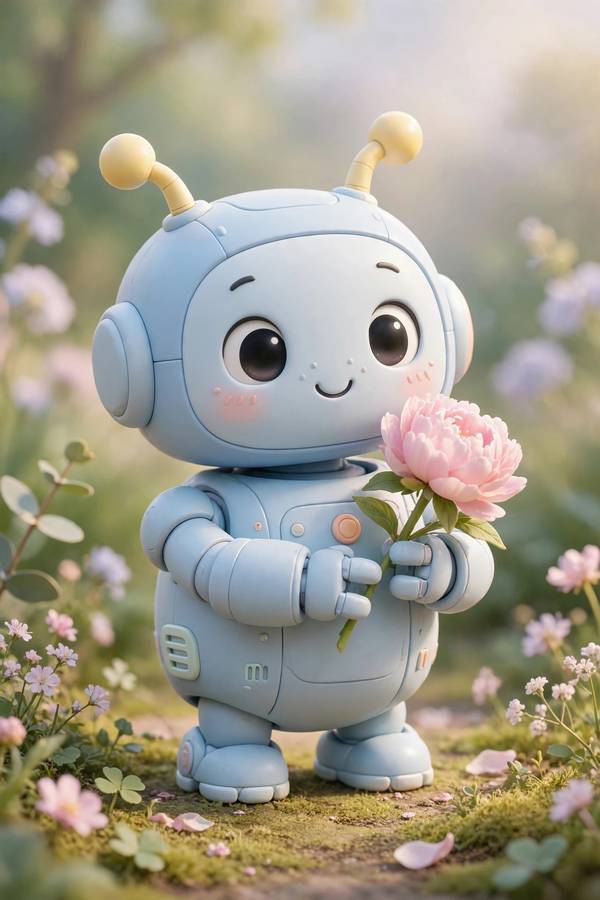
cute tiny robot holding a wilting flower, big expressive eyes, soft 3D render, pastel colors, Pixar styleancient forest spirit made of bark and moss, glowing amber eyes, towering over a small traveler, dark fantasysteampunk owl with brass gears and goggles, perched on a stack of old books, detailed illustrationgentle stone golem covered in garden flowers, children playing at its feet, soft morning light, heartwarming fantasy artmischievous fox spirit with nine tails of flame, Japanese woodblock print style, bold linesretired dragon running a tiny bookshop, spectacles on snout, cozy cluttered interior, whimsical illustrationdeep-sea anglerfish explorer with a tiny lantern submarine, bioluminescent dark ocean, children's book styleclockwork knight with visible gears through glass armor, standing in a field of wildflowers, contrast of hard and soft
Creatures are where AI shines — it has no preconceptions about anatomy that doesn’t exist, so your weirdest ideas get a fair hearing. Push the strangeness.
Abstract and Experimental Ideas
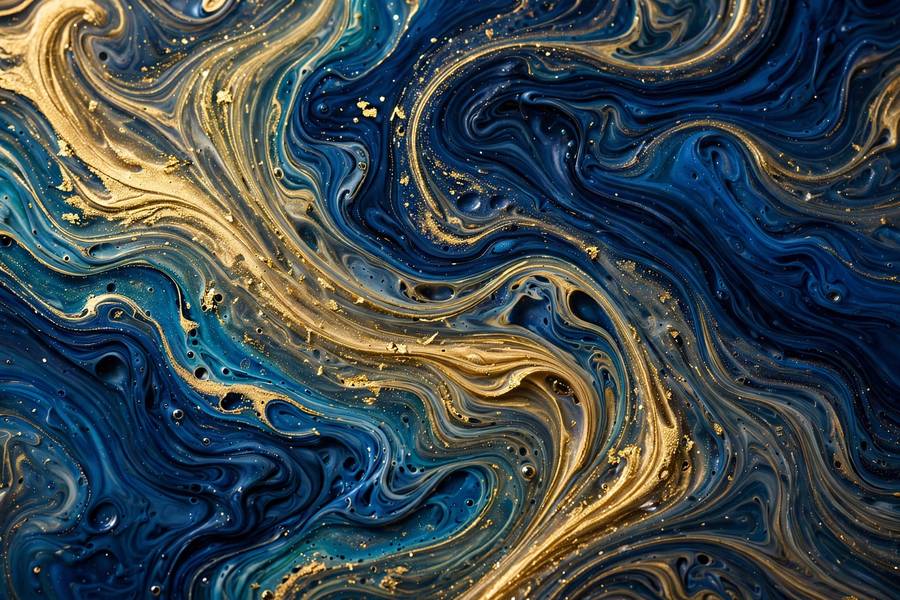
flowing liquid gold and deep blue ink colliding in water, macro photography, swirling marble patternsgeometric fox formed from triangular shards of sunset-colored glass, dark background, 3D rendersound waves visualized as blooming flowers, synesthesia art, vibrant gradients on blacka city skyline dissolving into a flock of birds at dusk, surreal double exposure, orange and purplefractal cathedral interior, infinite recursive arches, glowing stained glass, mathematical beautyemotions as weather systems over a tiny village, joy as sunshine, grief as gentle rain, conceptual illustrationtopographic map of an imaginary continent, contour lines forming a sleeping giant's face, vintage cartography styleglass still life shattering in reverse, fragments reassembling mid-air, high-speed photography aesthetic
Abstract prompts teach you that AI handles conceptual descriptions (“emotions as weather”) surprisingly well — the model maps metaphors to visuals fluently. This is genuinely fun territory.
Style-Mashup Ideas
The cheat code for originality: take two things that don’t belong together.
a samurai duel painted as a 1950s American diner advertisement, retro poster styleGothic cathedral interior rendered as a circuit board, neon tracings, cyberpunk sacred architectureunderwater tea party in the style of a Dutch Golden Age still life, octopus guests, oil paintinga medieval knight's armor designed by Apple, minimalist product photography, white backgroundArt Nouveau poster advertising a Mars colony, flowing organic lines, vintage travel postera noir detective office on a spaceship, rain on the viewport, 1940s film still meets sci-fiBaroque angels repairing a broken robot, dramatic heavenly light, classical oil paintinga cozy hobbit-hole kitchen designed as a Japanese capsule hotel, tiny efficient comfort, illustration
Mashups work because the model knows both halves well and the combination is genuinely novel. “X in the style of Y” and “X designed by Y” are the two most productive sentence structures in all of prompting.
Everyday Object, Unreal Treatment
Some of my favorite generations came from pointing the epic-treatment lens at boring things:
a single paperclip photographed like a luxury watch advertisement, dramatic macro, black backgrounda houseplant as an ancient god, towering over a tiny worshipper, epic fantasy scale, sunbeamsa coffee mug with a storm raging inside it, tiny lightning, photorealistic macroa library book with galaxies spilling from its pages, long exposure light trails, magical realism
The formula: mundane subject + grandiose treatment. The contrast does the creative work — and it works because AI renders both halves with equal conviction.
Remix Formulas: Make Any Prompt Yours
When the list runs dry, these formulas generate infinite prompts:
The time transplant: Take any subject + put it in a different era. “A food truck in ancient Rome.” “A Zoom call in 1890.” Anachronism is an idea machine.
The scale flip: Make the tiny huge or the huge tiny. “A cathedral inside a snow globe.” “A ladybug the size of a bus.” Scale changes are the simplest path to wonder.
The material swap: Render something in an unexpected material. “A portrait carved from cheese.” “A city made of glass and moonlight.” Material is an underused prompt dimension.
The profession swap: Give a creature or character an unexpected job. “A dragon accountant.” “A ghost librarian.” Instant narrative, instant charm.
The weather of emotion: Describe a scene’s emotional tone as weather, then let the model visualize it. “Nostalgia as an autumn afternoon.” Surprisingly evocative results.
The “what if it dreamed” frame: “What does a lighthouse dream about?” The model answers in imagery, and the answers are often stranger and better than direct descriptions.
Keep a running note of formulas that work for you. In a month you’ll have a personal prompt engine — and that’s when prompting stops feeling like guessing and starts feeling like a craft. For the deeper mechanics of turning words into images, how to use Midjourney is the natural next read.
One habit that leveled up my own results: after every render you actually like, save the full prompt next to the image. Six months later that folder is a personal dataset of what works in your style — better than any prompt list I could hand you, because it’s tuned to your taste. The list above gets you started; your own archive is what makes you good.
Frequently Asked Questions
Start with structured prompt collections organized by subject and style, then remix them — change the subject, style, and one detail. Prompt galleries, community showcases, and curated lists like this one are the fastest way past blank-box paralysis.
A good prompt has four parts: a specific subject, concrete details, a style or medium, and mood/lighting. “Weathered fisherman portrait, salt-and-pepper beard, dramatic side lighting, oil painting” beats “a man” because every added specific guides the model.
Yes — prompts aren’t copyrightable in most interpretations, and remixing is how everyone learns. The best practice is copy-then-change: alter the subject, style, and details so the result becomes yours and you learn how prompt pieces interact.
Style-mashup prompts combine two unrelated things — “a samurai duel as a 1950s diner ad” or “Gothic cathedral as a circuit board.” The structures “X in the style of Y” and “X designed by Y” are among the most productive prompt formulas for original results.
Use remix formulas: time transplants (modern subject in another era), scale flips (tiny made huge), material swaps, profession swaps for characters, and emotional-tone-as-weather descriptions. Originality comes from unexpected combinations, not longer prompts.