
Order a pair of headphones online and the store suggests a case, a stand, and — somehow — exactly the cable you didn’t know you needed. That moment of “how did it know” is AI doing its quiet work, and ecommerce is where AI has arguably paid for itself most completely. Unlike some industries where AI is still a science project, online retail runs on it daily.
So how is AI used in ecommerce, specifically? Not in vague “personalization” hand-waving, but in the eight concrete mechanisms below — each one tied to revenue, cost, or conversion. If you’re new to the whole landscape, my piece on what is ecommerce sets the stage, and the business overview of how AI is used in business covers the wider context.
Table of Contents
- 1. Product Recommendations That Actually Convert
- 2. Search That Understands What You Mean
- 3. Chatbots That Sell at 3 AM
- 4. Dynamic Pricing Without the Guesswork
- 5. Inventory Forecasting
- 6. Fraud Detection in Real Time
- 7. Visual Search: Shop What You See
- 8. Reviews, Descriptions, and Content at Scale
- Where to Start If You Run a Store
- Personalization Beyond the Carousel
- AI for Customer Retention and Win-Back
- Frequently Asked Questions
1. Product Recommendations That Actually Convert
The “customers also bought” carousel is the granddaddy of ecommerce AI, and it’s still the highest-ROI application going. Recommendation engines analyze purchase histories, browsing behavior, and similarity patterns to predict what each visitor is likely to want next. The classic result: a meaningful share of revenue traced directly to recommended items.
The craft here is in the tuning. Good engines blend collaborative filtering (“people like you bought this”) with content similarity (“this matches what you’re viewing”) and business rules (“push the overstock”). Bad ones recommend the thing you just bought — congratulations on your new second toaster. The difference is data quality and someone actually reviewing the output, not just the algorithm.
2. Search That Understands What You Mean
Store search used to be glorified keyword matching: type “summer dress” and get results containing exactly those words, including a dress-shaped lamp. AI-powered search understands intent — synonyms, misspellings, and the actual meaning of queries like “something for a beach wedding.”
This matters more than most store owners realize. Visitors who use site search convert at dramatically higher rates than browsers, because searchers have buying intent. Every failed search is a customer who told you exactly what they wanted and left empty-handed. Semantic search, query suggestions, and “no results” recovery pages are among the cheapest conversion wins in ecommerce.
3. Chatbots That Sell at 3 AM
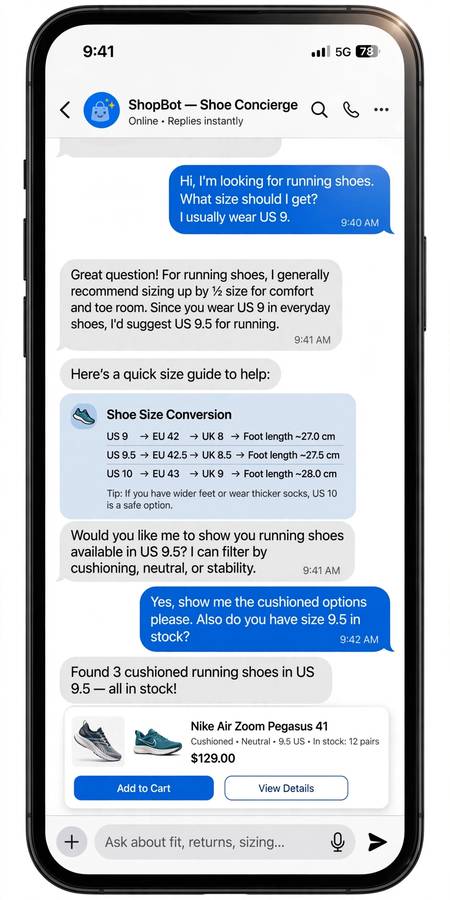
The best ecommerce chatbots aren’t the annoying pop-ups of 2018 — they’re competent sales assistants that answer sizing questions, check stock, track orders, and recover abandoned carts. They work the night shift, the lunch rush, and the holiday stampede without overtime.
What separates good from terrible: scope. A chatbot that knows your catalog, your shipping policy, and your return rules is genuinely useful. One trained on generic data that invents policies is a liability — I’ve seen bots promise free express shipping a store never offered. Start narrow (order tracking, FAQs, sizing), integrate real product data, and always offer a human handoff. The bot handles the routine; your team handles the relationships.
4. Dynamic Pricing Without the Guesswork
Airlines have done this forever; ecommerce caught up. AI pricing tools adjust prices based on demand, competitor prices, inventory levels, and time of day — within guardrails you set. The goal isn’t to squeeze every customer; it’s to stop leaving money on the table during demand spikes and stop overpricing slow movers into oblivion.
Small stores can use this too, though with simpler rules: automatic markdowns on aging inventory, bundle discounts that actually move units, promotional pricing timed to traffic patterns. The key discipline is setting floors and ceilings. Dynamic pricing without guardrails is how you accidentally sell your flagship product at a loss during a bot war.
5. Inventory Forecasting
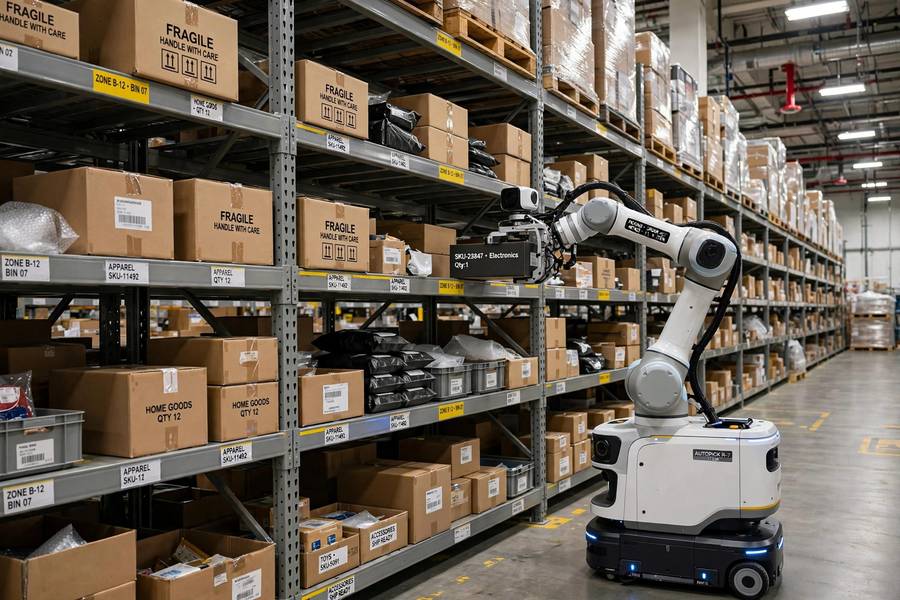
Stockouts lose sales; overstock eats cash. AI forecasting models chew through historical sales, seasonality, promotions, and even weather or trend data to predict demand per SKU. For anyone running a dropshipping business or a multi-SKU store, this is the difference between guessing and planning.
The honest caveat: forecasts are only as good as the history feeding them. New products with no sales data are educated guesses no matter what the dashboard says. But for established catalogs, even a modest improvement in forecast accuracy translates directly into less dead stock and fewer “sorry, out of stock” emails — which is real money.
6. Fraud Detection in Real Time
Every online store is a fraud target, and manual review doesn’t scale. AI fraud systems score transactions in milliseconds — flagging mismatched billing and shipping data, unusual purchase velocity, and patterns that match known fraud rings — while approving legitimate orders instantly.
The balancing act is false positives. An over-aggressive system declines real customers, which is worse than the fraud it prevents (angry customer, lost lifetime value). Good implementations layer the AI with human review for edge cases and constantly retrain on outcomes. If you’re selling anything above impulse-buy prices, this isn’t optional anymore.
7. Visual Search: Shop What You See
See a jacket on the street, snap a photo, find it for sale — visual search turns the entire physical world into a storefront. AI image recognition matches uploaded photos against product catalogs, handling the “I don’t know what this is called” problem that text search can’t touch.
Fashion, furniture, and home decor lead here, for obvious reasons. Implementation-wise, it needs clean product photography and a catalog organized for visual matching — another case where data quality is the real project. But for categories where customers shop with their eyes, it’s becoming table stakes rather than a gimmick.
8. Reviews, Descriptions, and Content at Scale
The unglamorous backbone: AI writes product descriptions, summarizes hundreds of reviews into digestible pros and cons, translates listings for new markets, and generates the SEO content that brings organic traffic. A store with 5,000 SKUs cannot write 5,000 unique descriptions by hand; AI drafts them all, and humans polish the top sellers.
The rule I drill into every store owner: AI drafts, humans approve — especially for anything customer-facing. Generic descriptions are fine for the long tail; your bestsellers deserve a human touch. And review summaries should always link to the actual reviews, because trust is the whole point.
Where to Start If You Run a Store
If this list feels like a lot, it is — but you don’t need all eight. Start where the money is: fix your site search, add a competent chatbot for the top ten FAQs, and put recommendations on product pages. Those three are mature, affordable, and measurable. The forecasting, pricing, and fraud layers come once you’re scaling. The broader playbook for how to use AI at work applies here too — ecommerce is just AI’s most battle-tested arena.
Personalization Beyond the Carousel
Recommendations get the glory, but personalization runs deeper. AI now tailors the entire storefront per visitor: the homepage hero, the category sorting, even which promotions surface. A returning customer who buys running gear sees a different store than a first-timer browsing gifts — same URL, different experience.
Email and SMS get the same treatment. Instead of one newsletter for everyone, AI segments audiences by behavior and predicts what each segment wants next: the lapsed buyer gets a win-back offer on the category they browsed, the frequent buyer gets early access to new arrivals. The open and conversion rates on behavior-triggered messages embarrass batch-and-blast campaigns. The principle is simple — every customer interaction is a chance to be relevant — and AI is what makes relevance scalable. A store with ten thousand customers can’t personalize by hand; with AI, it can’t afford not to.
AI for Customer Retention and Win-Back
Acquiring a customer costs far more than keeping one, which makes retention AI’s quiet profit center. Churn-prediction models flag customers whose behavior matches pre-churn patterns — declining visit frequency, shrinking basket sizes — before they disappear. That early warning lets you intervene: a well-timed discount, a personal check-in, a reminder of what they loved.
Win-back campaigns work the same way in reverse: identifying lapsed customers most likely to return and tailoring the offer to their history. The sneaky-effective version is the post-purchase flow — AI-timed follow-ups asking for reviews when satisfaction peaks, suggesting complementary products when the first purchase proves itself, and flagging support issues from subtle signals before they become one-star reviews. Retention is where ecommerce AI graduates from “nice feature” to “revenue engine,” because every retained customer compounds.

Frequently Asked Questions
AI powers product recommendations, semantic site search, chatbots, dynamic pricing, inventory forecasting, fraud detection, visual search, and content generation. These eight applications drive most of the measurable AI value in online retail.
Not all of it, but the basics — good site search, a FAQ chatbot, and product recommendations — are affordable and pay for themselves quickly. Start with those three before considering forecasting or dynamic pricing.
AI pricing tools adjust prices based on demand, competitor prices, inventory, and timing, within guardrails the store sets. Always configure price floors and ceilings to avoid selling at a loss during automated price changes.
Visual search lets shoppers upload a photo to find matching or similar products. AI image recognition compares the photo against the store catalog — ideal for fashion, furniture, and decor where customers shop by appearance.
Yes — competent chatbots answer sizing and policy questions, track orders, and recover abandoned carts around the clock. The key is training them on your real catalog and policies, with a human handoff for complex issues.
Keep reading: