

Ecommerce — electronic commerce — is simply buying and selling over the internet. When you order shoes from a website, book a course online, or subscribe to software, that’s ecommerce. The global market is worth trillions, and it’s still growing.
But here’s what the “start your store today” ads won’t tell you: ecommerce is a real business with real margins, real logistics, and real failure rates. I’ve watched founders treat it like a slot machine — launch a store, run ads, get rich. The ones who win treat it like retail: product, margin, customer acquisition cost, repeat purchase. The internet changed the storefront; it didn’t change the math.
Table of Contents
- The Simple Definition
- The 4 Main Ecommerce Models
- How an Ecommerce Sale Actually Works (Behind the Scenes)
- The Real Costs Nobody Mentions Upfront
- Why Most Ecommerce Stores Fail
- Is Ecommerce Right for You? A Blunt Checklist
- Frequently Asked Questions
The Simple Definition
Ecommerce is any commercial transaction conducted electronically — typically over the internet. That covers:
- Physical goods: clothing, electronics, furniture shipped to your door
- Digital goods: ebooks, software, courses, music downloads
- Services: freelance work booked online, SaaS subscriptions, ticket sales
If money changes hands and the internet was the medium, it’s ecommerce. A bakery taking orders through Instagram DMs is doing ecommerce. So is a billion-dollar marketplace.
The term gets fuzzy at the edges — is ordering pizza through an app ecommerce? Technically yes. But in practice, when people say “ecommerce business,” they mean selling products online as the core operation.
The 4 Main Ecommerce Models
B2C (Business to Consumer)
The classic online store. A company sells directly to shoppers — think Nike.com or any Shopify store. This is what most people picture, and it’s the most competitive space in ecommerce.
B2B (Business to Business)
Companies selling to other companies online — wholesale platforms, industrial suppliers, SaaS. Less glamorous, often more profitable. B2B buyers care about reliability and terms, not Instagram aesthetics.
C2C (Consumer to Consumer)
Platforms where individuals sell to each other — eBay, Etsy (mostly), Facebook Marketplace. The platform takes a cut and handles trust (payments, reviews); sellers handle the goods.
D2C (Direct to Consumer)
A subset of B2C worth naming: brands that skip retailers entirely and sell straight to buyers (Warby Parker, Dollar Shave Club originally). The pitch is better margins and customer relationships. The reality is you also inherit all of retail’s jobs — marketing, fulfillment, support.
There’s also dropshipping, where you sell products you never touch — a supplier ships directly to your customer. Low startup cost, but thin margins, zero quality control, and brutal competition since anyone can sell the same product. I’ve seen more money lost to dropshipping courses than to dropshipping itself.
How an Ecommerce Sale Actually Works (Behind the Scenes)
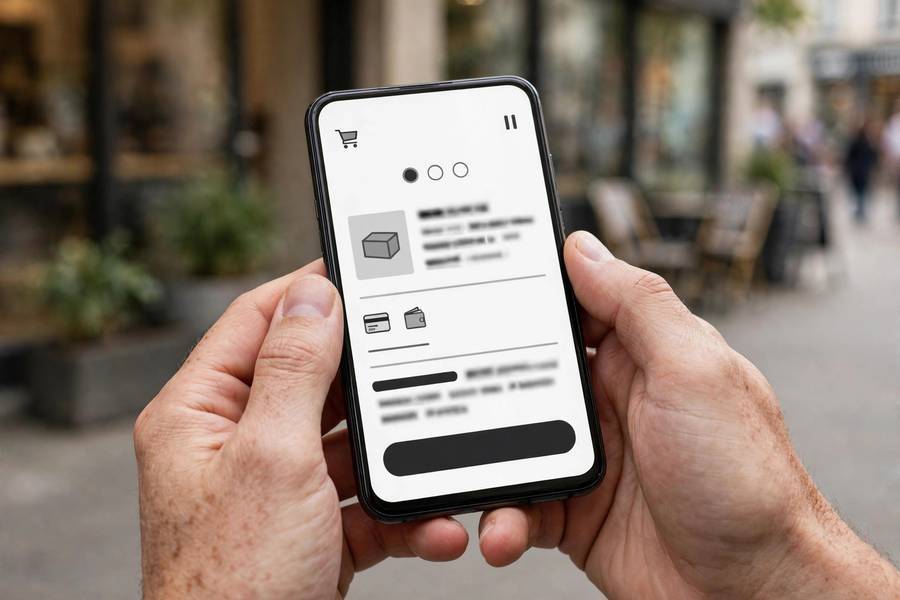
The customer sees: click, pay, package arrives. Here’s the machinery:
- Storefront. Your website or marketplace listing. This is the easy part — templates and platforms have commoditized it.
- Payment processing. Stripe, PayPal, etc. take 2-3% plus a fixed fee per transaction. On a $20 sale, that’s ~$0.90 gone immediately.
- Order management. The order hits your system; inventory is decremented. Somewhere, someone (or some software) has to make sure you actually have the item.
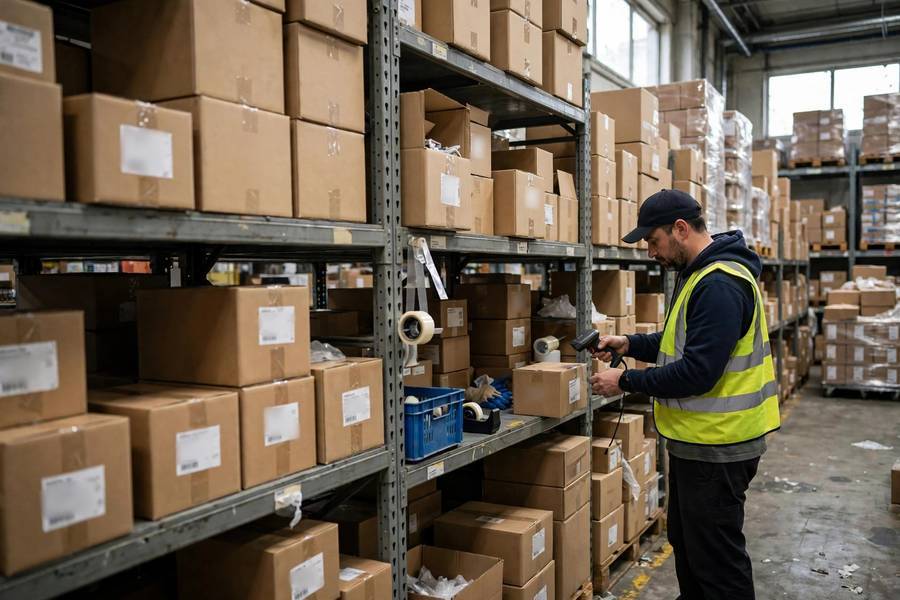
- Fulfillment. Pick, pack, ship. Either you do it (garage phase), a 3PL warehouse does it (growth phase), or the supplier does it (dropshipping). Shipping costs and speed are make-or-break — customers have been trained by Amazon to expect fast and free.
- Post-purchase. Confirmation emails, tracking, returns handling. Returns in apparel run 20-30%. If you didn’t model that, your margins are fiction.
Every step has a cost and a failure mode. Successful operators obsess over steps 3-5; beginners obsess over step 1.
The Real Costs Nobody Mentions Upfront
The “start for $29/month” pitch is technically true and practically a lie. Real costs:
- Platform fees: $39–399/month (Basic $39, Grow $105, Advanced $399) plus transaction percentages.
- Payment processing: ~3% of every sale, non-negotiable.
- Customer acquisition: the big one. Paid ads, influencer deals, content. Expect to spend $10-50+ to acquire a customer in competitive niches. If your average order is $30 with a 20% margin ($6 profit), and acquisition costs $15 — you’re losing $9 per customer. This single equation kills most stores.
- Shipping and packaging: materials, postage, dimensional weight surprises.
- Returns: processing, restocking, damaged goods. Budget 10-30% return rates depending on category.
- Your time: customer service emails at midnight are the unlisted cost.
Run the unit economics before you launch: (average order value × margin %) − acquisition cost − fulfillment cost = profit per order. If that number isn’t clearly positive with room to spare, fix the model, not the marketing.
For the broader picture of building something from zero, our guide on what a startup actually is covers the same discipline applied to new ventures generally.
Why Most Ecommerce Stores Fail
No real differentiation. Selling the same generic products as 500 other stores, competing only on price. Price competition online is a race to zero — Amazon already won it.
Acquisition cost > lifetime value. The math above. Most founders discover this six months and several thousand ad dollars in.
Inventory mistakes. Over-ordering (cash trapped in unsold stock) or under-ordering (stockouts during your one good month). Both are fatal for small operators.
Treating it as passive. “Passive income” ecommerce requires active systems: supplier relationships, ad management, customer service, site optimization. The income becomes leveraged, not passive — there’s a difference.
Ignoring repeat purchase. Acquiring a customer costs 5-7x more than retaining one. Stores with no email list, no loyalty hook, and no reason to come back are buying every sale at full price, forever.
Is Ecommerce Right for You? A Blunt Checklist
Ecommerce might be a good fit if:
– You have (or can get) a product with real differentiation — not just a different logo on an Alibaba commodity
– Your unit economics work on paper with conservative assumptions
– You can handle the operational grind (or afford to outsource it)
– You have a traffic thesis beyond “run Facebook ads” — content, community, wholesale, something
Skip it (for now) if:
– You’re looking for passive income with no operational involvement
– Your only edge is “I’ll market better” with no budget or audience
– The math needs everything to go right to break even
Ecommerce is a legitimate, massive opportunity — and a legitimate, massive amount of work. Go in with the numbers, not the dream. And if you’re building the brand behind the store, understanding what branding actually means is worth an hour before you spend a dollar on a logo.
More operational breakdowns like this live in our Business guides.

Frequently Asked Questions
Ecommerce (electronic commerce) is buying and selling goods or services over the internet. It includes online stores, marketplaces like eBay, digital products, subscriptions, and services booked online.
The four main models are B2C (business to consumer, e.g. online retail stores), B2B (business to business wholesale), C2C (consumer to consumer, e.g. eBay), and D2C (brands selling directly to buyers, skipping retailers).
Technically $29-100/month for a basic platform plan, but realistic startup costs including initial inventory, branding, and marketing run $1,000-10,000+. The biggest ongoing cost is customer acquisition, which can be $10-50+ per customer in competitive niches.
It can be highly profitable with the right unit economics: average order value × margin must comfortably exceed customer acquisition + fulfillment costs. Most failures come from negative unit economics discovered too late, not from lack of effort.
Ecommerce is the broad category of selling online. Dropshipping is one fulfillment model within it, where you sell products you never stock — a supplier ships directly to the customer. Dropshipping has low startup costs but thin margins and no quality control.