Retail runs on thin margins and brutal logistics — the right product, in the right place, at the right price, at the right time, millions of times a day. It’s one of the most data-rich industries on earth, which makes it one of the most natural homes for AI. Walk through a modern store and you’re walking through a dozen AI systems: the shelf that knows it’s empty, the price that changed overnight, the recommendation that followed you home. Here’s what’s actually deployed, what works, and what’s still theater. The wider business context is how AI is used in business.
Table of Contents
- Demand Forecasting: Knowing What Will Sell
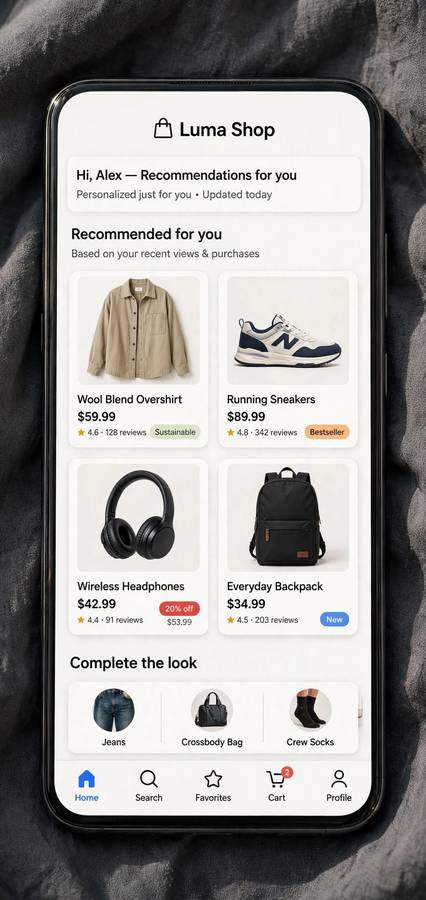
- Recommendations: The Digital Salesperson
- Dynamic Pricing: The Price That Thinks
- Computer Vision on the Shelf
- Checkout Without the Line
- Loss Prevention: Catching Shrink
- Personalized Marketing That Isn’t Creepy
- Supply Chain: The Invisible Half
- Store Layout and the Planogram Problem
- Virtual Try On and the Fitting Room
- What Is Still Theater
- Frequently Asked Questions
Demand Forecasting: Knowing What Will Sell
The foundational AI use case in retail: predicting demand. Modern forecasting models ingest sales history, seasonality, promotions, weather, local events, holidays, and even social trends to predict what each store will sell, down to the SKU. The accuracy gains over old statistical methods are substantial — forecast error reductions of 20 to 40 percent are commonly reported — and the payoff is direct: fewer stockouts, less overstock, less waste.
The perishable goods story is the most dramatic. A grocery chain that forecasts fresh produce demand better throws away less food — waste reduction that is simultaneously a cost saving and an environmental win. The models learn the micro-patterns: this store sells more strawberries before a sunny weekend, that one spikes on soup when the temperature drops. Nobody programs these rules; the data teaches them. For a business where margins are single digits, a few points of forecast accuracy is the difference between a good quarter and a bad one.
Recommendations: The Digital Salesperson
“Customers who bought this also bought” is the most successful AI in retail history. Recommendation engines drive a remarkable share of e-commerce revenue — the often-cited figures from the big platforms attribute over a third of sales to recommendations — by doing what a great salesperson does: noticing patterns in what people want and suggesting the next thing.
The methods have matured from simple co-purchase counting to deep learning models that blend browsing behavior, purchase history, context, and even visual similarity. The frontier is session-based recommendation: figuring out what the anonymous visitor wants right now, from this session alone, without a purchase history. It works surprisingly well, because intent leaks through behavior — the categories browsed, the time on page, the filters applied.
The honest limit: recommendations optimize for engagement and conversion, which isn’t always the customer’s long-term interest. The algorithm will happily recommend the tenth pair of shoes. The retailers thinking hardest about this are exploring longer-horizon objectives — satisfaction, retention, lifetime value — but the industry default is still “what converts now.” Something to watch.
Dynamic Pricing: The Price That Thinks
Prices that adjust to demand, competition, inventory, and context — dynamic pricing moved from airlines to retail with AI doing the optimization. E-commerce prices now change constantly: responding to competitor moves, clearing slow inventory, capturing demand spikes. The algorithms balance margin against velocity, learning the price elasticity of each product.
The consumer view is mixed, which is the polite way to say people hate it when they notice. The implementations that work stay within bounds customers accept: sales and clearances (dynamic pricing with a friendly face), personalized discounts (coupons targeted by predicted price sensitivity), and competitive matching. The implementations that backfire: surge pricing on essentials, personalized prices that feel discriminatory, changes so frequent they erode trust. The technology can optimize prices continuously; the wisdom is in choosing not to, most of the time.
Computer Vision on the Shelf
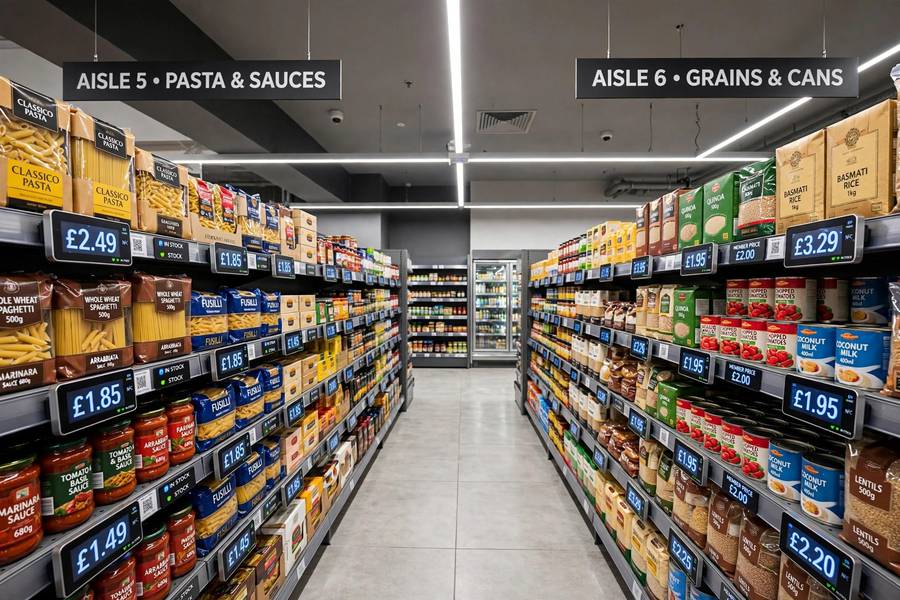
Cameras and computer vision turned the physical shelf into data. Shelf-scanning robots and fixed cameras detect out-of-stocks, misplaced items, incorrect prices, and planogram violations — the gap between how the shelf should look and how it does. A major retailer’s internal studies found that on-shelf availability problems cost significant sales; fixing them faster pays for the vision system quickly.
The robots get the press — the little autonomous scanners patrolling aisles after hours — but the fixed-camera systems are the workhorses, continuously monitoring high-value sections. The AI identifies the problem; the human fixes it. It’s the classic division of labor: machines see everything, humans handle the exceptions. Store managers who were skeptical become converts the first time the system catches a stockout they’d have missed for days.
Checkout Without the Line
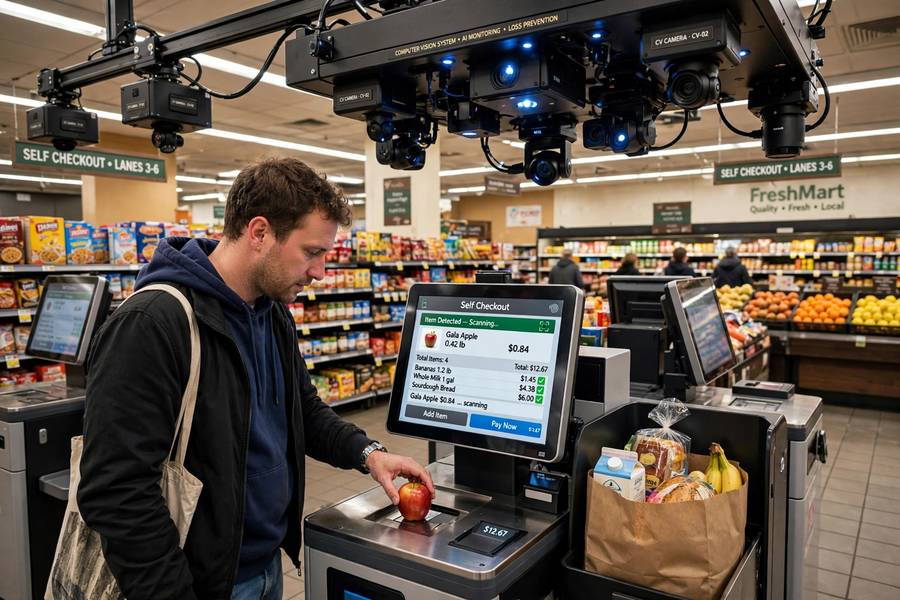
The checkout line is retail’s original sin — the part of the experience everyone hates — and AI is attacking it from multiple directions. Computer vision checkout (cameras and sensors tracking what you take, charging you as you walk out) eliminates the line entirely. Scan-and-go apps let shoppers scan items with their phones. Self-checkout with AI assistance reduces the errors and interventions that made early self-checkout miserable.
The vision-based systems are the most ambitious and the most expensive — outfitting a store with the sensor infrastructure is a serious capital project, which is why deployment has been slower than the demos suggested. The economics work for high-traffic urban stores and remain dubious elsewhere. But the direction is clear: the line is a solvable problem, and each generation of the technology makes the solution cheaper. The humble barcode had a fifty-year run; its successors are arriving.
Loss Prevention: Catching Shrink
Retail “shrink” — theft, fraud, and error — costs the industry tens of billions annually, and AI is now a standard weapon against it. Computer vision at self-checkout detects unscanned items and suspicious behavior. Transaction analysis flags return fraud and employee theft patterns. Predictive models identify the stores, shifts, and product categories at highest risk.
This is the use case with the sharpest ethical edges. False positives accuse innocent customers; demographic bias in the training data can concentrate suspicion unfairly; and the surveillance infrastructure required raises genuine privacy questions. The responsible deployments focus on clear, auditable signals (the unscanned item, not the “suspicious person”) and keep humans in the decision loop for anything consequential. The technology’s power demands proportional restraint — a lesson the industry is still learning, unevenly.
Personalized Marketing That Isn’t Creepy
Retail marketing personalization — the emails, app notifications, and offers tuned to individual shopping patterns — is among AI’s most mature applications. The models predict what you’ll want, when you’ll want it, and what offer will move you, then assemble the message. Done well, it feels like a store that knows you. Done badly, it feels like surveillance with coupons.
The line between the two is largely about control and transparency. Retailers that let customers tune their preferences, explain why they’re seeing an offer, and respect opt-outs get the benefits without the backlash. The data shows personalization lifts engagement substantially — but only when trust is intact. The creepy version converts once and unsubscribes forever. The industry’s best practitioners treat trust as the constraint the optimization runs inside, not as an afterthought.
Supply Chain: The Invisible Half
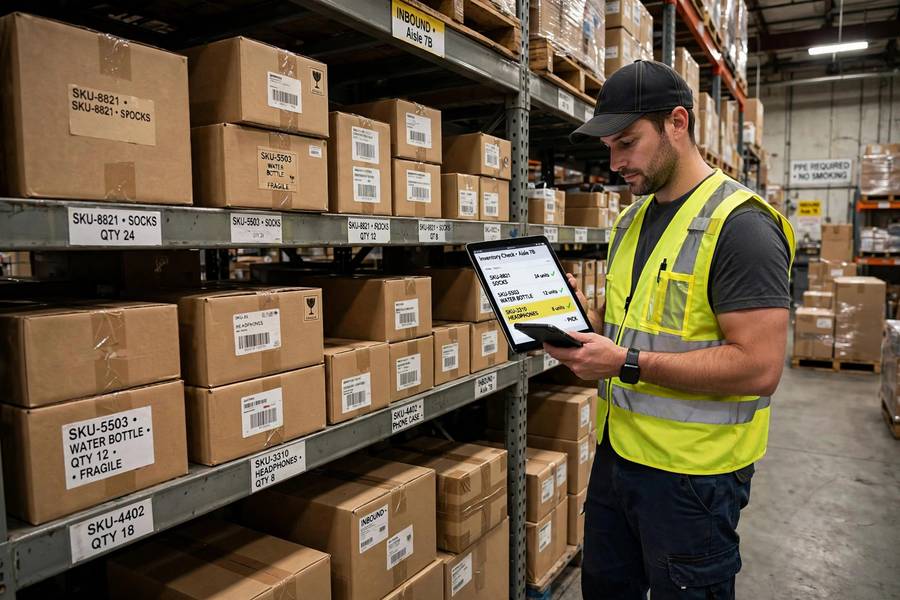
Half of retail AI is invisible to shoppers: the supply chain machinery that gets products to shelves. Demand forecasts drive replenishment orders. Warehouse robots pick and pack with AI-optimized paths. Delivery routing minimizes miles and time. Supplier risk models flag disruptions before they hit. What ecommerce is describes the storefront; this is the engine room.
The pandemic stress-tested all of it. Supply chains built for efficiency snapped; the AI systems trained on stable patterns failed on unprecedented disruption. The lesson the industry took: resilience needs to be an objective, not just efficiency. The current generation of supply chain AI optimizes for both — cost in normal times, adaptability in abnormal ones — with scenario modeling for disruptions. It’s less elegant than pure efficiency optimization and considerably more useful.
Store Layout and the Planogram Problem
Where products sit in a store — the planogram — measurably affects sales, and AI now optimizes it: which products get eye-level placement, how categories flow, where the high-margin items live. The models learn from sales data across thousands of stores, finding placement patterns no individual manager would discover.
The interesting tension: the data-optimal layout isn’t always the human-optimal one. Shoppers have habits and expectations — milk at the back, the familiar route — and layouts that violate them too aggressively confuse more than they convert. The best implementations blend the algorithmic recommendations with the store team’s knowledge of their customers. The AI proposes; the humans dispose. It’s the recurring theme of this entire article, really.
Virtual Try On and the Fitting Room
Apparel retail’s persistent problem — fit uncertainty driving returns — meets AI in virtual try-on: AR that shows how clothes look on your body, size recommendation engines trained on return data, and 3D body modeling from phone photos. The return rate for online apparel is brutally high, and every point of reduction is pure margin.
The technology is genuinely improving — the early versions were gimmicks, the current ones are useful — but the hard problem isn’t visualization, it’s fit truth. Bodies vary in ways photos don’t capture, and “looks right” isn’t “fits right.” The size recommendation engines, trained on millions of keep-or-return outcomes, are arguably more valuable than the AR: they answer the actual question (“will this fit me?”) rather than the photogenic one (“what would this look like?”). Returns are retail’s quiet margin killer; this is where AI earns its keep in apparel.
What Is Still Theater
The honest list. The fully autonomous store — no staff, just AI — works as a flagship demo and struggles as a business model; the labor savings don’t cover the infrastructure at most locations. Emotion-reading cameras that adjust the store to your mood: creepy, unreliable, and largely abandoned. Blockchain-for-provenance with AI verification: a solution in search of a problem outside luxury goods. And the robot greeters — charming at trade shows, bewildering in actual stores.
The pattern in the theater: technology deployed for the press release rather than the P&L. The real AI in retail is mostly invisible — forecasting, routing, pricing, replenishment — because the real problems are operational, not experiential. How to start a business in retail today means competing against competitors who have all of this machinery; the good news is that much of it is now available as affordable software, not just enterprise infrastructure.
Frequently Asked Questions
Physical stores use AI for demand forecasting, shelf monitoring with computer vision, dynamic pricing, self-checkout, loss prevention, personalized marketing, and store layout optimization. Much of the most valuable AI runs invisibly in the supply chain.
AI demand forecasting predicts what each store will sell down to the SKU, using sales history, seasonality, weather, and events. This reduces stockouts and overstock, cuts waste on perishables, and frees up working capital.
Dynamic pricing uses AI to adjust prices based on demand, competition, inventory levels, and context. It works best for clearances, personalized discounts, and competitive matching; aggressive implementations like surge pricing on essentials tend to damage customer trust.
Yes, substantially. Major e-commerce platforms attribute a large share of revenue to recommendations. Modern engines blend browsing behavior, purchase history, and context to suggest products, functioning as a digital salesperson that works at scale.
Computer vision checkout works but remains expensive to deploy, so adoption is concentrated in high-traffic urban stores. The technology keeps getting cheaper, and the checkout line is a solvable problem, but widespread deployment will take years.