
Marketing was AI’s first real business conquest, and it shows — no other department has as many AI tools, as much AI spending, or as many AI-fueled disappointments. I’ve spent years watching marketing teams adopt these tools, and the pattern is consistent: the boring applications (targeting, testing, analytics) deliver reliably, while the flashy ones (fully automated campaigns, AI brand voices) mostly produce expensive lessons. Here’s the honest inventory of how AI is actually used in marketing today. For context on the broader trend, see how AI is used in business.
Table of Contents
- Content Creation: The Draft Machine
- Ad Targeting: Finding the Right Eyeballs
- Personalization at Scale
- Email Marketing: Subject Lines and Send Times
- SEO and the Content Treadmill
- Social Media: Scheduling, Listening, Responding
- Analytics: From Reports to Answers
- Chatbots as Marketing: The Conversational Funnel
- Creative Testing: Letting Data Pick Winners
- What Does Not Work Yet
- Frequently Asked Questions
Content Creation: The Draft Machine
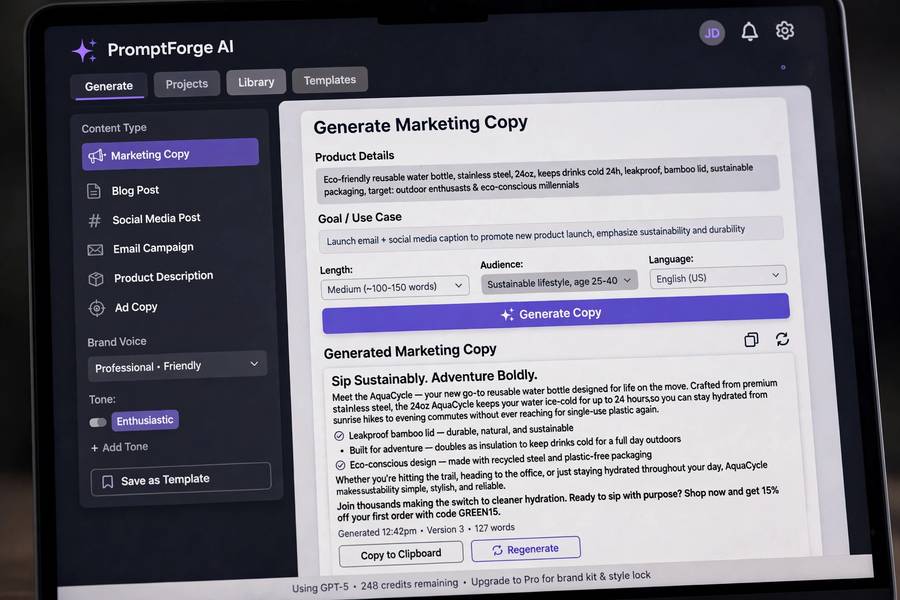
The most visible use: AI writes first drafts. Blog posts, ad copy, product descriptions, video scripts, email campaigns — the blank page problem that used to eat marketers’ mornings is largely gone. A competent marketer with AI assistance produces three to five times the draft output, then spends the saved time on the parts that actually need humans: strategy, voice, and judgment.
The quality conversation has matured past “is AI content good?” to the more useful “what is it good for?” It’s good for: structured, informational content; variations (ten headlines, five CTAs, three email versions); localization and adaptation; and scaling proven winners into new formats. It’s bad for: original thinking, brand voice (it approximates the average, not the distinctive), anything requiring genuine expertise, and humor — AI humor is the uncanny valley of comedy. The teams getting value use it as a draft machine with human editors, not as a publishing machine. What content marketing is hasn’t changed; the production economics have.
Ad Targeting: Finding the Right Eyeballs
Behind the scenes, AI runs the ad auctions that fund the internet. When you launch a campaign on the major ad platforms, machine learning decides who sees your ad, when, and at what bid — optimizing toward your objective (clicks, conversions, awareness) across billions of daily auctions. The targeting options marketers used to set manually (demographics, interests, placements) are increasingly handled by the platform’s algorithms, which test and learn faster than any human media buyer.
This is the least hyped and most consequential AI in marketing. It works because the feedback loop is tight and the objective is measurable: the algorithm tries variations, measures conversions, and shifts budget to what works, thousands of times a day. The marketer’s job shifted from manual targeting to feeding the algorithm good inputs — strong creative, clear conversion events, sensible budgets — and interpreting what it learns. The platforms keep removing manual controls, which frustrates old-school media buyers and delights everyone who’d rather the machine did the micro-optimization.
Personalization at Scale
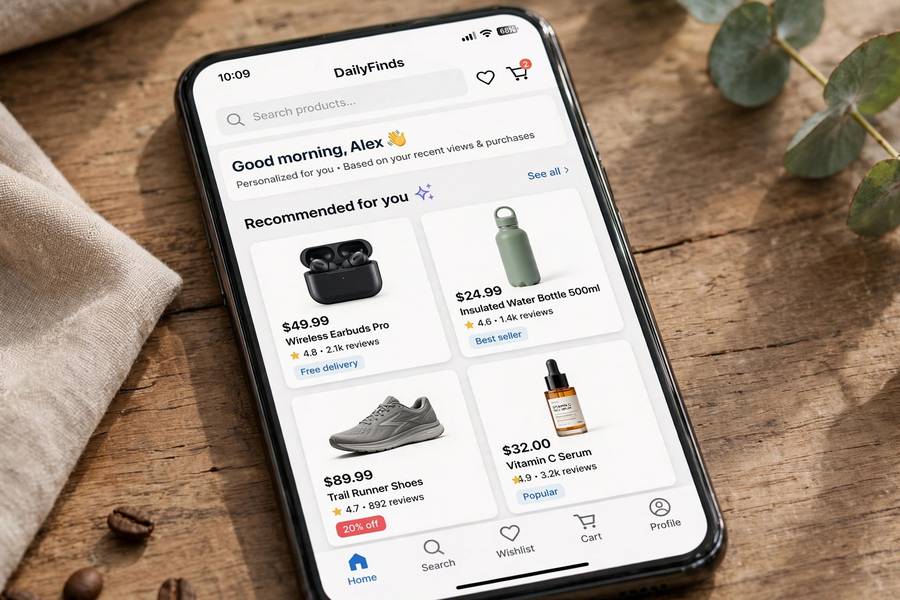
“Personalization” used to mean mail-merging a first name into an email. AI made it real: product recommendations tuned to individual behavior, website content that rearranges itself per visitor, email content blocks assembled for segments of one, pricing and offers adapted to predicted willingness. The streaming and e-commerce giants proved the model — a large share of what people watch and buy comes from recommendations — and the tooling has democratized down to mid-size businesses.
The honest limits: personalization needs data, and most companies have less usable data than they think. It also needs restraint — the line between “helpfully relevant” and “creepily surveilled” is real, and crossing it costs trust that’s expensive to rebuild. The best implementations are invisible: the customer just notices the store seems to know what they want. The worst announce themselves with “we noticed you looked at…” energy. The technology is ready; the taste is still catching up.
Email Marketing: Subject Lines and Send Times
Email is AI’s quiet stronghold. Subject line testing at scale (generate fifty variants, let the algorithm find winners), send-time optimization (each subscriber gets the email when they’re most likely to open), content personalization (different blocks for different segments), and churn prediction (identify subscribers about to disengage and trigger win-back sequences). None of this is glamorous. All of it moves the metrics that matter: open rates, click rates, revenue per send.
The compounding effect is what makes email AI valuable. A two percent lift in open rates from send-time optimization, a three percent lift in clicks from better subject lines, a five percent lift in conversion from personalization — these multiply across every send, forever. Email marketers were early AI adopters precisely because the channel is so measurable: when every improvement shows up in the numbers within days, adoption follows the evidence.
SEO and the Content Treadmill
AI’s impact on SEO is a double story. On the production side, AI content tools let sites publish at volumes that were previously impossible — which flooded search results with competent-but-generic content and forced search engines to get better at rewarding originality and expertise. On the optimization side, AI helps with keyword clustering, content briefs, internal linking suggestions, and technical audits.
The strategic takeaway: AI made content cheap, which made distinctive content valuable. The sites winning in search now are the ones using AI for the mechanical work (briefs, outlines, optimization) while investing human effort in what AI can’t fake: original research, genuine expertise, real experience. The content treadmill sped up, but the finish line moved toward quality. Teams that understood this early are thriving; teams that published a thousand AI articles and waited are learning about the difference between content and value.
Social Media: Scheduling, Listening, Responding
Social media management was an early AI beachhead: scheduling tools with optimal-time posting, AI caption and hashtag generation, social listening that monitors brand mentions and sentiment across platforms, and chatbots handling DMs. The listening side is arguably the most valuable — AI can process thousands of mentions and surface the patterns: sentiment shifts, emerging complaints, viral moments forming.
The content side follows the same draft-and-edit pattern as other channels, with one addition: format adaptation. One core idea becomes a thread, a carousel, a short video script, and a newsletter section — the AI handles the reformatting, the human ensures each version actually works in its format. The teams doing this well treat social as a system with AI handling production and humans handling voice and community. The teams doing it badly have feeds that feel like they were written by a committee of robots, because they were.
Analytics: From Reports to Answers
Marketing analytics used to mean dashboards — beautiful, ignored dashboards. AI changed the interface from “here are fifty charts” to “here’s what changed and why.” Anomaly detection flags the metric that moved; natural language queries let marketers ask “which campaign drove the most qualified leads last quarter?” and get an answer instead of a pivot table; predictive models forecast campaign performance and customer lifetime value.
The practical effect is democratization. Junior marketers can now get answers that used to require an analyst, and senior marketers spend less time wrangling data and more time deciding. The caveat is the oldest one in analytics: the AI answers the question you asked, and marketing questions are often wrong in interesting ways. “Which channel converts best?” has a different answer depending on attribution model, and the AI won’t tell you that unless you ask. Data literacy didn’t become less important — it became more important, because the answers come faster and with more confidence.
Chatbots as Marketing: The Conversational Funnel
Chatbots graduated from support tools to marketing assets: qualifying leads conversationally, guiding visitors to the right product, booking demos, recovering abandoned carts. The conversational funnel converts better than the static form for the same reason a good salesperson beats a brochure — it responds, adapts, and handles objections in real time.
The design discipline matters enormously. Good marketing chatbots are narrow and excellent: they do three things well and escalate everything else. Bad ones try to be the whole website in a chat window and frustrate everyone. The metric to watch isn’t engagement — it’s qualified pipeline. A chatbot that chats charmingly but never books a meeting is entertainment, not marketing. The best implementations I’ve seen are almost boring: quick qualification, smart routing, seamless handoff to humans. Boring converts.
Creative Testing: Letting Data Pick Winners
A/B testing used to be slow and manual. AI accelerated it into continuous multivariate optimization: test dozens of headline, image, and CTA combinations simultaneously; let the algorithm allocate traffic to winners in real time; roll out the champion automatically. Creative teams now generate variants specifically for testing — the AI doesn’t just pick winners, it informs what gets created by revealing what resonates.
This changed the creative process itself. Instead of debating which headline is best in a meeting, teams ship five and let the data decide in hours. The meeting debate moves upstream to strategy and brand — the things data can’t settle. It’s a healthier division of labor, and it’s produced a quiet cultural shift: creative confidence now comes from testing velocity, not from seniority. The most junior marketer with a good test beats the most senior marketer with a strong opinion, and everyone knows it.
What Does Not Work Yet
The honest failures list. Fully autonomous campaign management — set a budget and let AI do everything — produces mediocre results because strategy isn’t optimizable from click data alone. AI brand voice: the models approximate the average of your training data, which is the opposite of distinctive. Predictive creative (AI telling you what will go viral): doesn’t work, because virality is about culture, not patterns in past data. And AI-generated video spokespeople and influencers: technically impressive, commercially dubious, ethically murky.
The pattern in the failures: they all try to automate judgment — taste, strategy, cultural intuition. The successes automate production, optimization, and analysis. That boundary has held for years across every marketing application I’ve watched. Bet on tools that make your team faster and smarter; be skeptical of tools that claim to replace the team’s judgment. How to write a marketing plan is still a human document — AI can draft it, but the thinking is yours.

Frequently Asked Questions
AI is used for content creation, ad targeting, personalization, email optimization, SEO, social media management, analytics, chatbots, and creative testing. The most reliable applications automate production and optimization; strategy and brand judgment remain human.
No. AI makes marketing teams faster and more effective by handling drafts, targeting, testing, and analysis, but strategy, brand voice, creative judgment, and cultural intuition remain human. Teams using AI as leverage outperform both AI-only and human-only approaches.
AI personalization tailors content, product recommendations, emails, and website experiences to individual behavior and preferences. It works best when invisible to the customer and requires sufficient data plus restraint to avoid feeling intrusive.
AI optimizes subject lines through large-scale testing, personalizes send times per subscriber, assembles personalized content blocks, and predicts churn to trigger win-back campaigns. Small percentage lifts compound across every send.
AI made content cheap, which made distinctive content more valuable. Search engines increasingly reward originality, expertise, and real experience. Sites that use AI for mechanical work while investing human effort in genuine expertise perform well; mass-published generic AI content does not.