In 1952, Bell Labs built a machine called Audrey that could recognize the digits one through nine when spoken by a single voice. It was roughly the size of a refrigerator, it worked maybe 90 percent of the time for that one speaker, and it is the great-grandmother of the device sitting on your kitchen counter. Seventy-plus years later, I can ask my phone for the weather while driving with the windows down and the radio on, and it understands me. The distance between Audrey and that moment is one of the great unsung engineering stories of the twentieth century — decades of false starts, frozen funding, and one genuine revolution. For the mechanics of today’s systems, read my guide on how voice recognition works.
Table of Contents
- Audrey and the Digit Era (1950s–1960s)
- Shoes, Boxes, and the Word Count Explosion (1960s–1970s)
- Hidden Markov Models Take Over (1970s–1990s)
- The Statistical Machine Ascends (1980s–2000s)
- Dragon Dictate Goes Commercial (1990s)
- The Deep Learning Revolution (2010s)
- Siri, Alexa, and the Voice Interface Decade
- Where We Are Now (and What Still Trips It Up)
- Frequently Asked Questions
Audrey and the Digit Era (1950s–1960s)
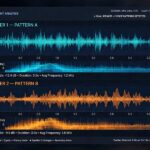
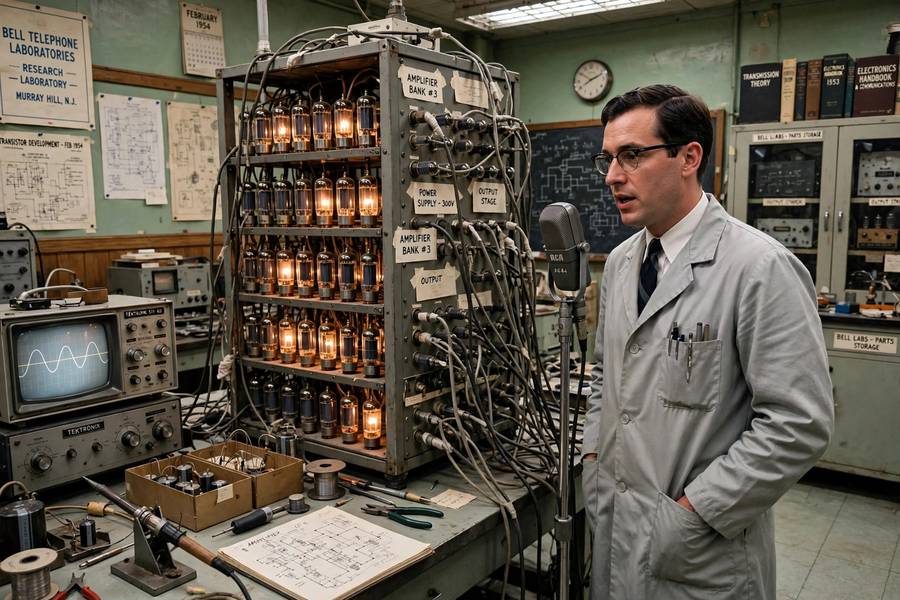
The story starts at Bell Labs in 1952 with Audrey — Automatic Digit Recognition. Audrey worked by measuring the power at specific frequencies during speech and comparing the patterns to stored templates of digits one through nine. If the speaker was the person whose voice templates had been recorded, and if the room was quiet, and if the speaker was careful, Audrey worked. Change the speaker and it fell apart completely.
This is the template-matching era. The entire field’s idea was: store a sound pattern, compare incoming sound to the stored pattern, pick the closest match. It sounds primitive now, and it was, but the insight underneath was correct — speech recognition is a pattern-matching problem. The execution just needed about fifty years of better math and vastly better hardware. A related thread of that broader story lives in the history of artificial intelligence, which passed through the same winters and springs.
The other early landmark of the fifties was the Shoebox, built by IBM in 1962. It recognized sixteen words — digits zero through nine plus commands like “plus,” “minus,” and “total” — and responded through a set of little numbered lights. IBM showed it off at the Seattle World’s Fair, which tells you something about how dazzling sixteen words felt in 1962. The Shoebox was a party trick with serious engineering behind it, and it set the template for what “success” looked like for the next decade: tiny vocabularies, single speakers, quiet rooms.
Shoes, Boxes, and the Word Count Explosion (1960s–1970s)
The 1960s added time alignment to the toolbox. Speakers talk at different speeds, and a template recorded slowly won’t match the same word spoken quickly. Dynamic time warping — an algorithm that stretches and compresses signals to find the best alignment — let recognizers compare words spoken at different tempos. This was the first real concession to how humans actually talk, and it mattered.
By the mid-seventies, researchers at Carnegie Mellon had built Harpy, a system that could understand 1,011 words spoken in complete sentences with reasonable grammar. Harpy used a clever trick: instead of searching every possible word at every position, it pruned the search using phonetic and grammatical knowledge — a technique called beam search that is still in use today. The vocabulary had grown from ten digits to a thousand words in twenty years. The catch: it still needed speaker-dependent training, and the “sentences” had to fit its grammar. Try slang and it collapsed.
The late seventies also brought DARPA into the picture. The US defense agency funded a Speech Understanding Research program aiming at a 1,000-word system, and while the results underwhelmed the funders, the infrastructure and datasets it produced became the field’s foundation. Money, even disappointed money, leaves laboratories behind.
Hidden Markov Models Take Over (1970s–1990s)
The real inflection point — the one that turned speech recognition from a lab curiosity into something with a commercial future — was the adoption of hidden Markov models (HMMs) in the 1970s and 80s, driven heavily by researchers at IBM (James Baker, Frederick Jelinek) and the team at Carnegie Mellon. The idea was elegant: model speech as a sequence of hidden states (roughly, phonemes) that generate the sounds we observe, and use statistics to figure out which sequence of states most likely produced the audio. Instead of one template per word, the system learned probabilistic models from data.
Why did this win? Because it made the system trainable. Given enough recordings, HMMs could learn new vocabularies, new speakers, new languages — without hand-crafted rules. This is the statistical turn in AI’s history: knowledge stops being written down by experts and starts being extracted from data. It was slower than the hype wanted, but it was the first approach that scaled with compute, which meant it scaled with the entire future of computing.
By the late eighties, commercial products were appearing. The gap between research demos and shipped products was still enormous — training took hours, accuracy was brittle, users had to read long enrollment texts in a monotone — but the road was visible for the first time.
The Statistical Machine Ascends (1980s–2000s)
The nineties and 2000s were the era of the statistical speech recognizer maturing into a real product category. Speaker-independent systems — ones that worked for voices they’d never heard — became practical. The vocabulary moved from hundreds of words to tens of thousands. The dictation software of the era trained on the speaker’s voice but no longer required painstaking per-user template libraries.
There were famous stumbles. Voice dialing in cars and early telephone customer-service systems (“say ‘representative’ for a representative”) trained an entire generation to shout at machines. The accuracy in noisy, real-world conditions was nowhere near the lab numbers, and everyone knew it. I consider this the era when the field learned its hardest lesson: the gap between a demo and a product is measured in noise, accents, and fatigue. A recognizer that works in a quiet lab with a cooperative speaker is a science project; one that works in a moving car with a tired driver talking over road noise is a product. Nobody had built the product yet.
The 2000s added one more crucial ingredient: data. Massive speech datasets, collected from telephone systems and early voice services, gave statistical models the raw material they needed. The field was assembling everything it needed for the next leap except one thing — the new math.
Dragon Dictate Goes Commercial (1990s)
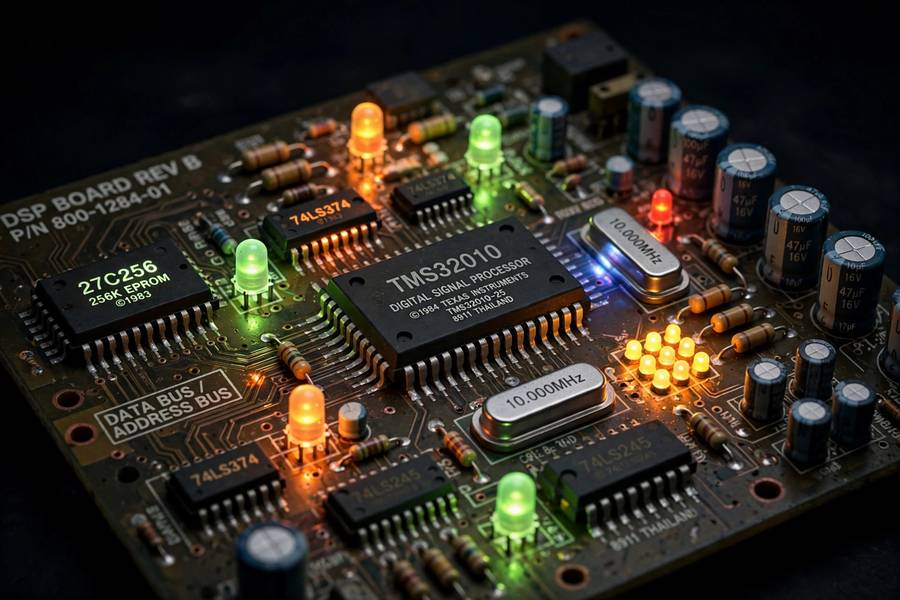
Dragon Dictate deserves its own section because it was the first product that made ordinary people believe speech recognition was real. Released in 1990, it cost $9,000 and required a dedicated DSP board in your PC. Users had to pause between every word — “the… quick… brown… fox” — which made dictation feel like Morse code. But it worked, sort of, and for people with injuries or disabilities it was genuinely life-changing.
The price tells the story of the era’s economics. The product dropped to consumer pricing through the nineties (Dragon NaturallySpeaking in 1997), and the pause-between-words requirement eventually vanished. Dragon proved the market existed; it also proved that shipping a statistical recognizer to consumers was an exercise in managing expectations. Every demo overpromised, every review complained about accents, and yet the product category survived and grew. There’s a lesson in that about durable usefulness: imperfect speech recognition still beats typing for many people.
The Deep Learning Revolution (2010s)
Everything changed between 2009 and 2012. Researchers at the University of Toronto (working with Geoffrey Hinton’s group) and Microsoft demonstrated that deep neural networks could replace the Gaussian mixture models inside HMM systems for acoustic modeling — and cut error rates dramatically. Google’s 2012 voice search rollout on Android brought deep learning speech recognition to hundreds of millions of users almost overnight.
The improvements compounded fast. Recurrent neural networks with LSTM layers captured the time structure of speech better. Then end-to-end models (CTC, sequence-to-sequence, and later Transformers) replaced the whole HMM pipeline — acoustic model, pronunciation model, language model — with single neural networks trained on raw data. The error rates on standard benchmarks fell from double digits to single digits to near-human levels on clean speech. This is the same deep learning story that remade computer vision and machine translation; speech got its turn, and it was thorough.
What changed for users was qualitative, not just quantitative. Dictation stopped being a novelty you forgave and became a tool you relied on. Real-time transcription of meetings became plausible. Voice assistants went from party tricks to daily habits for hundreds of millions of people. The math breakthrough didn’t just improve the product — it changed the product’s category.
Siri, Alexa, and the Voice Interface Decade
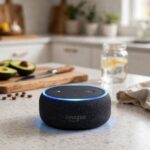
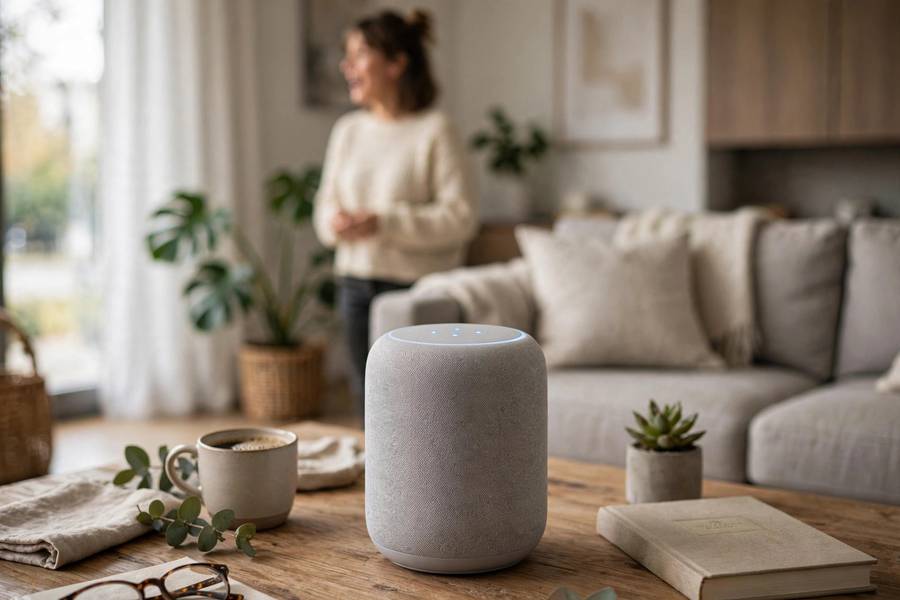
Apple launched Siri in 2011, and while the deep-learning backends took a few years to fully arrive, the launch established the idea that you talk to your phone. Amazon’s Echo and Alexa (2014–2015) did something stranger and more consequential: they proved people would put a listening device in their homes on purpose. Google Assistant followed. The voice assistant became a platform — smart home control, timers, questions, shopping — and the speech recognizer became the invisible front door to all of it.
The interesting engineering footnote is that the assistant is the easy part. Speech recognition’s hard problems moved up the stack: understanding intent across languages, handling multi-turn conversation, disambiguating “play it again” when there’s no context. And how text to speech works matters just as much — an assistant that hears perfectly but sounds like a robot from 1987 breaks the illusion. The decade’s real achievement was making the whole loop — hear, understand, answer, speak — feel natural.
Where We Are Now (and What Still Trips It Up)
Today’s best systems approach human-level accuracy on clear speech, and large-scale models handle dozens of languages, code-switching, and accents that would have destroyed a 2005 recognizer. On-device neural processing (Apple’s Neural Engine, Google’s on-device models) brought speed and privacy. Real-time captioning, meeting transcription, and voice interfaces are infrastructure now — the plumbing of daily life.
But honest accounting requires listing what still fails. Strong accents and dialects underperform relative to standard speech — the data bias problem never really went away. Overlapping speech (two people talking at once) still confuses systems. Heavy background noise degrades accuracy. Children’s voices remain harder. And privacy concerns about always-listening devices are legitimate and unresolved. The history of artificial intelligence is full of moments when “solved” turned out to mean “solved for the easy cases,” and speech recognition is no exception.
The trajectory, though, is remarkable. Audrey recognized nine digits from one speaker in a quiet room. Your phone recognizes tens of thousands of words from strangers in noisy ones. That took seventy years, two AI winters, one statistical revolution, and one neural one. If that doesn’t make you respect the problem, I don’t know what will.
Frequently Asked Questions
The first was Audrey, built by Bell Labs in 1952. It could recognize the digits one through nine when spoken by a single trained speaker. IBM’s Shoebox (1962) followed, recognizing sixteen words including basic arithmetic commands.
The breakthrough was deep learning, starting around 2009-2012 when neural networks replaced older statistical models for acoustic modeling. This cut error rates dramatically and was quickly rolled out in products like Google voice search and phone assistants.
Apple launched Siri in 2011 as part of the iPhone 4S. It popularized the idea of talking to your phone as a voice assistant, and was followed by Amazon Alexa in 2014 and Google Assistant in 2016.
A hidden Markov model (HMM) treats speech as a sequence of hidden states, roughly phonemes, that generate the sounds we hear. Adopted widely in the 1970s-80s, HMMs made speech systems trainable from data instead of hand-crafted rules, and dominated the field until deep learning arrived.
Top systems approach human-level accuracy on clear speech, with error rates in the low single digits on standard benchmarks. Performance still drops with strong accents, heavy background noise, overlapping speech, and children’s voices.