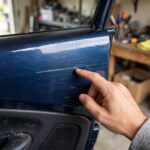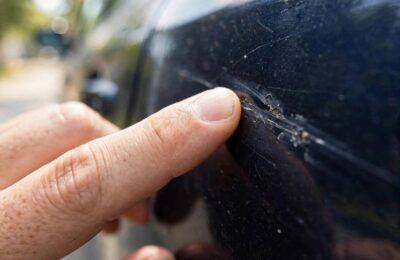
You found a scratch on your car. Maybe a shopping cart got you, maybe a branch, maybe someone’s door in a parking lot. Now you’re staring at it wondering: can I just leave this, or is it going to turn into a rust problem that eats my fender?
Here’s the honest answer I give every customer who asks: some scratches will absolutely rust if you ignore them. Others will never rust no matter how long you leave them. And you can tell which kind you have in about 30 seconds, with your fingernail. Let me show you how.
Table of Contents
- The Short Answer: Yes, Some Scratches Will Rust
- Your Car’s Paint Is a 4-Layer Shield — Here’s What It Does
- The 30-Second Fingernail Test (Find Out Which Kind You Have)
- Which Scratches Rust and Which Don’t
- How Fast Does Rust Actually Start?
- The Spots Where Scratches Rust Fastest
- What Happens If You Ignore It for a Year (Honest Timeline)
- The Cheapest Fixes That Actually Stop Rust
- When to Pay a Body Shop Instead
The Short Answer: Yes, Some Scratches Will Rust
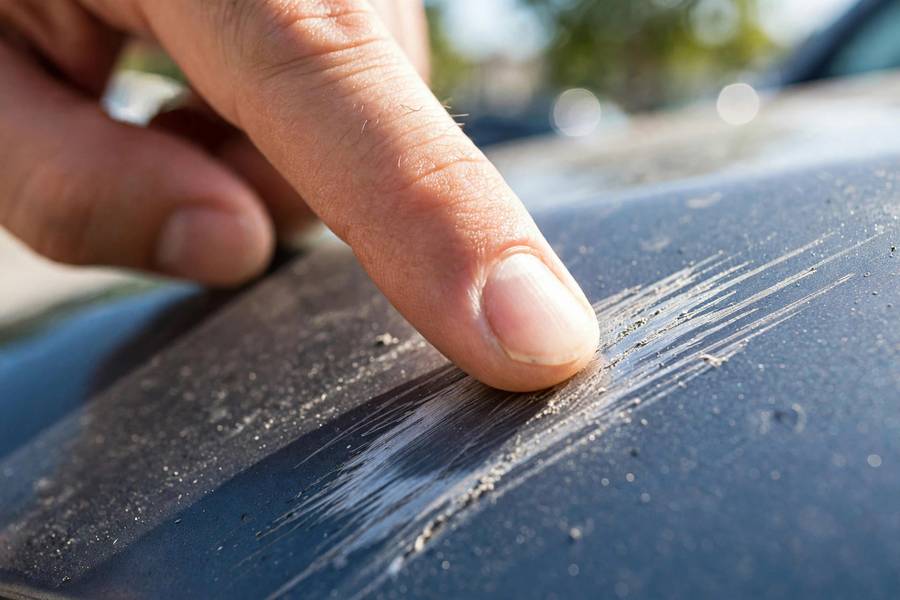
Car paint is a protective shield, and a scratch is a hole in it. When a scratch exposes bare metal, moisture and oxygen reach the steel — and steel plus water plus oxygen equals rust.
But most scratches never reach bare metal — the shallow ones only damage the top layers and will never rust. So the real question isn’t “do scratches rust?” — it’s “did MY scratch go deep enough to matter?”
Your Car’s Paint Is a 4-Layer Shield — Here’s What It Does
From the metal outward, your car’s paintwork is built in layers, each with a job:
- E-coat (electrocoat primer) — the first layer, bonded directly to the steel. This is the real rust protection; it seals the metal from moisture.
- Primer — builds thickness, smooths the surface, and helps the color coat stick.
- Base coat (color) — the actual color you see. It offers almost no protection on its own.
- Clear coat — the transparent top layer. Protects the color from UV and light abrasion, and gives the gloss.
The depth decides everything: a scratch through only the clear coat is cosmetic; one down to bare shiny metal is a rust starter kit.
If the scratch is just in the outer layers, you can often remove scratches from your car with polishing. If it’s deeper, you need a different approach — I’ll cover both below.
The 30-Second Fingernail Test (Find Out Which Kind You Have)
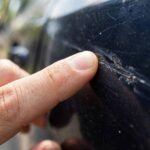
Forget complicated inspections. Run your fingernail across the scratch, perpendicular to it:
- Your nail glides over smoothly — clear coat only. It will never rust; polish and wax will usually fix it.
- Your nail catches slightly and you see a different color in the groove (white, gray, or primer color) — through the color coat into the primer. The metal isn’t exposed yet, but the shield is thin here.
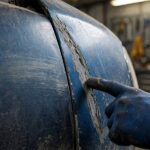
- Your nail catches hard and you see shiny metal, or the scratch looks dark and rough — bare metal is exposed. This one will rust; the clock is ticking.
That’s the whole diagnostic — more reliable than most expensive “paint depth gauges.” For the full DIY walkthrough, my guide on how to fix a car scratch yourself covers the step-by-step.
Which Scratches Rust and Which Don’t
Clear-Coat Scratches: Safe (but Ugly)
These faint lines and swirl marks only affect the transparent top layer. No metal is exposed, no moisture path exists — rust is physically impossible here.
Worth fixing for looks, but zero urgency — polish them out when you feel like it.
Paint-Layer Scratches: Watch Closely
These cut into the color — you’ll see a line of a different shade, often white or gray where primer shows through. Metal is still covered, so rust isn’t imminent, but the protection is compromised and chips can spread over time.
Fix these within a few months, especially before winter — a touch-up pen or polish-and-seal is usually enough.
Primer and Bare-Metal Scratches: Act This Week
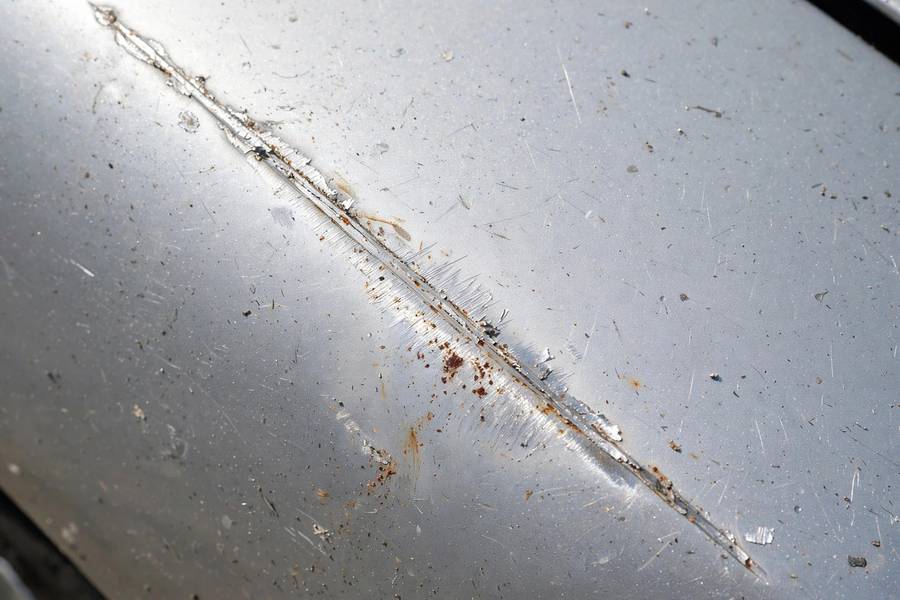
If you can see bare metal — shiny, silvery, or already brownish — this scratch will rust. It’s a question of when: weeks in a dry climate, days where they salt the roads.
I’ve seen a neglected key scratch become a hand-sized rust patch within two years. The original repair would have cost fifteen dollars; the eventual repair cost eight hundred.
How Fast Does Rust Actually Start?
There’s no single answer, because rust speed depends on three things: moisture, salt, and time.
- Dry climates: surface rust can take weeks to months. You have breathing room, but not forever.
- Humid or rainy climates: days to weeks. Constant moisture keeps the chemical reaction going.
- Coastal areas: salt air accelerates everything. A week of exposure can start visible corrosion.
- Road-salt regions in winter: the worst case — bare metal can show rust within days.
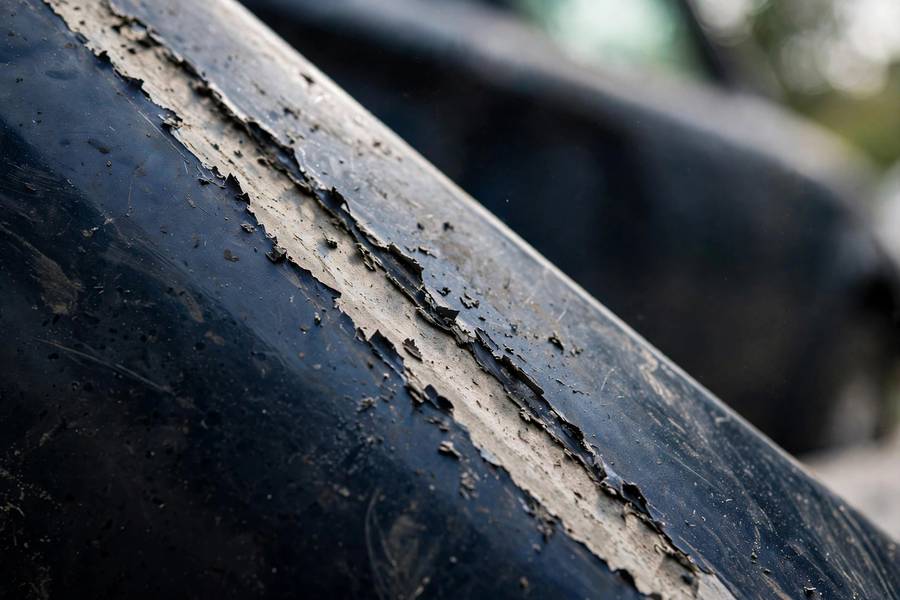
Once rust starts, it doesn’t stay in the scratch — it’s porous, traps moisture, and creeps outward under the surrounding paint.
The Spots Where Scratches Rust Fastest
Not all panels are equal. Scratches rust fastest where water sits or salt collects:
- Lower doors and rocker panels — road spray hits these constantly, and they’re hard to keep clean.
- Wheel arches and behind the wheels — mud, salt, and grit live here.
- The hood’s leading edge — stone chips concentrate here.
- Around the trunk and door edges — water collects in seams and drains slowly.
- Anywhere paint is already lifting or bubbling — moisture is already underneath.
Plastic bumpers cannot rust — no metal under the paint. Same for aluminum panels (common on newer hoods and trunk lids): they don’t rust like steel, though they can oxidize if badly damaged.
What Happens If You Ignore It for a Year (Honest Timeline)
Here’s what a bare-metal scratch does when ignored:
Month 1–2: Surface rust forms — a brownish discoloration in the scratch. Still easy to fix.
Month 3–6: Rust deepens and spreads under the surrounding paint — edges begin to bubble or lift.
Month 6–12: The bubbling spreads. Touch-ups no longer work — the panel needs proper bodywork: grinding, rust treatment, priming, repainting.
Year 2+: Rust can eat through the panel entirely, leaving holes — now you’re looking at panel replacement.
The fix at month one costs almost nothing; at year two it costs hundreds. Procrastination has a direct, measurable price tag here.
The Cheapest Fixes That Actually Stop Rust
You don’t need a body shop for most scratch rust prevention. Here’s what actually works, cheapest first:
Touch-up paint pen ($10–$20): The minimum effective fix for bare metal. Clean, dry, apply in thin layers, let it cure. It seals the metal from moisture — and sealing is what stops rust. Get your car’s exact paint code (door jamb sticker) for a decent match.
Touch-up paint + clear coat ($15–$30): Same as above, but finish with a clear coat layer for better protection and a closer match to the surrounding gloss.
Rubbing compound + polish + wax ($20–$40): For clear-coat and light paint scratches. Levels the clear coat; the wax adds a temporary moisture barrier.
Rust converter before touch-up ($10 extra): If surface rust has started, brush on rust converter first — it transforms rust into a stable, paintable surface. This saves scratches people think are “too late.”
None require special skill — just patience and a clean surface. Wash, dry fully, work in the shade, don’t rush drying times.
When to Pay a Body Shop Instead
DIY has limits, and an honest mechanic tells you where they are:
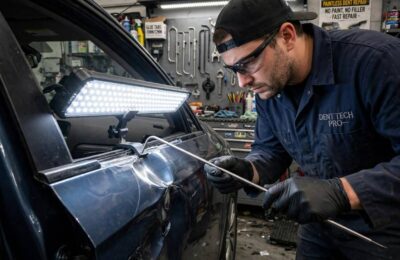
- The scratch is long or on a highly visible panel and you care about looks — a shop blends invisibly; your touch-up pen cannot.
- Rust has spread under the paint — bubbling means the damage is bigger than what you can see, and it needs grinding and proper priming.
- The scratch is on a crease or body line — these are nearly impossible to touch up without it looking obvious.
- You’re selling your car soon — visible scratches can knock hundreds off the price. Professional repair often pays for itself at sale time.
- Dents came with the scratch — if the panel is dented too, look into paintless dent repair before repainting; it’s cheaper when the paint is still intact.
Professional scratch repair runs $150–$500 per panel. Compare that to rust repair a year later — it’s not even close. If the scratch is through to metal and you can’t fix it this week, at least seal it with clear nail polish — a $3 bridge beats a $500 repair.
Only if it exposes bare metal. Shallow clear-coat scratches will never rust. Use the fingernail test: if your nail catches and you see shiny metal, that scratch can rust.
In dry areas, weeks to months; in humid, coastal, or road-salt regions, days. Once rust starts it spreads under the paint within months — seal deep scratches sooner for a cheaper fix.
Yes, if you catch it early. Touch-up paint seals bare metal from moisture and oxygen, which stops rust before it starts. If light surface rust has already formed, apply a rust converter first, then touch up over it. Deep, spreading rust under bubbling paint needs professional bodywork.
No. Plastic bumpers have no metal underneath, so they physically cannot rust. Scratches on bumpers look bad and the paint can peel or flake, but corrosion isn’t a risk. Aluminum body panels also don’t rust like steel, though they can oxidize if badly damaged.
Yes — rust is porous, traps moisture, and creeps outward under the paint. That’s why a small scratch becomes a bubbling patch. Sealing early is the only way to stop the spread.
Almost always. Visible scratches reduce perceived value by hundreds — buyers assume a scratched car was neglected. A $15 touch-up or $200 pro repair routinely pays for itself.