What Causes a Car Battery to Die? 8 Common Causes

A dead battery is never random. It’s always one of a short list of causes, and every one of them is testable. If your car won’t start this morning, don’t guess — work the list.
A typical car battery lasts 3–5 years, and it should be tested at least once a year once it’s in service. This guide covers the eight reasons batteries die, gives you a one-line check for each, shows you the two tests that actually diagnose the problem (parasitic drain and alternator output), and ends with the prevention routine that keeps you from doing this twice.
What a Healthy Electrical System Looks Like
Before you diagnose anything, know what “good” looks like. These are your reference numbers — every test below compares against them:
- Parasitic drain: under 50 milliamps (mA) with everything off. Above that, something is drawing power it shouldn’t be.
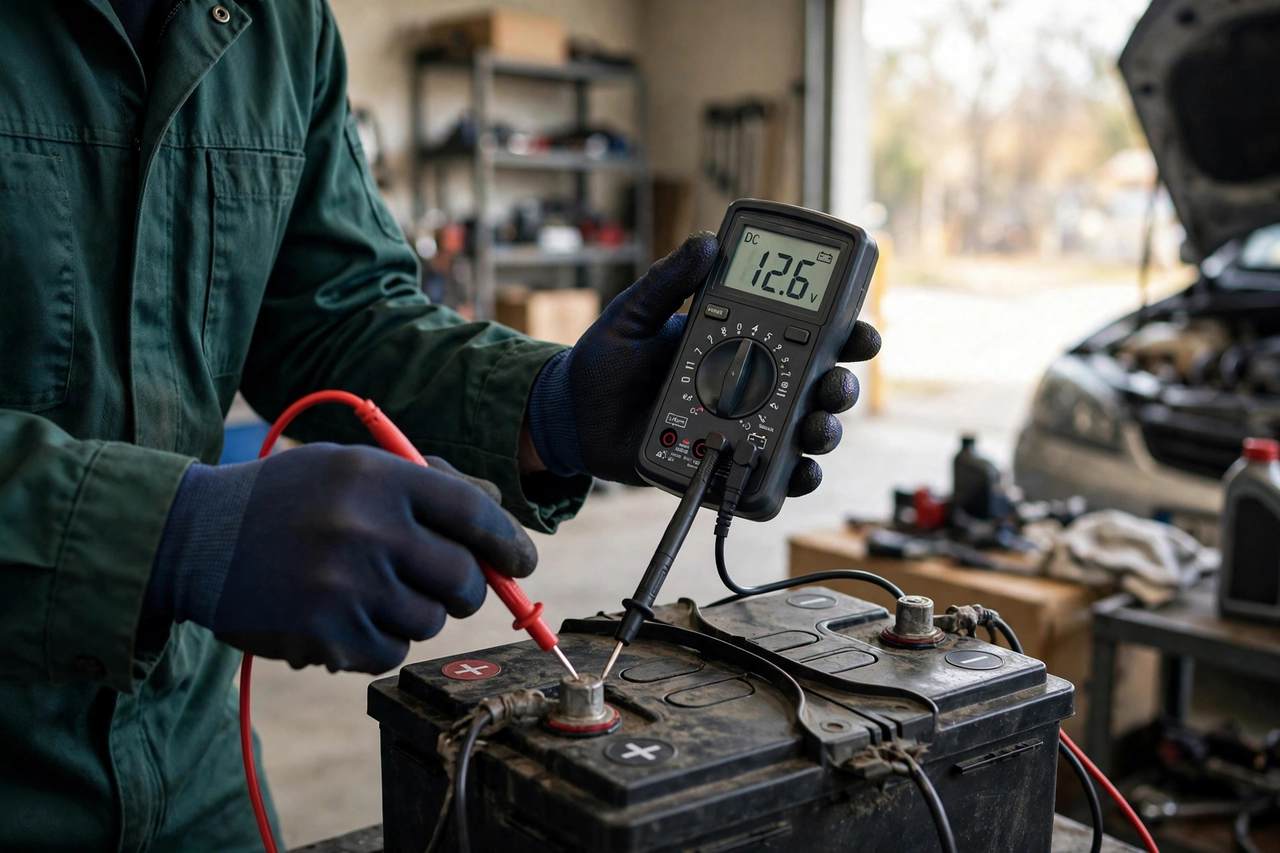
- Alternator output: 13.7–14.7 volts with the engine running. That’s the alternator recharging the battery as you drive.
- Battery lifespan: 3–5 years. Past that, it’s living on borrowed time.
- Testing cadence: at least once a year.
Keep those four in your head. Now the causes.
The 8 Causes of a Dead Car Battery
1. Lights or Accessories Left On
The classic. A dome light, headlights, a phone charger, or the trunk light left on overnight will drain a healthy battery flat by morning. How to check: walk the car — dome lights, map lights, glove box, trunk — and look for anything glowing that shouldn’t be. If the battery died after the car sat overnight and everything else tests fine, this was probably it.
2. Old Age
Batteries are chemical devices, and the chemistry wears out. At 3–5 years old, a battery that struggles on cold mornings or cranks slowly is simply done. How to check: find the manufacture date sticker on the battery case. Over three years old and struggling? Don’t keep testing it — replace it.
3. Parasitic Drain
Something electrical is staying awake when the car is off — a glove-box light, a faulty relay, an aftermarket alarm or stereo wired wrong. Normal parasitic draw is under 50 mA; a real drain can be hundreds of milliamps and will kill a battery overnight. How to check: the fuse-pull test, covered in detail below.
4. Faulty Alternator
The alternator’s job is to recharge the battery while you drive. If it fails, you’re running on battery alone, and the car will die — sometimes while you’re driving it. How to check: with the engine running, measure voltage at the battery terminals. It should read 13.7–14.7 volts. Below that, the alternator isn’t doing its job.
5. Corroded or Loose Terminals
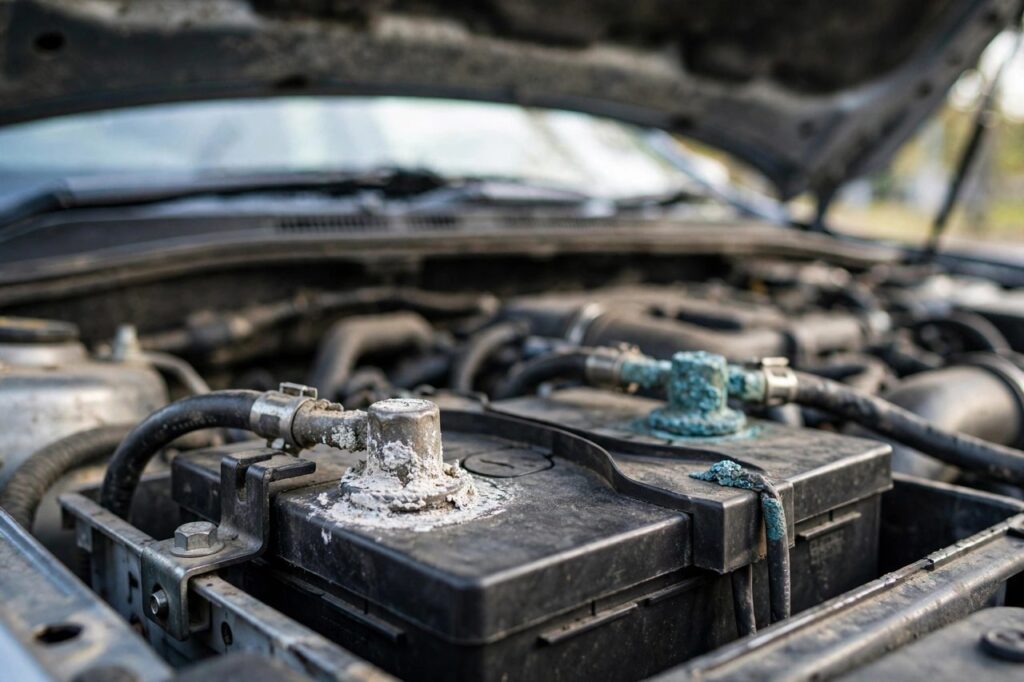
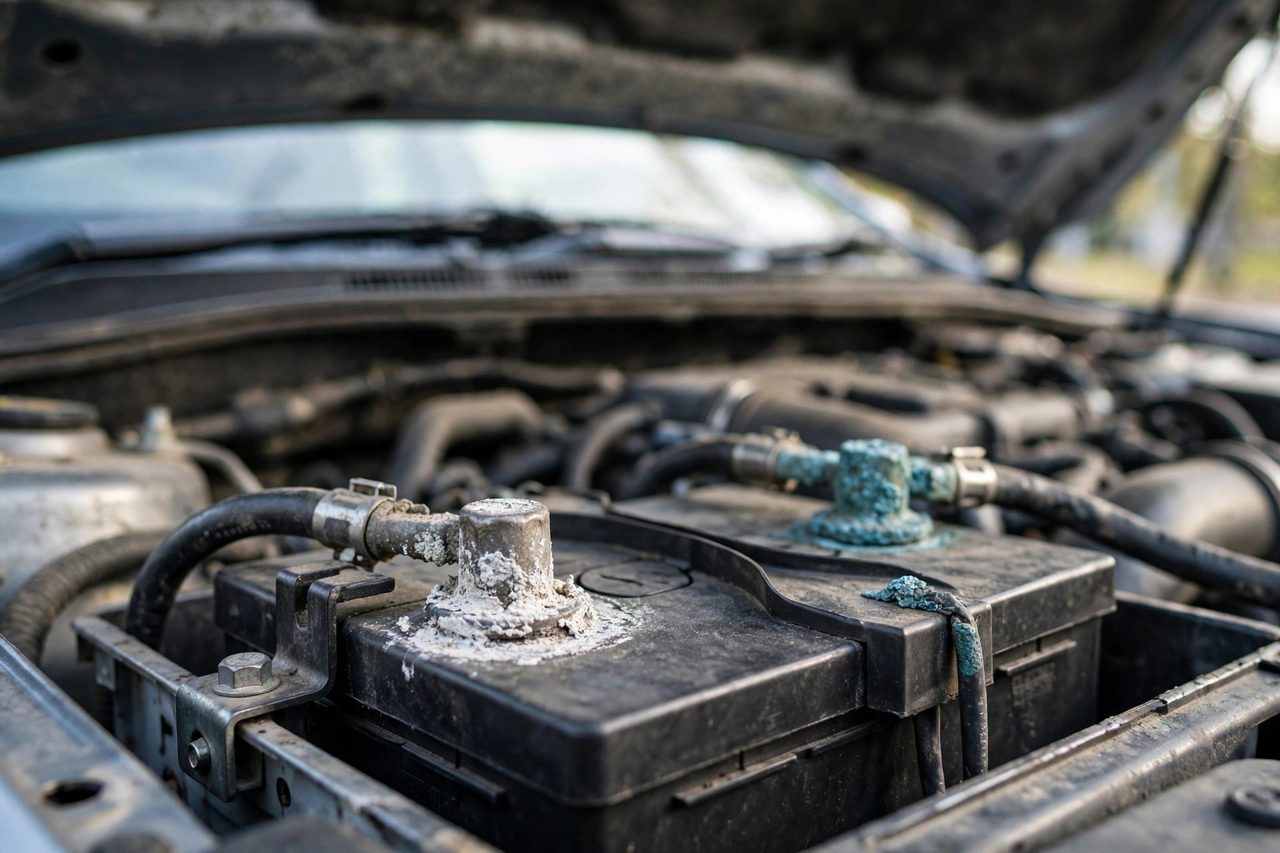
Corrosion — that crusty white or blue-green buildup on the terminals — blocks the connection between battery and cables. The battery can be perfectly healthy and still not start the car. How to check: look at both terminals. Any crust, any looseness, any cable that wiggles by hand is a problem. Cleaning is a ten-minute job — here’s how to clean battery terminals properly.
6. Frequent Short Trips
Starting the engine is the hardest thing a battery does. If you only drive five minutes at a time, the alternator never gets enough runtime to replace the charge each start consumed. The battery slowly walks downhill. How to check: be honest about your driving pattern. If every trip is under ten minutes and the battery keeps dying, this is your cause — take it for a proper 20-minute run regularly.
7. Extreme Temperatures
Heat accelerates the chemical breakdown inside a battery — summer kills more batteries than winter, it just shows up later. Cold doesn’t damage the battery the same way, but it thickens engine oil and slows the chemical reaction, so a weak battery that survived summer gives up on the first cold morning. How to check: if the battery died right after a heat wave or on the first freezing morning, and it’s over three years old, temperature exposed a battery that was already failing.
8. Infrequent Use
A car that sits for weeks slowly drains its battery — normal parasitic draw plus self-discharge, with no driving to recharge it. A month of sitting can take a battery from fine to flat. How to check: if the car sits for weeks at a time and the battery dies between uses, this is it. A battery tender (trickle charger) is the fix — it keeps the battery topped up without overcharging.
How to Test for a Parasitic Drain (The Fuse-Pull Method)
This is the test that finds mystery overnight deaths. You’ll need a multimeter — if you don’t have one, this multimeter battery test guide covers the basics.
Here’s the method:
- Turn everything off — lights, accessories, doors closed. Let the car sit for 15–20 minutes so all the modules go to sleep. Modern cars take a while to fully shut down.
- Disconnect the negative battery cable.
- Set your multimeter to measure DC current (amps), and connect it in series between the negative cable and the negative terminal. You’re now measuring everything flowing out of the battery.
- Read the draw. Under 50 mA is normal. Above that, you’ve got a drain worth hunting.
- With the meter still connected, pull fuses one at a time. When the reading drops to normal, you’ve found the circuit. The fuse box diagram tells you what that circuit feeds.
That last step is the whole trick. The fuse that makes the number drop names the culprit circuit — then you investigate what’s on it. A stuck relay, a light that won’t shut off, an aftermarket gadget wired to constant power. Common offenders, easy fixes.
How to Test Your Alternator
The alternator test is simpler and takes about a minute:
- Start the engine.
- Set the multimeter to DC volts.
- Touch the probes to the battery terminals — red to positive, black to negative.
- Read the voltage. Healthy: 13.7–14.7 volts.
Below 13.7 with the engine running, the alternator isn’t charging properly — it might be the alternator itself, the belt, or the wiring. Above 14.7 is also bad: overcharging cooks the battery and shortens its life. Either way, it’s a shop visit — alternator diagnosis past this point involves the charging circuit, not the battery.
One important note: a bad alternator will kill a good battery. If your battery keeps dying and it’s new, stop replacing batteries and test the alternator. The battery is the victim, not the criminal.
Warning Signs Before It Dies
Batteries almost always warn you. The trouble is that the warnings are easy to ignore until the morning it won’t start. Watch for these:
- Slow cranking. The engine turns over sluggishly, like it’s tired. This is the number-one early sign — the battery can barely do the hardest job it has.
- Dim lights. Headlights dimmer than usual, especially at idle, or interior lights that pulse. The battery isn’t holding voltage.
- Electrical gremlins. Power windows moving slowly, the radio resetting, warning lights flickering on the dash. Low voltage makes electronics act strange.
- Swollen battery case. If the sides of the battery are bulging out, replace it immediately. A swollen case means internal damage — gas buildup and plate distortion — and it’s a safety issue, not a “keep an eye on it” issue. Don’t keep driving on it and don’t try to charge it back to health.
- The battery is old and it’s struggling. Over three years old plus any of the above equals replacement time. Don’t wait for the tow truck to confirm it.
If you want the full deep-dive on symptoms, this guide to the signs your car battery is dying covers each one in detail.
Why Does My Battery Keep Dying After a Jump-Start?
This is the question that brings people to the shop, frustrated, on their third jump-start in a week. Here’s the logic:
A jump-start gets you going, but it doesn’t fix anything. After a jump, you need to drive for about 20 minutes before retesting — that gives the alternator time to put real charge back in. If the battery dies again after that, one of three things is true:
- The battery is simply worn out. It can’t hold a charge anymore. Over three years old? Replace it and stop jumping it.
- The alternator isn’t charging. The 20-minute drive didn’t recharge anything because the charging system is dead. Test it: 13.7–14.7 volts running. If it’s low, the battery was never the problem.
- There’s a parasitic drain. The battery charges fine while driving, then something drains it overnight. Run the fuse-pull test.
Jump-starting the same battery over and over doesn’t diagnose anything — it just postpones the test that would. If this is your situation right now, here’s the emergency jump-start procedure to get moving, then run the tests above in order: battery age, alternator output, parasitic drain.
When to Replace Your Battery
Simple rules:
- Over 3 years old and struggling (slow crank, dim lights): replace. Testing a dying battery just tells you what you already know.
- Swollen case: replace immediately, regardless of age. Safety issue.
- Fails a load test: most auto parts stores will load-test your battery for free. If it fails, it’s done — no amount of charging brings back a battery that can’t hold a load.
- Within 3–5 years and healthy: keep it, but test it at least once a year. Catching decline early is the difference between a planned replacement on your schedule and a replacement plus a tow on the battery’s schedule.
Don’t replace a battery to fix a drain or a dead alternator. Fix the cause first, then decide if the battery survived it. A new battery on a car with a parasitic drain is just an expensive way to have the same problem next week.
Prevention Routine
Five habits, almost no effort, and you’ll rarely think about your battery again:
- Test yearly. At least once a year — before summer heat or winter cold, ideally. Free at most parts stores.
- Keep terminals clean. Check them when you check your oil. Corrosion caught early wipes off; corrosion ignored becomes a no-start.
- Drive it properly. Short trips only? Take the long way home once a week, or at least a solid 20-minute run. The alternator needs runtime.
- Use a battery tender for stored cars. If the car sits for weeks, a tender keeps it topped up without overcharging. Cheap insurance against a dead battery and a shortened lifespan.
- Turn things off. Make it a habit: lights, accessories, everything off before you walk away. The number-one cause of overnight deaths is also the most preventable.
Batteries die for reasons, not by bad luck. Work the eight causes, trust the numbers — under 50 mA, 13.7–14.7 volts, 3–5 years — and you’ll find it every time.
Frequently Asked Questions
What causes a car battery to die overnight?
The most common overnight killers are lights or accessories left on, a parasitic drain (something drawing power while the car is off — normal draw is under 50 mA), and an old battery that can no longer hold a charge. If it happens repeatedly, run the fuse-pull parasitic drain test to find the circuit responsible.
How do I test for parasitic drain?
Turn everything off and let the car sit 15–20 minutes so modules sleep. Disconnect the negative cable and connect a multimeter (set to DC current) in series between the cable and terminal. A reading above 50 mA means there’s a drain. Pull fuses one at a time — when the reading drops to normal, you’ve found the faulty circuit.
How long do car batteries last?
A typical car battery lasts 3–5 years. Heat shortens life, frequent short trips prevent full recharging, and age degrades the internal chemistry. Test the battery at least once a year, and consider replacement once it’s over 3 years old and showing any signs of struggle, like slow cranking.
Can a bad alternator kill my car battery?
Yes — a faulty alternator is one of the most common battery killers. The alternator recharges the battery while you drive; if it fails, the car runs on battery power alone until it dies. Test it with the engine running: voltage at the terminals should read 13.7–14.7 volts. Below that, the charging system needs attention.
Why does my battery keep dying after a jump-start?
A jump-start doesn’t fix the underlying cause. Drive for about 20 minutes after the jump to let the alternator recharge the battery, then retest. If it dies again, the battery is worn out (especially if over 3 years old), the alternator isn’t charging, or there’s a parasitic drain emptying it overnight. Test in that order.
Is a swollen car battery dangerous?
Yes. A swollen or bulging battery case signals internal damage and is a safety issue — replace it immediately, regardless of age. Don’t keep driving on it and don’t try to charge it back to health. A swollen battery has failed structurally, not just electrically.