Latte vs Cappuccino Difference: What You’re Really Drinking


Order a latte in one café and a cappuccino in another, and you might wonder if anyone agrees on what these words mean. The latte vs cappuccino difference confuses even regular coffee drinkers, partly because cafés are inconsistent and partly because the two drinks genuinely share DNA: both are espresso plus steamed milk plus foam. But the difference is real, it’s measurable, and once you know it you’ll never order the wrong one again. It comes down to ratios — how much milk, how much foam, and what that does to the flavor in your cup.
Let’s break down the classic definitions, how the ratios change the taste, which one has more caffeine (the answer surprises people), and how to order with confidence anywhere in the world.
Latte vs Cappuccino Difference: The Ratios
The traditional definitions are beautifully simple. A cappuccino is equal thirds: one-third espresso, one-third steamed milk, one-third foam — typically served in a smaller cup, around 5 to 6 ounces. A latte (caffè latte, “milk coffee”) is mostly steamed milk with a smaller proportion of espresso and just a thin cap of foam — typically 8 to 12 ounces or more.
Think of it this way: a cappuccino is a small, intense, foam-forward drink where you taste the espresso prominently. A latte is a larger, milkier, gentler drink where the espresso is softened into the background. Same ingredients, completely different experience — like the difference between a cocktail and a long drink made from the same spirit.
Foam: The Texture Divide
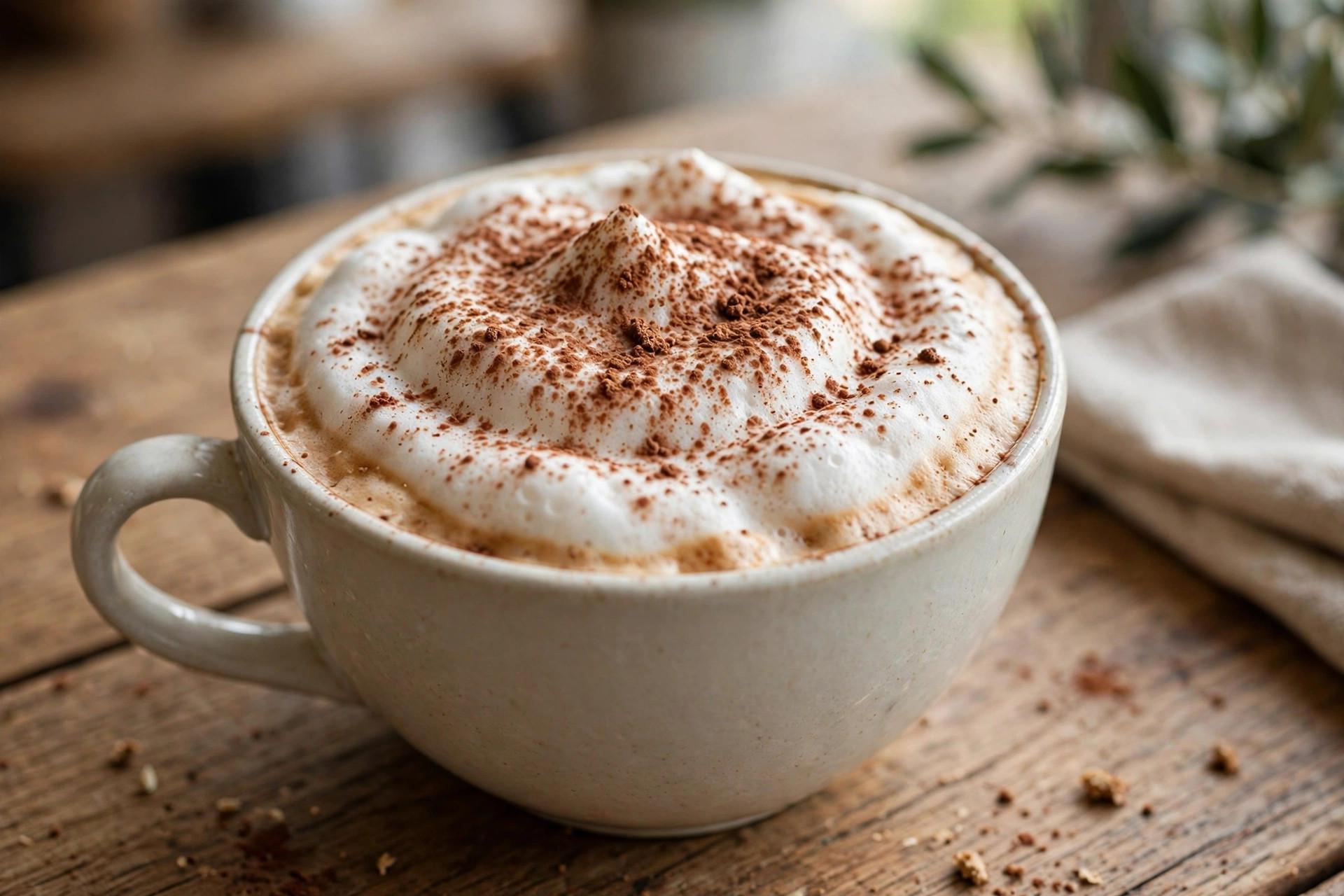
Foam is where the two drinks diverge most dramatically. A proper cappuccino wears a thick, airy cap of foam — traditionally about an inch deep — often dusted with cocoa or cinnamon. You drink through it, or spoon it, and the texture is part of the pleasure: light, pillowy, almost a dessert in itself.
A latte’s foam is minimal by design: a thin layer of silky microfoam, just enough to give the surface a glossy finish for latte art. The texture goal is completely different — where cappuccino foam is airy and distinct, latte microfoam is velvety and integrated, blending seamlessly with the milk below. If your “latte” arrives with two inches of stiff foam, you’ve been served a cappuccino in a big cup, whatever the menu says.

How the Difference Changes the Flavor
Milk does two things to espresso: it dilutes the intensity and its natural sugars add sweetness. So the flavor difference follows directly from the ratios. A cappuccino tastes bolder, more espresso-forward, with the foam adding a light, almost sweet contrast on top — it’s the choice when you want to actually taste the coffee. A latte tastes creamier, mellower, and sweeter, with the espresso as a background note — it’s the choice when you want coffee flavor without coffee intensity.
This is also why lattes take flavored syrups so well: there’s enough milk to carry vanilla, caramel, or hazelnut without the drink becoming cloying. A flavored cappuccino is rarer and, to purists, a bit of a crime — the foam cap and the bold espresso don’t need the help.
Which Has More Caffeine?
Here’s the surprise: traditionally, they’re about the same. A classic cappuccino and a classic latte both start with the same amount of espresso — usually a double shot. The latte just adds more milk around it. So the caffeine content is roughly equal; the latte is simply more diluted.
In practice, though, many cafés pull a double shot for a large latte and a single for a small cappuccino, or use the same double across everything — it varies. If caffeine is what you’re after, the drink size and the shop’s shot standards matter more than the latte/cappuccino label. When in doubt, ask how many shots are in it.
How to Order Like You Know What You’re Doing
- Want to taste the espresso? Order the cappuccino. Smaller, stronger, foam-forward.
- Want something mellow you can sip for an hour? Order the latte. Bigger, milkier, gentler.
- Want it sweeter? Latte takes syrups gracefully; a flavored cappuccino will raise eyebrows (but it’s your drink).
- In Italy, mind the clock. Traditional Italian café culture treats milky coffees as morning drinks — ordering a cappuccino after lunch marks you as a tourist. Espresso is the all-day drink.
- Specify the size if it matters. Because cafés vary wildly, “small latte” or “traditional cappuccino” gets you closer to the classic than the name alone.
Curious about the business behind the bar? Our guide on how to start a coffee shop walks through what it really takes to open a café — from equipment to costs.
Where They Come From: A Short History
Both drinks were born in Italy, but they took very different paths to your local café.
The cappuccino is the older of the two. Its ancestor was the Viennese Kapuziner — coffee with cream — named for the brown robes of Capuchin friars. When the drink migrated to Italy, it became the cappuccino: espresso crowned with steamed milk foam, the foam’s brown-and-white coloring echoing the friars’ habits. In Italy it settled into its role as a morning drink — small, satisfying, and never ordered after lunch by anyone who wanted to blend in.
The caffè latte started humbler: in Italian homes, it was simply breakfast — strong coffee (often moka pot, not espresso) mixed with hot milk in a bowl-like cup, something to dunk bread into. It wasn’t really a café drink at all. The café latte as the world knows it — big cup, espresso base, latte art — is largely an American invention of the late 20th century, when Italian coffee culture met American portion sizes and to-go cups. The Italians gave us the concept; the Americans supersized it.
Latte art itself — the hearts and rosettas baristas pour — emerged in the 1980s and 90s as espresso culture matured, turning the latte’s silky microfoam into a canvas. It’s worth noting the art only works because of the latte’s specific texture: thin, glossy, integrated foam. You can’t pour art on a cappuccino’s thick cap — which is exactly why the cappuccino gets the cocoa dusting instead. Form follows foam.
Making Both at Home Without an Espresso Machine
You don’t need a thousand-dollar machine to make respectable versions of both. Here’s the home setup:
- The coffee base: a moka pot makes strong, concentrated coffee that’s the closest home approximation to espresso. Brew it strong — this is not the moment for a weak cup.
- The milk: heat milk to steaming (not boiling — scalded milk tastes flat and sweet in the wrong way). Then froth it: a French press works brilliantly — pump the plunger vigorously for thirty seconds. A handheld milk frother or even a whisked jar does the job too.
- For a latte: pour roughly one part strong coffee to five or six parts steamed milk into a large mug, spoon over just a thin cap of foam. Mellow, milky, gentle.
- For a cappuccino: one part coffee, one part steamed milk, one part thick foam in a small cup. Bold, structured, foam-forward. Dust with cocoa if you’re feeling traditional.
Homemade versions won’t match a good café — the espresso machine’s pressurized steam wand makes microfoam that’s genuinely hard to replicate — but they’ll be far better than most people expect, and making both side by side is the fastest way to truly taste the difference. Once you’ve done it, you’ll never confuse them again.
Iced Versions: The Rules Change When It’s Cold
Order iced, and the latte-cappuccino distinction gets blurry — which causes real menu confusion. An iced latte is straightforward: espresso, cold milk, and ice in a tall glass. It’s one of the most popular summer drinks in the world, and it works because the latte’s whole identity is milk-forward gentleness — cold milk does that job perfectly.
An iced cappuccino is the awkward one. The defining feature of a cappuccino is hot, airy foam — and foam doesn’t really survive icing. Cafés handle it variously: some pour cold frothed milk over espresso and ice, some just serve something closer to an iced latte with extra foam on top, and some don’t offer it at all. If you love cappuccinos and it’s a hot day, my honest advice: get the iced latte and save the cappuccino for when you can have it hot. The drink’s soul is in the warm foam cap, and no amount of ice improves it.
Milk Alternatives and Decaf: How Substitutions Change Each Drink
Modern cafés run on substitutions, and they affect the two drinks differently:
- Oat milk steams and froths the most like dairy, making it the best all-rounder for both drinks. It adds a natural sweetness that flatters lattes especially.
- Almond and soy froth acceptably but thinner; in a cappuccino the foam cap suffers noticeably, while in a latte the difference is minor.
- Decaf or half-caf changes nothing structurally — the ratios are the ratios. But note that many cafés default decaf lattes to a single shot where the regular gets two, so check if caffeine content matters to you.
- Sugar-free syrups behave like regular syrups in lattes. In cappuccinos, any syrup fights the foam’s texture — the purist objection stands regardless of calories.
The through-line: the milkier and more forgiving the drink, the more gracefully it absorbs substitutions. Another quiet point in the latte’s favor — and another reason cappuccino loyalists guard the classic recipe so fiercely.
FAQ: Latte vs Cappuccino
Is a flat white the same as a latte?
Close cousins, not twins. A flat white is like a small, strong latte: a double shot with velvety steamed milk and very little foam, usually around 6 ounces. Think of it as sitting between a cappuccino and a latte in intensity.
Why does my homemade cappuccino not taste like the café’s?
Usually the foam: café espresso machines steam milk with high-pressure wands that create proper microfoam, which home methods struggle to match. Also, cafés use fresh, well-pulled espresso — the coffee itself matters as much as the milk.
Which is better for latte art?
The latte, by a mile. Its thin, silky microfoam is exactly what art needs. Cappuccino foam is too thick and airy for anything beyond a dusting of cocoa — which is its own kind of beautiful.
Do lattes always have more calories?
Typically yes, simply because there’s more milk — and milk has calories. A large whole-milk latte can easily double the calories of a small cappuccino. Switching to skim or a low-calorie milk alternative narrows the gap.
What’s a “dry” vs “wet” cappuccino?
Café slang for foam ratios: a dry cappuccino is mostly foam with very little steamed milk, while a wet cappuccino has more steamed milk and less foam — closer to latte territory. If you like the classic equal-thirds balance, you want it neither dry nor wet.