How Does a Microwave Work? The Physics Inside the Box

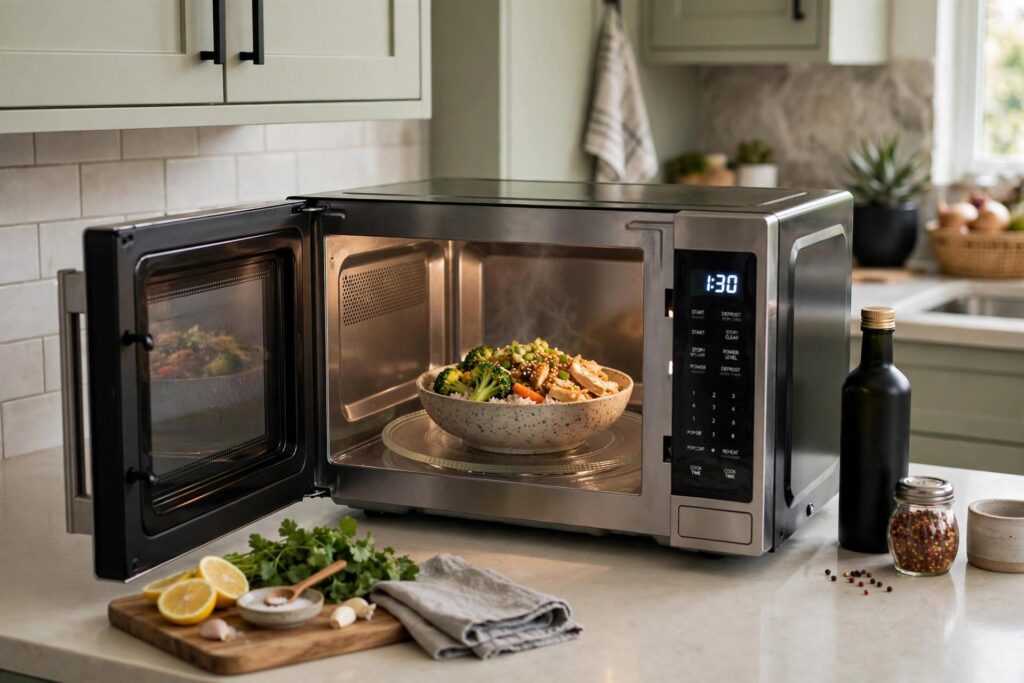
It’s the most-used and least-understood appliance in most kitchens. You press two buttons, the box hums for ninety seconds, and cold leftovers come out steaming. But how does a microwave work, exactly? It’s not “nuking” your food with anything nuclear — it’s shaking water molecules so fast they heat up from friction. Once you understand that one idea, everything about the microwave makes sense: why the plate spins, why some foods heat unevenly, why metal is a problem, and why the mesh on the door isn’t just decoration.
Let’s open the box — figuratively, please don’t open yours — and look at the surprisingly elegant physics humming away in there.
How Does a Microwave Work? The 30-Second Version
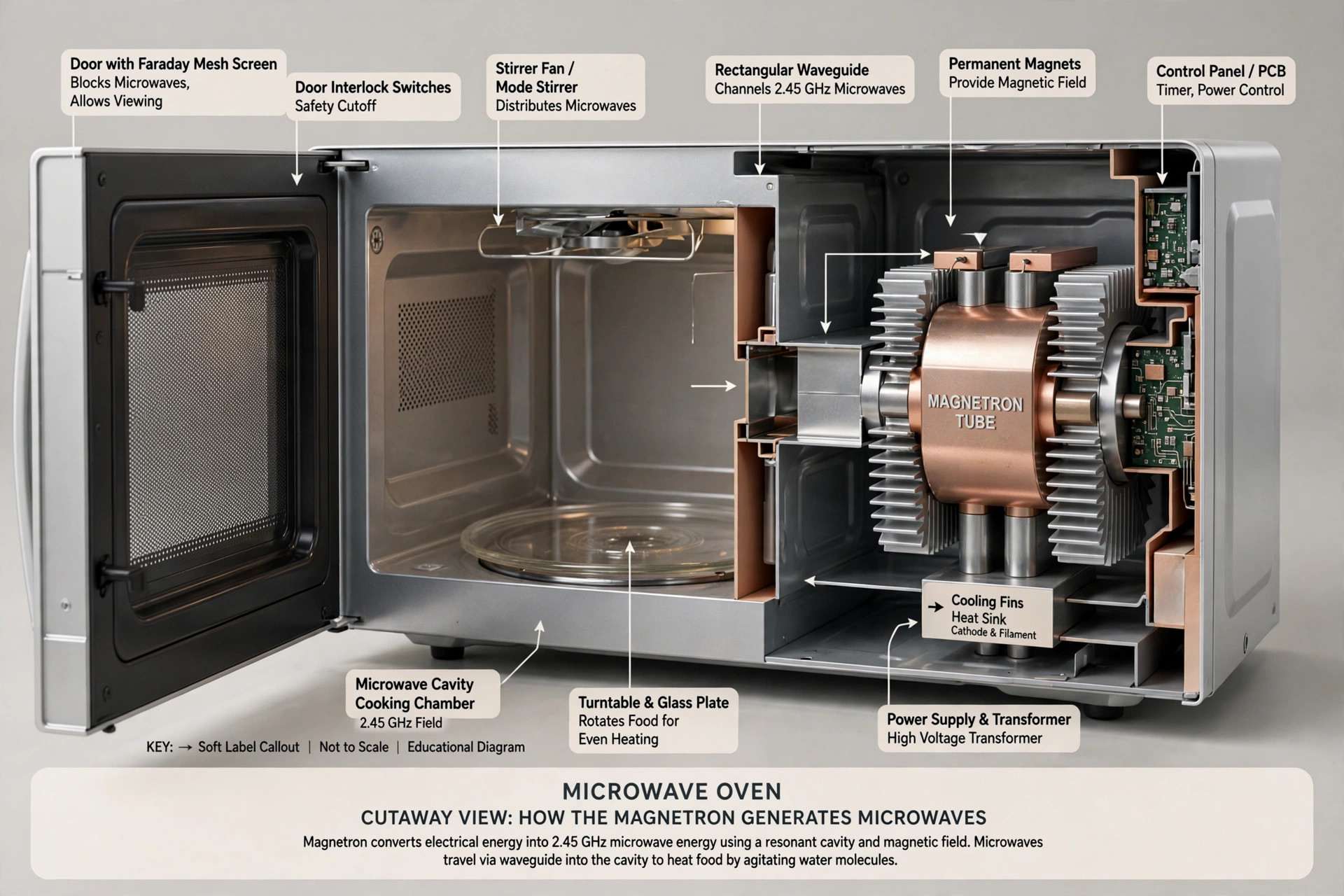
Inside every microwave oven is a component called a magnetron, a vacuum tube that generates electromagnetic waves at a frequency of about 2.45 gigahertz. These waves — actual microwaves, the same part of the spectrum as Wi-Fi and radar — flood the cooking chamber and pass through your food. Water, fat, and sugar molecules in the food absorb the energy and start vibrating billions of times per second. That vibration is heat. The food essentially cooks itself from the inside of each molecule outward.
That’s the whole trick. The oven doesn’t get hot; the food gets hot because its own molecules are dancing.
The Magnetron: The Heart of the Machine
The magnetron is one of the great unsung inventions of the 20th century. Developed from radar technology during World War II — legend has it a researcher noticed a chocolate bar melting in his pocket near an active radar set — it’s a clever little tube where electrons whirl around in a magnetic field, shedding energy as microwaves.
When you press start, the magnetron fires up and pumps microwaves into the cooking chamber through a channel called a waveguide. The waves bounce off the metal walls — which is why the inside is metal — and pass through the food from many angles. The whole process starts in a second or two, which is why microwaves feel instant compared to an oven that has to preheat.
Why Water Molecules? The Real Heating Mechanism
Here’s the part most explanations get slightly wrong. Microwaves don’t heat food because water is “special” — they heat it because water molecules are polar, meaning one end carries a slight positive charge and the other a slight negative charge. The microwave’s electric field flips direction 2.45 billion times per second, and each flip yanks the water molecules around to realign. That frantic rotation creates friction between neighboring molecules, and friction is heat.
Fats and sugars are also somewhat polar, so they heat too — which is why the cheese on your pizza gets molten while the crust stays merely warm. Dry, non-polar things barely absorb microwaves at all, which is why a dry paper plate stays cool while the food on it steams.
Why the Plate Spins (and Why Food Heats Unevenly)
If you’ve ever bitten into a burrito that’s lava on the edges and ice in the middle, you’ve met standing waves. The microwaves bouncing around the chamber interfere with each other, creating a fixed pattern of hot spots and cold spots — like ripples frozen in place. The turntable’s job is to drag your food through the hot spots so everything gets its turn.
This is also why microwave instructions tell you to let food “stand” for a minute or two after heating. During the standing time, heat conducts from the hot spots into the cold spots and evens out. Stirring halfway does the same thing manually. Neither step is optional if you want food that’s actually heated through rather than heated in patches.

Why Metal Is a Problem (and the Door Mesh Isn’t Decoration)
Metal reflects microwaves instead of absorbing them — that’s why the chamber walls are metal. A fork in the bowl acts like a little antenna: the concentrated reflected energy can arc — spark — between the metal and the wall, which can damage the magnetron and, in the worst case, start a fire. Thin metal edges, like the gold trim on some plates or twist ties, are the worst offenders because the energy concentrates at sharp points.
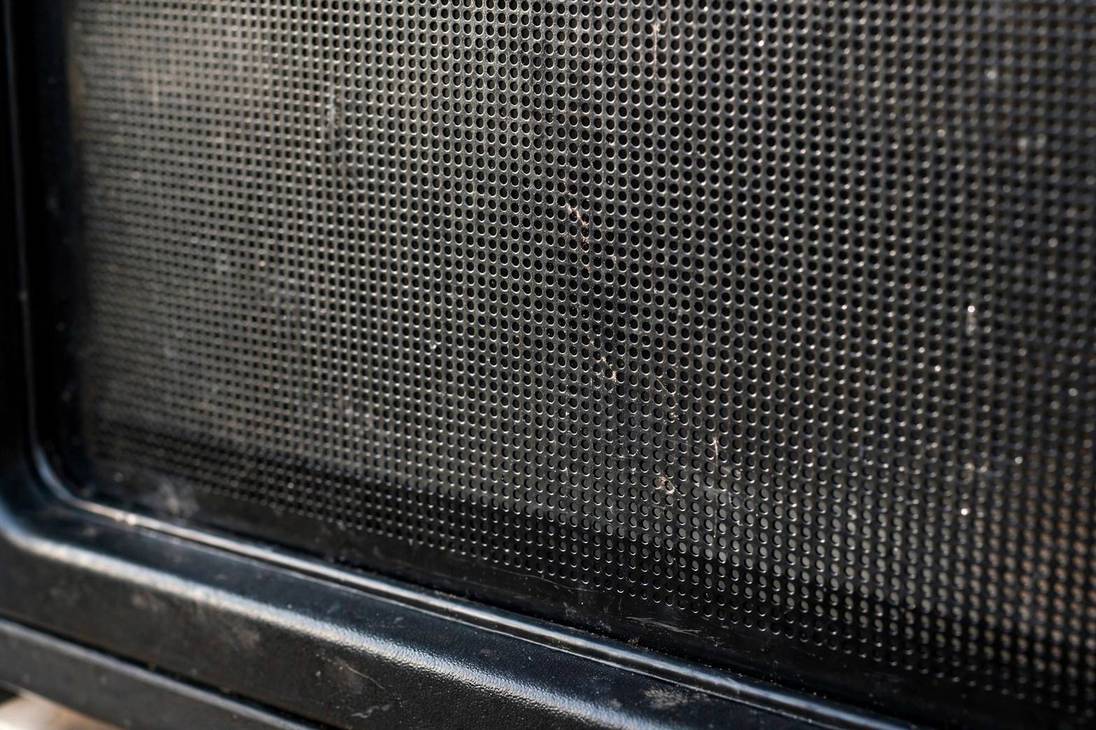
The mesh screen on the door works on a neat bit of physics: the holes are much smaller than the wavelength of the microwaves (about 12 centimeters), so the waves can’t get through — but visible light, with its tiny wavelength, passes easily. That’s why you can watch your food while the microwaves stay trapped inside. Clever, right?
Is Microwaved Food Safe? What Science Actually Says
Let’s clear this up, because myths persist. Microwaves are non-ionizing radiation — they don’t have enough energy to damage DNA or make food radioactive. That’s physically impossible at these frequencies; it’s like worrying that a warm breeze will give you a sunburn. Food cooked in a microwave is as safe as food cooked any other way.
The real considerations are practical, not scary: microwaves can heat unevenly, so stir and check temperatures; some plastics can leach chemicals when heated, so use microwave-safe containers; and superheated water — water heated past boiling without actually bubbling — can erupt when disturbed, so don’t overdo it with a plain mug of water. Respect the physics and the box is perfectly safe.
From Radar to Kitchen: A Short History
The microwave oven is a direct descendant of World War II radar — one of the purest examples of military technology wandering into the kitchen. The well-known story goes that in the mid-1940s, an engineer working on radar equipment noticed a chocolate bar melting in his pocket near an active magnetron. Whether the chocolate story is perfectly true or slightly polished, the insight was real: the same microwaves that detected aircraft could heat food.
The first commercial microwave oven, introduced in the late 1940s, was a beast — nearly six feet tall, enormously heavy, water-cooled, and priced for restaurants and industrial kitchens, not homes. It took two more decades of engineering to shrink the magnetron, simplify the cooling, and bring the price down. The countertop microwave as we know it arrived in the late 1960s, and through the 1970s and 80s it went from luxury gadget to standard kitchen equipment — one of the fastest appliance adoptions in history.
What’s remarkable is how little the core technology has changed since. A modern microwave still uses a magnetron generating waves at essentially the same frequency, in a metal box with a mesh-screened door. The controls went digital, sensors got smarter, but the physics inside is the same physics that melted that chocolate bar eighty years ago.
Microwave or Oven: Which Should You Actually Use?
Knowing how a microwave works tells you exactly when to reach for it — and when not to. Here’s my practical breakdown:
- Reach for the microwave: reheating leftovers and drinks, defrosting (used carefully), melting butter or chocolate, steaming vegetables, cooking bacon quickly, softening ice cream that’s too hard to scoop. Anything where speed and convenience matter more than texture.
- Reach for the oven: anything that needs browning, crisping, or a crust — roasted vegetables, baked goods, pizza, casseroles with a browned top. The oven’s dry, sustained heat does what microwaves fundamentally can’t: drive the Maillard reaction across a whole surface.
- Use both: the power move is combining them. Par-cook potatoes in the microwave, then crisp them in a hot oven. Melt cheese in the microwave, then brown it under the broiler. Each appliance does what it’s good at, and dinner gets faster and better.
The microwave’s real weakness was never safety or nutrition — it’s texture. Microwaves can’t brown, can’t crisp, and heat unevenly. Once you stop asking it to do those things and let it do what it’s brilliant at — fast, convenient heating — it earns its counter space completely.
And a final tip from the physics: arrange food in a ring with the center empty when reheating on a plate. The center of the turntable gets the least even exposure, so the donut arrangement heats more uniformly. It’s a small thing, but it works — try it next time you’re reheating dinner.
Defrosting Done Right: The Microwave’s Trickiest Job
Defrosting is where the microwave’s uneven heating causes the most grief: the edges of your chicken start cooking while the center stays frozen. The fix is understanding what’s happening. Thin edges have more surface area relative to their mass, so they absorb more energy and thaw first — then, because liquid water absorbs microwaves far better than ice does, the thawed edges start cooking while the icy center still barely absorbs anything. It’s a runaway effect.
The defrost setting exists precisely for this: it cycles the magnetron on and off, giving heat time to conduct inward during the off periods instead of piling energy into the edges. Help it along: break food into smaller pieces if you can, flip and rotate halfway through, and pull off thawed outer pieces as they loosen. For meat, stop while the center is still slightly icy — it’ll finish thawing during standing time or at the start of cooking. And never defrost at full power unless you enjoy the culinary experience of cooked-outside, frozen-inside.
FAQ: How Microwaves Work
Why can’t I put metal in the microwave?
Metal reflects microwaves, and thin or pointed metal concentrates that reflected energy until it arcs — sparks — which can damage the oven or start a fire. Thick, smooth metal is less dramatic but still blocks heating. When in doubt, transfer food to a microwave-safe dish.
Why do instructions say to let food stand after microwaving?
Because of standing waves: microwaves create fixed hot and cold spots in the chamber. Standing time lets heat conduct from hot spots to cold spots so the food evens out. Stirring halfway through does the same job.
Does a microwave destroy nutrients in food?
No more than other cooking methods — often less, because cooking times are shorter and you use less water. Nutrient loss comes mostly from heat, time, and water, not from the microwaves themselves.
Why does the microwave interfere with Wi-Fi sometimes?
Both use the 2.45 GHz band, and older or leaky microwaves spill a little energy at that frequency. If your video call stutters every time someone reheats lunch, that’s why — the microwave is shouting over your router.
Can microwaves leak out of the oven?
Ovens are designed with multiple interlocks and the door mesh to contain them, and safety standards allow only tiny amounts of leakage — far below harmful levels. If the door is damaged, bent, or doesn’t close properly, stop using it and get it serviced.