Starlink India: Licensed but Still Grounded — What’s Blocking Launch


Starlink India is one of the strangest sagas in global telecom: SpaceX holds an Indian satellite internet licence, has built 20 gateway sites across the country, and has distribution deals with the country’s two biggest telecom players, yet its service remains firmly switched off. The latest chapter, a public war of words between Elon Musk and India’s establishment, has pushed the story back into headlines. Here is where things stand.
The short version: Starlink Satellite Communications Pvt. Ltd. received its Indian GMPCS licence in June 2025 and space-regulator authorisation in July 2025. But commercial launch requires Home Ministry security clearance, spectrum assignment (pending a Cabinet decision on pricing), and foreign investment approvals, none of which are finalized. On October 9, 2026, Musk publicly attacked the delay; the government called his claims baseless.
Does Starlink Have a Licence in India?
Yes, and this is where the confusion starts. Starlink holds a Unified Licence with GMPCS (Global Mobile Personal Communication by Satellite) service authorisation from the Department of Telecommunications, confirmed in a parliamentary reply released in January 2026, according to TaxGuru. It also received final approval from IN-SPACe, India’s space-sector regulator, in July 2025, valid until July 2030, as detailed by The420.
But a licence is only step one. As the government stresses, the GMPCS authorisation establishes eligibility to provide satellite services subject to conditions; it does not complete security assessments, spectrum assignment, or operational approvals. Three companies hold the same authorisation, Starlink, Jio Satellite Communications, and Eutelsat OneWeb, and all three are at broadly the same regulatory stage, with none offering full commercial service yet.
What Is Blocking the Starlink India Launch?
Four gates stand between Starlink and paying customers:
- Security clearance: the Home Ministry must clear Starlink’s network design, including lawful interception capabilities, Indian gateways for domestic traffic, terminal registration, and the ability to suspend service on government orders. Special provisions apply near borders and coastlines.
- Spectrum assignment: satellite spectrum pricing is still being finalized. The Cabinet must approve a revenue-based charging framework, reportedly around 5 percent of adjusted gross revenue, before spectrum can be assigned.
- Gateway approvals: each of Starlink’s 20 gateway sites needs individual security clearance.
- Foreign investment approvals: FDI-related clearances remain pending.
India’s rules are shaped by hard experience: concerns over satellite communications date back to the 26/11 Mumbai attacks, and the framework demands local data handling, equipment localisation targets, and NavIC navigation support, per The420’s analysis.
The Musk vs. Ambani Row
The dispute exploded into public view in early October 2026. Musk, frustrated after roughly five years of pursuing Indian market entry, posted on X on October 9: “Dear Prime Minister Ambani, please accept my humble apologies for not realizing that you are the real boss of India,” accusing Reliance chairman Mukesh Ambani of monopolistic behavior and asking him to let Starlink compete, according to ABHS. A day earlier, Musk had questioned whether Ambani was “the real boss of India.”
The irony, widely noted, is that Reliance Jio signed a distribution agreement with SpaceX in March 2025 to bring Starlink to its customers, subject to regulatory approvals, alongside a similar Bharti Airtel deal. Ambani’s Jio is simultaneously Starlink’s prospective partner and, through Jio Satellite Communications, its direct competitor.
The Ministry of Communications hit back on October 8, calling suggestions that India unfairly blocks Starlink “baseless and misconceived” and insisting its framework is fair and non-discriminatory, as reported by InsiderFinance. Communications Minister Jyotiraditya Scindia, speaking at India Mobile Congress 2026 on October 9, said India allows no monopolies in any sector, confirmed all three licensees, and said spectrum would be assigned once the charging framework is finalized, per Nation Path India. He added that a pricing decision was close.
What Starlink Has Already Built in India
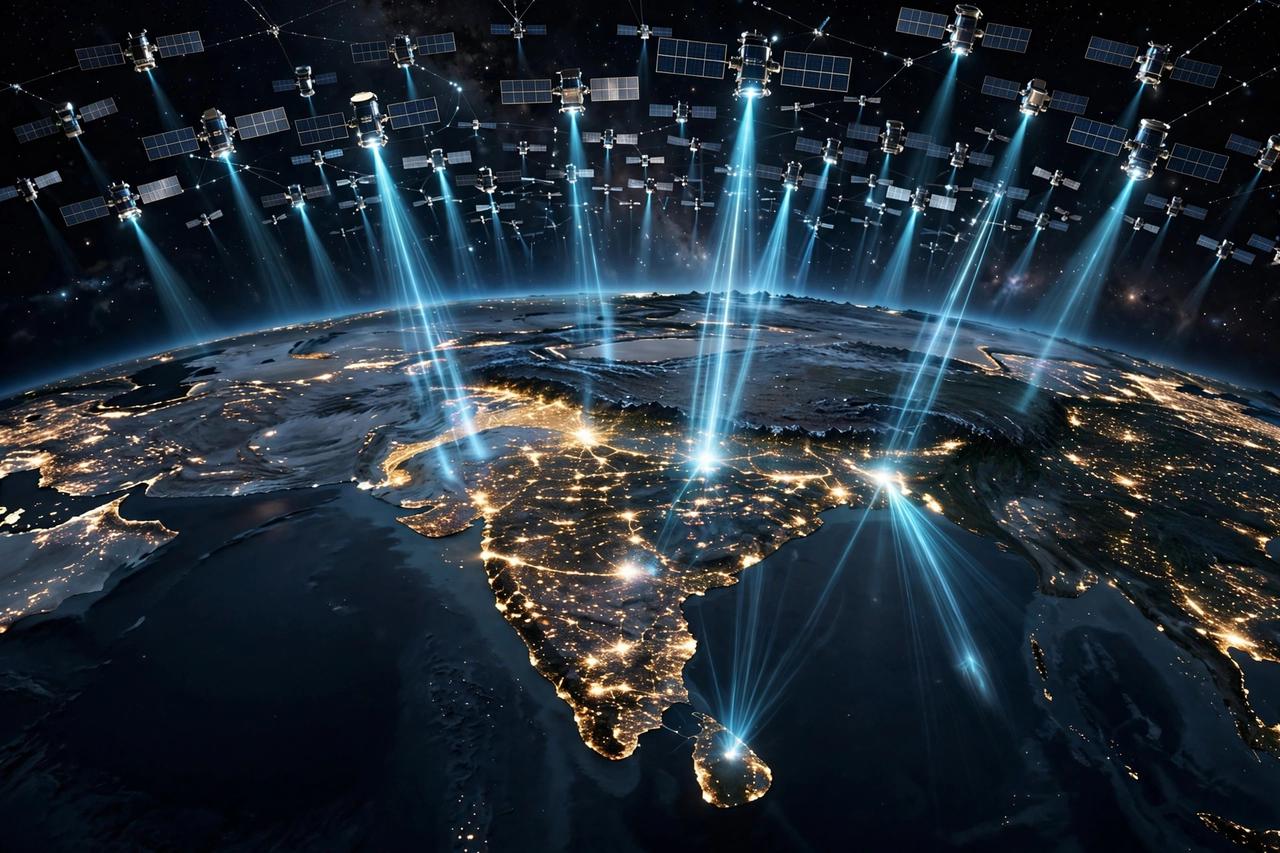
Starlink is not waiting idly. At India Mobile Congress 2026, Starlink’s vice president of business operations, Lauren Dreyer, said the company had built 20 gateway sites and installed hundreds of antennas across India, and had designed India-specific data and security controls to keep local user data within the country, according to InsiderFinance. The infrastructure is largely ready; the paperwork is not.
Competitors are in the same queue. Jio Satellite Communications (the Reliance Jio-SES joint venture) and Eutelsat OneWeb (backed by Bharti Airtel) hold licences and are undergoing the same security assessments. Amazon’s Project Kuiper has applied for a licence but has not received approval, per Tech Insider.
When Will Starlink Launch in India?
There is no confirmed launch date. The realistic sequence: Cabinet approves the spectrum charging framework, spectrum is assigned, Home Ministry grants security clearance, and remaining FDI approvals land. Scindia’s “close” comment on pricing suggests movement, but Indian telecom timelines have a habit of stretching. A limited or trial rollout in one region while the broader review continues is considered more likely in the near term than a full national launch, per Tech Insider’s analysis.
For Indian consumers, especially in remote and rural areas with poor connectivity, satellite internet promises genuine transformation. The question is no longer whether Starlink can technically serve India, it demonstrably can, but whether India’s security-first regulatory machine will let it. This article will be updated as approvals progress.
How Satellite Internet Actually Works
Understanding the Starlink India saga requires a bit of orbital mechanics. Traditional satellite internet uses a few large satellites parked in geostationary orbit, 36,000 km up; the signal travel time creates noticeable lag. Starlink uses a mega-constellation of thousands of small satellites in low Earth orbit, a few hundred kilometers up, handing off connections like cell towers in the sky. The result is latency comparable to terrestrial broadband, which is why it works for video calls and gaming where older satellite internet never could.
On the ground, users need a dish terminal (Starlink’s “Dishy”), and the network needs gateway stations, the ground facilities connecting satellites to the terrestrial internet. Starlink has built 20 of these in India. India’s security rules focus heavily on these gateways: traffic from Indian users must route through Indian gateways, the government demands interception capabilities, and each site needs individual clearance. The technology is ready; the trust framework is not.
What Starlink Could Mean for Rural India
The stakes go beyond corporate rivalry. India has hundreds of millions of people with poor or no broadband, concentrated in rural, hilly, and remote areas where laying fiber is prohibitively expensive. Satellite internet bypasses that last-mile problem entirely: a dish on a roof connects a Himalayan village or a Rajasthani hamlet as easily as a Mumbai apartment. Telemedicine, remote education, and digital payments, the pillars of India’s digital ambitions, all depend on connectivity that much of the country still lacks.
This is why the government faces genuine tension. Security agencies see a foreign-controlled communications network with terminals that work anywhere; development planners see the fastest route to universal connectivity. Both views are legitimate, and India’s unusually strict framework, shaped by the 26/11 attacks and border security concerns, reflects the security side winning so far. The eventual compromise will set the template for every satellite operator that follows.
The Global Race for Satellite Internet
India is one theater in a worldwide contest. Starlink operates in well over 100 countries and has become critical infrastructure in places like Ukraine, which demonstrated both the promise and the geopolitical leverage of privately controlled satellite networks. Competitors are racing: Amazon’s Project Kuiper is deploying its own constellation, Eutelsat OneWeb serves enterprise and government customers, and China is building state-backed constellations. Whoever connects the world’s unconnected billions gains enormous influence, which is exactly why governments from Delhi to Brussels treat satellite licensing as national security policy, not just telecom paperwork. India’s decision will echo far beyond its borders.
Starlink vs. the Competition in India
The Indian satellite race has four runners at different stages. Starlink leads on infrastructure (20 gateways built, hundreds of antennas) but waits on security clearance and spectrum like everyone else. Jio Satellite Communications, the Reliance Jio-SES joint venture, holds the same GMPCS licence and benefits from Jio’s terrestrial distribution muscle. Eutelsat OneWeb, backed by Bharti Airtel, also holds a licence and targets enterprise and government customers first. Amazon’s Project Kuiper trails, having applied for a licence without approval yet. All three licensed operators face the identical queue: security assessment, spectrum pricing decision, spectrum assignment. Whoever clears it first gets a head start, but the government’s technology-neutral stance suggests no favorites.
What Happens Next: The Timeline to Watch
The sequence is now fairly clear. Near term: the Cabinet decides the spectrum charging framework (Scindia said a decision was close in October 2026). Then: spectrum assignment to the three licensed operators, each completing its Home Ministry security clearance in parallel. Then: commercial launch, possibly starting with enterprise and government customers before residential. Wild cards: a limited regional trial to build confidence, further Musk-government friction (the October row shows how quickly politics intrudes), and the Kuiper licensing decision adding a fourth player. For consumers, the realistic hope is initial services within the next year, not the next quarter. Watch the Cabinet’s spectrum decision; everything else follows from it.
Frequently Asked Questions
Is Starlink available in India?
No. Starlink holds an Indian GMPCS licence and has built gateway infrastructure, but it has not received the security clearances and spectrum assignment needed for commercial launch. Its beams over India remain switched off.
When will Starlink launch in India?
No date is confirmed. Launch depends on Home Ministry security clearance, Cabinet approval of satellite spectrum pricing, spectrum assignment, and FDI approvals. The communications minister said a pricing decision was close in October 2026.
How much will Starlink cost in India?
Pricing has not been announced for India. In other markets, Starlink’s residential service is positioned as a premium product versus terrestrial broadband; Indian pricing will depend partly on the spectrum charges the Cabinet sets.
Who are Starlink’s competitors in India?
Jio Satellite Communications (Reliance Jio-SES) and Eutelsat OneWeb (Bharti Airtel-backed) hold the same GMPCS licences and face the same approval queue. Amazon’s Project Kuiper has applied but is not yet licensed.
Why did Elon Musk criticize Mukesh Ambani?
On October 9, 2026, Musk posted on X accusing Ambani of monopolistic behavior blocking Starlink’s entry, sarcastically calling him “Prime Minister Ambani.” The government rejected the claim, noting all three licensed operators face the same security and spectrum process.