Strait of Hormuz Explained: Why Attacks There Just Sent Oil Over $106

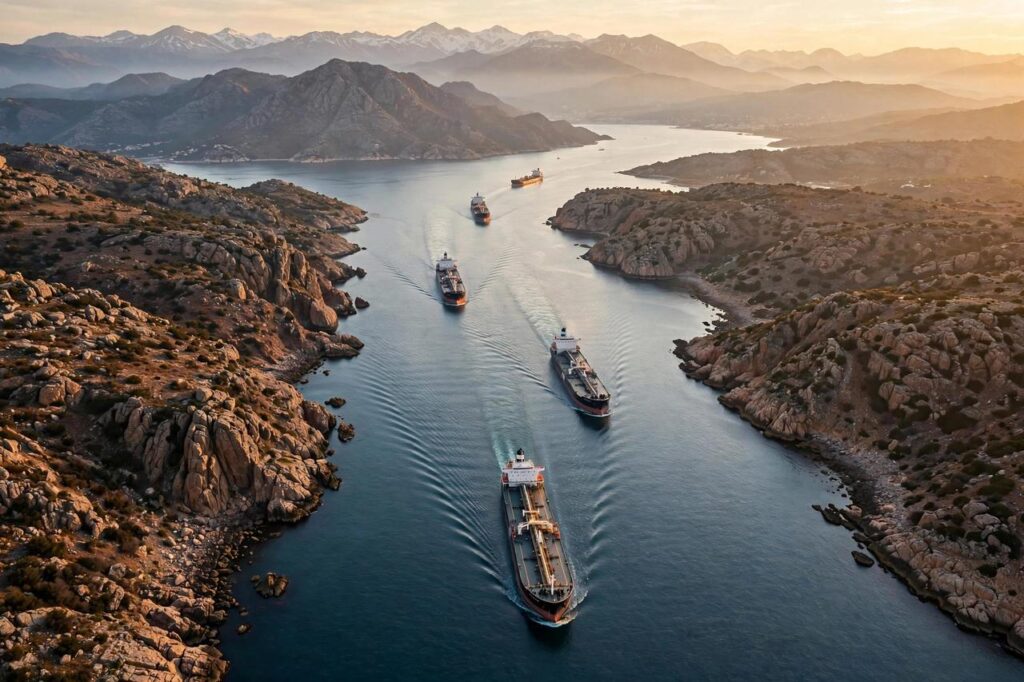
The Strait of Hormuz is back at the center of the world’s energy crisis. In the past week, more than a dozen tankers have been attacked in and around the narrow waterway, Iranian crude exports have flatlined under a US naval blockade, and crude oil prices surged past $106 a barrel in London. Here is what the strait is, why it matters so much, and what is happening there right now.
The short version: the Strait of Hormuz is the narrow sea passage between Iran and Oman connecting the Persian Gulf to the open ocean. A huge share of the world’s seaborne oil passes through it, which makes it the single most important energy chokepoint on the planet, and the current flashpoint of a war that began in February 2026.
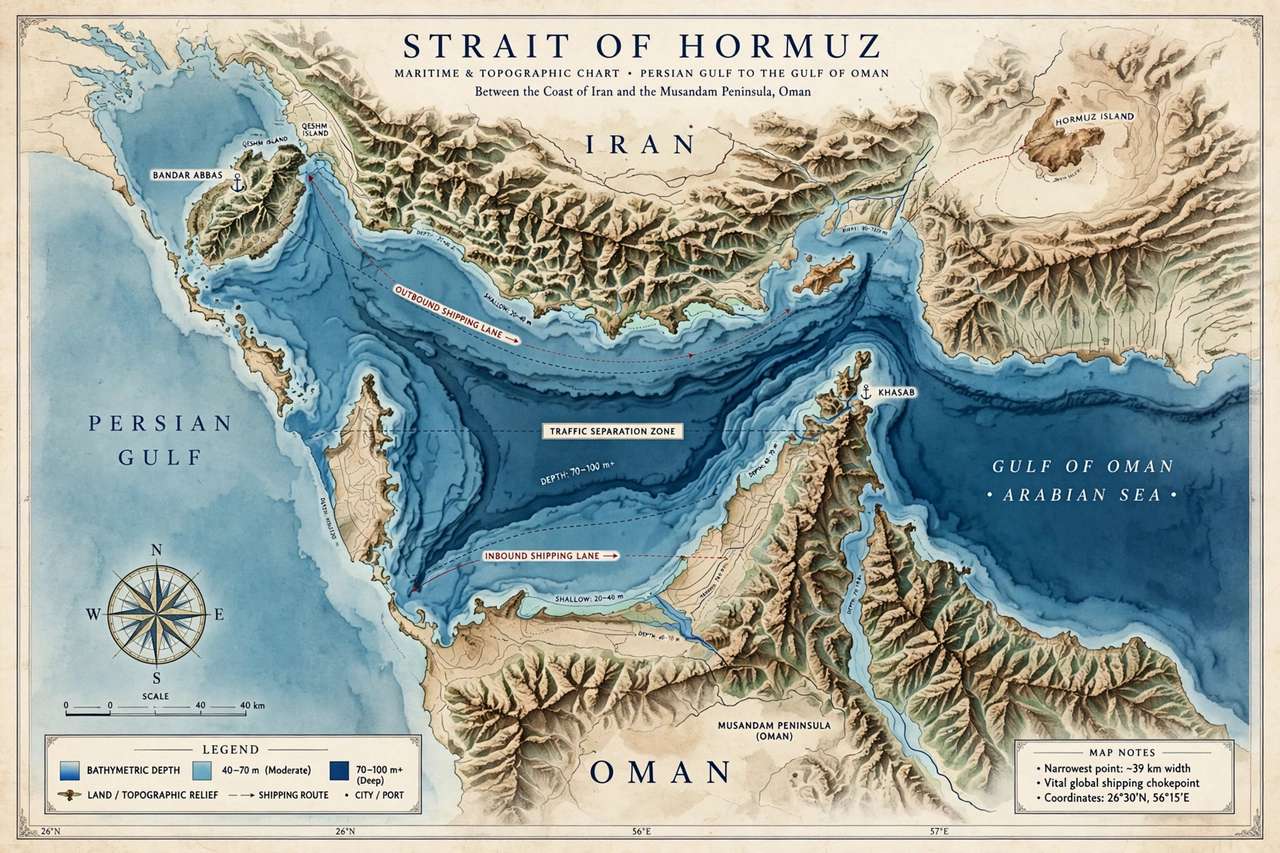
Where Is the Strait of Hormuz?
The Strait of Hormuz sits between Iran to the north and Oman (and the United Arab Emirates) to the south, linking the Persian Gulf with the Gulf of Oman and the Arabian Sea beyond. At its narrowest, the shipping lanes squeeze through a corridor only a few dozen kilometers wide, with inbound and outbound traffic separated into two narrow lanes.
That geography is the whole story. Oil and gas produced in Saudi Arabia, Iraq, Kuwait, Qatar, the UAE, and Iran itself must pass through Hormuz to reach world markets. There is no practical alternative route for most of this traffic; pipelines that bypass the strait exist but carry only a fraction of the volume. Whoever can threaten shipping in Hormuz holds leverage over the global economy.
Why the Strait of Hormuz Matters for Oil Prices
Energy markets treat Hormuz as the world’s most dangerous chokepoint because disruption there cannot be quickly replaced. When attacks rise, three things happen in sequence: shipping insurers raise premiums, tanker operators slow down or reroute, and crude prices spike on fear of lost supply. That is exactly what unfolded this week: after a wave of attacks, crude pushed above $106 a barrel in London on Monday before easing slightly on Tuesday, according to Bloomberg reporting.
The strait has been threatened before, notably during the 1980s Tanker War, but the current crisis is different in scale: it is unfolding inside an active war, with a naval blockade, naval mines, and drone strikes all in play simultaneously.
How the Current Crisis Started
The United States and Israel launched a war against Iran on February 28, 2026, according to regional reporting. Tehran responded with missile and drone attacks across the region and effectively closed the Strait of Hormuz, while Washington later imposed a naval blockade on Iranian ports.
In June, the US and Iran signed a memorandum of understanding concerning freedom of navigation in the strait, but implementation stalled over disagreements about security arrangements. After US attacks resumed on July 8, Iran announced on July 12 that it had closed the strait again. In late August, US Central Command said international shipping lanes had been reopened following the removal of Iranian naval mines by US forces. Since then, the situation has seesawed between fragile recovery and renewed escalation.
What Is Happening in the Strait of Hormuz Right Now
The past two weeks have seen the worst attacks on shipping since the war began. At least 12 tankers were attacked in and around the strait in the past week alone, according to maritime agency reports cited by The National. The UK Maritime Trade Operations agency issued delayed reports covering six vessels struck on a single Sunday, five tankers and a container ship, in what the New York Post described as the heaviest fire on ships near the vital route since February.
Separately, Iran’s Islamic Revolutionary Guard Corps Navy said a supertanker struck a naval mine while attempting to transit the strait with its navigation systems switched off, the third such mine strike since Saturday, according to ANews. The IRGC renewed its warning that vessels switching off their transponders would be treated as hostile.
The Institute for the Study of War assessed on October 13 that Iran appears to be deliberately targeting vessels conducting ship-to-ship oil transfers near the strait to undermine energy flows, and warned Tehran may be improving its anti-ship missile capabilities, as reported by Transport Topics.
The US Blockade and Iran’s Vanishing Oil Exports
Parallel to the attacks, the US naval blockade is strangling Iran’s own oil trade. The blockade kept Iranian crude exports at zero through October, according to energy intelligence firm Vortexa, Reuters reported on October 13. Iranian crude sitting in tankers on the water has fallen to 83 million barrels, with 43 million barrels trapped west of the strait by the blockade. Vortexa’s director of maritime risk said the blockade “has physically stopped Iranian crude from leaving the Gulf” in a way years of sanctions never managed.
Iran’s liquefied petroleum gas exports also fell 48% month-on-month to their lowest since at least January 2023, according to the same report. Meanwhile, oil flows from the rest of the Gulf had been recovering toward pre-war levels earlier in October before the latest attacks, with Bloomberg noting shipowners turning vessels around near Fujairah in the UAE.
What Happens Next in the Strait of Hormuz
Three variables will decide what comes next. First, whether the June freedom-of-navigation understanding can be revived; Iran’s deputy foreign minister has said normal navigation depends on Washington meeting its obligations and abandoning the military path. Second, whether insurers and shipowners keep sending tankers through under US military escort, which had been restoring flows before this week’s attacks. Third, the physical oil market: with Iranian barrels trapped and Russian crude filling gaps for buyers like China, any further disruption lands on an already tight market.
For now, the strait remains open but dangerous: transiting under escort, with transponders on, and under the watch of naval mines, drones, and warships. This article will be updated as the situation develops.
A Brief History of Hormuz Tensions
The current crisis has deep roots. During the 1980s Tanker War, part of the Iran-Iraq War, both sides attacked oil tankers in the Gulf, and the US Navy’s Operation Earnest Will escorted Kuwaiti tankers through Hormuz, a direct ancestor of today’s escort operations. In 2019, a series of mysterious tanker attacks and the seizure of vessels near the strait spiked oil prices and drew in US, UK, and allied naval forces. Each cycle follows the same pattern: Iran threatens or disrupts shipping to gain leverage, the US and allies increase naval presence, insurers raise premiums, and prices jump until the situation stabilizes. What makes 2026 different is that the disruption is happening inside an open war with a formal blockade, raising the stakes beyond any previous episode.
The Economics of a Chokepoint
There is also a human cost beyond prices. Seafarers transiting Hormuz face genuine danger, and crew abandonment or injury in attack zones has drawn attention from maritime unions. Behind every tanker statistic are crews doing dangerous work, a reminder that energy geopolitics is never just about barrels and dollars.
When Hormuz is threatened, the costs cascade. War-risk insurance premiums for Gulf transits spike immediately, adding dollars per barrel before a single ship is hit. Tanker rates climb as owners demand compensation for danger or refuse the route entirely. Buyers scramble: refineries in Asia, the strait’s biggest customers, bid for alternative supplies, which is one reason Russian crude has filled gaps left by trapped Iranian barrels. And strategic reserves enter the conversation; major importers hold emergency stockpiles precisely for scenarios like this. The $106 oil price seen this week reflects fear as much as physical shortage, markets price the risk of what could happen next, not just what’s happening now.
What the Experts Are Watching Next
The diplomatic track matters as much as the military one. Any revival of the June freedom-of-navigation understanding, back-channel talks via Oman (the traditional mediator), or de-escalatory statements from Tehran or Washington would move markets faster than any single naval deployment. Watch what officials say about ‘coordination’ of transits: Iran’s demand that vessels coordinate passage is the political core of the crisis, and any compromise on that language is the real signal of progress.
Analysts tracking the strait watch a handful of leading indicators. Tanker transponder data: ships going dark (switching off AIS) signals fear, and Iran has explicitly warned such vessels will be targeted. Insurance premiums: war-risk rates are the market’s fear gauge; sharp rises precede physical disruption. Ship-to-ship transfer activity near Fujairah: Iran is now targeting these operations specifically, per the Institute for the Study of War. US escort posture: the scale of naval escorts determines whether commercial flows recover. And Iranian floating storage: the 83 million barrels of Iranian crude sitting in tankers, 43 million trapped west of the strait, is a pressure gauge on Tehran itself. When those barrels start moving again, de-escalation is real.
Frequently Asked Questions
Where is the Strait of Hormuz located?
The Strait of Hormuz lies between Iran to the north and Oman and the UAE to the south, connecting the Persian Gulf to the Gulf of Oman and the Arabian Sea. Its shipping lanes narrow to a corridor only a few dozen kilometers wide.
Why is the Strait of Hormuz so important?
It is the only sea route for oil and gas exports from the Persian Gulf states to world markets. Because there is no practical alternative for most of this traffic, any threat to shipping there moves global energy prices.
Is the Strait of Hormuz closed right now?
As of mid-October 2026, the strait is not fully closed, but shipping faces severe danger: naval mines, drone and projectile attacks, and a US naval blockade. Many operators are proceeding only under military escort or turning back.
Who controls the Strait of Hormuz?
No single country controls it. Iran borders the northern shore and asserts the right to regulate transit; Oman and the UAE border the southern shore; the US Navy maintains a major presence. Control is contested, which is precisely the problem.
How do attacks in the Strait of Hormuz affect gas prices?
Attacks raise shipping insurance costs, slow tanker traffic, and threaten supply, all of which push crude prices up. Refined fuel prices typically follow crude with a lag of days to weeks, depending on the market.