What Is Old Money Aesthetic? The Complete Style Guide

What is old money aesthetic? It is the art of looking like elegance was never a decision — as if the cashmere coat, the polished loafers, and the perfectly unfussy hair simply happened. Born from the wardrobes of inherited wealth and raised to internet fame by television and TikTok, it is less a fashion trend than a philosophy: quality over quantity, restraint over display.
What Is the Old Money Aesthetic?
The old money aesthetic is a style rooted in the understated dress codes of established, generational wealth — think East Coast American families, European aristocracy, and the country-club set. Its defining feature is quiet luxury: expensive-looking without looking expensive, polished without appearing to try. Where new money announces itself with monograms and supercars, old money whispers with perfect tailoring and fabrics you can feel from across the room.
The aesthetic exploded into mainstream consciousness through shows like Succession — whose characters dress in anonymous, impeccable cashmere — and through a broader cultural fatigue with logomania and fast fashion. It promises something trends cannot: timelessness.
The Core Principles
Fit is everything. Old money dressing is tailored, never tight and never sloppy. Trousers break cleanly, blazers hug the shoulder, and nothing pulls or bunches. A $50 blazer that fits beats a $500 one that does not.
Fabric over flash. Cashmere, merino wool, silk, linen, tweed, and quality cotton. The luxury is tactile — it announces itself in texture, not in branding.
Restraint. No visible logos, no loud prints, no trend-chasing silhouettes. The palette stays muted; the accessories stay minimal.
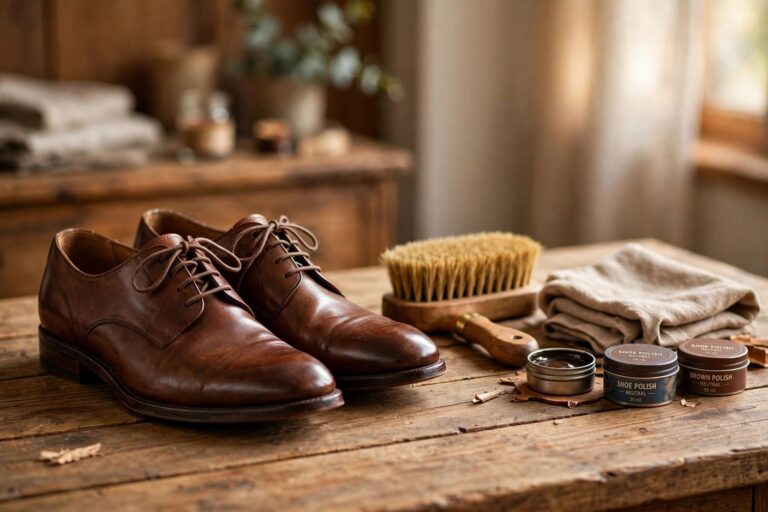
Maintenance. The aesthetic includes upkeep: polished shoes, pressed shirts, neat grooming. Old money looks effortless because the effort is invisible — and constant.
Longevity. Buy once, buy well, wear for decades. A wardrobe of twenty perfect pieces beats a closet of two hundred forgettable ones — the same philosophy behind a well-built capsule wardrobe, where every item earns its place.
The Color Palette
Old money lives in neutrals and muted heritage tones: navy, camel, cream, ivory, charcoal, forest green, burgundy, and chocolate brown. White is crisp, black is used sparingly (navy is the true neutral). Patterns are classic and quiet — pinstripes, houndstooth, subtle plaids, Breton stripes. Anything neon, anything that glows under blacklight, does not belong here.
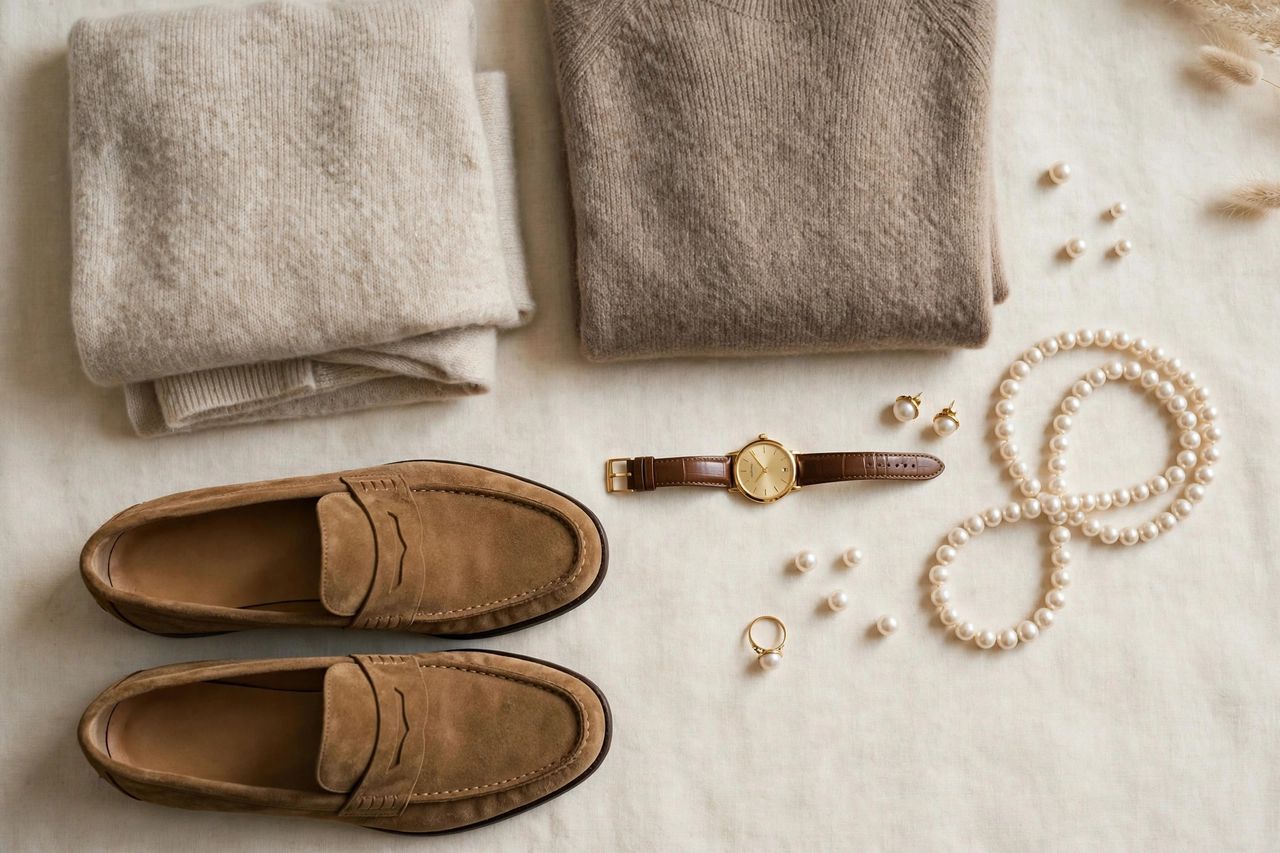
Old Money Wardrobe Staples for Women
The blazer. A well-cut navy or camel blazer is the cornerstone — worn over everything from jeans to silk dresses.
Cashmere knitwear. Crewnecks, cardigans, and turtlenecks in cream, gray, and navy. The softer and simpler, the better.
The silk blouse and the white shirt. Crisp, minimal, endlessly versatile.
Tailored trousers and the pleated skirt. High-waisted, clean lines, in wool or quality cotton.
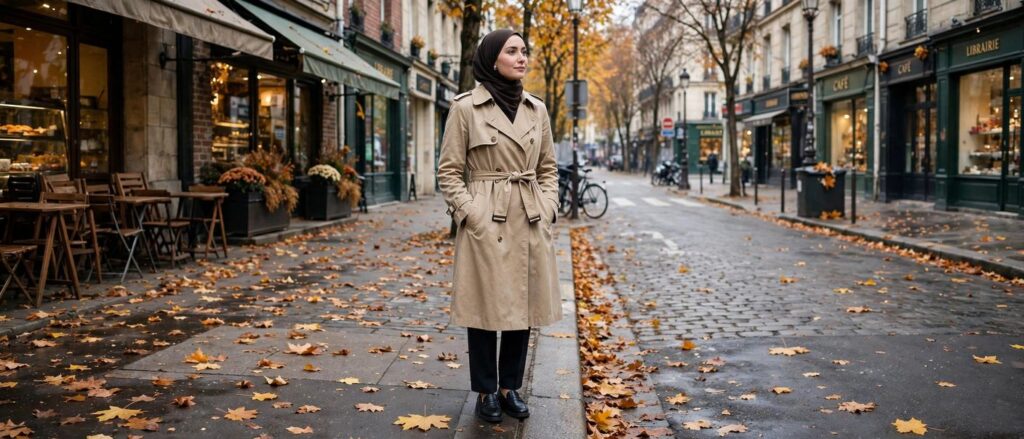
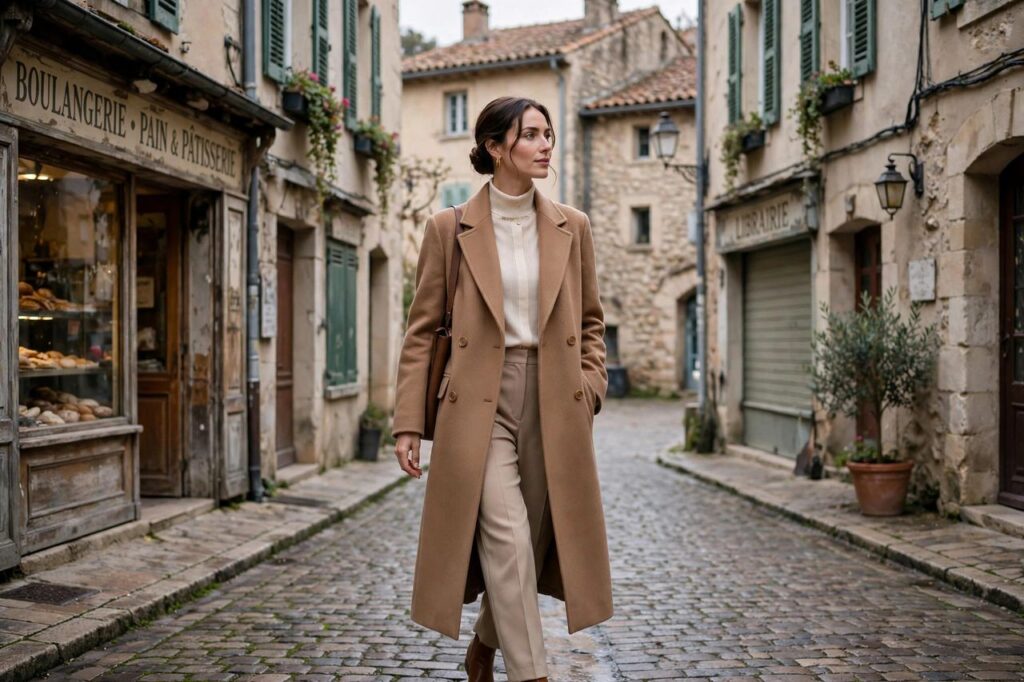
The trench coat and the camel coat. Outerwear is where the aesthetic truly shows — one great coat transforms everything underneath.
Loafers, ballet flats, and low heels. Polished leather, modest heels, nothing strappy or sky-high for daytime.
Understated accessories. Pearl studs, a slim gold watch, a structured leather handbag, a silk scarf. One statement piece maximum — usually none.
Old Money Wardrobe Staples for Men
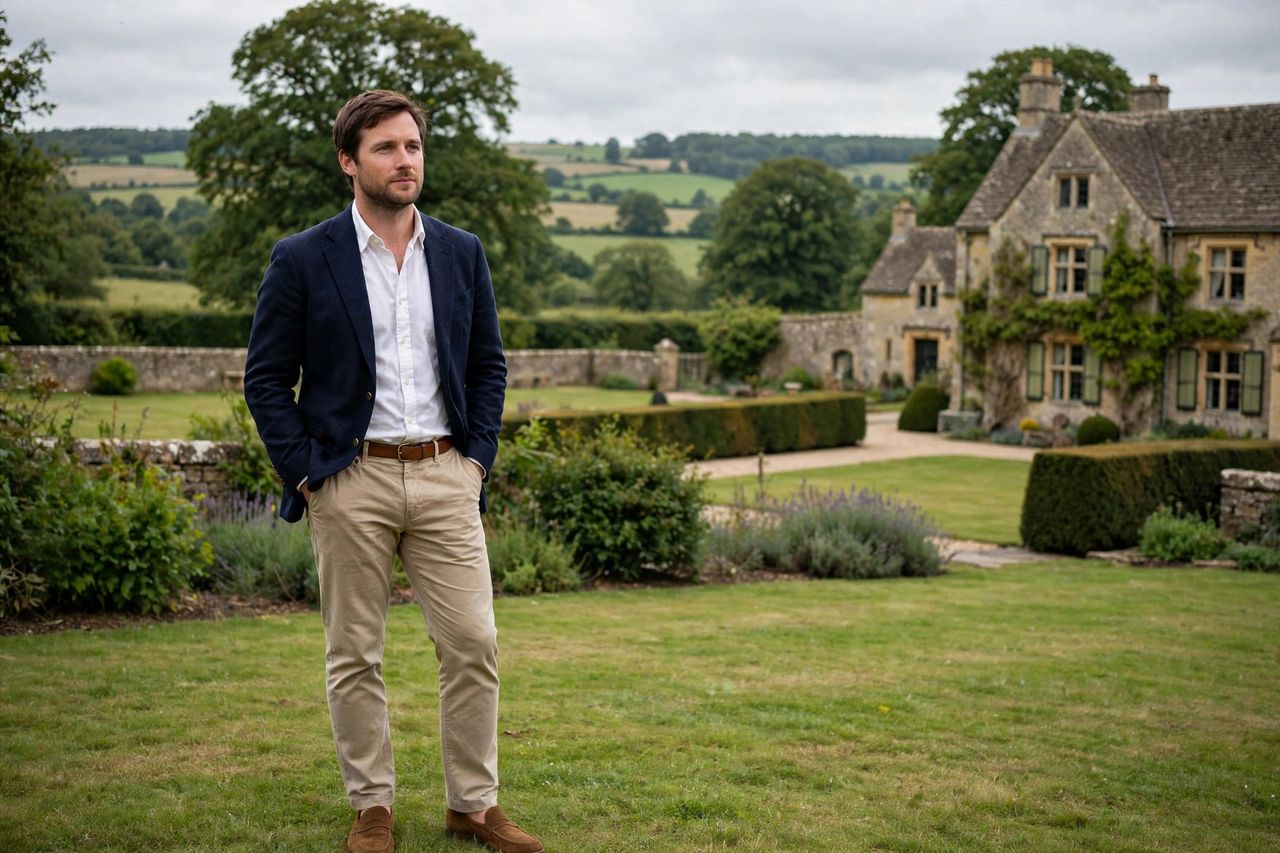
The navy blazer and the sport coat. The male equivalent of the cornerstone — unstructured shoulders read more modern, structured more traditional.
Oxford shirts. White and light blue, pressed, with the sleeves worn down or neatly rolled.
Chinos and wool trousers. Khaki, stone, navy, charcoal — always tailored, never skinny.
Knitwear. Crewneck sweaters, quarter-zips, and v-necks in merino or cashmere, often layered over collared shirts.
The polo shirt. Piqué cotton, no visible logo (or a tiny embroidered one at most), worn with chinos rather than gym shorts.
Loafers, boat shoes, and brogues. Broken-in leather beats box-fresh — the aesthetic values patina.
The details. A simple watch with a leather strap, a pocket square for occasions, a quality belt. Colognes are subtle or absent.
Fabrics That Define the Look
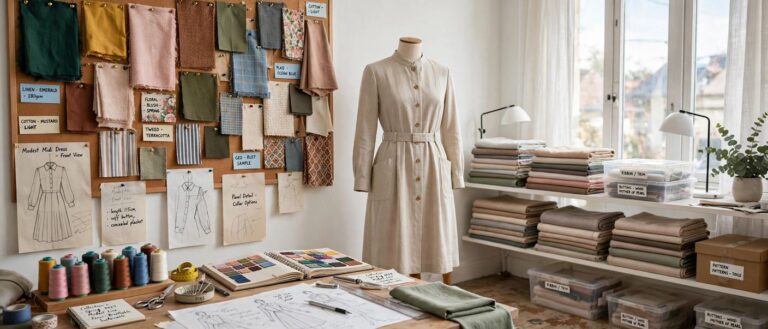
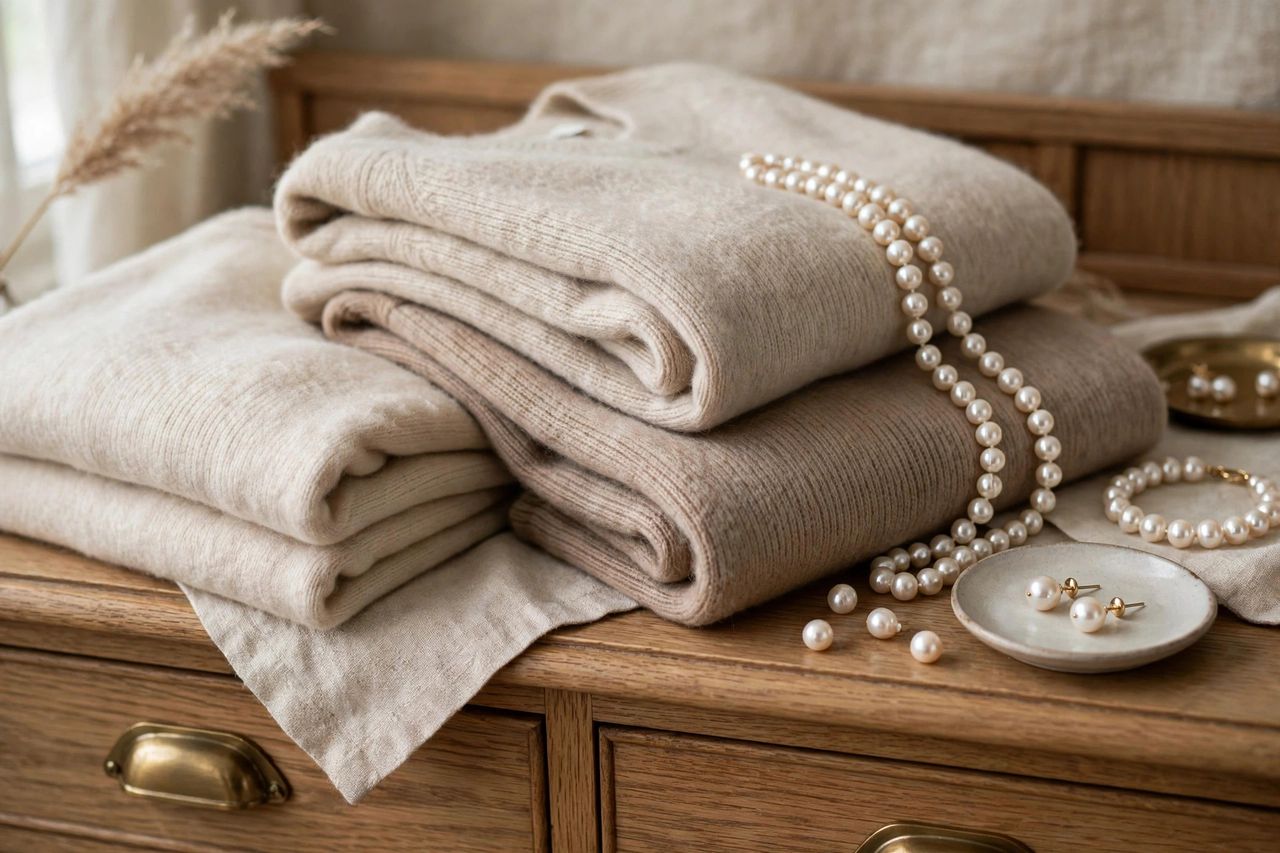
If you remember one thing, remember this: the old money aesthetic is a fabric aesthetic. Cashmere for softness, merino for versatility, linen for summer ease, tweed and flannel for autumn texture, silk for polish, and brushed cotton for everyday refinement. Learn to feel quality — check seams, linings, and fabric weight — and you can build the look at any price point. Thrift stores in affluent neighborhoods are famously rich hunting grounds for the real thing.
Brands Associated With the Aesthetic
The names most linked to the look — Ralph Lauren, Loro Piana, Brunello Cucinelli, The Row, Max Mara, Brooks Brothers — share a design language of restraint rather than a price tag requirement. But the aesthetic was never about brands; it is about the absence of branding. A logo-free sweater from a high-street store in the right fabric and fit reads more “old money” than a monogrammed designer piece ever will.
What to Avoid
Visible logos and monogram patterns. Fast-fashion fabrics that pill and fade. Bodycon silhouettes and athleisure-as-outfits. Overly distressed denim. Chunky statement jewelry. Anything worn because it is trending this month. The old money test is simple: would this look the same in a photograph from 1995? If yes, it belongs.
Grooming and the Rest of the Picture
The aesthetic extends beyond clothing: neat, natural-looking hair; minimal makeup with polished skin; manicured but unshowy nails; good posture. For occasions, the old-Hollywood end of the spectrum — the kind of timeless red-carpet elegance celebrated in roundups of the best Oscars red carpet dresses — shows how the same principles scale up to formalwear: classic lines, luxurious fabric, zero gimmicks.
Building the Look on a Budget
Old money style is paradoxically one of the most budget-friendly aesthetics to adopt, because it rewards so few, well-chosen pieces. Start with the neutrals you own, tailor what fits almost-right (a $20 alteration transforms a thrifted blazer), invest first in shoes and outerwear (the most visible items), and buy fabrics over labels. Shop secondhand, shop end-of-season sales, and ignore everything with a trend cycle shorter than five years. In twelve months of disciplined buying, you can assemble a wardrobe that looks inherited.
Old Money vs. Quiet Luxury vs. Preppy: What’s the Difference?
Quiet luxury is the broader fashion-industry term for the same idea — luxury without logos — and largely overlaps. Old money specifically references the heritage, generational-wealth fantasy: the country club, the ancestral home, the wardrobe passed down. Preppy shares the wardrobe vocabulary (blazers, loafers, polos) but is more collegiate, colorful, and playful — think campus rather than estate. Old money is preppy’s more reserved older sibling.
What Is Old Money Aesthetic? Origins and Meaning
The aesthetic’s roots run deeper than any TikTok trend cycle. Its visual language comes from the American Northeast establishment — the Ivy League campuses, Newport summers, and Manhattan clubs of the twentieth century — blended with European aristocratic codes: British country tweeds, Italian tailoring, French understated chic. What the internet did was name it and democratize it, turning a closed social code into an open style template. The irony is rich: an aesthetic built on inherited exclusivity became one of the most inclusive trends online, precisely because its actual requirements — fit, fabric, restraint — cost far less than the logomania it replaced.
Old Money Aesthetic Through the Seasons
Spring: Trench coats, Breton stripes, light chinos, loafers without socks (or with invisible ones). Linen shirts enter the rotation.
Summer: Linen everything — shirts, trousers, blazers. Espadrilles and boat shoes. Panama hats and woven belts. The palette lightens to cream, stone, and pale blue.
Autumn: The aesthetic’s home season. Tweed, flannel, corduroy, cashmere layers, suede loafers and boots. Forest green, burgundy, and camel dominate.
Winter: Wool overcoats, cashmere scarves, leather gloves, turtlenecks under blazers. Darker neutrals — charcoal, navy, chocolate. Quality outerwear does the heavy lifting.
The through-line across seasons: natural fabrics suited to the weather, layers rather than bulk, and never a visible logo no matter the temperature.
Hair, Makeup, and Fragrance Codes
The aesthetic’s grooming rules mirror its clothing rules: polished but never obvious. Hair is neat and healthy-looking — classic cuts, natural colors, nothing sculptural. Makeup, where worn, is the “no-makeup” look perfected: even skin, groomed brows, neutral lips. Nails are short, clean, and nude or clear. Fragrance follows the same restraint — subtle, classic scents (citrus, soft florals, light woods) applied sparingly, never entering the room before you do. The goal in every category is identical: look like the best version of yourself, not like a different person.
Old Money Home Touches (Beyond the Wardrobe)
Devotees often extend the aesthetic to their surroundings, and the principles translate directly: quality materials (wood, linen, wool, brass), inherited or vintage pieces mixed with the new, books that are actually read, art that is personal rather than fashionable, and nothing that looks purchased all at once. Fresh flowers, well-made bedding, a proper table setting — the domestic version of “effortless” requires the same invisible effort as the wardrobe version. You do not need a manor house; a small apartment with good light, honest materials, and zero clutter captures the spirit.
Building Your First Old Money Capsule
Start with twelve pieces that all work together: navy blazer, camel or charcoal coat, white oxford shirt, Breton top, cream cashmere crewneck, dark straight-leg trousers, well-fitted dark jeans, pleated midi skirt or tailored chinos, trench coat, leather loafers, simple leather handbag or briefcase, and a silk scarf. Every piece in a neutral from the palette; every piece fitting impeccably. From this foundation, everything matches everything — the true old money superpower is not owning more, but needing less. Add seasonally, replace rarely, and tailor relentlessly.
Old Money Aesthetic: Common Mistakes Beginners Make
Buying the costume, not the clothes. Head-to-toe “old money” starter packs from fast-fashion retailers miss the point — the aesthetic is about fabric and fit, and cheap imitations of both read as exactly what they are. Buy fewer, better pieces.
Over-accessorizing. Piling on pearls, scarves, watches, and bags simultaneously creates the opposite of restraint. One quiet accessory at a time.
Ignoring fit. An untailored blazer in the right color still looks wrong. Budget for alterations before buying more items.
Performing wealth instead of dressing well. The aesthetic curdles when it becomes cosplay of a class rather than an appreciation of craft. The goal is to look polished and timeless — not to convince anyone of your net worth.
Forgetting grooming. Impeccable clothes with neglected hair, nails, or shoes break the illusion instantly. The aesthetic is head-to-toe or not at all.
Frequently Asked Questions
What is the old money aesthetic?
A timeless style inspired by generational wealth: tailored fits, luxurious natural fabrics, muted colors, minimal branding, and polished restraint. It prioritizes quality and longevity over trends and display.
Can you dress old money on a budget?
Absolutely — arguably it is the cheapest aesthetic to fake well. Thrifted wool blazers, tailored basics, polished secondhand loafers, and disciplined neutral colors achieve the look without designer prices.
What colors are old money?
Navy, camel, cream, ivory, charcoal, forest green, burgundy, and brown. The palette is muted and heritage-inspired; brights and neons are out.
Is old money the same as quiet luxury?
Nearly. Quiet luxury is the industry term for logo-free luxury dressing; old money is the specific cultural aesthetic of inherited-wealth style. In practice, the wardrobes are almost identical.
What shoes go with the old money aesthetic?
Leather loafers, ballet flats, low block heels, boat shoes, brogues, and clean white sneakers in minimal designs. Polished and understated beats trendy every time.
Does the old money aesthetic work for casual wear?
Yes — that is its natural habitat. Well-fitted chinos, a cashmere crewneck, and loafers are the casual uniform. The aesthetic is about elevating the everyday, not dressing for galas.
The old money aesthetic endures because it was never really about money. It is about the discipline of restraint — and that, unlike a trust fund, anyone can inherit.