How to Read Tire Size Numbers: Sidewall Decoder Guide

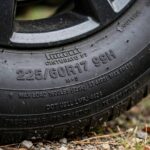
Every tire has a secret language molded into its sidewall, and once you learn how to read tire size numbers, you will never again stand confused in a tire shop while someone asks what size you need. I have spent twenty years under hoods, and I can tell you that the code — something like P215/65R16 98H — looks intimidating but breaks down into simple pieces. Each number and letter answers one question: how wide, how tall, what construction, what wheel, how much weight, how fast. By the end of this guide, you will decode any sidewall like a pro.
We will work through a real example piece by piece, cover the load index and speed rating charts, decode the extra markings most people ignore, and finish with the buying rules that keep you from making expensive mistakes. Let us decode.
How to Read Tire Size Numbers: The Main Code
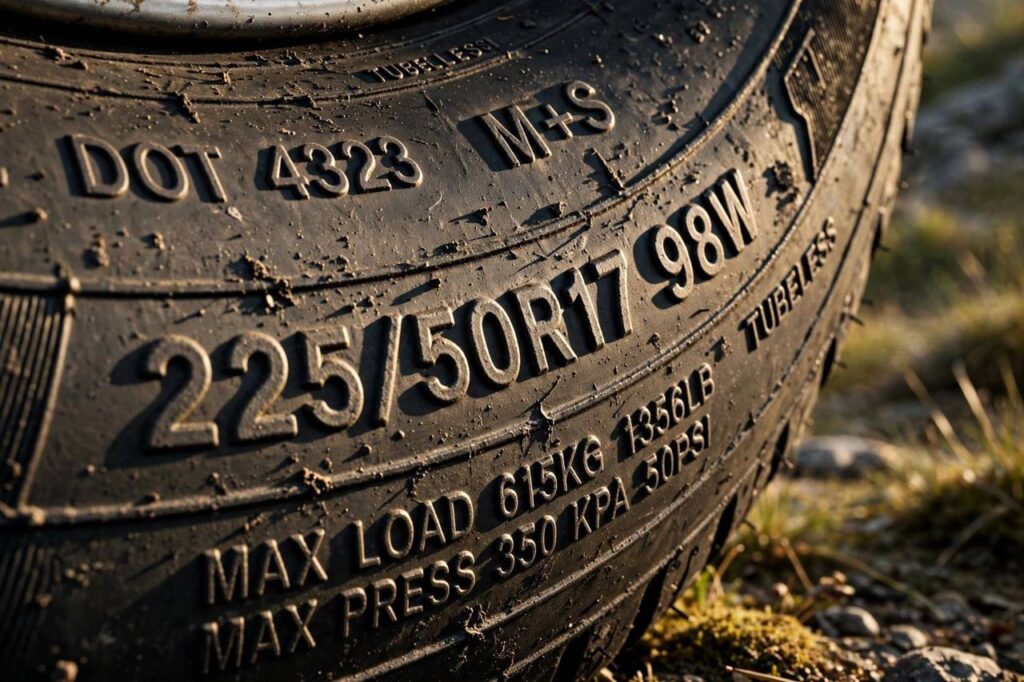
Take the classic example: P215/65R16. The P stands for the tire type — P means passenger vehicle. You will also see LT for light truck, ST for special trailer, and T for temporary spare. No letter at the start means a European metric tire, which follows the same numbering otherwise.
The 215 is the section width in millimeters — the tire’s width from sidewall to sidewall at its widest point. Wider is not automatically better; it is simply the measurement. The 65 is the aspect ratio: the sidewall height expressed as a percentage of the width. So this tire’s sidewall height is 65 percent of 215 millimeters, or about 140 millimeters. Lower aspect ratios mean shorter sidewalls — the “low-profile” look — which sharpens handling but rides harsher and risks wheel damage on potholes.
The R means radial construction — the internal ply cords run radially from bead to bead. Virtually every modern passenger tire is radial; you will essentially never see anything else on a current vehicle, but the letter is part of the standard code. The 16 is the wheel diameter in inches — the size of the wheel this tire fits. This is the number that must match your wheels exactly. Everything else has some flexibility; wheel diameter has none.
Worked example two: LT265/70R17. LT means light truck — a heavier-duty tire for pickups and SUVs that carry loads. 265 millimeters wide, aspect ratio 70 (a taller sidewall, good for off-road and load carrying), radial construction, fits a 17-inch wheel. You can already see how the code tells a story: this is a tall, sturdy truck tire, not a low-profile sport tire.
Load Index and Speed Rating
After the size code comes something like 98H — the service description. The 98 is the load index: a numerical code for the maximum weight each tire can carry. Load index 98 corresponds to 1,521 pounds per tire. Multiply by four tires and you get the vehicle’s total tire load capacity — which must meet or exceed the vehicle’s gross weight rating. Never install tires with a lower load index than the manufacturer specifies; it is a genuine safety issue, not a technicality.
Common load indexes you will encounter: 91 carries 1,356 pounds (typical for smaller cars), 95 carries 1,521 pounds, 98 carries 1,521 pounds as well in some tables — the key point is to check the chart rather than guess, because the scale is not linear and close numbers can differ. Your vehicle’s required load index is on the driver’s door jamb placard — that placard is the authority, not the tire shop’s opinion.
The H is the speed rating: the maximum speed the tire is certified to sustain. H is rated to 130 mph. The common ratings in order: S (112 mph), T (118 mph), H (130 mph), V (149 mph), W (168 mph), Y (186 mph). You do not need to drive 130 mph to need an H-rated tire — the rating also reflects the tire’s heat tolerance and handling characteristics at normal speeds. Downgrading the speed rating below the manufacturer’s specification affects handling, braking, and in some cases insurance coverage.
The rule for both: match or exceed the original specification. Going higher on load index or speed rating is fine (and sometimes beneficial); going lower compromises safety. The door jamb placard lists the manufacturer’s required size, load index, and speed rating — photograph it and keep it on your phone for tire shopping.

The Markings Most People Ignore
Beyond the main code, the sidewall carries information worth knowing. The DOT code includes the tire’s birth date: look for a four-digit number in an oval — the first two digits are the week, the last two are the year. “3224” means the 32nd week of 2024. Tires age even sitting still; most manufacturers recommend replacing tires at six to ten years regardless of tread depth, so check the date on used tires and spares.
Treadwear, traction, and temperature grades — the UTQG ratings — are molded into the sidewall. Treadwear is a relative number (higher means longer-wearing, with 100 as a reference baseline). Traction grades run AA, A, B, C for wet stopping ability. Temperature grades run A, B, C for heat resistance. These are useful for comparing tires within a brand’s lineup, less useful for comparing across brands, since testing is self-reported.
Look for M+S (mud and snow) or the three-peak mountain snowflake symbol if you need winter capability — the snowflake indicates the tire passed specific snow traction testing, while M+S is a tread-pattern designation with a lower bar. Directional tires have a rotation arrow that must point the right way; asymmetric tires are marked “outside” and “inside” for correct mounting. Getting these backwards is a common and costly mounting error.
Maximum inflation pressure is also on the sidewall — and it is not the recommended pressure. The sidewall number is the tire’s maximum safe pressure; your car’s recommended pressure is on the door jamb placard and is almost always lower. Inflating to the sidewall maximum is one of the most common tire mistakes I see.
Buying Rules: Do Not Make These Mistakes
Rule one: buy the size on the door jamb placard unless you know exactly why you are deviating. Plus-sizing (wider tires, larger wheels, lower aspect ratio) is popular and can look great, but it changes ride quality, speedometer accuracy, fuel economy, and sometimes clearance. If you deviate, keep the overall diameter within 3 percent of stock — beyond that, your speedometer, odometer, and gearing are all wrong.
Rule two: replace tires in axle pairs at minimum. Mismatched tires on the same axle — different sizes, different tread depths, different types — create handling imbalances that show up exactly when you need grip most: emergency braking and wet corners. All four matching is ideal; same axle matching is the minimum.
Rule three: check the date code on every tire you buy, including from reputable shops. Old stock happens. A “new” tire manufactured four years ago has already used up a large part of its safe life sitting in a warehouse. Refuse anything over a year old if you have the choice.
Rule four: understand what you are actually buying beyond size. The cheapest tire in your size may have poor wet traction or short tread life — the UTQG grades and independent reviews tell the real story. Tires are the only part of your car that touches the road; this is not the place to optimize purely for price.
Rule five: torque the lug nuts properly and recheck them. Whether the shop mounts the tires or you do, lug nuts tightened to the manufacturer’s torque specification — found in your owner’s manual — prevent warped brake rotors and, in the worst case, a wheel coming loose. Recheck the torque after 50 to 100 miles of driving, since new wheels can settle. It takes five minutes and it matters.
Tire knowledge connects directly to tire care: once you can read the sidewall, checking tire pressure correctly and knowing the correct PSI for your tires are the maintenance habits that make your tires last — and if you ever face a flat, changing a flat tire step by step plus the tire wear patterns guide will tell you what your tires have been trying to say about your alignment.
What does P215/65R16 mean on a tire?
P means passenger vehicle tire, 215 is the width in millimeters, 65 is the aspect ratio (sidewall height as 65% of the width), R means radial construction, and 16 is the wheel diameter in inches. Together they describe a passenger tire 215mm wide with a relatively tall sidewall, fitting a 16-inch wheel.
What is the load index on a tire?
The load index is the number after the size code (e.g., the 98 in 98H) indicating the maximum weight each tire can carry — 98 corresponds to 1,521 pounds per tire. Never install tires with a lower load index than your vehicle’s door jamb placard specifies. Matching or exceeding the original specification is the safety rule.
What do tire speed ratings mean?
The letter after the load index (e.g., the H in 98H) is the maximum sustained speed certification: S is 112 mph, T is 118, H is 130, V is 149, W is 168, Y is 186. The rating also reflects heat tolerance and handling at normal speeds, so do not downgrade below the manufacturer’s specification even if you never drive fast.
Where is the tire manufacture date?
In the DOT code on the sidewall: a four-digit number in an oval where the first two digits are the production week and the last two are the year. “3224” means the 32nd week of 2024. Check this on every tire you buy — old stock tires have used up part of their safe life sitting in storage.
Can I put a different tire size on my car?
You can deviate from stock, but know what changes: ride quality, speedometer accuracy, fuel economy, and clearance. Keep the overall tire diameter within 3 percent of the original, never go below the specified load index or speed rating, and replace tires in axle pairs at minimum. When in doubt, the door jamb placard size is the safe answer.
The Bottom Line
Reading tire size numbers is just vocabulary: type, width, aspect ratio, construction, wheel diameter, then load index and speed rating. Learn it once and you will buy tires with confidence, spot a shop trying to sell you the wrong size, and understand what your tires are telling you about your car. The code on your sidewall is not a secret — it is an instruction manual, and now you can read it.