How to Defrost a Car Windshield Fast: Ranked Methods

Everyone wants to know how to defrost a car windshield fast on the morning they are already late — and that is exactly when people do the things that crack glass and burn out blower motors. I have spent twenty years under hoods, and I have seen the aftermath of every shortcut: the cracked windshield from hot water, the scratched glass from a metal scraper, the dead battery from twenty minutes of idling with everything on. There is a right way to clear ice quickly, and it is faster than the wrong ways once you know it.
This guide ranks the defrosting methods by actual speed — your car’s climate system done right versus the DIY sprays — tells you exactly what never to do and why, and finishes with the overnight prevention tricks that mean you never scrape again. Let us clear that windshield.
How to Defrost a Car Windshield: The Fastest Method, Ranked
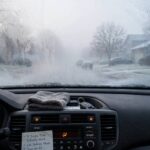
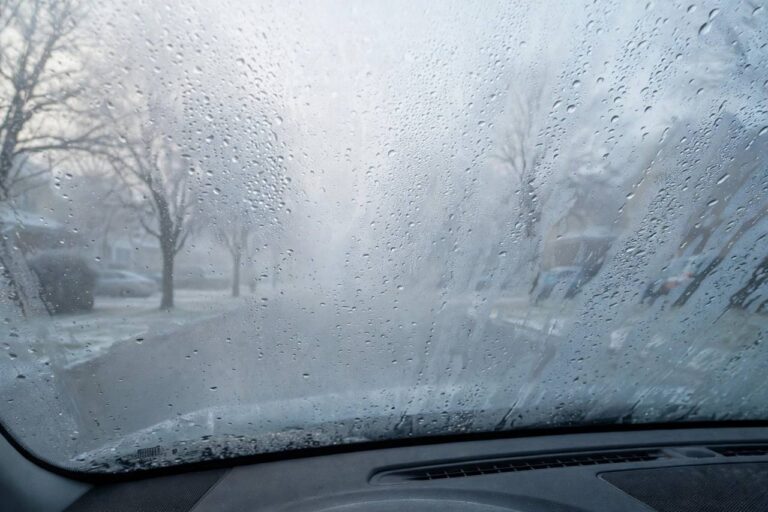
Method one — fastest and best: your car’s own defrost system, used correctly. Start the car, turn the temperature to full hot, set the fan to high, direct all airflow to the windshield (the defrost button or the windshield vent setting), and turn the AC on. Yes, the AC — in winter. The air conditioning dehumidifies the air, which clears interior fog dramatically faster than heat alone. Turn off recirculation so the system pulls in fresh outside air rather than recirculating humid cabin air.
This method takes five to ten minutes depending on ice thickness, and it works while you finish your coffee inside — no scraping required for light frost. The key detail most people miss: the engine needs to be warm for the heater to produce real heat, so the first two minutes do little. Do not sit there revving the engine; gentle idling warms it fine, and driving gently warms it faster than idling once the initial warm-up passes.
Method two — fast for light ice: a DIY de-icing spray. The classic formula is two parts rubbing alcohol to one part water in a spray bottle, with a drop of dish soap optional. Alcohol has a much lower freezing point than water, so it melts thin ice on contact. Spray it on, wait thirty seconds, and wipe with the wipers or a soft cloth. This is genuinely quick for frost and thin ice — under two minutes — but it struggles with thick ice, and you will go through a lot of spray.
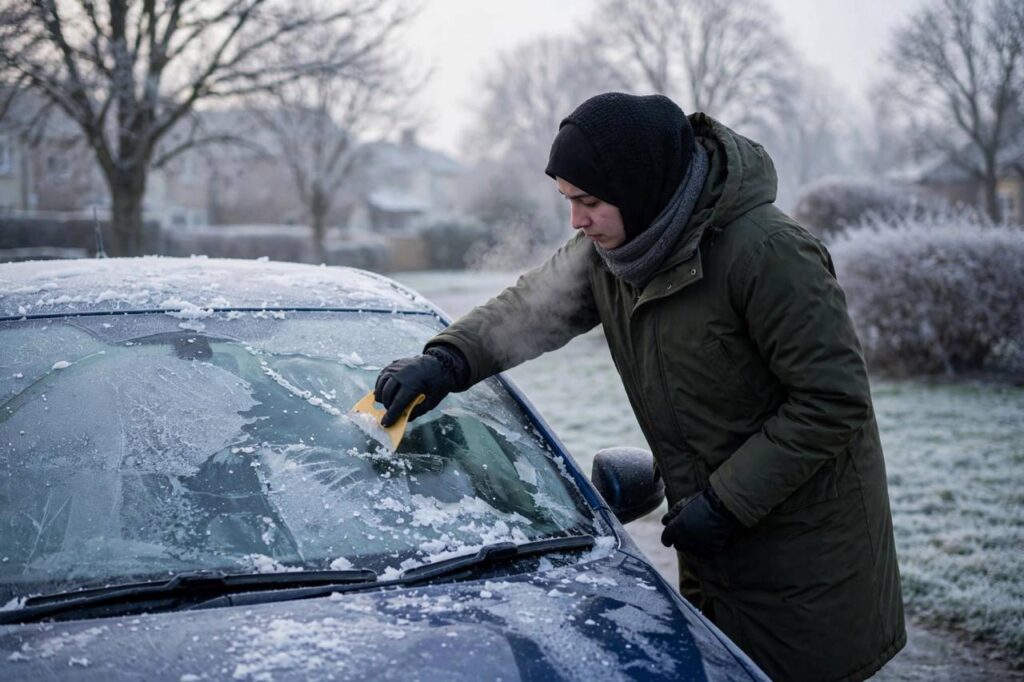
Method three — the manual standby: a proper plastic ice scraper and a snow brush. Not fast, but reliable, free, and always available. Technique matters: use the scraper’s flat edge with firm, overlapping strokes, working from the edges inward. Clear the entire windshield, not just a porthole — the peephole scrape is illegal in many places and genuinely dangerous. Brush snow off first so the scraper meets ice, not a snow-ice sandwich.
Method four — remote start and patience. If your car has remote start, use it: start the car with the defroster preset from inside the house, and by the time you walk out, the system has done the work. This is method one with a head start. The limitation is obvious — it only works if you have remote start, and it still takes the same five to ten minutes of runtime.
The honest ranking: for thick ice, the climate system plus a scraper for the edges wins. For light frost, the alcohol spray is fastest. For zero effort, remote start with the defroster preset. Combine methods freely — spray the windshield, start the defroster, scrape the loosened edges while the system works the middle.
What Never to Do (and Why)
Never pour hot or boiling water on a frozen windshield. This is the big one. The sudden temperature shock can crack the glass — and “can” becomes “will” often enough that every auto glass shop has stories. Thermal stress cracks start small and spread across the whole windshield within days. Lukewarm water is less risky but still pointless; it refreezes quickly in real cold and leaves you worse off.
Never use a metal scraper, spatula, or credit card on glass. Metal gouges windshields, and even a credit card edge can scratch the glass or damage the wiper blades. Use a purpose-made plastic scraper — they cost a few dollars and they are shaped for the job. And never scrape with the wipers running dry on ice; you will shred the wiper blades, and on some cars you can burn out the wiper motor straining against frozen blades.
Never idle your car for twenty-plus minutes in an enclosed space. Carbon monoxide is odorless and lethal, and “just warming up the car” in a closed garage kills people every winter. If you must warm up in a garage, open the garage door fully first. Better: back the car out, then let it warm up in the open air.
Never leave the car unattended and unlocked while it warms up in the driveway. Beyond the theft risk — which is real and common — many jurisdictions prohibit unattended idling, and your insurance may not cover a stolen car that was left running. Remote start systems that keep the doors locked exist precisely to solve this problem.
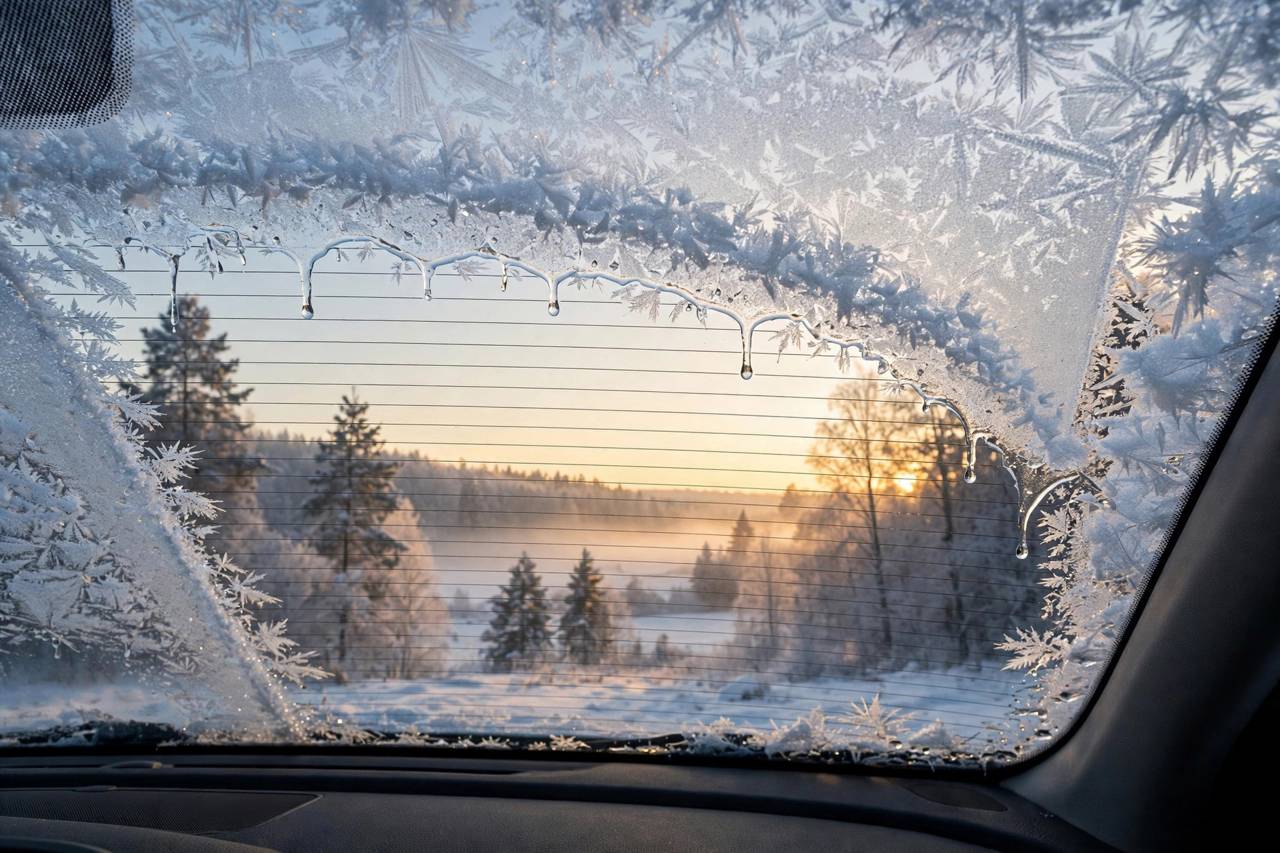
Prevent Ice Overnight: Never Scrape Again
The best defrost method is not needing one. A windshield cover — a fitted frost guard or even a large towel tucked under the wipers — prevents ice from bonding to the glass overnight. In the morning, you pull the cover off and drive away. Fifteen seconds, zero scraping. This is the single highest-return winter car habit there is.
Park facing east when possible. The morning sun hits the windshield first and starts the melting process before you even wake up. It will not clear thick ice alone, but it meaningfully reduces the work on frosty mornings. Similarly, parking in a garage — even an unheated one — keeps the car several degrees warmer than outside, which is often the difference between frost and no frost.
Treat the windshield with a water-repellent coating before winter. These coatings make it harder for ice to bond to the glass, so what does form releases much more easily. Apply it in the fall to clean glass, and reapply mid-winter. It also improves wet-weather visibility year-round, so it is not a single-season investment.
Lift the wipers off the glass overnight when ice is expected. Wipers frozen to the windshield tear when you start the car — lifting them takes two seconds and saves a set of blades. And keep the washer fluid topped up with winter-rated fluid (rated well below your area’s coldest temperatures); summer fluid freezes in the lines and the reservoir, and then you have no washer at all when road salt coats the glass.
Your Climate System: Getting the Most From It
A few details make your defroster dramatically more effective. First, the cabin air filter matters — a clogged filter chokes airflow to the windshield, and weak airflow means slow defrosting. If your defroster seems weaker than it used to be, the filter is the first suspect.
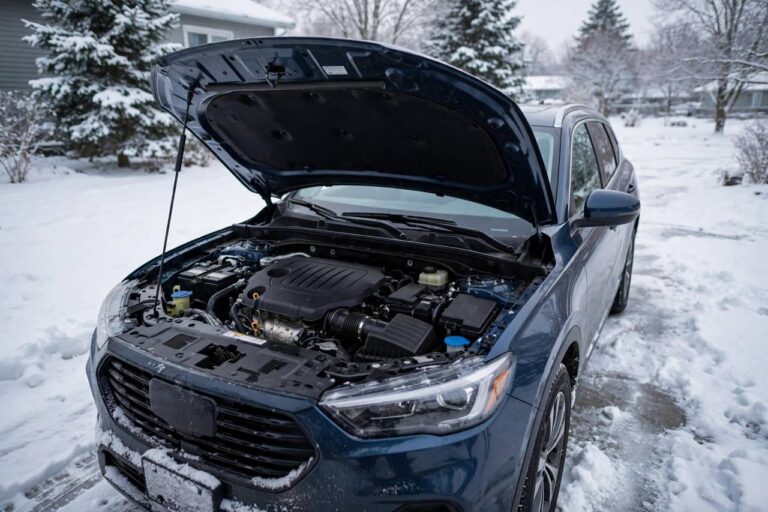
Second, understand that your heater runs on engine coolant — the hot coolant flowing through the heater core is what warms the air. That means coolant health affects defrost performance: low coolant or a stuck thermostat means lukewarm air and endless defrost times. If the heater never gets properly hot, that is a cooling-system issue worth diagnosing, and understanding what coolant does in your car explains why it matters for winter comfort as much as for the engine.
Third, clear snow from the cowl — the grille area at the base of the windshield — before starting. The HVAC intake lives there, and a snow-blocked intake starves the system of air. Thirty seconds with the snow brush on the cowl pays for itself in defrost speed.
What is the fastest way to defrost a car windshield?
Start the car, set heat to full hot, fan to high, airflow directed to the windshield, AC on, and recirculation off. This clears most ice in five to ten minutes with no scraping. For light frost, a spray of two parts rubbing alcohol to one part water melts it in under two minutes. Combining both — spray plus defroster — is the fastest overall approach.
Can you pour hot water on a frozen windshield?
No — never. The sudden temperature change can crack the windshield through thermal shock, and even lukewarm water refreezes quickly in real cold, leaving you worse off. Use the defroster system, a de-icing spray, or a plastic scraper instead. Every auto glass shop has stories of windshields cracked by hot water.
Should the AC be on when defrosting in winter?
Yes. The air conditioning dehumidifies the air, which clears interior fog far faster than heat alone. Run full hot temperature with the AC engaged, fan on high, directed at the windshield, with recirculation off so the system uses fresh outside air. This is how the defrost button on most cars is already programmed to work.
How do you prevent ice on your windshield overnight?
Use a windshield frost cover — pull it off in the morning and drive away with zero scraping. Park facing east so morning sun starts melting early, park in a garage when possible, apply a water-repellent glass coating before winter, and lift wipers off the glass overnight so they do not freeze down and tear.
Why is my car defroster not working well?
The most common causes: a clogged cabin air filter choking airflow, low engine coolant or a stuck thermostat preventing the heater from getting hot, snow blocking the HVAC intake at the base of the windshield, or recirculation left on (recirculating humid cabin air instead of fresh air). Check these in order before assuming the blower motor has failed.
The Bottom Line
Defrosting fast is a system, not a scramble: full-hot defroster with the AC on and recirculation off, a DIY alcohol spray for light frost, a plastic scraper for the stubborn edges — and never hot water, metal tools, or dry wipers on ice. Better yet, prevent it overnight with a windshield cover and you will never scrape again. Winter mornings are hard enough; your windshield should not be.