How to Clean a Burnt Pot: 6 Methods That Actually Work

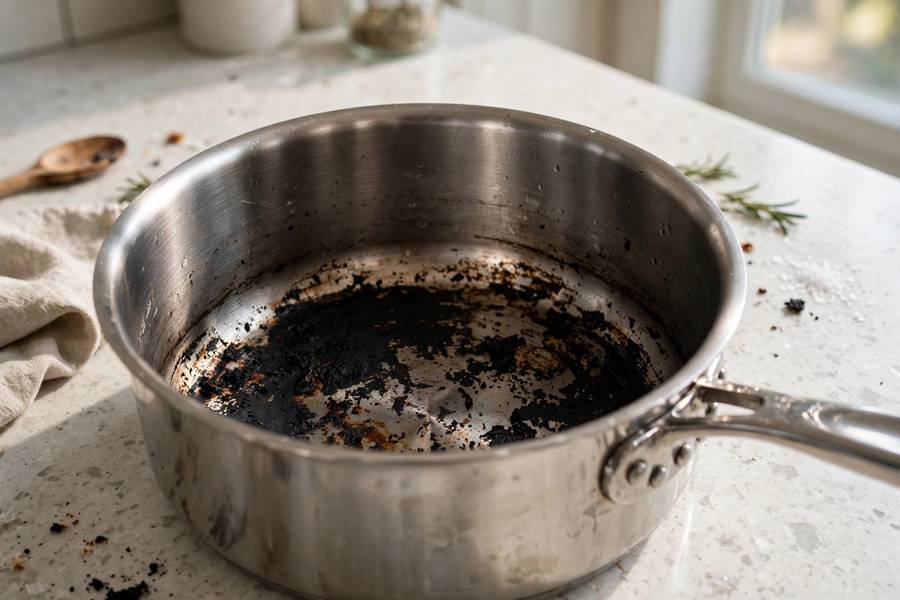
If you need to know how to clean a burnt pot, I already know how it happened, because it has happened in my kitchen more times than I will admit in print. You walked away from the stove “for just a minute,” the sauce went from simmering to scorched, and now the bottom of your favorite pot looks like the surface of the moon. I test recipes constantly, which means I burn pots with professional frequency — and over the years I have tried every rescue method on the internet, from the brilliant to the genuinely terrible. This guide is the honest result: the methods that actually work, ranked by situation, matched to your pot’s material, and including the ones I would never use again.
One important note before we start: the right method depends on what your pot is made of. Stainless steel forgives almost everything. Nonstick, enamel, aluminum, and cast iron each have rules, and I will flag them as we go, because the fastest way to turn a burnt pot into a ruined pot is using the wrong rescue on the right cookware.
How to Clean a Burnt Pot: The Method That Works First
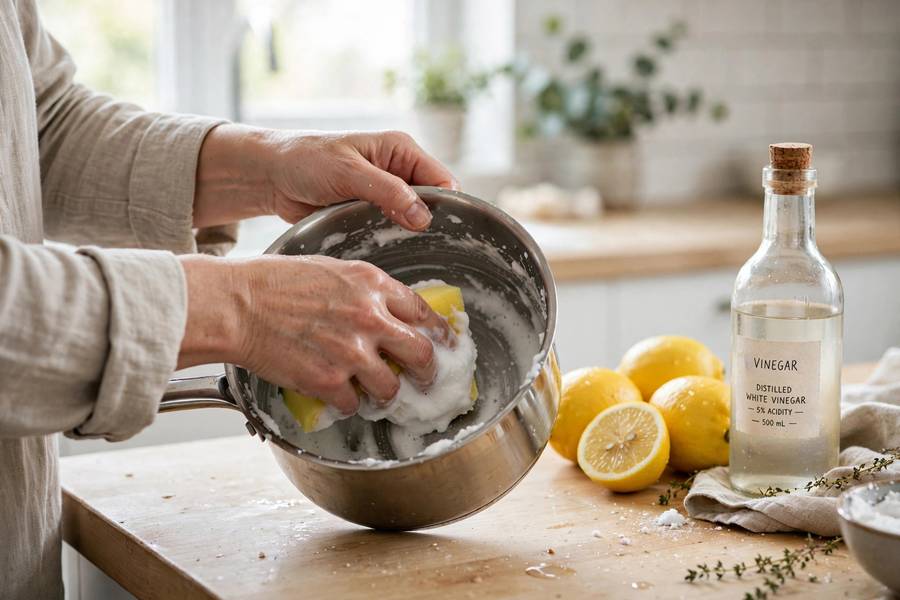
Start here, because this works on most burnt pots and it uses things already in your kitchen. Fill the pot with enough water to cover the burnt area, add a cup of white vinegar, and bring it to a boil. Let it simmer for five to ten minutes — you will see the burnt layer starting to loosen and lift. Take it off the heat, pour out most of the liquid, and add two to three tablespoons of baking soda. It will fizz dramatically. That fizzing is the point: the reaction between the acid and the base lifts carbonized residue mechanically.
Once the fizzing settles, use a wooden spoon or a non-scratch sponge to scrub. Most moderate burns come off at this stage with surprisingly little effort. Rinse, wash with dish soap as normal, and assess. If the pot looks good, you are done — this single method resolves maybe two-thirds of burnt pots in my experience. If black patches remain, move on to the targeted methods below rather than repeating the boil endlessly.
Material check: safe for stainless steel and enamel-coated cookware. Go easy with vinegar on bare aluminum — prolonged acid contact can discolor it. Fine for cast iron in a one-off rescue, but dry and re-season the pan afterward.
Method 2: The Baking Soda Paste (Best for Stubborn Spots)
For burnt patches that survived the boil, make a paste of three parts baking soda to one part water — thick, like toothpaste. Spread it generously over the burnt areas and let it sit for at least 30 minutes; for bad burns, several hours or overnight. The mild abrasiveness of baking soda does the work without the scratching risk of harsher scouring powders.
Scrub with a soft sponge or a nylon brush, working in circles. For stainless steel with truly welded-on carbon, you can step up to a ball of crumpled aluminum foil as the scrubber with the baking soda paste — it sounds aggressive, but on stainless it is remarkably effective and does not scratch the way steel wool does. I would not use the foil trick on anything else, though.
Material check: the paste is safe for everything, including nonstick — just use a soft sponge on nonstick, never the foil. On nonstick, honestly, the paste plus patience is your whole toolkit; anything more aggressive risks the coating, and a damaged nonstick coating means the pot is done.
Method 3: The Lemon Boil (Best for Stains and Smell)
Quarter two or three lemons, toss them in the pot with a few inches of water, and boil for five to ten minutes. The citric acid loosens burnt residue the way vinegar does, but lemons have a second talent: they deodorize. If your pot smells like a campfire even after cleaning, this is the fix — simmer lemon slices in water for ten minutes and the burnt smell genuinely disappears instead of being masked.
This method is also excellent for the brownish discoloration that lingers after the black carbon is gone — the heat tint and mineral staining that make a pot look permanently dirty even when it is clean. A lemon boil followed by a baking soda scrub restores stainless steel to something close to its original shine.
Material check: safe across the board, including enamel and aluminum. This is my go-to recommendation for enamel-coated Dutch ovens, where you want effective but gentle.
Method 4: The Dishwasher Tablet Soak
This one sounds like internet nonsense and works like a small miracle. Fill the burnt pot with hot water, drop in a dishwasher tablet (the powdery kind, not the gel pods), and let it soak for one to three hours. The concentrated enzymes and detergents in the tablet break down carbonized food shockingly well. After soaking, the burnt layer usually wipes away with a soft sponge.
I was skeptical the first time — it felt like one of those hacks that cannot possibly work — and then I watched a pot I had written off come clean with almost no scrubbing. It is now my rescue method for the worst cases, the ones where the bottom is a solid black landscape. One caution: do not leave nonstick or enamel soaking in this solution for hours; the strong detergents can dull finishes with prolonged exposure. An hour is plenty.
Method 5: Salt Scrub (Best for Cast Iron)
For cast iron — and only really for cast iron — coarse salt is the classic rescue. Pour a generous layer of coarse kosher salt into the dry pot, add just enough water to make a gritty slurry, and scrub with a stiff brush or a folded paper towel. The salt acts as an abrasive that will not harm the seasoning the way soap-and-scrub marathons can, and it absorbs residual grease at the same time.
Rinse, dry the pot immediately and thoroughly (cast iron’s enemy is water left sitting), warm it on the stove to evaporate every trace of moisture, and rub in a thin layer of oil while it is warm to maintain the seasoning. This whole ritual takes five minutes and it is the reason cast iron can survive decades of exactly the kind of cooking that burns pots.
Material check: ideal for cast iron and carbon steel. Fine on stainless in a pinch. Skip it on nonstick and enamel — too abrasive for coatings.
Method 6: The Overnight Soak (For When You Have Given Up Scrubbing)
Sometimes the answer is time, not chemistry. Fill the pot with the hottest tap water you have, add a good squirt of dish soap and a tablespoon of baking soda, and walk away until morning. Eight hours of soaking softens even badly carbonized layers to the point where they release with light scrubbing.
This is the method for the pot you burned during a big batch cooking session and discovered the next day — the “I will deal with it tomorrow” pot. Tomorrow’s version of you will be grateful, because the overnight soak does the hardest part of the work while you sleep. It is also the gentlest method on this list, which makes it the right first try for expensive enamel cookware you are nervous about.
What Never to Do to a Burnt Pot
Just as important as the methods is the list of things that will make everything worse. Do not pour cold water into a screaming-hot burnt pot — thermal shock can warp stainless steel and crack enamel. Let it cool first, always. Do not use steel wool or metal scouring pads on nonstick, enamel, or aluminum — you will trade a burnt pot for a scratched one, which is worse. Do not use bleach or oven cleaner on cookware — they can react with metals and leave residues you do not want near food. And do not put a badly burnt nonstick pot back into service if the coating is flaking or bubbled — no cleaning method restores a destroyed coating, and at that point the honest answer is replacement.
How to Keep Pots From Burning Again
Rescue is good; prevention is better, and most burnt pots share the same three causes. First, heat too high — the overwhelming majority of scorching happens because the burner was a notch or two above what the dish needed. Second, unattended cooking — set a timer even for “just a minute,” because a minute is never a minute. Third, thin-bottomed pots on powerful burners, which create hot spots that scorch food in the center while the edges look fine. A heavy-bottomed pot, moderate heat, and an occasional stir prevent more burnt pots than any cleaning method ever will.
Frequently Asked Questions
How do you clean a badly burnt pot without scrubbing it to death?
Use chemistry instead of force: the vinegar boil followed by baking soda, or the dishwasher tablet soak for one to three hours. Both loosen carbonized food so it wipes away with a soft sponge. The overnight hot-water soak is the gentlest option and works while you sleep.
Can you save a burnt nonstick pot?
If only food is burnt on, yes — use the baking soda paste with a soft sponge, or the gentle overnight soak, and never anything abrasive. If the nonstick coating itself is flaking, bubbling, or peeling, no: the coating cannot be restored, and the pot should be replaced.
Does baking soda and vinegar really clean burnt pots?
Yes, and it is the method I reach for first. Boiling diluted vinegar loosens the burnt layer, and adding baking soda afterward creates a fizzing reaction that lifts residue mechanically. It resolves most moderate burns with minimal scrubbing, and both ingredients are already in your kitchen.
How do you clean a burnt enamel Dutch oven?
Stick to gentle methods: the lemon boil, the baking soda paste with a soft sponge, or the overnight soak. Avoid steel wool, metal utensils, and prolonged soaks in harsh detergents, all of which can dull or damage the enamel. Never plunge a hot enamel pot into cold water — thermal shock can crack the coating.
Why does my pot still smell burnt after cleaning?
The smell lives in microscopic residue and in the pot’s pores, not in visible dirt. Simmer lemon slices in water inside the pot for ten minutes — the citric acid and steam genuinely neutralize the odor rather than masking it. If the smell persists after that, one more baking soda paste scrub usually finishes it.
Is it safe to cook in a pot after it has been badly burnt?
Generally yes, once it is properly cleaned — burnt food residue is unpleasant, not poisonous, and stainless steel, cast iron, and enamel are all fine after a good rescue. The exception is damaged nonstick: if the coating is compromised, replace the pot rather than continuing to cook in it.
The Pot Deserves a Second Chance
Here is what years of burning pots has taught me: almost every burnt pot is salvageable, and the rescue usually takes less time than the trip to buy a replacement. Start with the vinegar boil, escalate to the paste or the tablet soak for stubborn cases, match the method to the material, and never pour cold water into a hot pot. Your cookware has survived worse than a scorched sauce — it just needs the right chemistry and a little patience. Now go set a timer next time. I say this with love, and from experience.