How to Dress Business Casual for Women: 5 Formulas


Learning how to dress business casual for women is harder than it should be, because nobody will tell you what it actually means. “Business casual” is the dress code equivalent of “dress nicely” — technically an instruction, practically a riddle. After years of helping women build work wardrobes, I can tell you the secret: stop hunting for individual perfect outfits and start using formulas. A formula is a repeatable combination — blazer plus knit top plus tailored trousers — that you can run in different colors and fabrics forever. Below are five of them, one for every setting where business casual shows up, plus the dos and don’ts that keep you polished without ever second-guessing yourself in the morning.
Not the untouchable runway kind of fashion — the real kind. What to wear to work, how to build a wardrobe that lasts, how to look good without spending a fortune. Every look here uses full-coverage, elegant pieces, because polish and modesty are not opposites; they are the same thing done well.
How to Dress Business Casual for Women: What It Actually Means
Business casual sits between formal business wear (the full suit, the power dress) and casual (jeans and sneakers). The line moves by industry — a law firm and a design studio mean different things by it — but the core is constant: polished, put-together, professional, without the stiffness of formal suiting.
Here is the practical test I give everyone: if your CEO walked in unexpectedly, would you feel fine? If a client saw you on a video call, would you look intentional? Business casual is the wardrobe that passes both tests without looking overdressed at your own desk. When in doubt, it is always safer to be slightly overdressed than slightly under — nobody ever got judged for looking too polished.
Formula 1: The Office Anchor (Blazer + Knit + Tailored Trousers)
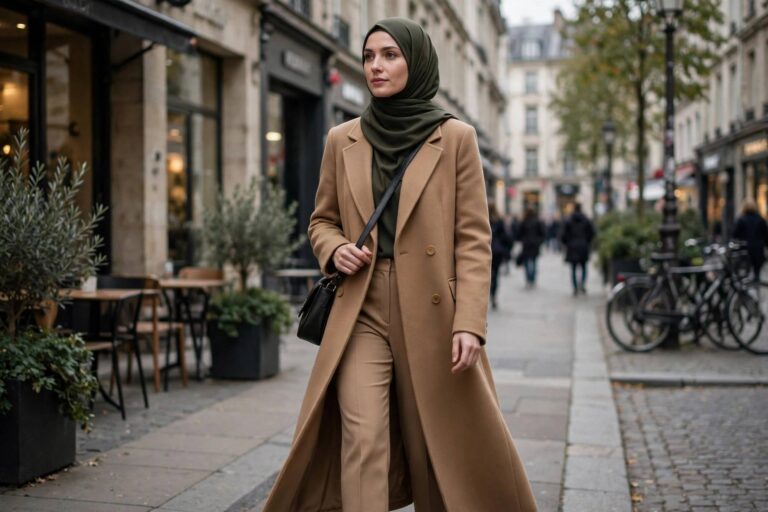
This is the workhorse — the formula that covers 80 percent of office days. A well-fitting blazer in navy, black, or camel; a simple knit top or blouse underneath (crew neck or modest V, opaque fabric, no clinging); tailored trousers or a knee-length-or-longer pencil skirt in a complementary neutral. Closed-toe flats, loafers, or a low block heel.
Why it works: the blazer does all the professional heavy lifting, which means everything underneath can be simple and comfortable. Buy the blazer in the best quality you can afford — it is the visible piece — and save on the knit tops, which are easily replaced. One blazer, three tops, two trousers: that is two weeks of outfits from six pieces. This is the capsule logic that makes work wardrobes affordable, and if you want to build the whole system, start with capsule wardrobe essentials and build outward.
Formula 2: The Polished Dress (One-and-Done)
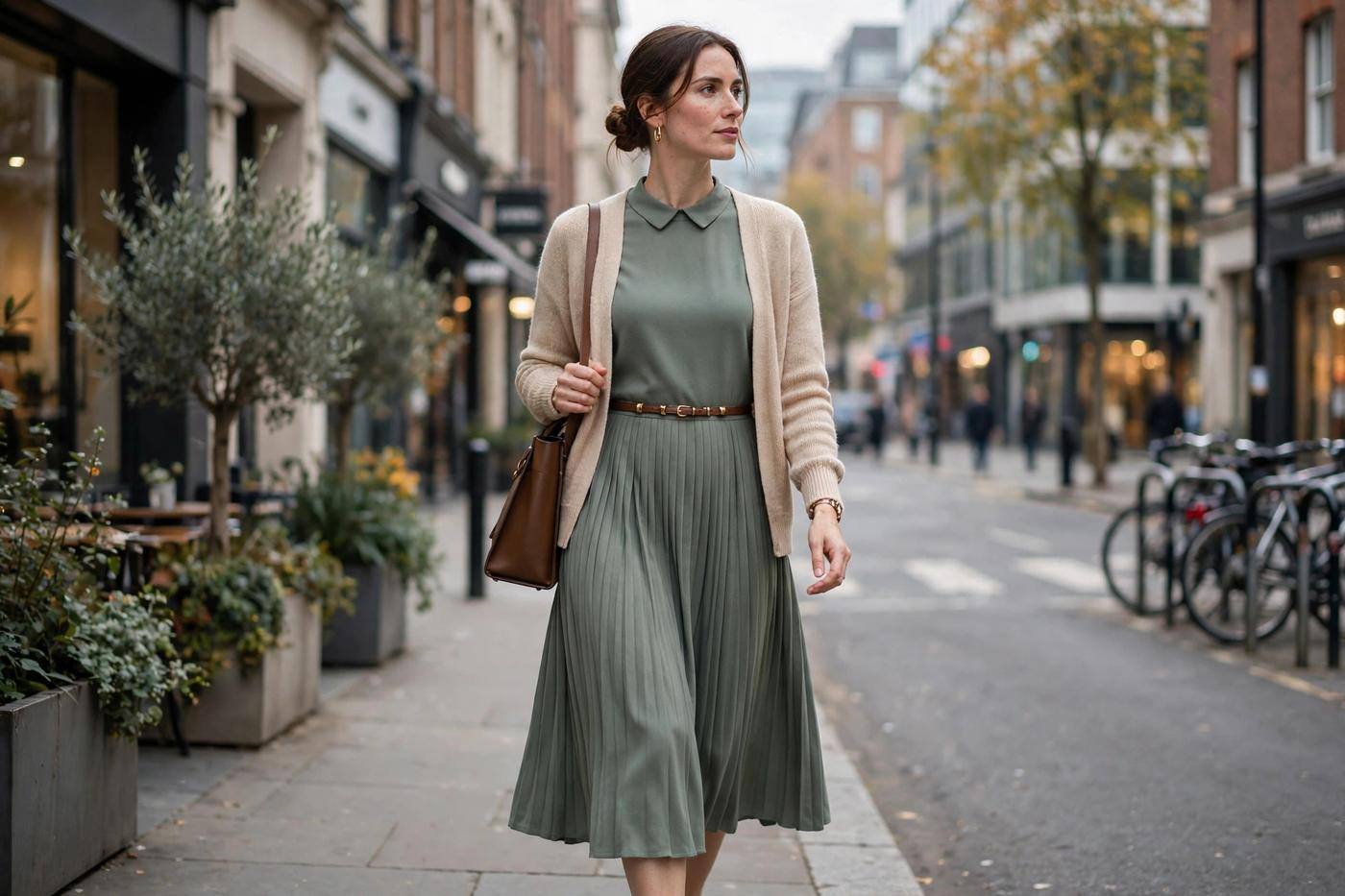
Some mornings you do not want to think. That is what the work dress is for: a midi-length sheath or fit-and-flare in a solid color or subtle print, with sleeves (short sleeves fine, sleeveless needs a blazer or cardigan over it in most offices), opaque fabric, and a neckline that stays put when you sit. Add a blazer for meetings, lose it at your desk.
The one-and-done dress is the highest ROI piece in a work wardrobe because it eliminates decision fatigue entirely. Look for wrinkle-resistant fabrics with a little stretch — you will wear it weekly, so it needs to survive the week. A navy or black midi dress with a cardigan or blazer is appropriate in virtually every business-casual office on earth.
Formula 3: Remote and Video Calls (Waist-Up Strategy)
Remote work changed business casual into a waist-up discipline. The camera sees your top, your background, and your grooming — that is the whole canvas. A structured knit blazer, a crisp blouse, or a polished sweater in a solid color reads professional on camera; busy prints and stark white (which blows out on webcams) do not.
Two rules for video: finish the outfit anyway, and mind the details the camera magnifies. “Finish the outfit” because the doorbell rings, the camera slips, and psychology matters — people who dress fully for work report feeling more focused, and I believe them. Details the camera magnifies: wrinkled collars, shiny fabrics, and distracting jewelry. Keep it simple, keep it intentional. And good lighting beats an expensive blouse every time — face a window and you will look better than any outfit upgrade can manage.
Formula 4: The Client Meeting Upgrade
Client-facing days get one notch above your daily baseline. If your office baseline is Formula 1, the client version adds structure: the sharper blazer, the silk-feel blouse instead of the knit, trousers with a crease, the better shoes. Think of it as your everyday formula with the volume turned up 15 percent — recognizably you, just the version that closes deals.
The psychology is real: dressing slightly above the room’s baseline signals that you take the meeting seriously, and people respond to that signal before you say a word. Style is not about money. It is about knowing yourself — and knowing the room.
Formula 5: The Work Event (Dinner, Conference, Holiday Party)
Work events are business casual’s trickiest setting because the code shifts by event. The safe formula: a midi dress or an elevated separates combination (silk-feel blouse, tailored wide-leg trousers) in a richer fabric or deeper color than daytime, with one statement element — interesting shoes, a bold-but-tasteful piece of jewelry, a textured clutch. You want “celebratory professional,” not “nightclub” and not “board meeting.”
For conferences, default to your Formula 1 office anchor — you will be on your feet all day and photographed constantly. For the holiday party, the midi dress in a festive-but-modest cut is undefeated. When the invitation says “festive attire” and nothing else, that dress plus the statement element is the answer.

The Dos and Don’ts
Do invest in fit. A $60 blazer tailored for $25 looks better than a $300 blazer off the rack. Fit is the whole game in workwear — shoulders, sleeve length, trouser hem. Find a tailor and become a regular.
Do build on neutrals. Navy, black, grey, camel, white, and olive mix with everything and always look professional. Add color through tops, scarves, and shoes once the neutral foundation is solid.
Do keep a desk kit. A spare pair of flats, a lint roller, a stain stick, and a blazer on the back of your chair cover 90 percent of wardrobe emergencies.
Do not wear anything you have to manage. If you are tugging, adjusting, pinning, or worrying about it, it is not work-appropriate — regardless of what it looks like standing still in the mirror. The best-dressed woman in the office is the one who forgot what she was wearing.
Do not confuse casual Friday with the weekend. Dark, well-fitting jeans with a blazer can work in genuinely casual offices — but distressed denim, sneakers, and graphic tees do not belong in business casual, whatever Friday claims.
Do not neglect grooming. Neat hair, clean shoes, and maintained nails do more for a professional impression than any single clothing item. Polish is a head-to-toe project.
Building the Wardrobe on a Budget
You do not need a closet overhaul; you need about twelve pieces that all work together. Start with the formulas above and buy in this order: the blazer, two trousers, three tops, one dress, shoes, then the cardigan. Shop end-of-season sales for the blazer and trousers, save on tops, and never pay full price for anything in January or July. Thrift stores in professional neighborhoods are goldmines for blazers — quality wool for a fraction of retail, with tailoring making them look custom. Maintain what you own: a clothes brush, cedar blocks, and prompt repairs keep a small wardrobe looking expensive for years. Style is not about money — it is about knowing yourself, and a small wardrobe you understand beats a large one you do not, every single time.
The 12-Piece Business Casual Capsule
If you are building from scratch, here is the exact shopping list — twelve pieces that combine into weeks of outfits: two blazers (navy, black or camel), three knit tops or blouses (white, one color, one print), two pairs of tailored trousers (black, navy or grey), one midi dress (navy or black), one cardigan, one pair of loafers, one pair of closed-toe flats, and one low block heel. Everything neutral, everything interchangeable.
The math is the magic: two blazers times three tops times two trousers is twelve combinations before you even touch the dress. Add the cardigan as a layering option and you are past three weeks without repeating a look. Buy the blazers and trousers in the best quality your budget allows, save on the tops, and replace shoes when they wear — tired shoes undo an entire outfit faster than anything else you own.
Frequently Asked Questions
What is considered business casual for women?
Business casual for women generally means polished, professional clothing without formal suiting: blazers, blouses, knit tops, tailored trousers, midi skirts and dresses, and closed-toe shoes. It sits between business formal (full suits) and casual wear (jeans, sneakers, t-shirts). The exact line varies by industry — when unsure, dress slightly up rather than down.
Can women wear jeans for business casual?
In genuinely casual offices, dark, well-fitting, non-distressed jeans paired with a blazer and polished shoes can pass — but this depends entirely on your workplace culture. In traditional industries (law, finance), jeans remain inappropriate. Observe what senior women in your office wear on Fridays before deciding.
Are dresses business casual?
Yes — a midi-length dress in an opaque fabric with modest coverage is one of the easiest business casual options. Sheath, fit-and-flare, and shirt-dress styles all work. Pair sleeveless dresses with a blazer or cardigan in conservative offices, and keep hemlines at or below the knee.
What shoes are business casual for women?
Closed-toe flats, loafers, low block heels, and polished ankle boots are the core business-casual shoe wardrobe. Avoid sneakers, flip-flops, stilettos, and anything overly casual or overly evening. Comfort matters — you will be on your feet — so invest in quality here.
How do you dress business casual in summer?
Stick to the formulas with lighter fabrics: linen-blend blazers, breathable cotton blouses, and midi skirts instead of trousers. Keep coverage the same — heat does not change the dress code — and choose sweat-friendly fabrics in darker colors or prints. A sleeveless shell under a light blazer handles both the commute and the air conditioning.