How to Sleep on a Long Flight: A System That Works

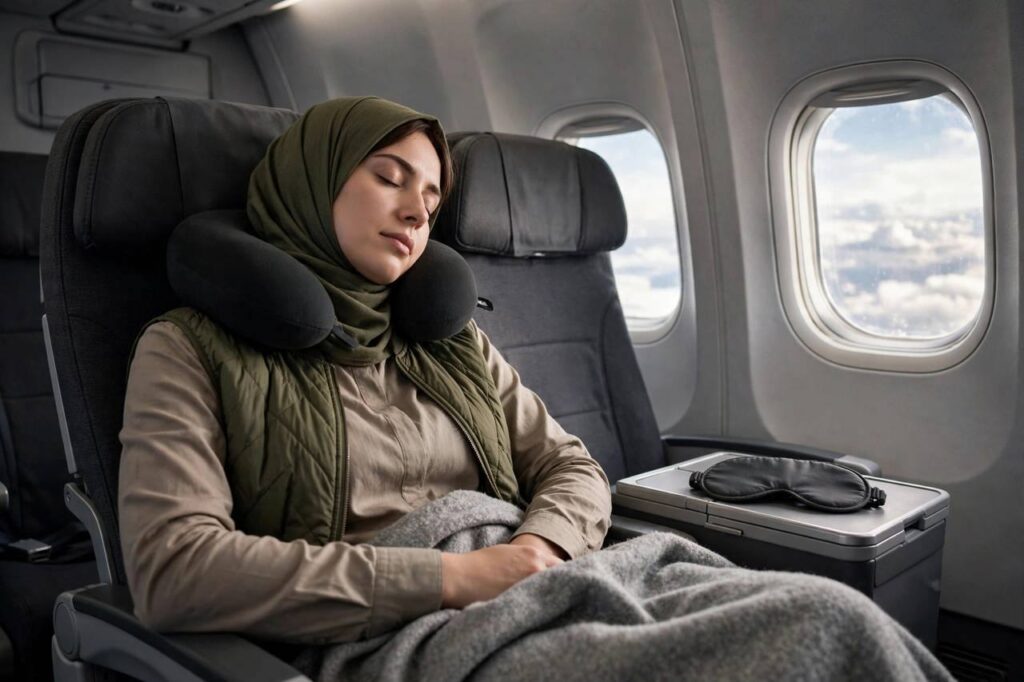
There is a special kind of exhaustion that only exists at 35,000 feet: the wired-but-tired limbo of a long-haul flight, where your body has no idea what time it is and the cabin lights seem designed to keep it that way. Learning how to sleep on a long flight is not really about one trick — it is about building a small system out of your seat choice, your gear, your timing, and a wind-down routine that convinces your body it is bedtime even though you are strapped into a metal tube. I fly long-haul several times a year, and after a lot of trial and very groggy error, I have a method that genuinely works.
Here is the mindset shift that changed everything for me: stop trying to “fall asleep on a plane” and start trying to recreate the conditions of sleep. Your brain does not care that you are over the Atlantic. It cares about darkness, quiet, comfort, temperature, and routine. Give it enough of those signals and it will do the rest — even in economy.
How to Sleep on a Long Flight: Start Before You Board
The most important sleep decisions happen before you ever sit down. First, choose your seat like it matters, because it does. Window seats win for sleep, full stop — you get a wall to lean against and nobody climbs over you. Avoid seats near the lavatories (noise, light, foot traffic) and the very back row if the seats do not recline fully. If you can, pick a flight that departs in the evening at your destination’s time; arriving rested is much easier when the flight overlaps with a normal night.
Second, tire yourself out strategically. I am not suggesting a marathon, but a decent walk through the terminal, some light stretching, and staying awake during a layover all build the sleep pressure you will need later. The travelers who sleep best on planes are usually the ones who arrive at the gate pleasantly tired, not the ones who napped for three hours in the lounge.
Third, eat with intention. A heavy, greasy airport meal is the enemy of in-flight sleep — your digestive system working overtime is not conducive to rest. Eat a reasonable meal before boarding, and once airborne, eat light. I also cut caffeine at least six hours before I plan to sleep on the plane, which usually means no coffee after the first hour of the flight for me.
Build Your Sleep Kit: The Gear That Actually Matters
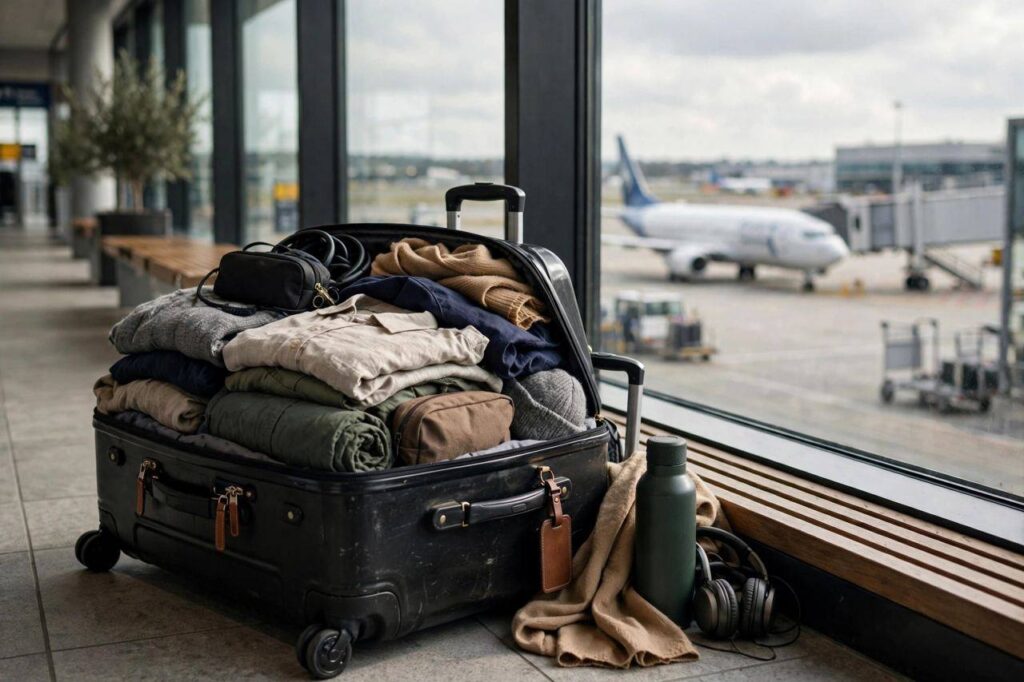
You do not need a suitcase of gadgets. You need four things, and quality matters more than quantity:
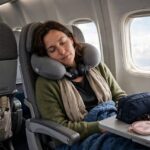
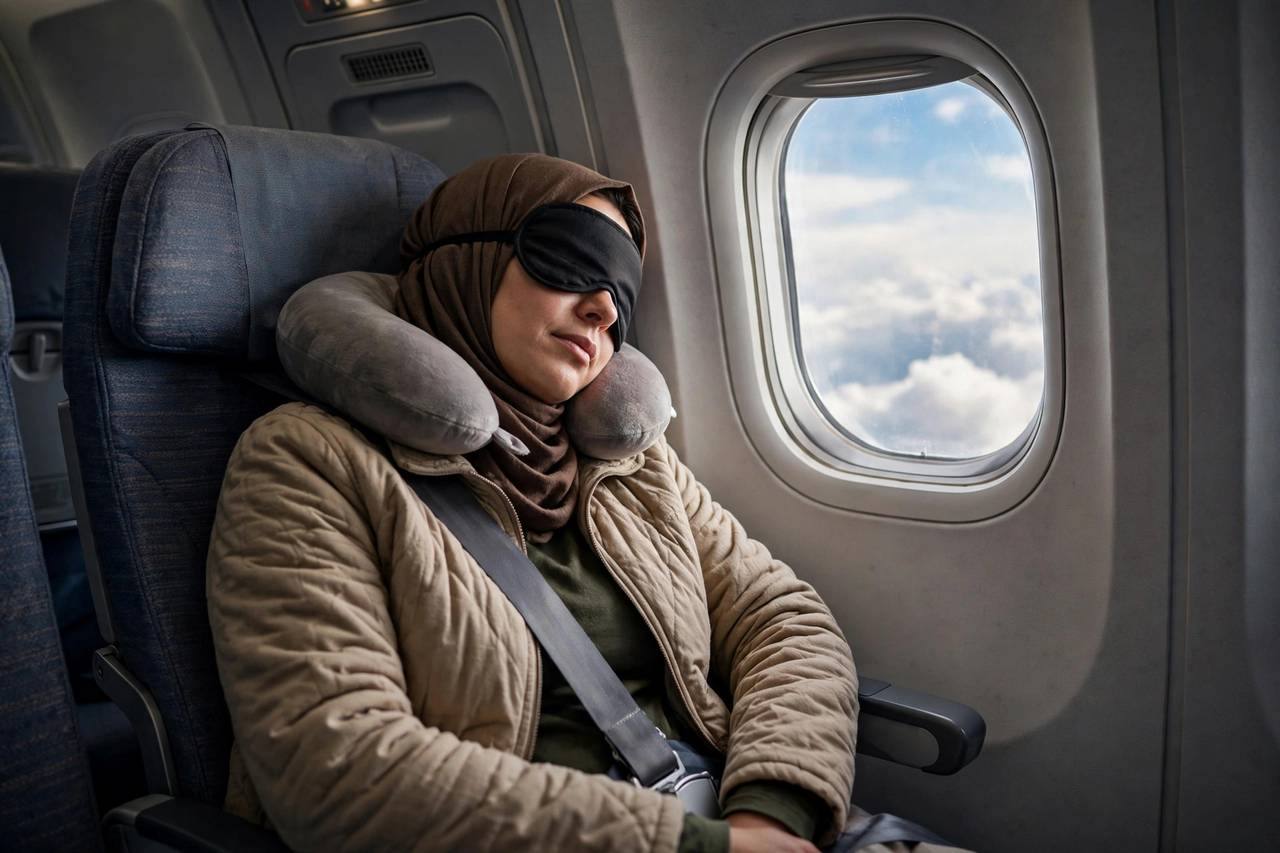
- A real neck pillow — the memory foam kind. The cheap inflatable ones are better than nothing, but a contoured memory foam pillow that actually supports your chin keeps your head from doing the dreaded forward slump. Wear it backward (opening at the back of your neck) if you lean against the window — it works better that way.
- A contoured eye mask. Not the free flat one from the amenity kit — a molded mask that does not press on your eyelids. Total darkness is the single strongest sleep signal you can give your brain, and cabin crews love turning the lights on at surprising moments.
- Noise control. Foam earplugs are cheap and effective. Noise-canceling earbuds or headphones are better — they erase the engine drone that otherwise keeps your nervous system on low alert all night. Either way, block the sound.
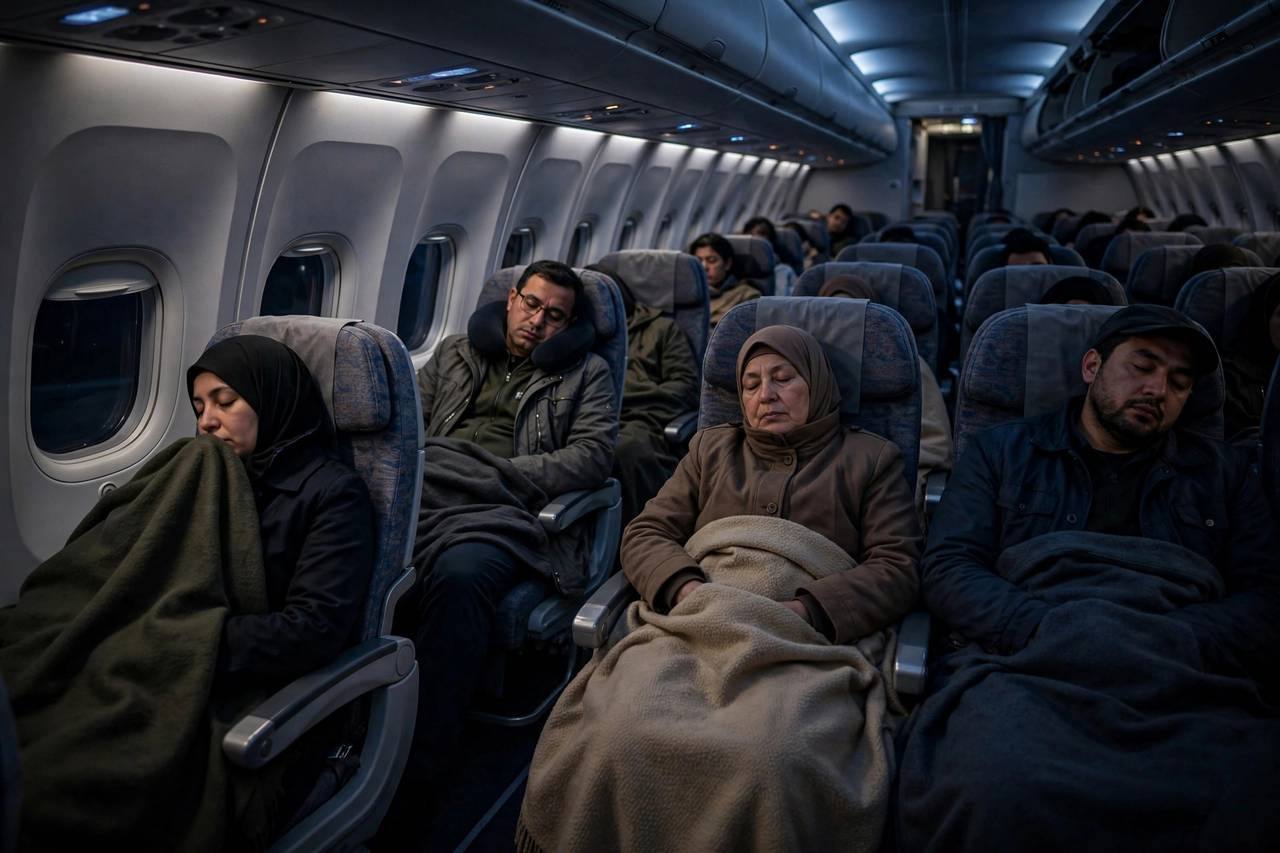
- Warm layers. Cabins are cold, and your body temperature drops as you fall asleep. A hoodie, warm socks, and the blanket (or your own travel blanket) make the difference between dozing and actually sleeping.
Optional but worth it: a small inflatable footrest or even your carry-on positioned to elevate your feet slightly, and lip balm plus moisturizer, because cabin air is brutally dry and physical discomfort is the enemy of sleep.
Time Your Sleep to Your Destination
This is the part most people get wrong. Sleep on the plane according to your destination’s clock, not your departure city’s. If you are flying from New York to London on an evening flight, that is basically a normal bedtime in London — sleep as much of the flight as you can. If you are flying westward on a daytime flight, staying awake (or napping briefly) sets you up better for arrival.
A day or two before the trip, start nudging your schedule toward the destination time zone — even an hour helps. And once you are on board, set your watch to destination time immediately. It sounds like a small psychological trick because it is one, but it works: your brain starts orienting to the new schedule instead of clinging to the old one.
For very long flights (12+ hours), think in terms of one solid sleep block rather than scattered naps. A single four-to-six-hour stretch does more for you than three two-hour fragments. Protect that block: mask on, headphones in, do-not-disturb energy.
The In-Flight Wind-Down Routine
About thirty minutes before you want to sleep, run a condensed version of your home bedtime routine. Your brain is a pattern-matching machine — give it the familiar sequence and it starts powering down:
- Decline the meal service or eat minimally if it falls during your planned sleep window. You can always ask the crew for food later.
- Change into comfortable clothes if you can — or at least lose the shoes, loosen the waistband, and put on the warm socks.
- Do a bathroom trip so you are not waking up an hour later.
- Dim your world: mask on, earplugs or headphones in, overhead light off, screen off or set to the dimmest warm setting.
- Wind your mind down with something boring and familiar — a book you have read before, a calm playlist, a meditation app. Avoid thrillers, work email, and anything that spikes adrenaline.
- Recline thoughtfully. Recline your seat (it is there for a reason), but do it slowly and check behind you first — a little courtesy goes a long way at 2 a.m.
The routine does not need to be elaborate. It needs to be consistent — the same sequence every time you fly long-haul, so your body learns what it means.
Positions and Tricks for Economy Seats
Let us be honest: economy seats were not designed for sleep. But small adjustments add up:
- The window lean: pillow against the window or the wall, head tilted onto it. The most reliable economy sleep position ever discovered.
- The tray-table desk nap: for some people, folding the tray table down and resting the head on folded arms (on a pillow) works better than leaning back. Try it on a short flight first.
- The foot elevation: feet flat is the enemy. Anything that raises your feet even slightly — a bag under them, legs crossed — improves comfort disproportionately.
- The lumbar roll: a small rolled-up sweater behind your lower back prevents the slow slide into the dreaded C-shape that wakes you with back pain.
- Seatbelt over the blanket: fasten it visibly over your blanket so the crew does not wake you during turbulence checks. This is the single best “do not disturb” sign on a plane.
What About Sleep Aids?
People ask me about this constantly, so let us address it directly. Melatonin is the gentlest option — it does not knock you out so much as nudge your body clock, which makes it genuinely useful for time-zone adjustment. A low dose taken 30 minutes before your planned sleep can help, and it is worth trying at home first to see how you respond.
Stronger sleep medications are a personal decision to make with your doctor, not with a travel blog. What I will say from experience: test anything new before the flight, never for the first time at cruising altitude. You want to know how groggy you will be on landing, and a plane is a terrible laboratory. Also be cautious with alcohol — a glass of wine feels relaxing but fragments sleep badly, and dehydration at altitude makes everything worse. The travelers who sleep best are usually the boring ones: hydrated, uncaffeinated, and alcohol-free.
Waking Up Right (Yes, This Is Part of Sleeping Well)
How you wake up determines whether your in-flight sleep pays off. Set a quiet alarm for about 45 minutes before landing — enough time to wake gradually rather than being jolted by the descent announcement. Drink a full glass of water immediately; you are dehydrated even if you do not feel it. Splash cold water on your face. Eat something with protein if food is available. And get light into your eyes as soon as possible after landing — daylight is the strongest reset signal for your body clock, stronger than any supplement.
If you arrive in the morning at your destination, resist the nap. I know. It is the hardest advice in travel and the most important: push through to a normal local bedtime and your jet lag will be a fraction of what it could be. If you absolutely must nap, keep it under 30 minutes and before mid-afternoon local time.
Frequently Asked Questions
How to sleep on a long flight in economy?
Choose a window seat away from lavatories, bring a memory foam neck pillow, contoured eye mask, and noise-canceling earbuds, dress warmly, and run a consistent wind-down routine (bathroom, comfortable clothes, mask on, screens off). Fasten your seatbelt over your blanket so the crew does not wake you. Timing your sleep to your destination’s clock matters as much as any gear.
Is it better to sleep or stay awake on a long flight?
It depends on direction and timing. On eastbound overnight flights, sleeping as much as possible aligns you with your destination and reduces jet lag. On westbound daytime flights, staying awake (or limiting yourself to a short nap) usually works better, since you will want to sleep at a normal local bedtime after arrival. Match your sleep to the destination’s clock.
Does melatonin help you sleep on planes?
Melatonin can help, mainly by nudging your body clock toward the destination time zone rather than acting as a sedative. A low dose taken about 30 minutes before your planned sleep is the common approach. Try it at home first to see how you respond, and talk to your doctor if you take other medications or have health conditions.
Why can’t I fall asleep on planes even when I’m tired?
Usually it is a combination of light, noise, discomfort, and anxiety keeping your nervous system alert. The fix is systematic: total darkness (contoured mask), quiet (earplugs or noise-canceling), physical comfort (pillow, warm layers, foot support), and a wind-down routine that signals bedtime. Most “I can’t sleep on planes” people have simply never stacked all four at once.
What is the best seat for sleeping on a plane?
A window seat in a quiet section of the cabin — away from lavatories and galleys — is best for sleep because you get a wall to lean on and no one climbs over you. Avoid bulkhead rows if you want under-seat storage for your sleep kit, and avoid exit rows if the seats there do not recline.
Learning how to sleep on a long flight is one of those skills that pays compound interest: every trip gets a little easier, and you start arriving as a functioning human instead of a zombie. Build the kit, pick the seat, time it to your destination, and run the routine. The plane is uncomfortable — your system does not have to be.