When to Send Wedding Invitations Timeline: The Complete Guide

Of all the wedding stationery questions I get as a planner, the most common is some version of: when to send wedding invitations timeline — and when do the save-the-dates go out, and when are RSVPs due, and does any of this change for a destination wedding? The Knot and every wedding site publish versions of this timeline, but they rarely explain the why behind each date — which is what lets you adapt the timeline when your wedding isn’t standard. Here’s the full count-back system I use with clients, from save-the-dates to RSVP deadline, adjusted for formality level and wedding type. (Coordinating with dress shopping? See the wedding dress shopping timeline.)
The principle behind every date below: each mailing exists to give guests enough time to act — book travel, request time off, arrange childcare, choose a gift. Work backward from what guests need, and the timeline builds itself.
The Master Timeline: Count Back From Your Wedding Date
- 12+ months out — Save-the-dates (destination weddings): If guests need passports, flights, and multiple days off, give them a year. This isn’t optional for destination weddings; it’s the difference between guests attending and guests sending regrets.
- 8–10 months out — Save-the-dates (standard weddings): For local or domestic weddings where most guests drive in. Send to everyone you’re inviting — save-the-dates are a commitment; everyone who gets one must get an invitation.
- 6–8 weeks out — Wedding invitations mailed (standard): The classic window. Enough time for guests to plan, not so much they forget. Mail on a Tuesday or Wednesday for best delivery timing (avoid weekend postal lulls). And how to address wedding invitations to married couples covers the trickiest addressing etiquette.
- 10–12 weeks out — Wedding invitations mailed (destination or holiday weekend): Guests need the extra runway for travel bookings and time-off requests.
- 3–4 weeks out — RSVP deadline: This is the date that matters most to your vendors. Your caterer needs final headcounts 7–14 days before the wedding; the RSVP deadline gives you a buffer to chase stragglers.
- 2 weeks out — Final headcount to vendors.
- 1 week out — Seating chart finalized.
Timeline by Formality Level
Formal / black-tie: Follow the full timeline above, leaning early — formal weddings often involve out-of-town guests and higher expectations of advance notice. Invitations at 8 weeks, RSVP at 4 weeks. Get the wording right with formal wedding invitation wording. Consider a wedding website with travel details linked from the save-the-date.
Semi-formal / cocktail: The standard timeline works as written. Save-the-dates at 6–8 months are plenty for mostly-local guest lists.
Casual / intimate: You can compress: invitations at 4–6 weeks, RSVP deadline 2–3 weeks out. But don’t compress the vendor buffer — your caterer still needs that final count on time. Small weddings tempt couples to wing the timeline; the vendors won’t let you.
Elopement / microwedding (under 20 guests): A personal call or message 2–3 months out, then a simple invitation or details email 4–6 weeks out. With tiny guest lists, direct communication beats formal stationery.

The RSVP Deadline: Why 3–4 Weeks (and How to Enforce It)
Couples always ask if they can set the RSVP deadline closer to the wedding. You can — but every week you shave off is a week less to chase the 15–20% of guests who won’t respond on time. (That percentage is remarkably consistent across weddings. Plan for it.)
Enforcement tactics that work: number your RSVP cards invisibly on the back so you can identify non-responders; set the deadline a week before you actually need it, giving yourself chase time; and assign one person (not the couple — a parent, the planner, a bridesmaid) to make the follow-up calls. The “we haven’t heard from you and need to give the caterer numbers Friday” script works because it’s true.
Digital RSVPs via your wedding website dramatically improve response rates — the friction of finding a stamp kills paper responses. If you’re doing paper invitations, include a QR code or URL alongside the card. Tradition and practicality can coexist.
Special Cases: Adjusting the Timeline
Destination weddings: Save-the-dates at 12 months, invitations at 12 weeks, RSVP deadline at 6–8 weeks (guests are booking non-refundable travel — they need firm plans earlier, and so do you for group rates).
Holiday weekends: Treat like a destination wedding for timeline purposes — guests need to request the time off and book before prices spike. Invitations at 10–12 weeks.
Second mailings: If you sent save-the-dates, the invitation is expected — don’t skip it thinking the save-the-date “covered it.” The invitation carries the details (times, venues, dress code) that save-the-dates deliberately omit.
B-list invitations: If you’re inviting in waves as declines come in, send the second wave immediately after the RSVP deadline — 3 weeks out is tight but workable, and honesty (“we had a cancellation and would love you there”) beats a obviously-late invitation with no context.
When to Send Wedding Invitations Timeline: Paper vs. Digital
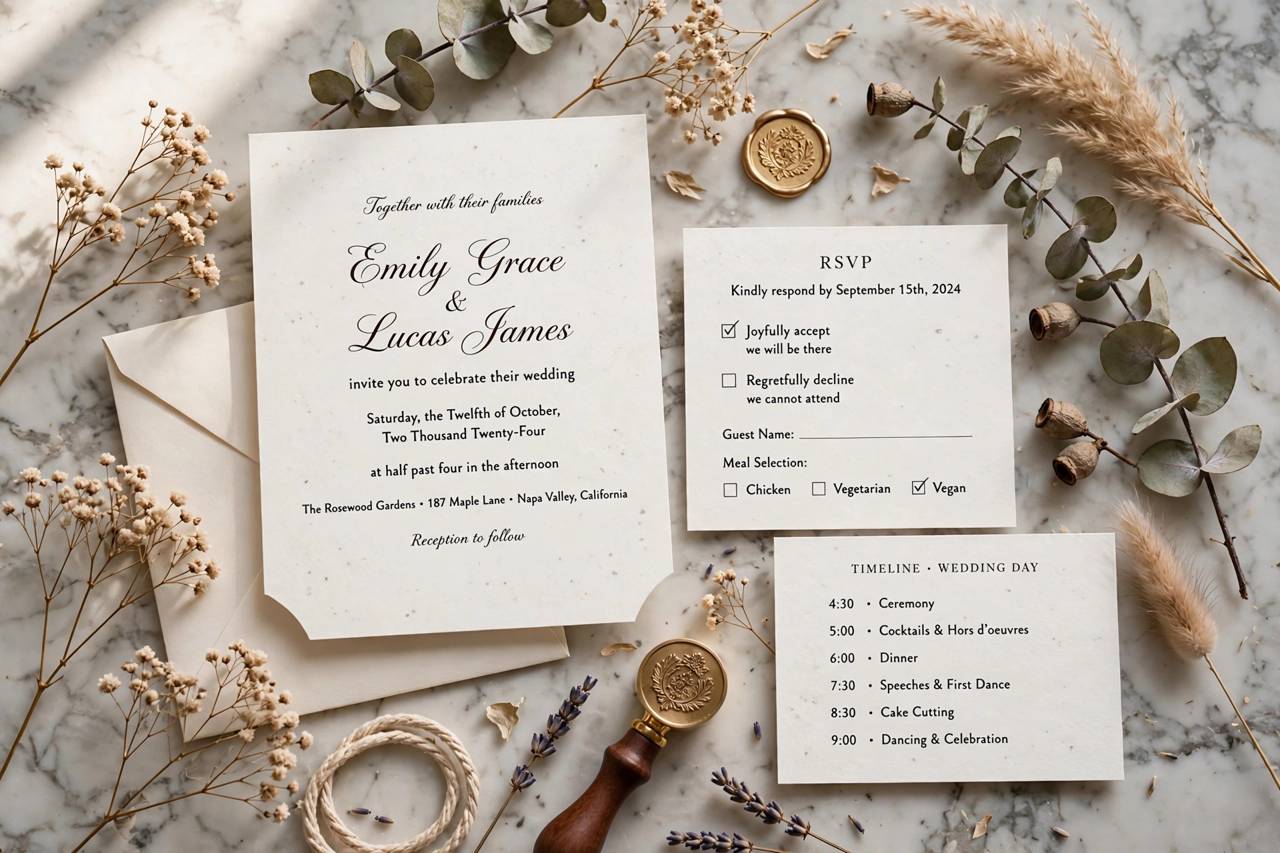
The timeline above assumes paper invitations, but digital is now mainstream — and the timing shifts slightly. Paper invitations remain the standard for formal weddings: they’re keepsakes, they signal the event’s weight, and older guests expect them. Mail 6–8 weeks out as described. Digital invitations (Paperless Post, Greenvelope, or your wedding website) suit casual and semi-formal weddings beautifully: they cost a fraction, RSVP tracking is automatic, and you can send them slightly later — 4–6 weeks — since delivery is instant.
The hybrid approach is what I recommend most: paper invitations for the ceremony’s formality, digital for everything around it — rehearsal dinner, after-party, weekend events. And regardless of medium, the RSVP deadline math doesn’t change: vendors need headcounts on the same schedule whether guests reply by card or by click.
One etiquette note: digital doesn’t mean casual in tone. A beautifully designed digital suite with proper wording reads as modern, not cheap. What reads as cheap is a mass text message with a link. Medium matters less than care.
Wording and Enclosure Mistakes to Avoid
Timeline handled — now the errors I see on the invitations themselves. Registry information in the invitation: never. It’s the single most cited etiquette breach — registry details go on the wedding website or shower invitations, not the wedding invitation. Vague dress code: “dressy casual” means nothing; say what you mean (“cocktail attire,” “garden party formal — block heels recommended for grass”). Guests would rather be overdressed with clarity than confused.
Plus-one ambiguity: name every invited person on the envelope (“Ms. Jane Smith and Mr. John Doe”) — “and guest” only when you genuinely don’t know the partner’s name. Missing logistics: ceremony start time (not “arrive by” time — put the actual start), venue address, parking or shuttle info, and the wedding website URL. RSVP mechanism buried: the reply card or QR code should be impossible to miss, with the deadline date printed large. Every friction point in responding costs you responses — and every missing response costs you a follow-up call.
When to Send Wedding Invitations Timeline: The Day-Of Stationery
The invitation timeline gets all the attention, but the day-of stationery has its own deadlines that couples discover late. Here’s the countdown: Programs and menus (4–6 weeks out): finalize these after the RSVP deadline, since menus depend on final meal counts and programs on the final wedding party lineup. Order prints at 3–4 weeks to allow for errors and reprints.
Place cards and seating chart (1–2 weeks out): these are last because they’re the most change-sensitive — late RSVP shifts, vendor meal assignments, and family diplomacy all resolve in the final fortnight. Build the seating chart digitally so changes are painless, and print place cards no earlier than a week out. Signage (2–3 weeks out): welcome signs, bar menus, and direction signs can be ordered once the layout is final.
The golden rule of day-of stationery: nothing gets printed until the information is final. Every reprint costs money and stress, and the items most likely to change (seating, menus) are exactly the ones couples print earliest out of anxiety. Work backward from the wedding date like the invitation timeline — and give yourself the same buffers.
The Post-Wedding Stationery: Thank-You Notes
The timeline doesn’t end at the wedding. Thank-you notes: send within 2–3 months of the wedding (sooner for shower gifts — within 2–3 weeks). This is the one stationery tradition etiquette experts refuse to relax: pre-printed cards without a personal line don’t count, and neither do group emails. Mention the specific gift and how you’ll use it — two sentences of genuine specificity beat a paragraph of generic gratitude. Order the thank-you cards with your invitations and address them as gifts arrive; batching them monthly keeps the pile from becoming a mountain. Future you, three months married, will be grateful.
Frequently Asked Questions
When should you send wedding invitations?
Mail invitations 6–8 weeks before a standard wedding, 10–12 weeks for destination or holiday-weekend weddings. Set the RSVP deadline 3–4 weeks before the wedding (6–8 for destination).
When do you send save-the-dates?
Eight to ten months out for standard weddings, twelve or more months for destination weddings. Only send them to guests who will definitely receive invitations.
How far in advance do guests need for a destination wedding?
Twelve months via save-the-date, with full invitations at twelve weeks and RSVP deadline at six to eight weeks. Guests are booking flights and taking time off — they need the runway.
What should the RSVP deadline be?
Three to four weeks before the wedding for standard weddings. This gives you buffer to chase non-responders before your caterer’s final headcount deadline (usually 7–14 days out).
Is it rude to send wedding invitations late?
Under six weeks for a standard wedding puts guests in a bind, especially out-of-town ones. If you’re running late, a quick message with the key details (date, venue, RSVP link) buys goodwill while the formal invitations follow.
Do you need to send invitations if you sent save-the-dates?
Yes — save-the-dates announce the date; invitations deliver the details (ceremony time, venue addresses, dress code, RSVP mechanism). One doesn’t replace the other.
When to send wedding invitations isn’t really about stationery etiquette — it’s about giving your guests the gift of time and your vendors the gift of accurate numbers. Work backward from what everyone needs, and the timeline takes care of itself.