What Is a Grand Slam in Tennis? The Four Majors Explained

Tennis commentators throw the phrase around every summer — “she’s chasing the Grand Slam!” — but what is a Grand Slam in tennis, exactly? It’s not a tournament. It’s an achievement: winning all four of the sport’s major championships. The four majors — the Australian Open, the French Open, Wimbledon, and the US Open — are the biggest titles in tennis, and sweeping all four is the rarest feat in the sport. I’ve watched tennis for decades, and the Grand Slam conversation is where the sport’s history, its surfaces, and its legends all collide. Here’s the complete breakdown: the four tournaments, the different kinds of Slams, and the short list of players who’ve actually done it.
The Four Majors: Surfaces, Months, Character
Each major has its own surface, season, and personality — and the surface variety is precisely what makes the Slam so hard:
- Australian Open (January, Melbourne) — Hard court. The season opener, played in often brutal summer heat. Medium-fast hard courts reward aggressive baseline play. Known for the “Happy Slam” atmosphere and epic five-setters in the Melbourne night.
- French Open (May–June, Paris) — Clay. Roland-Garros. Slow, grinding red clay that rewards patience, heavy topspin, and supreme fitness. The surface specialists’ major — and the one most champions find hardest to win if they grew up on hard courts.
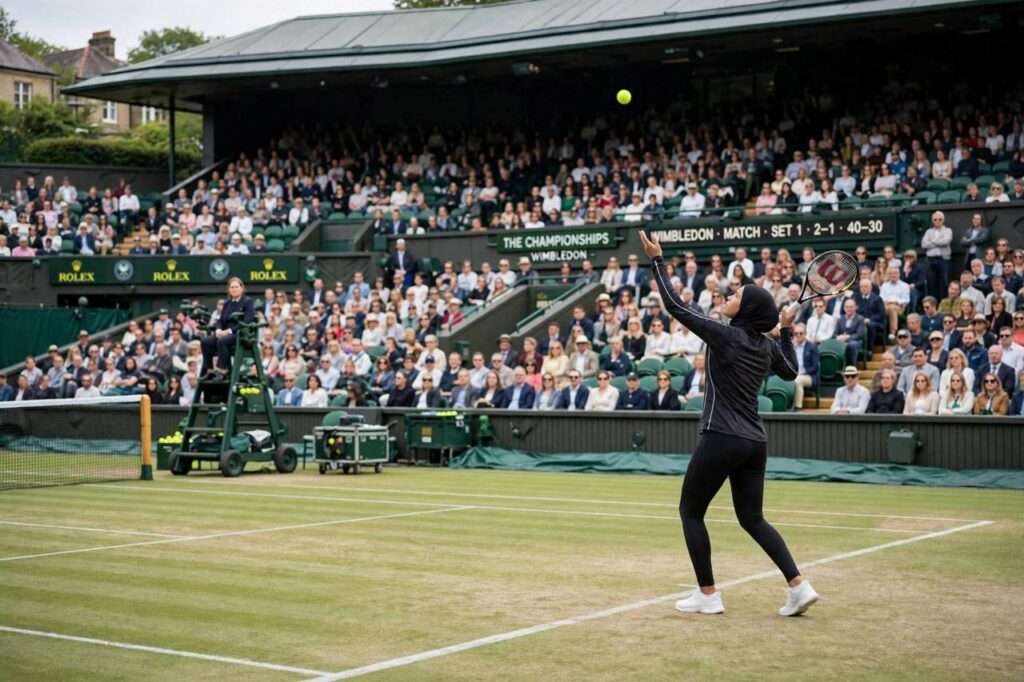
- Wimbledon (June–July, London) — Grass. The oldest and most prestigious, all-white dress code, strawberries and tradition. Fast, low-bouncing grass rewards serve-and-volley and attacking play — our guide to how to serve a tennis ball breaks down the shot that starts it all. — the polar opposite of clay, which is why winning both in the same year (the “Channel Slam”) is legendary.
- US Open (August–September, New York) — Hard court. The season’s final major: loud, late-night, electric. Faster hard courts than Melbourne, with an atmosphere closer to a prizefight than a garden party.
To win a calendar-year Grand Slam, a player must master three different surfaces across eight months while staying healthy, in form, and mentally fresh. That’s why it’s so rare — it’s not one hot streak, it’s sustained excellence across conditions that demand different games.
Calendar Slam vs. Career Slam vs. Golden Slam
Not all Slams are the same achievement. The terminology matters:
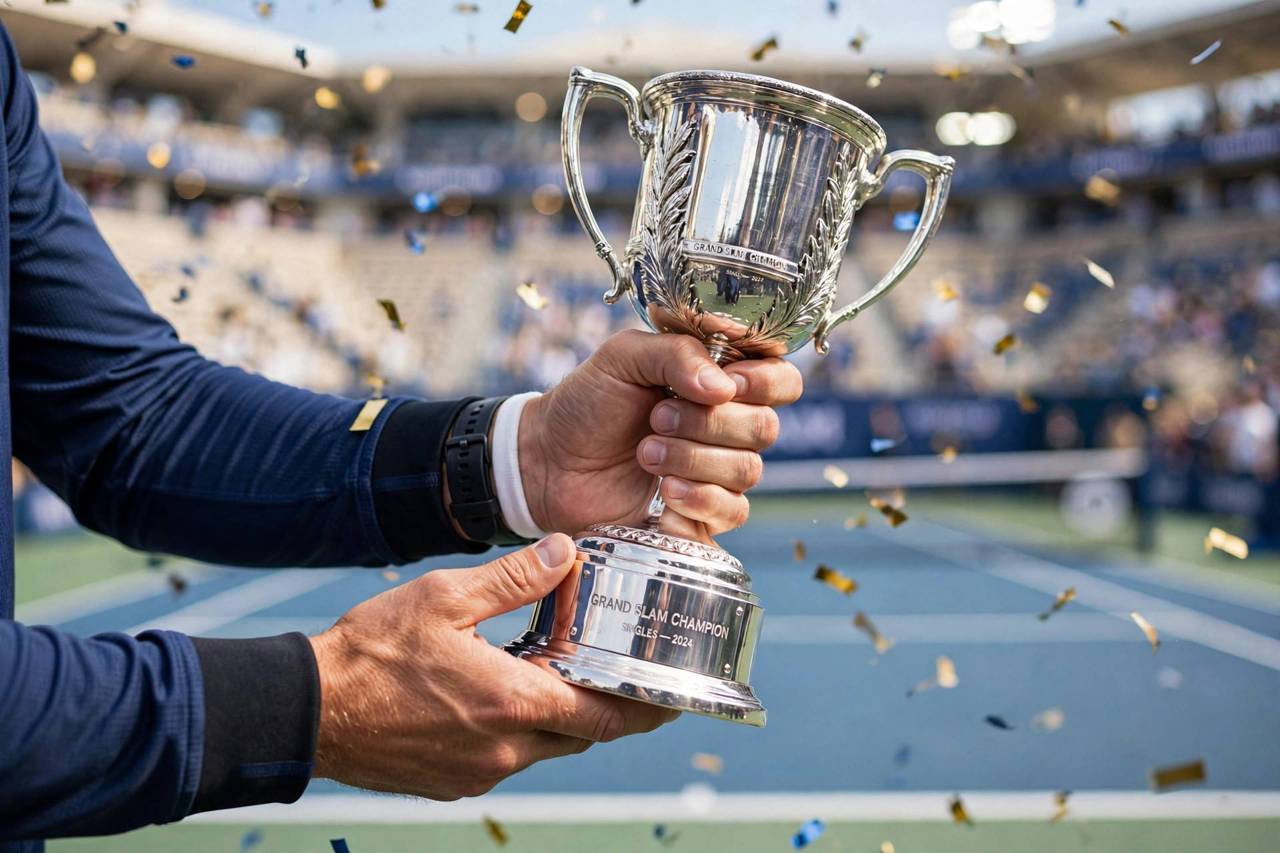
- Calendar-Year Grand Slam: All four majors in the same calendar year. The true, original Grand Slam — and the rarest. Only a handful of players in history have done it in singles.
- Career Grand Slam: All four majors across a player’s whole career, not necessarily in the same year. Still elite — it proves mastery of every surface — but meaningfully easier than the calendar version. Many all-time greats have this without the calendar Slam.
- Golden Slam: All four majors plus the Olympic singles gold medal in the same year. Only one player in history — Steffi Graf in 1988 — has achieved it. It’s arguably the single hardest feat in tennis.
- Non-Calendar-Year Grand Slam: Holding all four titles simultaneously across a year boundary (e.g., winning Wimbledon through the French Open of the next year). Serena Williams did this twice — the press dubbed it the “Serena Slam.”
Who Has Actually Done It: The Short List
Calendar-year Grand Slam (singles): Don Budge (1938), Maureen Connolly (1953), Rod Laver (1962 and 1969 — the only man to do it twice), Margaret Court (1970), and Steffi Graf (1988). That’s it. Five players. In the Open Era (since 1968), only Laver, Court, and Graf.
Near misses that define eras: Novak Djokovic held all four simultaneously in 2015–16 (the non-calendar Slam) and came within one match of the calendar Slam in 2021, losing the US Open final. Serena Williams came within two matches in 2015. Roger Federer and Rafael Nadal each won three of four in a year multiple times but never all four — the French-Wimbledon/US Open gauntlet stopped them in different ways.
Career Grand Slam club includes Andre Agassi, Rafael Nadal, Roger Federer, Novak Djokovic, Serena Williams, Maria Sharapova, and a select few others — proof that even the all-time greats usually need a full career, not a single year, to conquer every surface.
Why It’s So Hard: The Anatomy of the Challenge
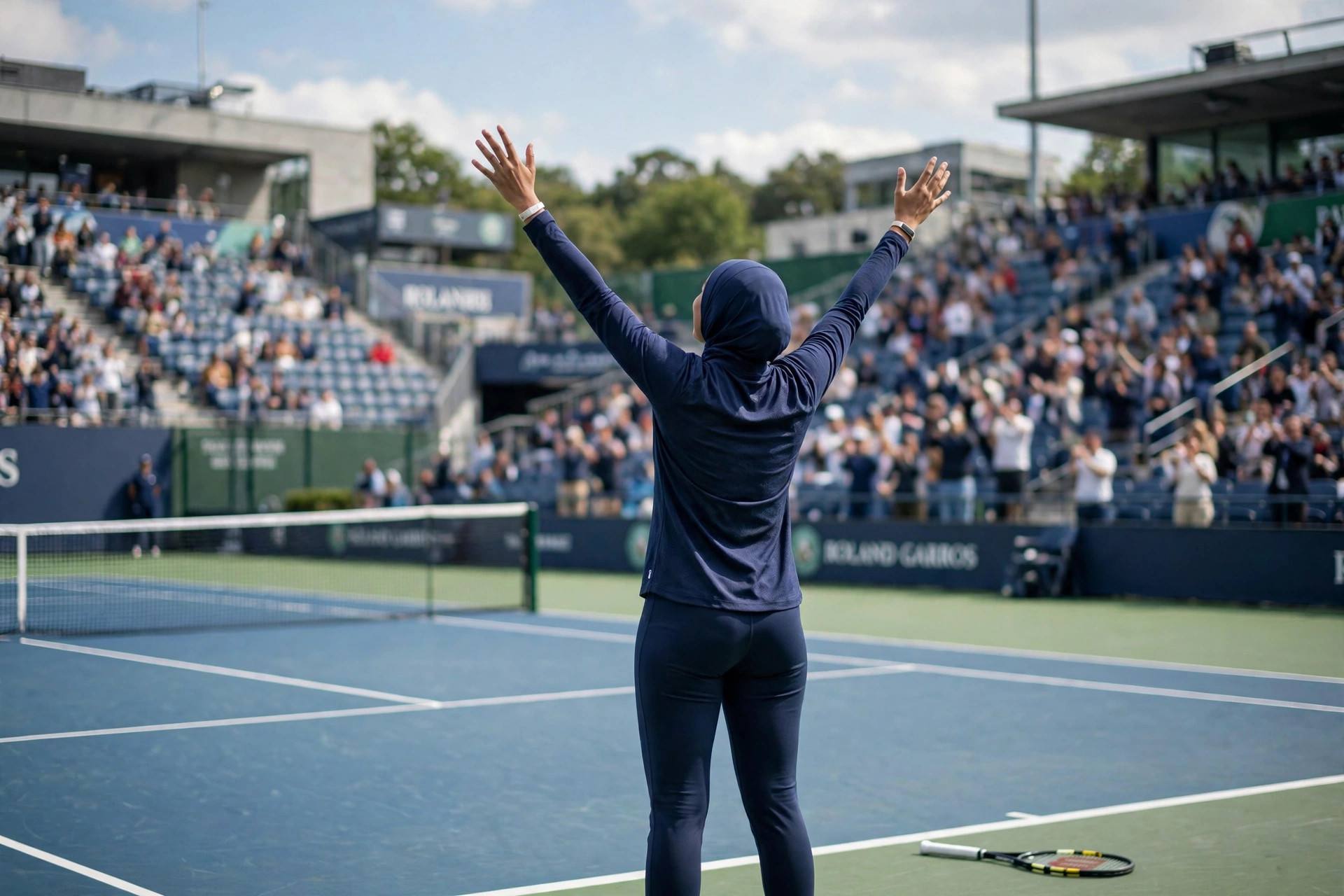
Three factors conspire. Surface whiplash: clay-to-grass in under a month (French Open to Wimbledon) demands completely retooling movement, tactics, and timing — it’s the hardest transition in sports. The field: 128-player draws mean seven best-of-five-set wins per major for men (new to the sport’s rules? Start with tennis scoring explained).; one bad day, one inspired opponent, and the Slam is gone. Pressure: by the third major of a Slam chase, every match is played under historic scrutiny. The 2021 US Open final showed what that weight does — even Djokovic, the most mentally formidable player ever, buckled under it.
What Is a Grand Slam in Tennis? Doubles, Juniors, and Wheelchair Events
The singles Slam gets the headlines, but the achievement exists across every discipline — and the record books look different in each. Doubles calendar Slams are significantly more common than singles: the Bryan brothers, Martina Navratilova, and several others swept all four in a year, partly because doubles specialists can sustain peaks across surfaces more manageably and partly because the doubles field is smaller. The calendar Slam is still rare air in doubles — just less thin air than in singles.
Junior Grand Slams follow the same four tournaments with junior draws, and winning all four as a junior is a famous predictor of pro success — though not a guarantee. Wheelchair tennis holds Grand Slam events at all four majors too, with its own calendar-Slam history: players like Diede de Groot have achieved the calendar Grand Slam in wheelchair singles, a feat that deserves far more attention than it gets. The four-tournament structure is the sport’s universal skeleton; the achievement scales to every category.
The Modern Slam Race: How the Big Three Rewrote History
No discussion of the Grand Slam is complete without the era that redefined it. For two decades, Roger Federer, Rafael Nadal, and Novak Djokovic didn’t just chase majors — they turned the all-time tally into a three-way arms race that pushed the men’s record into the twenties, a number once considered unreachable. (Pete Sampras’s 14 was the benchmark for a generation; the Big Three lapped it.)
What made their era unique wasn’t just the totals — it was the distribution. Nadal’s clay dominance (a double-digit French Open haul) versus Federer’s grass-and-hard versatility versus Djokovic’s all-surface completeness turned every Slam into a referendum on greatness. The surface specialists of earlier eras rarely threatened across all four; these three contested every single one, year after year.
The lesson for the Grand Slam conversation: the achievement’s difficulty is relative to the era’s competition. Laver’s 1969 Slam came against a thinner global field; a calendar Slam today would require beating a deeper, more athletic, more specialized tour across three surfaces. That’s partly why it hasn’t happened in men’s singles since 1969 — and why, if it ever happens again, it’ll be the story of the sporting decade.
The Channel Slam: Tennis’s Other Rare Feat
Within Grand Slam lore, one sub-achievement has its own name and mystique: the Channel Slam — winning the French Open and Wimbledon back-to-back in the same year. It’s named for the English Channel between Paris and London, and it captures the hardest surface transition in sports: from slow, grinding red clay to fast, skidding grass, with barely a month between.
The two surfaces demand opposite games. Clay rewards patience, heavy topspin, and endless rally tolerance; grass rewards aggression, slice, net play, and reflexes. Retooling your entire game — footwork, tactics, timing — in four weeks while winning seven matches at each event is absurd. That’s why the Channel Slam club is tiny: Björn Borg did it three straight years (1978–80), Rafael Nadal did it twice (2008, 2010), and only a handful of others have managed it once. In the women’s game, it’s equally rare.
What makes it fascinating is that it isolates the adaptability component of greatness. The calendar Slam requires everything; the Channel Slam requires the single hardest thing. When analysts debate the most versatile players ever, the Channel Slam is exhibit A — proof a player didn’t just dominate, but transformed.
Could It Happen Again?
Every generation asks, and the honest answer is: the barrier keeps rising. The tour is deeper than ever — the 50th-ranked player today would dismantle most top-10 players from the 1980s — which means seven consecutive wins at four straight majors is statistically harsher than in Laver’s era. On the other hand, sports science, scheduling, and surface homogenization (courts play more similarly than they used to) all help. Djokovic’s 2021 near-miss proved it’s conceivable; the final-match collapse proved the last hurdle is psychological as much as physical. My take: it’ll happen again, and when it does, the pressure of the chase will be the story as much as the tennis.
Frequently Asked Questions
What is a Grand Slam in tennis?
Winning all four major championships — the Australian Open, French Open, Wimbledon, and US Open. In its strictest sense, it means winning all four in the same calendar year, the rarest achievement in tennis.
What are the four Grand Slam tournaments?
The Australian Open (January, hard court), French Open (May–June, clay), Wimbledon (June–July, grass), and US Open (August–September, hard court).
What is the difference between a calendar Slam and a career Slam?
A calendar Slam means all four majors in one year; a career Slam means all four across a player’s entire career. The calendar version is vastly rarer — only five singles players have ever done it.
What is a Golden Slam in tennis?
Winning all four majors plus the Olympic singles gold medal in the same calendar year. Steffi Graf’s 1988 season is the only Golden Slam in history.
Who has won the most Grand Slam titles?
In men’s singles, the record has been a three-way race between Djokovic, Nadal, and Federer in the 20s; in women’s singles, Margaret Court’s 24 has long stood as the benchmark, with Serena Williams at 23 in the Open Era. (Counts evolve — check current totals.)
Has anyone won all four Grand Slams twice in one year?
No — but Rod Laver won the calendar Grand Slam twice in separate years (1962 and 1969), the only player to do so. In doubles, the calendar Slam has been achieved more often than in singles.
What is a Grand Slam in tennis? Four tournaments, three surfaces, eight months, seven matches each — and a place on the shortest list in sports. That’s why, every summer, the whole tennis world holds its breath.