How to Freeze Bread Properly: Method by Bread Type + Thawing

There’s nothing sadder than a beautiful loaf gone stale on day three — or worse, thrown away. Learning how to freeze bread properly changed how I buy and bake bread: I stock up when it’s fresh, freeze it right, and always have good bread ready. But there’s a right way and a “technically frozen” way, and the difference shows up in the thaw. Done properly, frozen bread tastes nearly indistinguishable from fresh. Done carelessly, it’s dry, freezer-burned, and disappointing. Here’s the method by bread type, the thawing guide, and how long each kind actually lasts.
The enemy here is air and time. Freezer burn is dehydration — moisture leaving the bread’s surface into the dry freezer air — and staleness (starch retrogradation, if you want the science word) actually happens faster in the refrigerator than at room temperature or in the freezer. So the rules are: freeze fast, wrap airtight, and never “store” bread in the fridge.
The Universal Method: Wrap Airtight, Freeze Fast
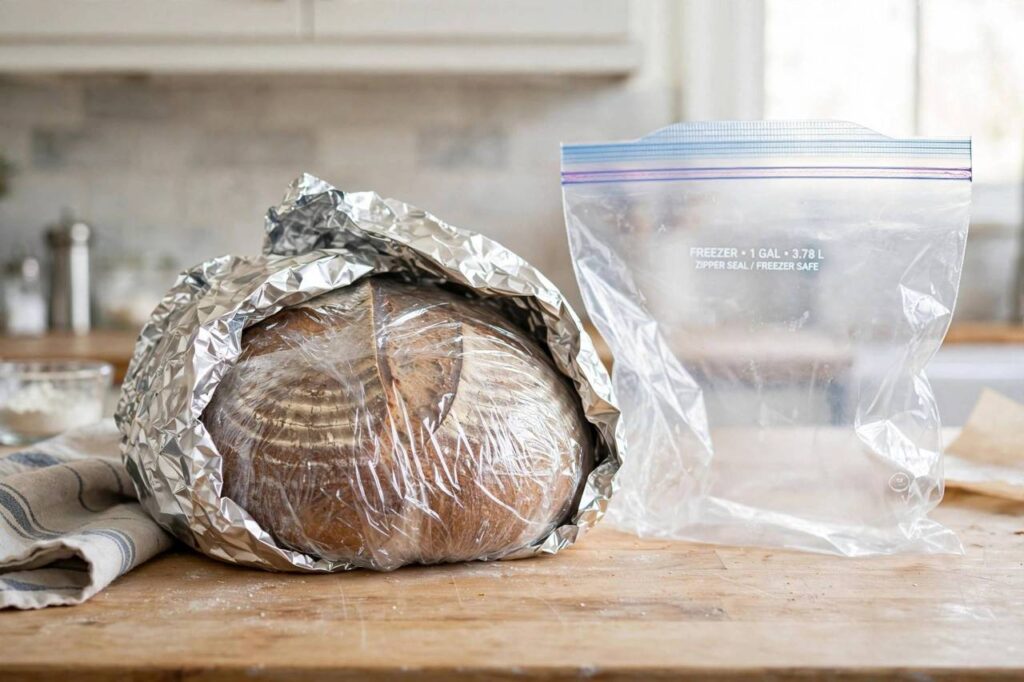
Whatever the bread type, the foundation is the same. Freeze bread at peak freshness — ideally the day you buy or bake it, once it’s completely cool. (Freezing warm bread traps steam, which becomes ice crystals, which becomes sogginess.) Wrap it tightly in plastic wrap or a freezer bag, pressing out as much air as possible, then add a second layer — aluminum foil or a second bag — for anything staying frozen more than a couple of weeks. Double-wrapping is the single best freezer-burn insurance.
Freeze it as fast as your freezer allows: spread loaves out rather than stacking them, and don’t freeze a mountain of bread all at once if your freezer is small — a slow freeze forms larger ice crystals, which damage texture. Label everything with the date. Future you will not remember what’s in the mystery foil package.
Method by Bread Type
- Sandwich loaves and sliced bread: The easiest. If it’s pre-sliced, slip small squares of parchment or wax paper between slices before bagging — then you can pull out exactly two slices without thawing the loaf. Press out the air, seal, freeze.
- Artisan loaves (sourdough, baguettes, boules): Freeze whole or halved, never sliced (slices dry out faster). Baguettes freeze beautifully for about a month; the crust won’t be crackly after thawing, but a few minutes in a hot oven fixes that (see below).
- Rolls and buns: Freeze in a single layer on a tray for an hour first (so they don’t stick together), then bag. Pull out exactly what you need.
- Bagels: Slice them before freezing — trying to slice a frozen bagel is a trip to the emergency room waiting to happen. Wrap individually or with parchment between halves.
- Pizza dough and raw dough: Portion into balls, coat lightly with oil, wrap individually, and bag. Thaw overnight in the fridge.
- Quick breads (banana bread, muffins): Wrap individual portions. They thaw in under an hour at room temperature and taste freshly baked.
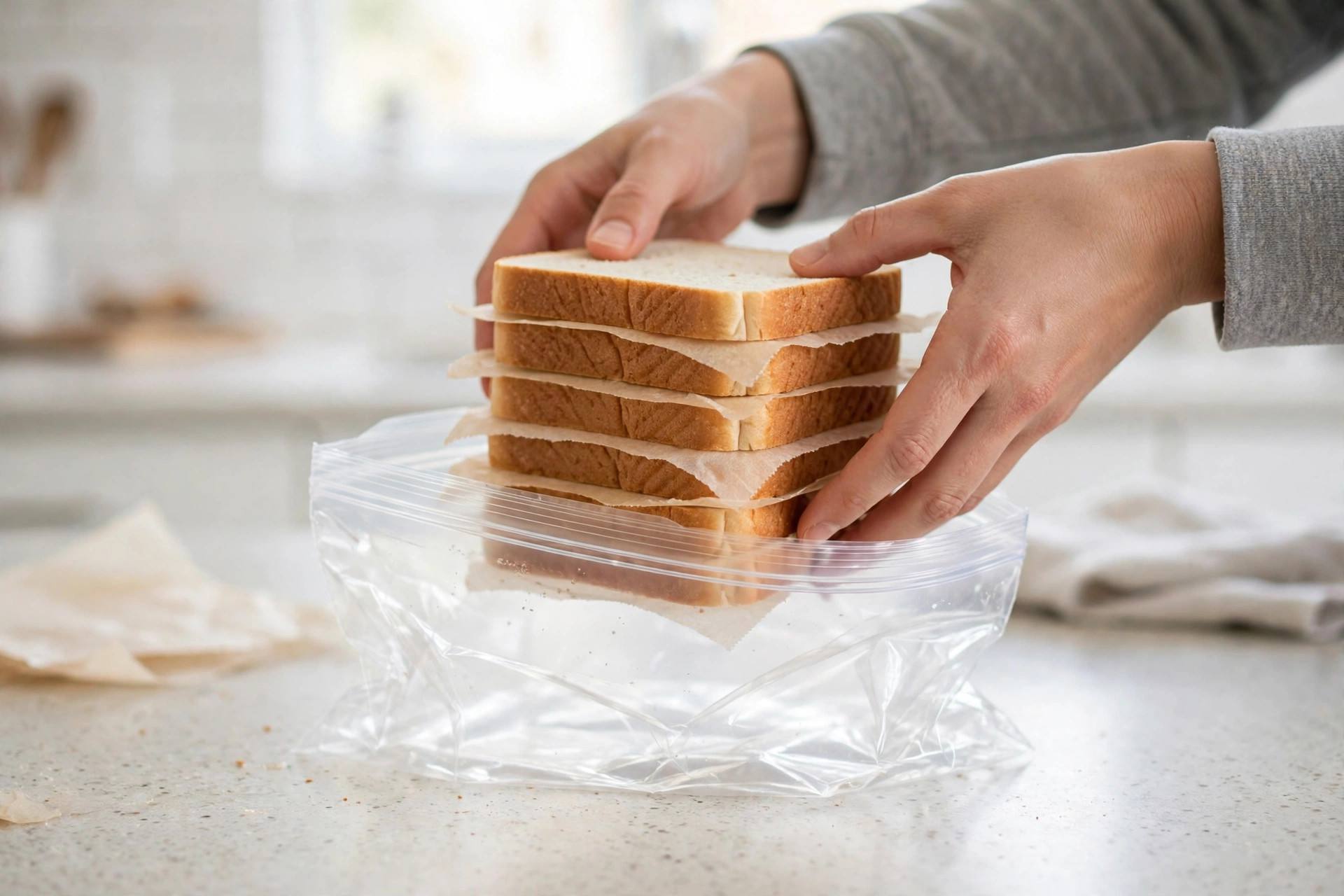
How to Thaw Bread: The Right Way for Each Type
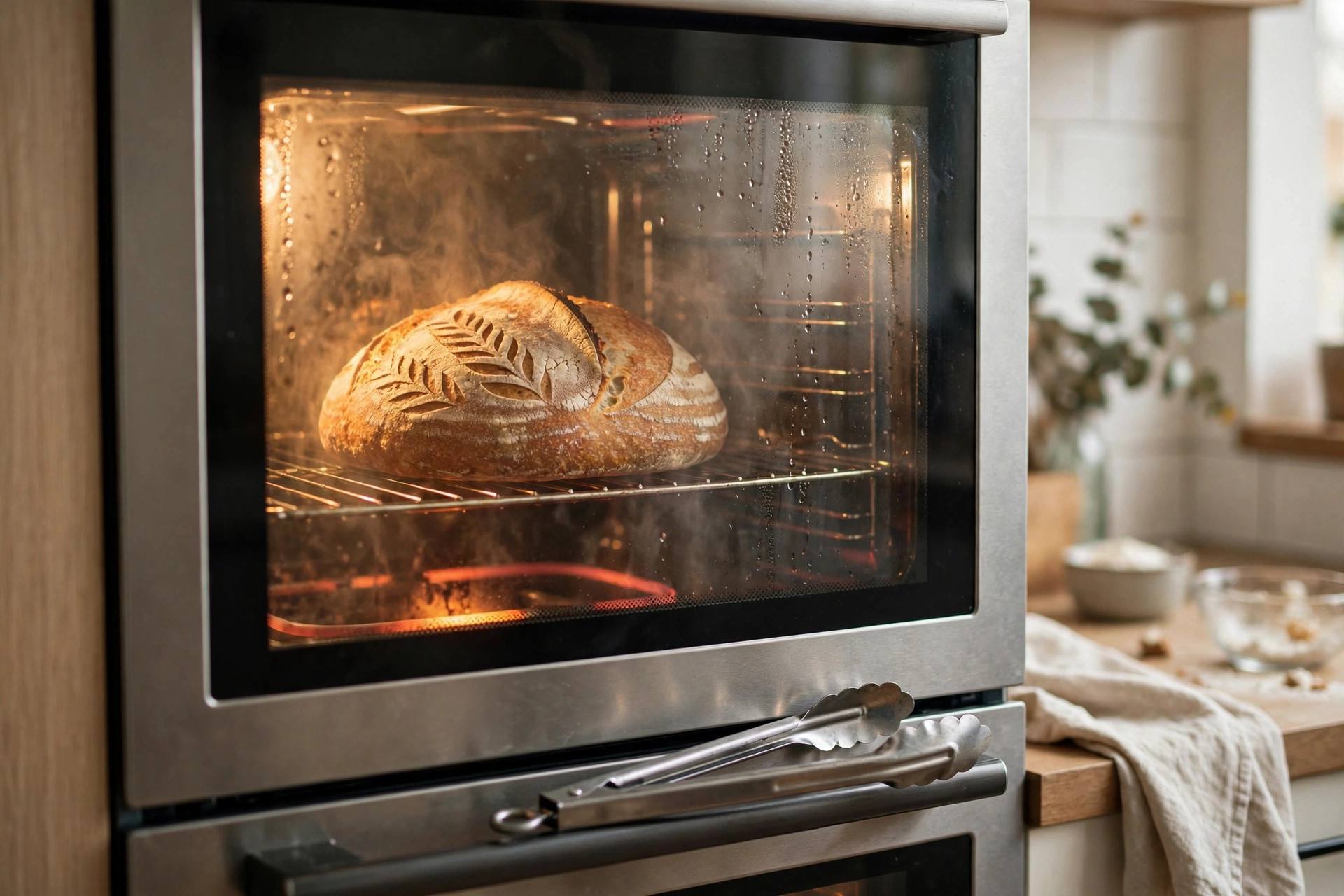
Thawing is half the method, and most people get it wrong by microwaving. Room temperature: For whole loaves and sliced bread, unwrap and leave at room temperature for 1–3 hours. Keep it wrapped while thawing if you want to retain moisture, or unwrap for the last 30 minutes if you want the crust to firm up. Oven refresh: The magic trick for artisan bread — spritz or run the thawed loaf briefly under water, then bake at 350°F (175°C) for 8–12 minutes. The crust re-crispes astonishingly well; I’ve served “refreshed” sourdough to guests who assumed it was fresh-baked. Toaster: Frozen slices go straight into the toaster — no thawing needed. This is the whole point of pre-slicing. Microwave: Only in emergencies, 15–20 seconds max — any longer and the bread turns rubbery as it cools.
Freezer-Life Table: How Long Each Bread Lasts
- Sliced sandwich bread: 3 months at best quality
- Artisan loaves (sourdough, boule): 2–3 months
- Baguettes: 1 month (crust suffers first)
- Rolls and buns: 2–3 months
- Bagels: 3 months
- Pizza/raw dough: 3 months
- Quick breads and muffins: 2–3 months
These are quality guidelines, not safety deadlines — frozen bread stays safe indefinitely, but texture degrades. Anything past these windows tends toward dry and tired, though it’s still fine for toast, croutons, or breadcrumbs.
Mistakes That Ruin Frozen Bread
Freezing stale bread hoping the freezer will fix it — freezing preserves the current state; it can’t reverse staleness. Single thin wrapping — one layer of plastic is not enough for more than a week or two. Refreezing thawed bread — each freeze-thaw cycle damages texture further; portion before freezing so you only thaw what you’ll use. Storing bread in the fridge — the worst of both worlds; refrigeration accelerates staling without the preservation benefits of freezing.
How to Freeze Bread Properly for Meal Prep
If you want the freezer to function as a bread pantry rather than a bread graveyard, think in weekly portions. Here’s the system I use: every Sunday, I portion the week’s bread — five bags of two sandwich slices (weekday lunches), one bag of four dinner rolls, and the artisan loaf halved (half for the week, half for next). Everything gets dated. Weekday mornings, slices go straight from freezer to toaster; rolls thaw on the counter during the day.
The labeling system matters more than you’d think. Masking tape and a marker: contents + date + quantity (“Sourdough, Oct 13, 6 slices”). Without it, you’ll thaw mystery packages and discover the bagels when you wanted the rolls. I also keep a simple rule — first in, first out. New bread goes behind old bread in the freezer, same as a store shelf. It sounds fussy; it prevents the archaeological dig six months later.
For families, scale the portions to your actual consumption and freeze in daily units, not weekly ones. Thawing a whole loaf “for the week” and refreezing the remainder is exactly the cycle that degrades texture. Small units, thawed as needed — that’s the whole discipline.
Beyond Bread: Freezing Other Baked Goods
The same principles extend across the bakery. Cookies: freeze baked cookies in single layers separated by parchment, or freeze raw dough balls and bake from frozen (add 2–3 minutes to the bake time) — dough balls give you fresher-tasting cookies with the same convenience. Muffins: wrap individually; they thaw in about an hour and taste freshly baked. Pancakes and waffles: cool completely, freeze in stacks with parchment between, and reheat straight in the toaster — better than any store-bought frozen version.
What doesn’t freeze well: cream-filled pastries (the filling weeps), meringues (they go chewy), and anything with a delicate crisp topping that won’t survive the thaw. Custard-based items are borderline — technically freezable, texturally disappointing. When in doubt, freeze a test portion before committing the whole batch. The freezer is a tool, not a miracle — it preserves quality, and quality in means quality out.
How to Freeze Bread Properly: Sourdough Specifics
Sourdough deserves special attention because its whole appeal — the crackling crust, the open crumb — is exactly what freezing threatens. The good news: sourdough’s sturdy structure actually freezes better than soft sandwich bread. The method, refined:
Freeze it unsliced, always. Sourdough’s crumb dries fast once cut; freezing a whole or halved loaf protects it. Cool completely — sourdough holds heat in its thick crust longer than you expect, and trapped steam is the enemy. Double-wrap: plastic directly against the bread, then foil. The refresh is non-negotiable for sourdough: thaw at room temperature, then run the loaf briefly under water (yes, really — a quick pass under the tap) and bake at 375°F (190°C) for 10–12 minutes. The crust re-crackles astonishingly; the crumb steams back to life.
What about the starter? Different question, same freezer: sourdough starter can be frozen in small portions for long-term backup, though drying it is the more reliable preservation method. For the baked loaf, though, the freeze-and-refresh cycle above gives you bakery-quality sourdough on demand — which is the entire point of baking it in the first place.
Freezer Burn Rescue: Is It Salvageable?
Found a sad, frosty loaf from three months ago? Don’t toss it immediately. Light freezer burn — dry patches, slight off smell — is often rescuable: the oven-refresh trick (dampen, hot oven) rehydrates the crumb surprisingly well, and toasting masks the rest. Cube it for croutons (olive oil, salt, 375°F for 12 minutes) or blitz into breadcrumbs — both are better with slightly dry bread. Only discard if there’s a strong rancid or off smell that survives toasting, which signals fat oxidation rather than simple dehydration. Most “ruined” frozen bread is just bread waiting for the right second act.
Frequently Asked Questions
How do you freeze bread properly?
Freeze at peak freshness once completely cool. Wrap airtight in plastic wrap or a freezer bag with air pressed out, add a second layer of foil or bag for longer storage, freeze quickly, and label with the date.
Can you freeze bread in its original packaging?
For a week or two, yes — store-bought bread bags are reasonably airtight. For longer storage, rewrap: the original bag plus an outer freezer bag prevents freezer burn far better.
How long does bread last in the freezer?
Most breads hold best quality for 1–3 months depending on type: sliced sandwich bread up to 3 months, artisan loaves 2–3 months, baguettes about 1 month. It stays safe longer, but texture declines.
What’s the best way to thaw frozen bread?
Room temperature for 1–3 hours for loaves; toaster straight from frozen for slices; and the oven-refresh trick (lightly dampen, bake at 350°F for 8–12 minutes) for artisan loaves to restore a crisp crust.
Can you refreeze bread?
It’s safe but not recommended — each freeze-thaw cycle degrades texture. Portion bread before freezing (parchment between slices, individual rolls) so you only thaw what you’ll eat.
Does freezing bread keep it fresh longer than refrigerating?
Yes, dramatically. Refrigeration actually speeds up staling (starch retrogradation happens fastest at fridge temperatures). For anything you won’t eat in 2–3 days, the freezer beats the fridge every time.
That’s how to freeze bread properly: freeze it fresh, wrap it like you mean it, thaw it with intention. Do that, and the freezer stops being where good bread goes to die — and becomes the reason you always have good bread in the house.