19 Family Game Night Ideas That Work for All Ages

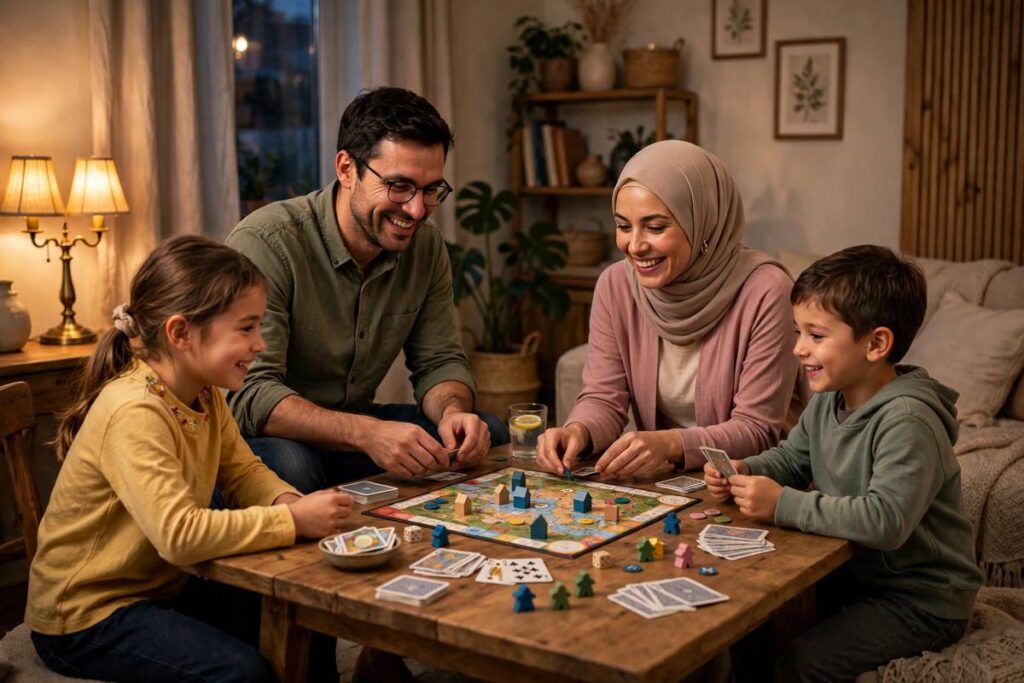
Every family has the same problem on game night: the seven-year-old wants something simple, the teenager wants something that is not embarrassing, and the adults want something that does not take forty-five minutes to explain. The best family game night ideas solve for all three at once — games with rules you can teach in five minutes, enough depth that the adults stay interested, and zero moments where someone is eliminated in round one and stares at a phone for an hour. Here is a full playbook: the games worth owning, the ones that need no equipment at all, and how to run the night so it actually happens again next week.
The Classics That Earned It
Some games survive decades of family testing for a reason. These are the ones that work across the widest age ranges with the least rules overhead.
Uno. The gateway game. Anyone who can match colors and numbers can play, which means the youngest players are genuinely competitive within one round. The special cards — skip, reverse, draw two — add just enough chaos to keep adults from sleepwalking through it. Games take fifteen minutes, and nobody has ever needed to read the rulebook twice.
Ticket to Ride. The rare strategy game a ten-year-old can win. You collect colored cards, claim train routes across a map, and try to connect your secret destination cities. The rules take five minutes to teach, but route-blocking and card-hoarding give adults real decisions to chew on. The 30-to-60-minute playtime is the sweet spot for an evening.
Codenames. One player gives one-word clues to get their team to guess the right words on a grid — without accidentally pointing at the assassin card that ends the game instantly. It plays brilliantly with mixed ages because kids are often better at the lateral-thinking clues than adults. Works for four or more; the more the merrier.
Sushi Go! A card-drafting game where you pick one sushi card and pass the rest, trying to assemble the highest-scoring meal. Rounds take fifteen minutes, the art is adorable, and the “draft one, pass the rest” mechanic teaches real game skills without anyone noticing they are learning.
Family Game Night Ideas With Just a Deck of Cards
No special purchases required. A standard deck of cards — the thing already in your junk drawer — unlocks a surprising number of genuinely good family games.
Golf (the card game). Each player lays out a grid of face-down cards and tries to end with the lowest score, peeking at and swapping cards over nine “holes.” Kids love the memory element; adults love the push-your-luck decisions. Scales perfectly from two to six players.
Spit (or Speed). A frantic head-to-head race to play cards onto shared piles in ascending or descending order. It is loud, physical, and over in five minutes — perfect as a palate cleanser between longer games or as the main event for competitive kids.
Crazy Eights. The original Uno, minus the special deck. Match rank or suit, eights are wild, first to empty their hand wins. Simple enough for a six-year-old, and the hand-management decisions keep it from feeling babyish.
Go Fish, upgraded. Everyone knows Go Fish, but try playing it with a twist for older kids: require players to ask for cards by full description (“Do you have any queens?”) and track who asked for what. Suddenly it is a memory game wearing a kids’-game costume.
No-Equipment Games: Zero Setup, Maximum Laughs
The best family game night ideas are sometimes the ones that need nothing at all — no box, no pieces, no setup. These are the games that save a night when the planned game falls flat or the power goes out.
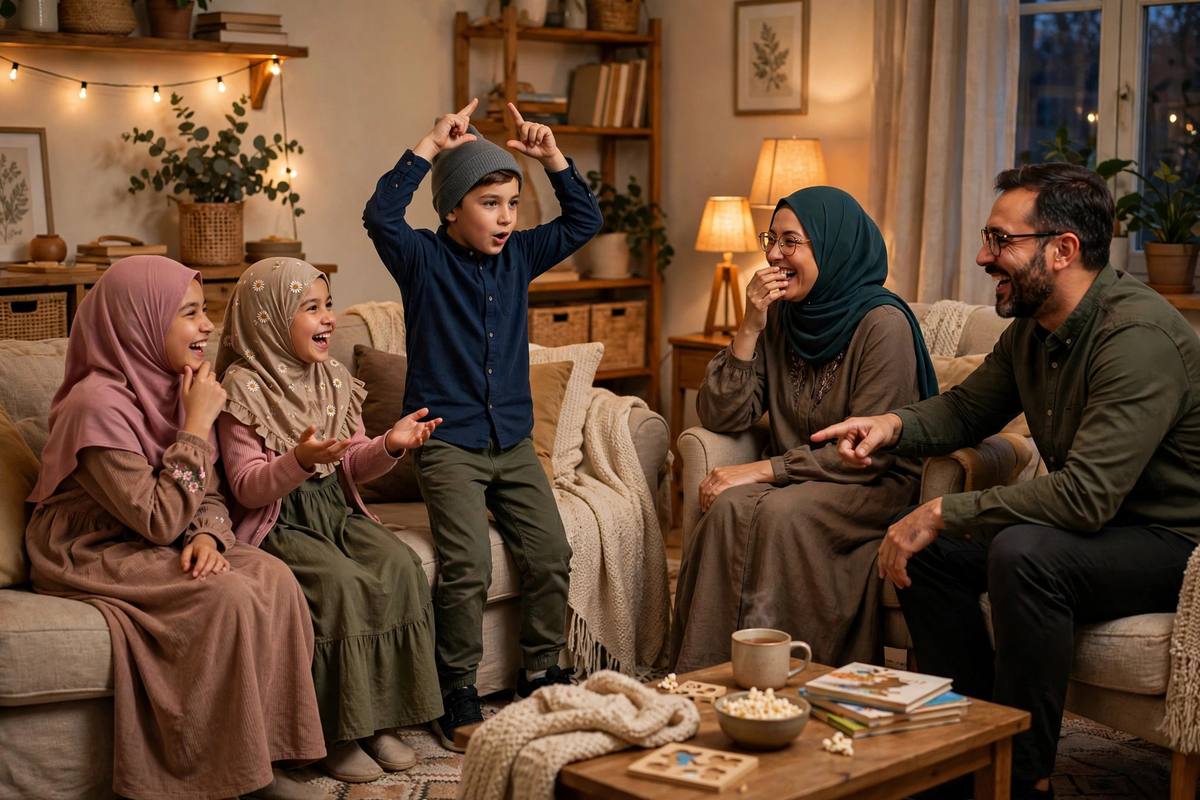
Charades, with a hat. Everyone writes three prompts on slips of paper — movies, actions, animals — and they go in a hat. Classic charades rules, but the player-generated prompts are always funnier than anything printed on a card. Split into teams if you have six or more; play cooperatively with little kids.
Werewolf (one-night style). Secret roles, accusations, bluffing. One player is secretly the werewolf, everyone else debates who it is. Needs at least five players and no equipment whatsoever. Teenagers, who are biologically optimized for deception and drama, tend to dominate — which they love.
Twenty Questions, tournament edition. One person thinks of something; everyone else gets twenty yes-or-no questions. Run it as a bracket: winners advance, and the final round is the two best guessers head-to-head. The yes-or-no constraint forces genuinely clever questioning.
The Name Game (Celebrity). Write famous names on slips, put them in a bowl. Round one: describe the person without saying the name. Round two: same names, one-word clues only. Round three: same names, charades only. By round three, the shared references from earlier rounds make it hilarious.
Cooperative Games: Everyone Wins (or Loses) Together
Competitive games end with someone losing, and in families that someone is often the youngest player, who then does not want to play again. Cooperative games fix this by making the whole table a team. Nobody gets eliminated, nobody gloats, and the post-game conversation is about what the group should have done differently.
Pandemic. The family works together to stop four diseases from spreading across a world map. It is genuinely tense — the diseases escalate on a timer — and it teaches real strategic thinking: resource allocation, prioritization, playing to each role’s strengths. Best for ages ten and up; younger kids can play as advisors.
Forbidden Island. A simpler, shorter cooperative game: your team of adventurers must grab four treasures from a sinking island and escape before it floods. Thirty minutes, beautiful components, and the island literally sinks piece by piece as you play, which kids find thrilling.
The Crew. A cooperative trick-taking card game — yes, like the stuff grandparents play — rebuilt as a series of fifty space missions of increasing difficulty. Plays in twenty minutes, and the limited-communication rules mean nobody can boss everyone else around, which solves the classic family problem of one person quarterbacking the whole table.
Games for Big Groups (8+ Players)
Most board games tap out at six players, which is awkward when the whole extended family shows up. These scale up without breaking.
Wavelength. One player gives a clue positioning a hidden target on a spectrum between two opposites (“hot–cold,” “boring–exciting”), and the team debates where the target sits. It plays up to twelve, takes thirty minutes, and generates the best arguments of any game on this list — the loving kind.
Just One. A cooperative party game for up to seven: everyone writes a one-word clue to help the guesser identify a mystery word, but identical clues get cancelled. The cancelled-clue twist forces creative thinking, and rounds take twenty minutes. Simple enough for grandparents, clever enough for everyone else.
Telestrations. Telephone meets Pictionary: you draw a word, pass it, the next person guesses what you drew, the next draws that guess, and by the end the results are unrecognizable and hilarious. Plays up to eight (twelve with the party pack), and the reveal at the end is always the best part of the night.
Two Rooms and a Boom, simplified. For the ambitious group: split into two rooms, with hidden roles and a five-minute timer. It is the most setup of anything here, but for a dozen players with energy to burn, nothing beats it. Save it for the night the teenagers are in charge of choosing.
How to Actually Run a Good Game Night
The games are only half the equation. The other half is logistics, and most failed game nights fail on logistics, not on game choice.
Pick the game before the night. Nothing kills momentum like thirty minutes of “what should we play?” while half the family drifts to their phones. The organizer chooses in advance, learns the rules in advance, and can teach them in under five minutes. If you cannot explain a game in five minutes, save it for a night without kids.
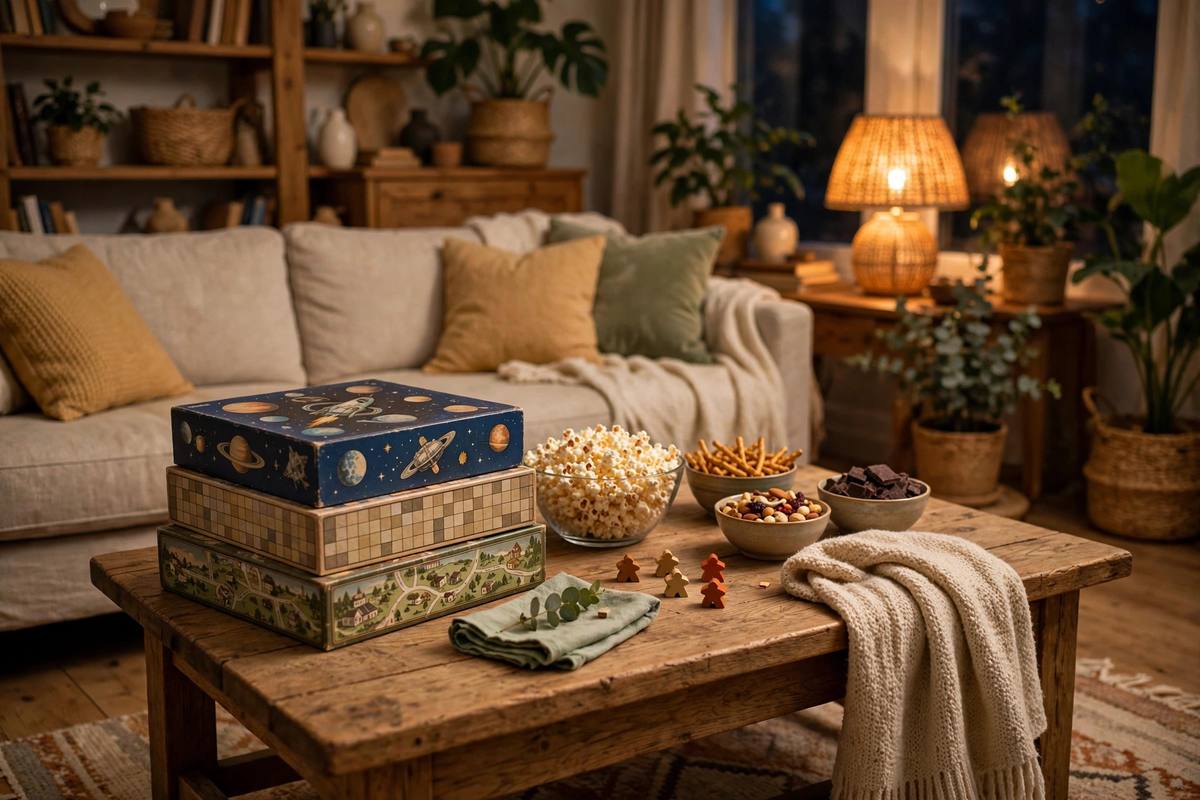
Feed people first. Hungry players are bad players. This does not need to be elaborate — popcorn, a snack tray, pizza — but having food on the table when the game starts changes the entire mood. If you want to make an evening of it, hosting a dinner party and game night back-to-back is a natural combination.
Set a hard stop time. “One more game” is how a fun evening becomes a cranky midnight. Agree in advance: we play until 9:30, or we play exactly two games. Ending while everyone still wants more is the secret to getting a yes next week.
Let the kids win sometimes — honestly. Nobody is fooled by a thrown game, and kids can smell condescension. Instead, choose games where skill gaps matter less (cooperative games, luck-heavy card games), or play with a small handicap openly stated. Losing fair and square to a parent is fine; losing to a parent who is obviously pretending to try is infuriating.
Take it out of the house occasionally. A change of venue refreshes the whole ritual. Escape rooms are essentially a professionally designed cooperative game night — puzzles, teamwork, a time limit — and they work brilliantly as an occasional special-edition family game night.
Frequently Asked Questions
What are good family game night ideas for mixed ages?
Choose games with simple rules but real decisions: Uno, Ticket to Ride, Codenames, and cooperative games like Forbidden Island. Avoid elimination games where young players sit out, and prefer games playable in under an hour.
How do you keep teenagers interested in family game night?
Give them games with social deduction or bluffing (Werewolf, Codenames), let them choose the game sometimes, and keep sessions short. A hard stop time and good snacks matter more than the specific game.
What games need no equipment at all?
Charades, Werewolf, Twenty Questions, and the Celebrity name game all need nothing but people. Writing prompts on slips of paper is the only prep, and even that is optional.
Are cooperative board games good for families?
Excellent — they eliminate the problem of a young player losing early and checking out. Pandemic, Forbidden Island, and The Crew let the whole table win or lose together, which keeps everyone engaged to the end.
How long should family game night last?
One to two hours is the sweet spot for most families. Agree on a stop time or a fixed number of games in advance — ending while everyone still wants more is what gets you a yes next week.