Active, Dormant and Extinct Volcanoes: What the Labels Really Mean (and When They’re Wrong)

Every school textbook sorts volcanoes into three tidy boxes: active, dormant, extinct. The boxes are real, and the definitions behind them are worth learning properly. But I owe my students — and you — the second half of the lesson in the same breath: these labels are judgements scientists make about volcanoes, not properties volcanoes have. Judgements can be wrong, and the history of volcanology contains eruptions that killed people precisely because a label was trusted too far. Learn the three definitions first, exactly as the textbooks give them. Then learn where they bend, where they have already broken, and what the scientists who maintain the world’s volcano database use instead when the words have to carry real weight.
The Three Labels, Defined
One standard way to classify volcanoes is by their activity, and the classification actually has four stations along it, not three — the fourth is the one happening right now.
| Label | What it means |
|---|---|
| Erupting | The volcano is currently erupting. |
| Active | It has erupted at least once in the past 10,000 years — even if it is quiet right now. (A volcano can be in a period of dormancy and still be classified active.) |
| Dormant | It is not erupting, but it remains connected to a magma chamber that might erupt — a sleeping volcano, not a finished one. |
| Extinct | No eruption is expected in the foreseeable future. |
Three of these definitions deserve a second look even before the complications arrive. Notice that active is a statement about the past ten thousand years, not about this morning: a volcano that last erupted nine thousand years ago and has been silent ever since is “active” by the definition, and correctly so, as the next sections will argue. Notice that dormant is defined by a connection — to a magma chamber that might erupt — which makes it a claim about plumbing that no one can inspect directly.
And notice the careful wording of extinct: not “will never erupt,” but “we do not expect it to erupt in the foreseeable future.” The textbook itself writes the escape hatch into the definition. Hold onto that; it becomes the point of an entire section below.
Why “Dormant” Is the Tricky One
The problem with “dormant” is the clock. How long is a volcano allowed to sleep before the label stops meaning anything? The Global Volcanism Program states the difficulty exactly: dormant intervals between major eruptions at a single volcano may last hundreds to tens of thousands of years — dwarfing the relatively short observational record in many regions. A volcano can be quiet for longer than the entire history of the town on its slopes, longer than the written records of the country it stands in, and still simply be between eruptions. Restricting the word “active” to recorded human memory is, in the GVP’s judgement, misleading — which is why its scientists prefer to add a more precise identifying word, calling a volcano a “Holocene volcano” (one belonging to the current geological epoch) rather than lean on “active” and “dormant” to do work they cannot do precisely.
Dormant, then, is the honest label for a real state — connected, capable, quiet — attached to a timescale human intuition is bad at. A dormant volcano is not resting on a human schedule.
When the Labels Got It Wrong
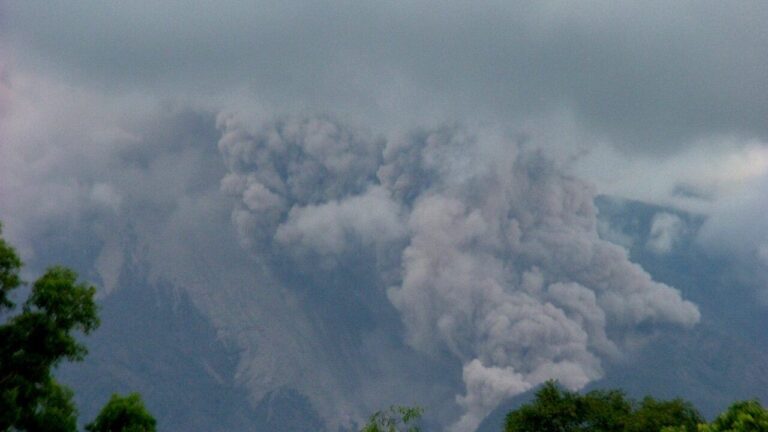
El Chichón, Mexico, 1982. The volcano had long been assumed to be dormant, having had no recorded eruption in over 600 years. In March 1982 it awoke with a huge eruption; after a few days it seemed to go quiet, evacuated residents began returning home — and on 4 April a deadly pyroclastic flow was released. The estimated death toll was 1,900. This is the purest case in the record of a label failing at every level: the classification was wrong, the quiet interval within the eruption was misread, and people paid for both misreadings. It is the standing exhibit for when a ‘dormant’ label turns deadly.
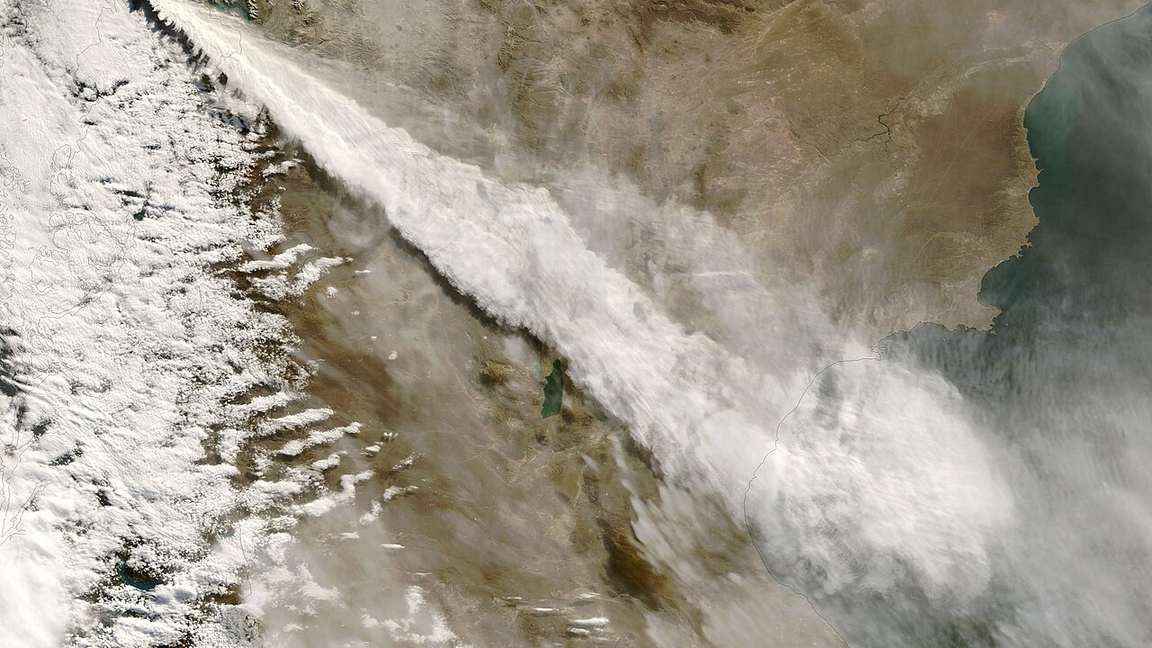
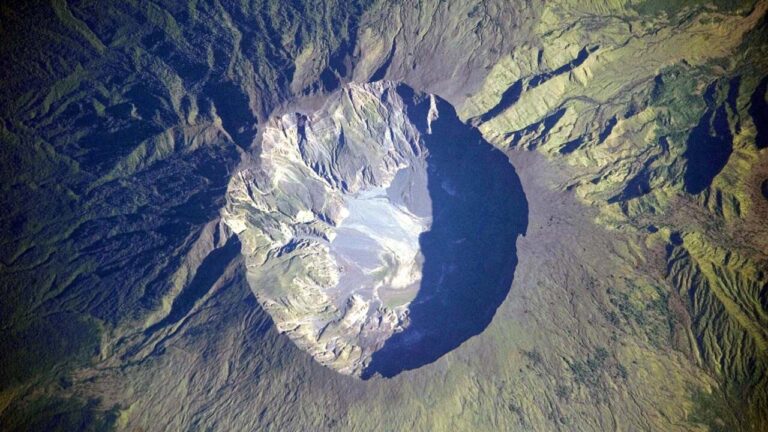
Tambora, Indonesia, 1815. The volcano that produced the largest eruption in recorded history had, in the BBC’s words, “previously been dormant for centuries” before 1815. Centuries of dormancy were not the prelude to a small event; they were the prelude to a VEI 7. If dormancy measured safety, Tambora’s long sleep should have meant something reassuring. It meant nothing of the kind — and this is the same volcano whose record our eruption history uses as its benchmark, which tells you the size of the gap between the label and the reality it was pasted onto.
The pattern across both cases is the lesson: the labels failed not because scientists were careless, but because the labels compress a probability into a word, and words feel more certain than probabilities are.
Can an “Extinct” Volcano Wake Up?
The textbook behind this article’s definitions answers its own question with unusual candor. Extinct is described as the only “safe” category — and in the very next breath, the same source adds that even extinct volcanoes may surprise scientists. Both halves belong in your notes. The extinct label records a genuine judgement: the magma supply is considered finished, no eruption is expected in the foreseeable future, and scientists quite reasonably focus their monitoring efforts on active volcanoes instead, especially those near populated areas. But the judgement rests on evidence — eruption history, geology, the state of the system — and evidence can be incomplete.
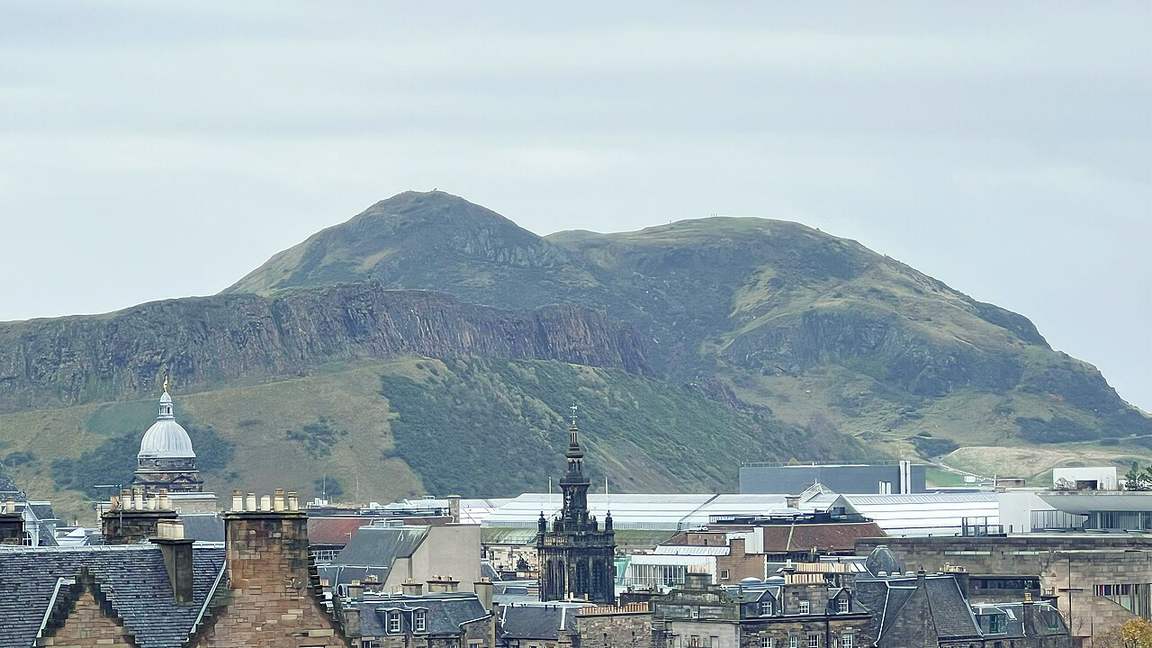
One more qualification, often missed: “extinct” retires the volcano’s eruptions, not its slopes. The same textbook notes that extinct volcanoes are still prone to mass wasting — landslides and collapses of their aging edifices. The mountain stops making new hazards; it does not stop having old ones.
An “extinct” volcano that surprised everyone would not have broken a law of nature; it would have corrected a classification. That is the correct mental posture toward all three labels: they are the best current reading of the evidence, maintained by people who revise them when the evidence changes. Treat them with respect, and never with the confidence reserved for facts of physics.
How Scientists Actually Talk About It
Listen to the professionals and you will notice they reach for different vocabulary than the textbook’s three boxes. The Global Volcanism Program organizes its database around Holocene and Pleistocene categories — geological epochs rather than behaviour words — and reports its counts in those terms, because an epoch is a checkable fact about a volcano’s deposits in a way that “dormant” never quite is. (How those categories turn into world totals is a story of its own: so how many are there, really?) The three everyday labels survive because they are useful — for teaching, for headlines, for a first sorting of a complicated planet. The epoch language survives because it is precise. A student who can use both, and say which one they are using, understands the subject better than a textbook that prints only the tidy version.
It is the same maturity the labels themselves demand: volcanoes were being sorted into chains long before the labels existed — the older islands of the Hawaiian chain, carried away from their hotspot, shade from active into genuinely finished, which is how volcanoes form where plates move over hotspots in the first place.
Frequently Asked Questions
A dormant volcano is not erupting but remains connected to a magma chamber that might erupt — it is asleep, with its supply intact. An extinct volcano is one scientists do not expect to erupt in the foreseeable future. The difference is the expected future: possible for dormant, not expected for extinct — with the textbook’s own caveat that even extinct volcanoes may surprise scientists.
Far longer than intuition suggests: dormant intervals between major eruptions can last hundreds to tens of thousands of years, according to the Global Volcanism Program. El Chichón had no recorded eruption for over 600 years before 1982; Tambora had been dormant for centuries before producing the largest eruption in recorded history.
By the standard textbook definition, active: the threshold is at least one eruption in the past 10,000 years, regardless of how quiet the volcano is today. It might simultaneously be described as dormant in its current state — the labels overlap, because “active” describes its record and “dormant” describes its present behaviour.
Because “could erupt” has no natural edge, the Global Volcanism Program prefers more precise wording — identifying volcanoes by epoch, as Holocene volcanoes — and adding qualifying words rather than stretching “active” until it means everything and nothing. Precise labels make for honest counts and honest warnings.