How Do Trade Tariffs Work? A Clear Newsroom Explainer

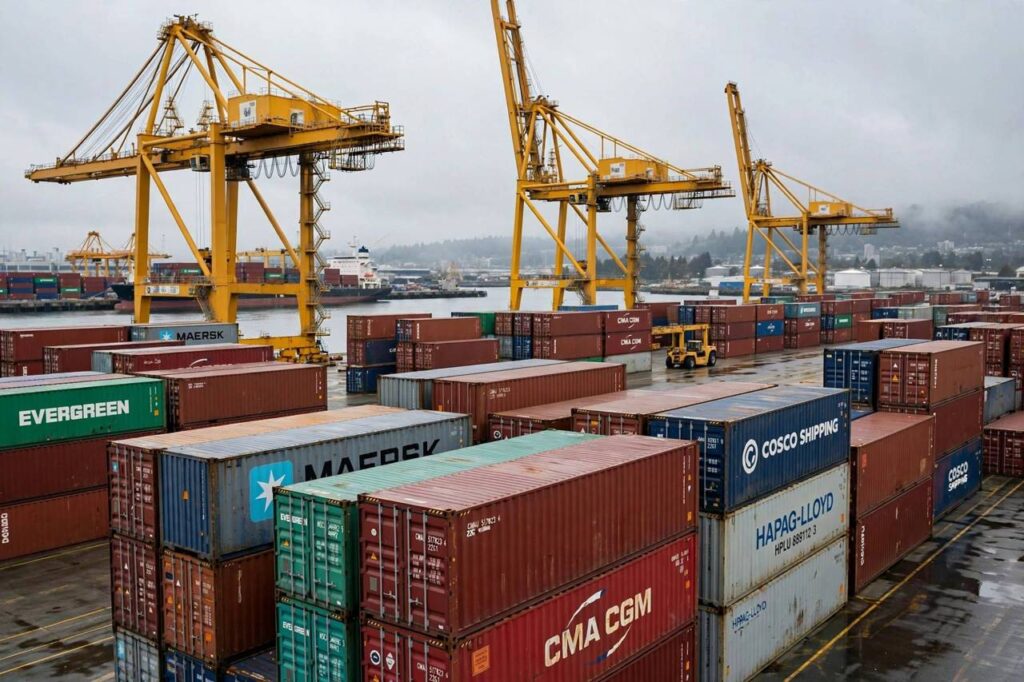
Tariffs make headlines constantly, and the coverage usually skips the basics. So how do trade tariffs work? At their core, a tariff is a tax that a government places on goods imported from other countries. When a product crosses the border, the importer pays the tariff to the government, and that cost ripples through the economy in ways that are worth understanding clearly.
This explainer sticks to the mechanics: what tariffs are, who actually pays them, why governments impose them, and how they show up in the prices you pay. Trade policy is debated fiercely, and economists disagree about plenty. But the basic plumbing of how tariffs function is not controversial, and understanding it makes every tariff headline easier to read.
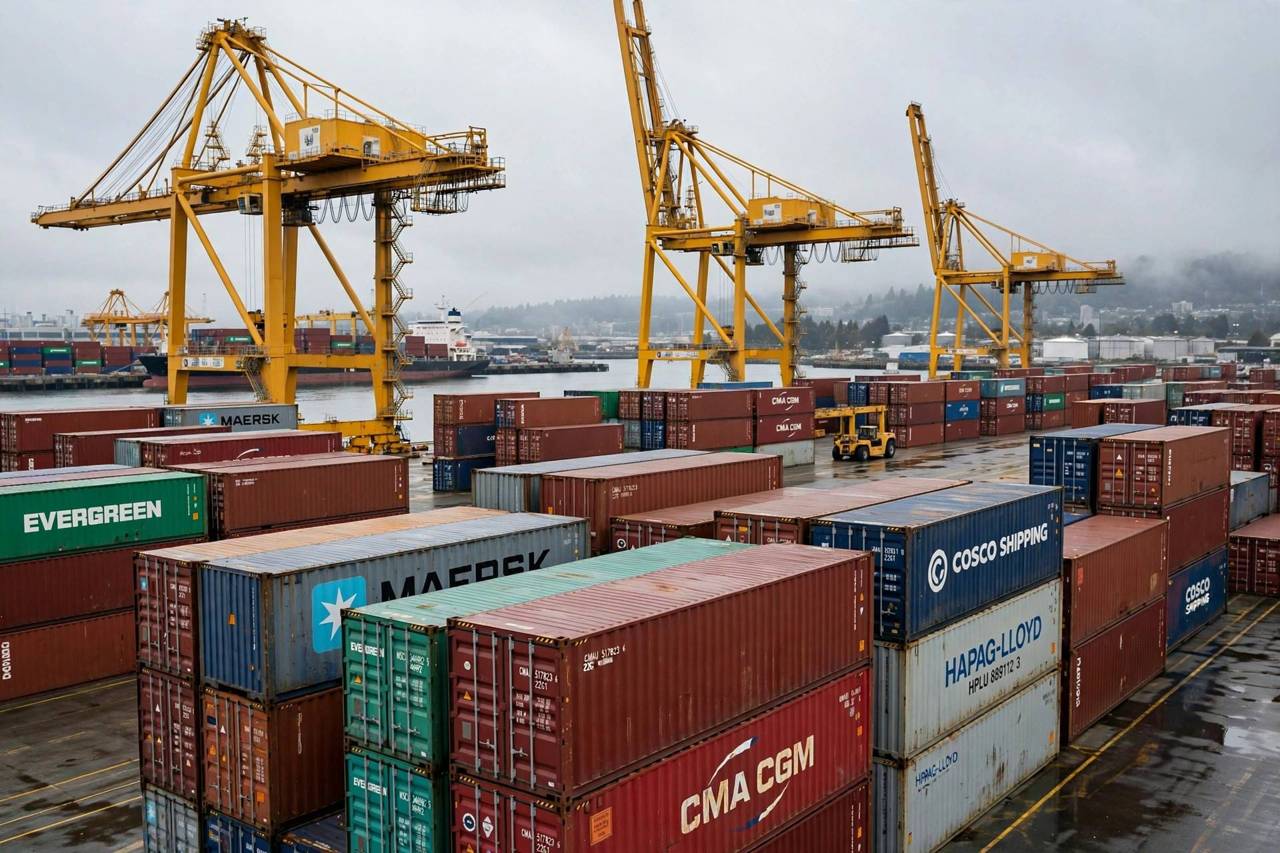
What a Tariff Actually Is
A tariff is a tax levied on imported goods, collected by the importing country’s customs authority. If a government sets a tariff on imported steel, then every shipment of foreign steel entering the country gets taxed at that rate before it can be sold domestically. The tax is calculated as a percentage of the goods’ value or sometimes as a fixed amount per unit.
Tariffs are one of the oldest tools of economic policy. Governments have used them for centuries to raise revenue and shape trade. In the modern era, they sit alongside other trade tools like quotas, which limit quantities, and subsidies, which support domestic producers directly. Of the three, tariffs get the most attention because they are simple to announce and their effects are easy to trace.
It helps to distinguish tariffs from other border charges. Customs duties, import taxes, and tariffs are closely related terms that often describe the same thing. Sanctions and embargoes are different: they restrict or ban trade entirely rather than taxing it. A tariff says you can import this, but it will cost extra. An embargo says you cannot import it at all.
Who Really Pays the Tariff
This is the most misunderstood part. Legally, the importer pays the tariff: the company bringing the goods into the country writes the check to customs. But economically, the cost gets shared, and the split depends on the market. Understanding this chain is the key to reading any tariff story.
Often, the importer passes some or all of the cost to the next buyer, a manufacturer or retailer, who may pass it further to consumers through higher prices. Sometimes the foreign exporter absorbs part of the cost by lowering their prices to stay competitive. Sometimes the importer eats the margin. The exact split varies by product, competition, and how easily buyers can switch to alternatives.
The practical upshot: when tariffs rise on consumer goods, shoppers often see higher prices, though rarely by the full tariff amount and rarely immediately. Existing inventory, long-term contracts, and competitive pressure all delay and dilute the effect. When tariffs hit industrial inputs like steel or components, the cost ripples through every product built with those materials.
Why Governments Impose Tariffs
Governments reach for tariffs for several distinct reasons, and the stated reason shapes the debate. The classic justification is protecting domestic industries. If foreign producers can make something cheaper, a tariff raises the import price and gives local producers breathing room. Supporters call this leveling the playing field. Critics call it shielding inefficiency.
National security is another rationale. Governments sometimes argue that relying on foreign suppliers for critical goods, from semiconductors to medical supplies to defense materials, creates vulnerability. Tariffs, in this framing, are tools for building domestic capacity in strategic sectors.
Tariffs are also used as negotiating leverage. Threatening or imposing tariffs can pressure trading partners into concessions on other issues, from market access to regulatory standards. And historically, tariffs were simply a revenue source. Before income taxes existed, customs duties funded many governments. Revenue still matters for some countries today, though it is rarely the main motive in large economies.
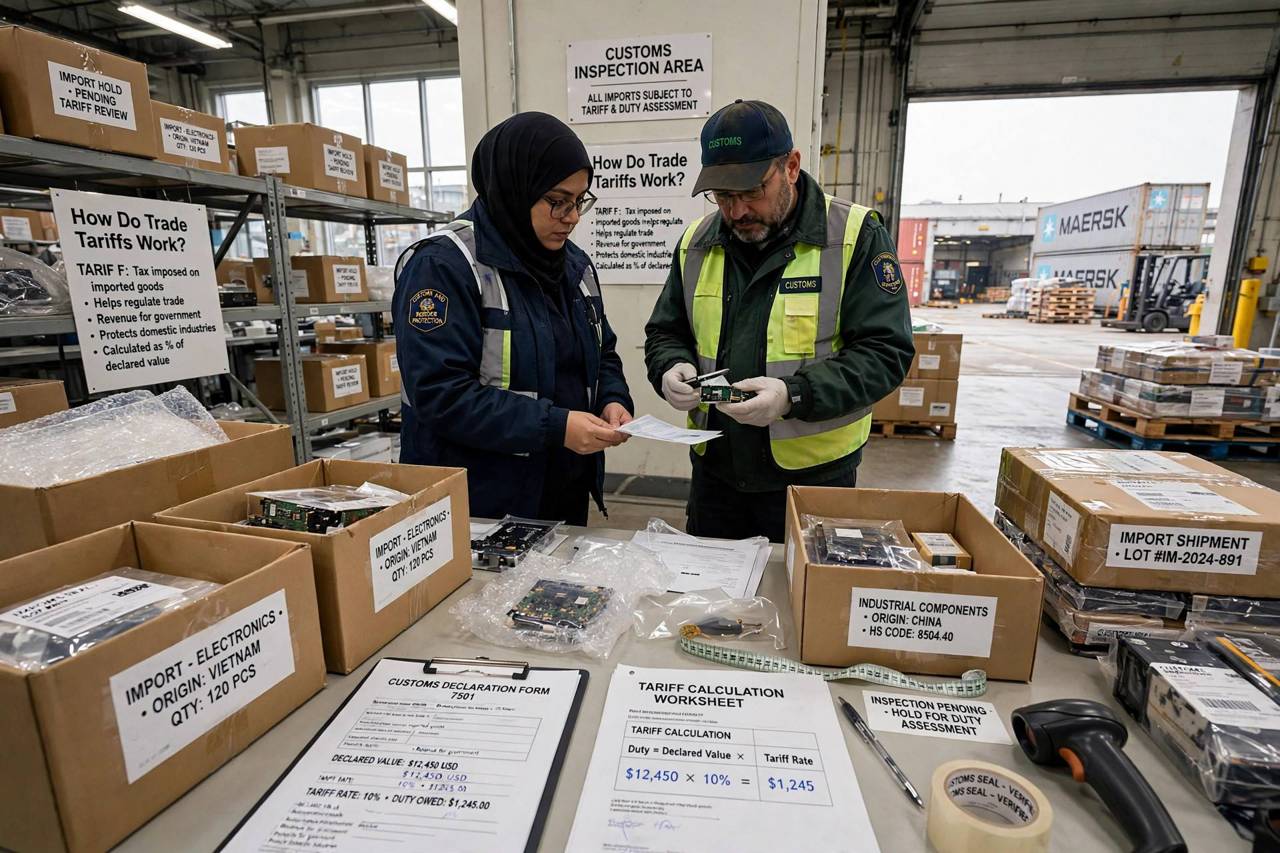
How Tariffs Affect Prices and Businesses
For consumers, the main channel is prices. Tariffs on finished goods tend to raise shelf prices over time. Tariffs on components raise the cost of making things domestically too, which surprises people. A tariff on imported car parts makes domestically assembled cars more expensive, not just imported ones. Modern supply chains are so intertwined that few products escape the ripple effects.
For businesses, tariffs create both pain and planning headaches. Companies that depend on imported inputs face higher costs and must decide whether to absorb them, raise prices, or find new suppliers. Switching suppliers takes time and money, which is why tariff announcements often move markets before the tariffs even take effect. Uncertainty itself has a cost.
Some domestic producers benefit, at least initially. A tariff on imported goods can raise the price umbrella under which local competitors operate. But those same producers often rely on imported materials, so the net effect is murkier than it looks. Economists study these trade-offs endlessly, which is why tariff debates never quite settle.
Retaliation and Trade Disputes
Tariffs rarely happen in isolation. When one country imposes tariffs, affected trading partners often respond with tariffs of their own, aimed at politically sensitive exports. This tit-for-tat dynamic is what people mean by a trade war: an escalating cycle of tariffs and counter-tariffs that spreads costs across both economies.
International institutions exist partly to manage these disputes. The World Trade Organization sets rules for how tariffs can be applied and provides a forum for resolving conflicts. Countries also negotiate trade agreements that lower tariffs among members in exchange for mutual market access. The global tariff landscape at any moment is the product of decades of such deals, disputes, and revisions.
For news readers, the pattern to watch is escalation versus negotiation. Tariff announcements are often opening bids. Whether they lead to deals, stalemates, or spirals depends on the politics, and the economic effects compound the longer the measures stay in place.
How to Read Tariff Headlines Like a Pro
When a tariff story breaks, ask four questions. First, what exactly is being tariffed, finished goods or inputs? The economic effects differ enormously. Second, at what rate, and is it new or an increase? Third, who is affected: which countries, which industries, which consumers? Fourth, what is the stated purpose, and what do independent economists say about whether tariffs achieve it?
Also watch the timeline. Tariffs announced today may take effect months later, with exemptions, phase-ins, and carve-outs that change the real impact. The headline number is the start of the story, not the end. Follow-up coverage weeks later often reveals a very different picture from the initial announcement.
Finally, remember that tariffs are one instrument among many. Export controls, subsidies, currency policy, and regulations all shape trade alongside tariffs. A tariff headline tells you something real, but the full picture of a trade relationship is always bigger than any single measure.
How Do Trade Tariffs Work? A Simple Example
Abstract explanations help, but a concrete example makes the mechanics click. Imagine a bicycle that costs one hundred dollars to import. The government imposes a twenty-five percent tariff on imported bicycles. When the shipment arrives, the importer pays twenty-five dollars per bike to customs. The bike now effectively costs the importer one hundred twenty-five dollars before it ever reaches a store.
What happens next depends on the market. If competing domestic bikes sell for one hundred thirty dollars, the importer might raise the price to one hundred twenty and absorb five dollars of the tariff to stay competitive. Shoppers pay twenty dollars more. The importer earns less per bike. The government collects twenty-five dollars. Everyone in the chain feels it differently.
Now suppose the importer cannot raise prices because customers will just buy the domestic bike. Then the importer absorbs the full tariff, margins shrink, and they start looking for a supplier in a country without the tariff. If they find one, trade shifts. The original exporting country loses business, a third country gains it, and the tariff’s effect lands somewhere nobody predicted. This rerouting is one of the most common real-world outcomes.
Finally, consider the domestic bike maker. With imports now pricier, they can raise their own prices a little and still undercut the imports, or hold prices steady and gain market share. Either way they benefit in the short term. But if they use imported components, like gears or frames, their own costs just rose too. In a global supply chain, almost nobody is purely a winner. That is why economists argue about tariffs endlessly: the effects are real, distributed, and hard to predict in advance.
Trade policy moves slowly until it does not, so it pays to follow tariff stories past the announcement. The initial headline is rarely the final shape of the policy. Watch for the exemptions, the retaliation, and the follow-up deals. That is where the real economic story lives.
Frequently Asked Questions
Who pays for tariffs, the foreign country or consumers?
The importer legally pays the tariff to customs, but the economic cost is typically shared. Importers, exporters, and consumers each absorb part of it depending on market conditions. Consumers often see higher prices over time, though rarely the full tariff amount immediately.
Do tariffs help the economy?
Economists debate this intensely. Tariffs can protect specific domestic industries and generate government revenue, but they also raise costs for consumers and businesses that use imported inputs. The net effect depends on the tariff design, the industries involved, and how trading partners respond.
What is the difference between a tariff and a sanction?
A tariff taxes imports but still allows the trade. A sanction restricts or prohibits trade entirely, often targeting specific countries, companies, or individuals for political reasons. Tariffs are economic tools. Sanctions are closer to foreign policy tools.
Can tariffs cause a trade war?
Yes. When one country imposes tariffs, affected partners often retaliate with their own tariffs, creating an escalating cycle. Trade wars raise costs on both sides and create uncertainty for businesses, which is why most tariff announcements are watched for signs of retaliation.
How long do tariffs usually last?
It varies widely. Some tariffs are temporary negotiating tools removed after a deal. Others stay in place for years or decades and become a permanent feature of the trade landscape. Their duration often depends more on politics than economics.