What to Wear to a Job Interview (Complete Guide)

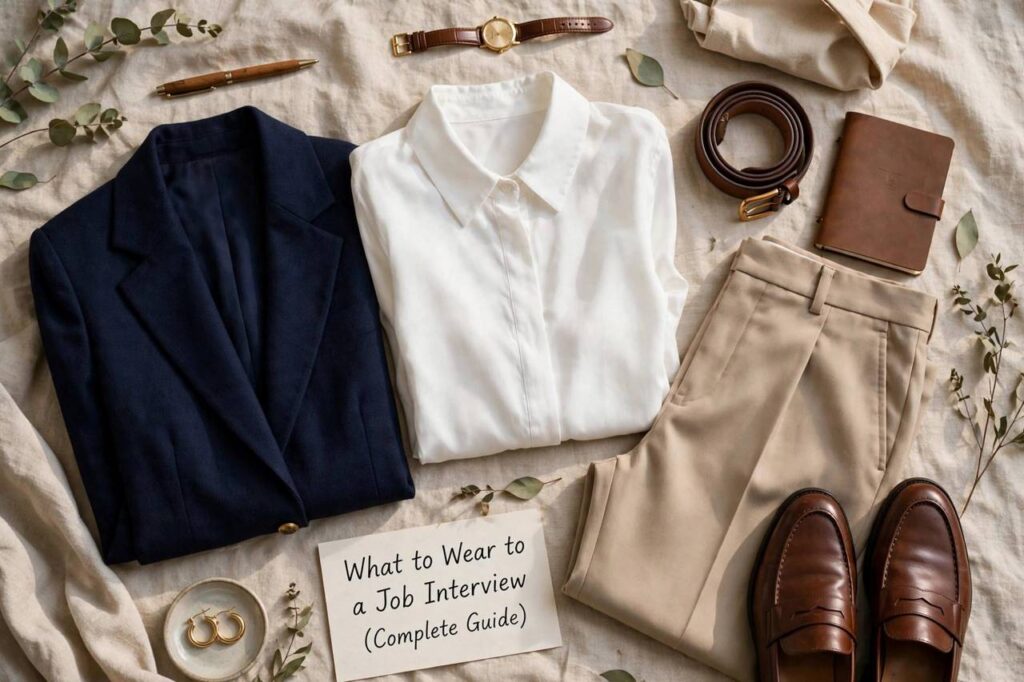
You can be the strongest candidate in the room and still lose the first seven seconds. That is roughly how long it takes an interviewer to form an impression of you, and your clothes do most of the talking before you say a word. What to wear to a job interview is not really a fashion question — it is a strategy question. The goal is simple: look like you already belong in the role, without your outfit distracting anyone from what you are saying.
The One Rule That Overrides Everything
Dress one level above the job’s everyday dress code. If the office wears jeans, you wear smart trousers and a blazer. If the office wears suits, you wear your sharpest one. You are not trying to blend in on day one — you are signaling that you take the opportunity seriously. Underdressing reads as indifference; overdressing slightly reads as respect. When in doubt, the overdressed candidate is forgiven far more often.
That said, “one level above” has limits. A three-piece suit for a startup that wears hoodies does not signal respect — it signals that you did not research the company. Which brings us to the actual work: find out what people wear there.
Research the Company Culture First
Before choosing anything, look at the company’s careers page, team photos, and employee social media. A law firm, a bank, and a design studio expect visibly different things, and the job posting itself often hints at the culture. If you have a contact inside, ask directly — “what do people wear to interviews here?” is a completely normal question.
As a rough map: corporate and finance still expect traditional business formal — suit, conservative colors, minimal accessories. Tech and startups expect smart casual — dark trousers or a skirt, a crisp shirt or blouse, a blazer optional but never wrong. Creative industries allow personality — interesting textures, a distinctive piece — but the outfit should still look deliberate, not like you grabbed it on the way out.
Outfit Formulas That Always Work
The universal safe choice: navy or charcoal blazer, white or light-blue shirt or blouse, dark tailored trousers or a knee-length skirt, closed-toe shoes in a neutral color. This works for nearly every industry and every gender presentation. It is not exciting. It is not supposed to be — the interview is the exciting part.
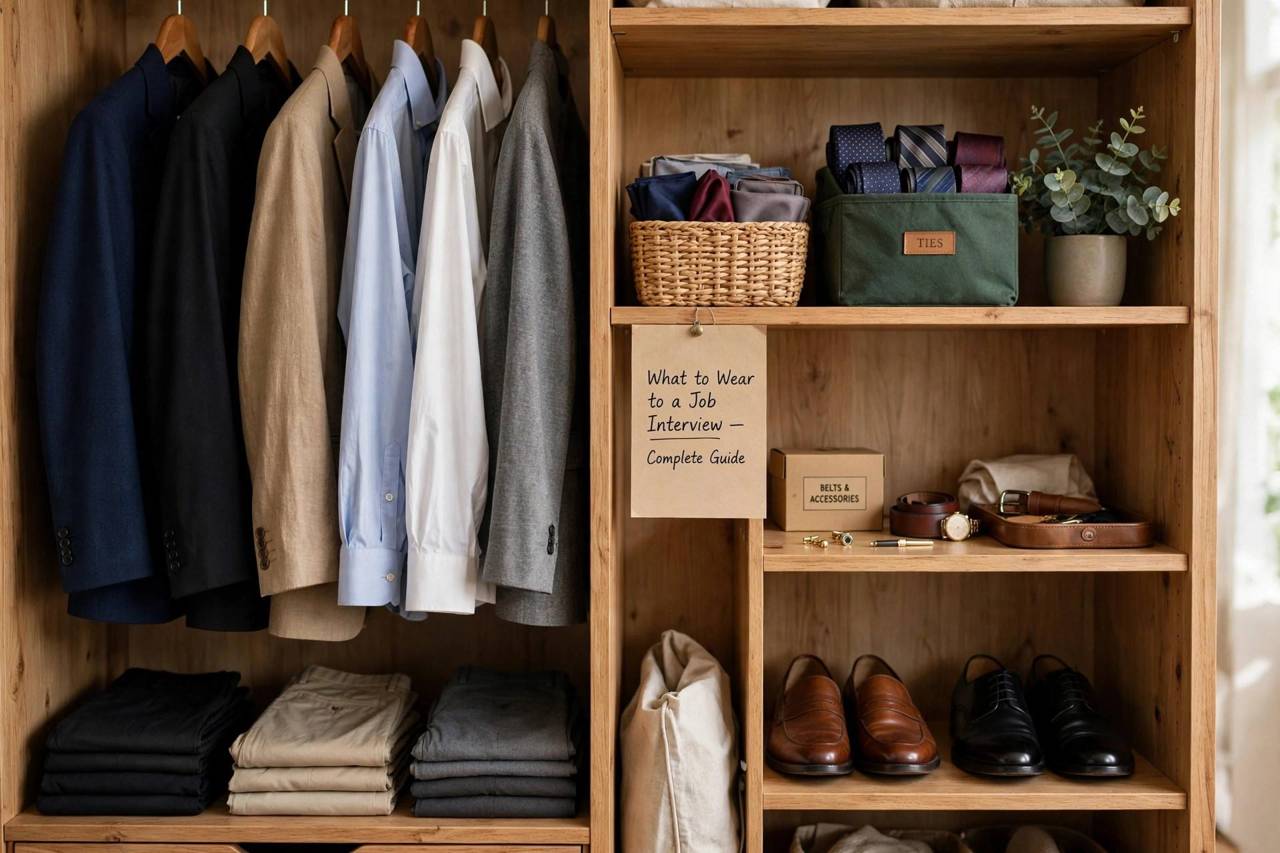
For business formal: a matching suit in navy, charcoal, or black. White shirt. Conservative tie or simple blouse. Leather shoes, polished. Minimal jewelry. This is the uniform for law, finance, consulting, and executive roles.
For business casual: blazer optional, but a structured layer always helps — it reads as polished even over a simple top. Dark chinos or tailored trousers, a button-down or knit top, loafers or clean minimal sneakers-free shoes. Skip the tie unless the industry expects it.
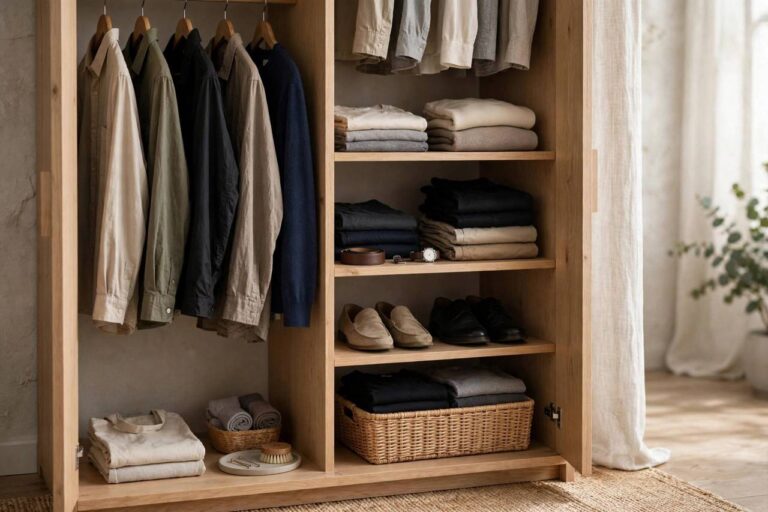
Building a small rotation of interview-ready pieces is easier if your wardrobe is already streamlined — our capsule wardrobe guide covers how to build a versatile closet where everything works together, which makes mornings like this much less stressful.
Fit, Grooming, and the Details Nobody Mentions
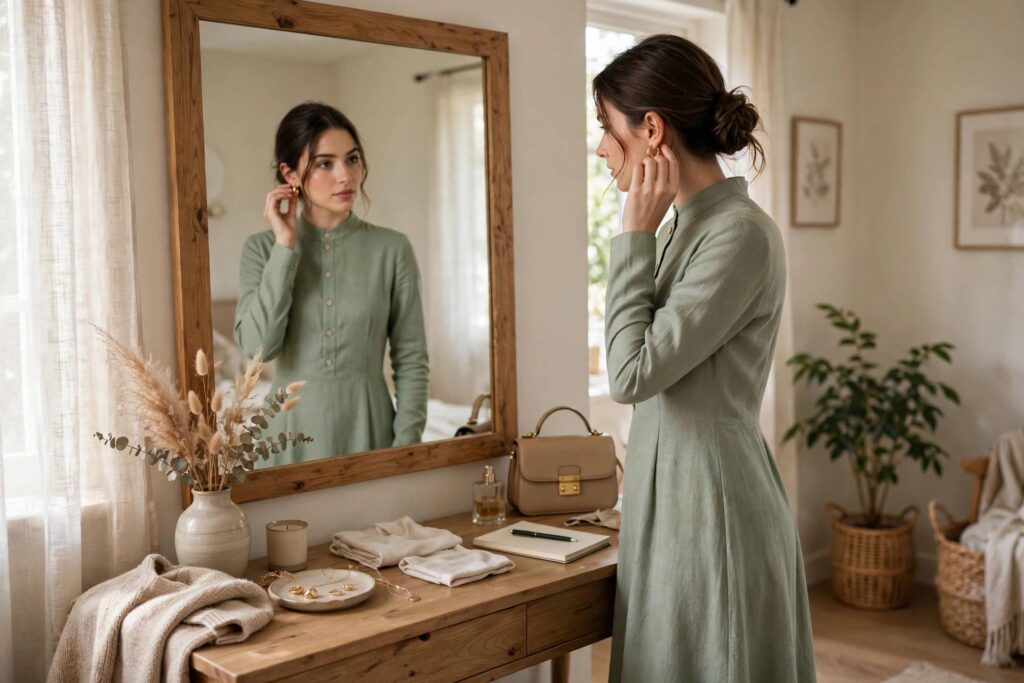
Fit matters more than price. A well-fitted mid-range blazer outperforms an expensive one that pulls at the shoulders. Get the trousers hemmed, make sure the shirt collar sits flat, and check the outfit in natural light — indoor lighting hides wrinkles and stains that daylight will not.
Grooming is the other half of the impression: clean nails, neat hair, subtle fragrance or none at all. Strong perfume or cologne in a small interview room is a genuine liability. Iron or steam everything the night before, and do a full trial run — sit down in the outfit, walk around, check the shoes are comfortable enough for a building tour you did not expect.
What to Wear to a Job Interview: Common Mistakes
Wrinkled or stained clothing. The fastest way to look unprepared. Check everything the night before, not the morning of.
Too much fragrance. One light spray or none. Interview rooms are small and interviewers have allergies.
Distracting accessories. Loud jewelry, novelty ties, and statement pieces pull attention away from your answers. One tasteful accessory is plenty.
New shoes, worn for the first time. Break them in beforehand. Limping into an interview is memorable for the wrong reasons.
Dressing for the job you have, not the one you want. If you are interviewing up a level, dress for that level.
Video Interviews: The Same Rules, Adjusted
For video calls, the frame is your outfit’s entire world. Wear the full outfit anyway — it changes how you carry yourself — but pay extra attention to the top half: solid colors read better on camera than busy patterns, and a blazer over anything instantly looks intentional. Check your background, light your face from the front, and glance at how the colors render on your actual webcam before the call.
What to Wear to a Job Interview: Industry Cheat Sheet
Here is the quick reference. Law, finance, consulting, government: full suit, conservative colors, minimal accessories — no exceptions for first interviews. Tech, startups, agencies: dark trousers or skirt, crisp shirt or blouse, blazer; a tie is optional and often skipped. Healthcare and education: smart business casual — polished but approachable, since you will work with the public. Retail, hospitality, trades: neat, clean, practical — dark trousers, collared shirt or blouse, closed shoes; overdressing here can look out of touch, but underdressing looks careless.
Creative fields (design, media, fashion, advertising): this is the one arena where personality is an asset. Wear something with a point of view — interesting tailoring, a distinctive accessory, evidence of taste — while keeping the overall impression polished. The interviewers are judging your aesthetic judgment along with everything else, so a generic suit can actually work against you. One rule still holds: deliberate beats casual. “Creative” is not a synonym for “unironed.”
Seasonal and Weather Adjustments
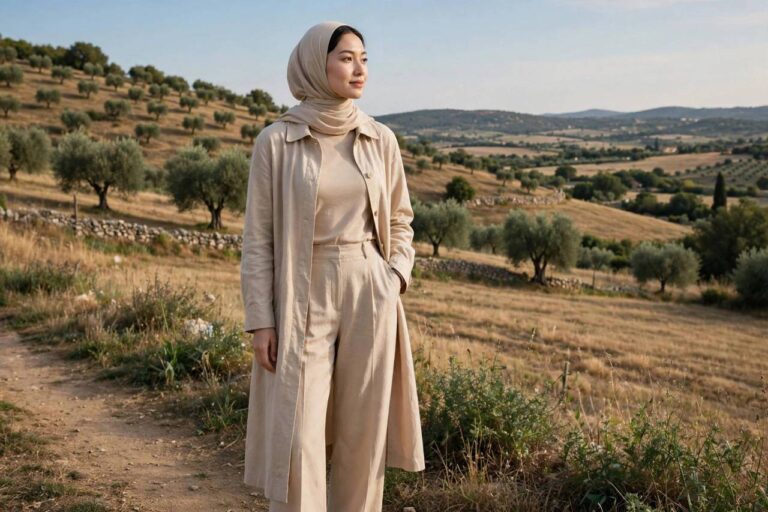
Summer interviews in hot climates create a real dilemma: a full suit in 95-degree heat. The solution is fabric, not informality — lightweight wool, cotton, or linen-blend suits breathe far better than heavy polyester, and you can skip the tie where the industry allows. Arrive early, cool down in the lobby, and keep a handkerchief handy. In winter, your coat is part of the outfit: a clean, classic overcoat beats a puffer jacket, and change out of boots into proper shoes if the weather forced your hand.
Rain is the silent killer of interview outfits. Check the forecast, carry a compact umbrella, and give yourself extra time — arriving flustered and damp undoes the entire effect. These details feel fussy until the day they save you.
The Night-Before Checklist
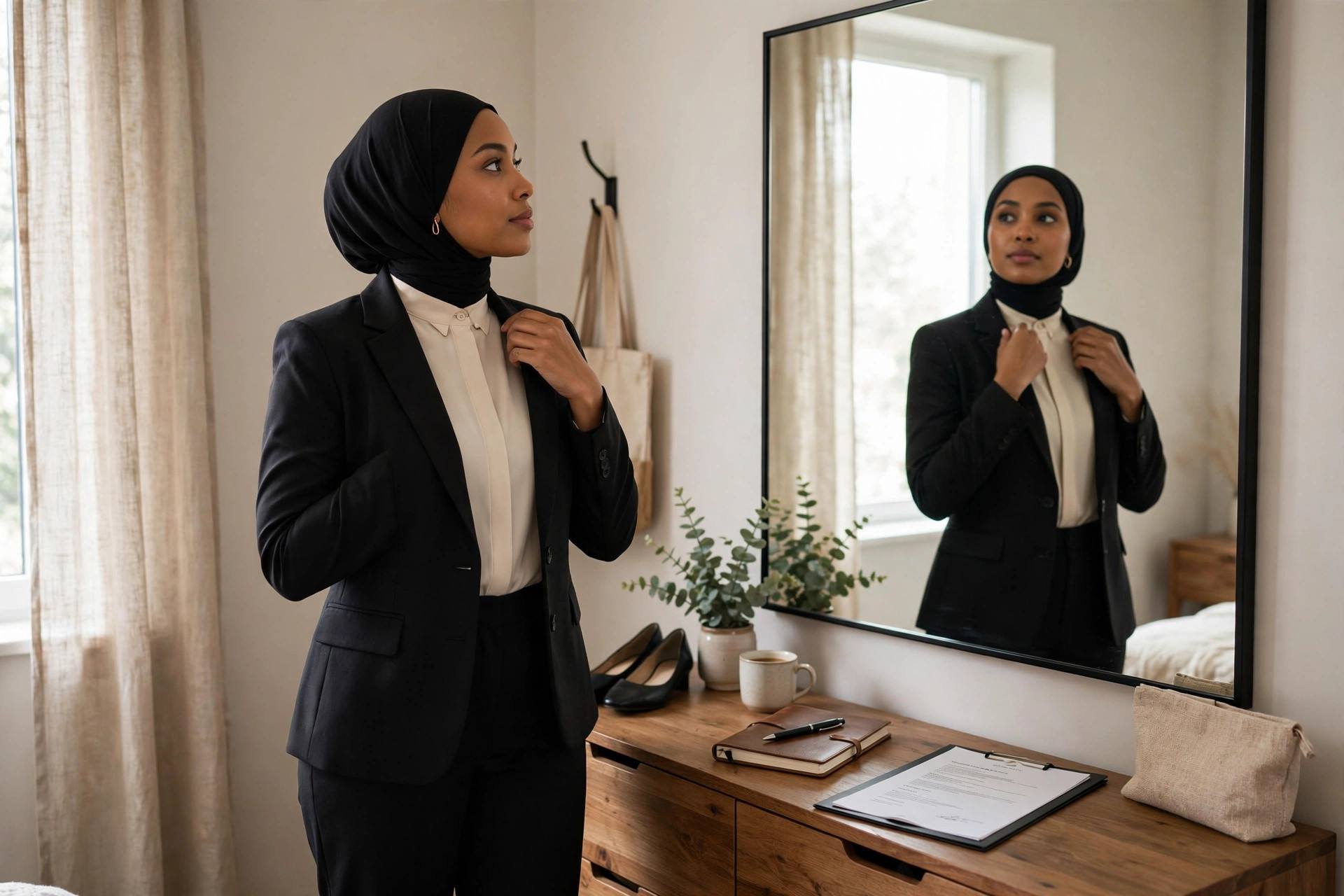
Everything that can go wrong with an interview outfit goes wrong in the morning, when you are already nervous. So do it the night before: lay out the complete outfit including shoes, belt, and accessories; check for wrinkles, stains, missing buttons, and scuffed shoes; pack your bag with copies of your resume, a pen, and mints; confirm the company’s address and your interviewer’s name. Try the whole thing on once, sit down in it, and look at yourself in a mirror in good light. In the morning, you should be dressing on autopilot — all decisions already made.
What Never Works: The Definitive Don’t List
Some mistakes are universal across industries. Visible logos and slogans — you are interviewing for their brand, not advertising yours. Athleisure — leggings, gym shoes, and hoodies read as “I didn’t try,” even at casual companies. Overpowering fragrance — mentioned before, worth repeating, because it is the most common avoidable error. Wrinkled anything — ten minutes with an iron or steamer. Too-tight or too-loose fits — both distract. Flashy accessories — the interviewer should remember your answers, not your watch. Visible undergarments, sheer fabrics without lining, or anything you’d adjust constantly — fidgeting with your clothes signals discomfort. The throughline: nothing you wear should require attention during the interview. Your outfit’s job is to be forgotten five minutes in.
Interview Outfit Emergencies: Quick Fixes
Things go wrong. Coffee spill an hour before: cold water and a dab of dish soap on most fabrics; if it won’t budge, change the layer — this is why a backup shirt lives in your bag. Broken heel or scuffed shoe: a black marker hides scuffs on dark leather shockingly well. Wrinkled blazer, no iron: hang it in a steamy bathroom for fifteen minutes. Forgot a tie: skip it confidently rather than borrowing something awful — an open collar beats a bad tie. Stuck in traffic, arriving sweaty: arrive early enough to cool down in the lobby, freshen up in the restroom, and walk in composed. The meta-lesson: the outfit is a system, and systems need redundancy. Pack the backup shirt, the stain pen, and the extra ten minutes.
Frequently Asked Questions
What should I wear to a job interview as a woman?
A blazer with tailored trousers or a knee-length skirt, a blouse in a solid or subtle pattern, and closed-toe shoes. Adjust formality to the industry: full suit for corporate and finance, smart separates for tech and creative roles.
What should I wear to a job interview as a man?
Navy or charcoal suit for formal industries; for most others, dark tailored trousers, a crisp button-down shirt, and a blazer. Polished leather shoes, minimal accessories, and a conservative tie only where the industry expects one.
Can I wear jeans to a job interview?
Only if you are certain the company culture is genuinely casual — and even then, dark, well-fitted jeans with a blazer and smart shoes is the ceiling. When in doubt, skip the jeans entirely.
What colors are best for interview outfits?
Navy, charcoal, gray, black, and white are the safest foundation. Studies of first impressions consistently favor blue tones for trustworthiness. Save bold colors for a single accent at most.
How should I dress for a second or final interview?
Slightly sharper than the first round, in a different outfit — interviewers notice repeats more than you would expect. If the first round was business casual and went well, keep the same level; do not dress down just because the vibe felt relaxed.