How to Sleep on a Plane Comfortably: The Complete Playbook

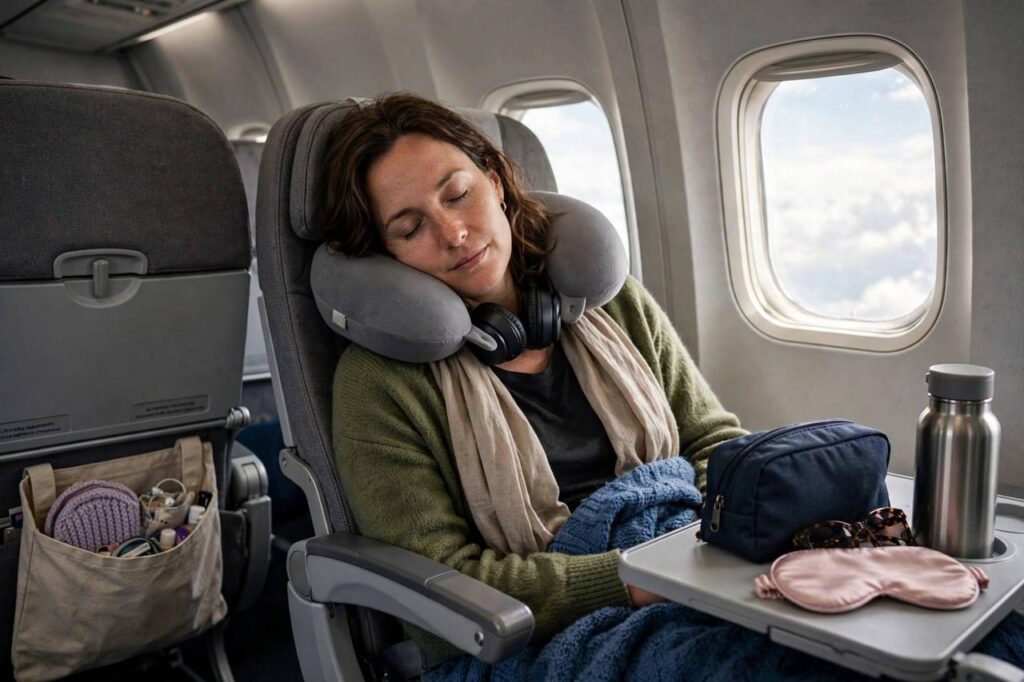
I’ve slept in airport terminals, on red-eyes across the Atlantic, and once — memorably — upright in a middle seat for nine hours. Some of those sleeps were miserable. Some were genuinely restful. The difference was never luck; it was preparation. If you’re wondering how to sleep on a plane comfortably, the truth is that good airplane sleep is a skill, and it’s one you can learn before your next flight.
This is my complete playbook: what to bring, how to set up your seat, what to eat and drink, and the timing tricks that help you actually land rested instead of wrecked.
How to Sleep on a Plane Comfortably: The Sleep Kit
Everything here earns its place by solving a specific problem:
- A real neck pillow. Not the flimsy U-shaped kind that pushes your head forward — get a memory foam one, or better yet, one of the wraparound styles that supports your chin. This is the single highest-impact item. Your neck will thank you for years.
- A contoured sleep mask. The cheap flat ones press on your eyelids. A contoured 3D mask blocks light completely while letting you blink. Cabin lights, window glare, seatback screens — all gone.
- Earplugs or noise-cancelling earbuds. Engine drone is the enemy of deep sleep. Foam earplugs are cheap and effective; noise-cancelling earbuds playing white noise or brown noise are the luxury version.
- Compression socks. On flights over four hours, these reduce swelling and keep your legs comfortable, which matters more for sleep than people realize.
- A warm layer. Cabins run cold. A packable down layer or a large scarf doubles as a blanket and a pillow.
- Lip balm and water. Cabin air is brutally dry. Hydrated and comfortable beats parched and restless.
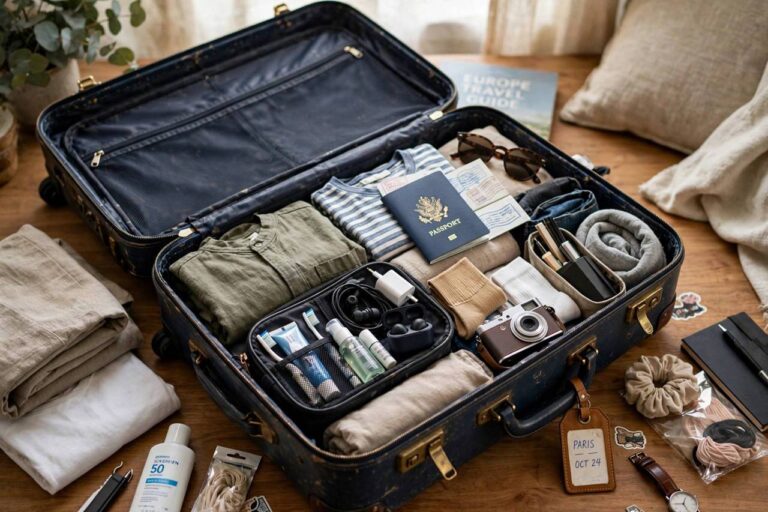
Pack all of this in an accessible pouch at the top of your bag — one-bag packing philosophy applies: the things you need in flight should never be buried under everything else.
Choose Your Seat Like Your Sleep Depends on It (It Does)
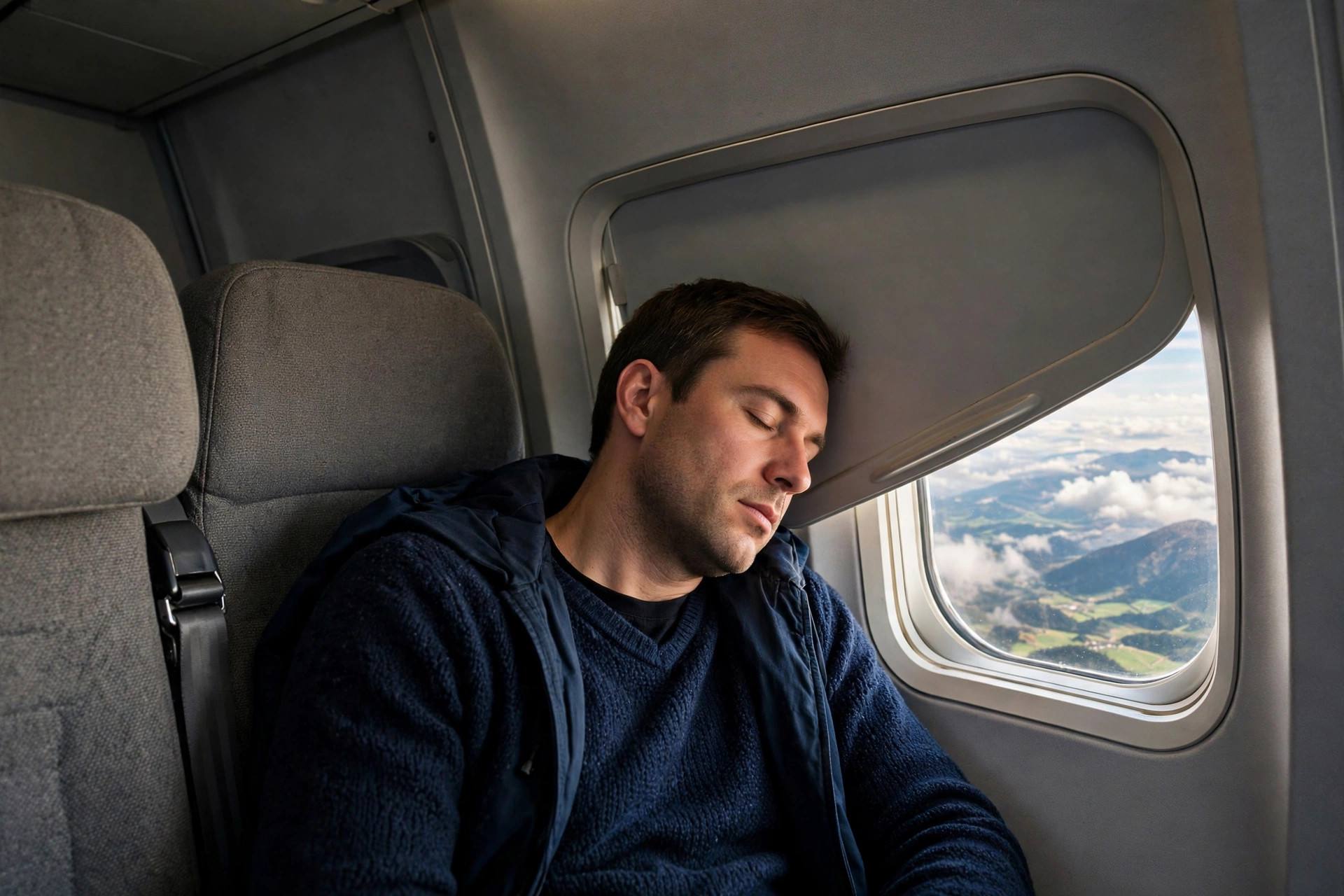
Window seat, always — if sleep is the goal. You get a wall to lean on, nobody climbs over you, and you control the shade. The window side is the only seat where you can truly settle in.
Avoid the last row and the row in front of the exit. Seats there often don’t recline fully, and you’re next to the galley or lavatory traffic. Similarly, bulkhead rows give legroom but the armrests don’t lift and you’re near the bassinet/bathroom zone.
Recline — politely. A slight recline changes the geometry of your whole body and makes sleep dramatically easier. Recline slowly, check behind you first, and keep it modest during meal service. Your comfort matters, and so does your neighbor’s.
If you’re booking last-minute and seat choice is limited, finding cheap flights sometimes turns up fares where you can still snag a decent seat — and booking at the right time timing affects which seats are left as much as the price.
The Pre-Flight Routine That Sets You Up
Good airplane sleep starts before boarding. Eat a real meal at the airport rather than relying on airplane food timing — a comfortable, not-stuffed stomach sleeps better. Change into comfortable clothes before boarding if you can (or wear them from the start). Use the restroom right before boarding so you’re not waking up an hour in.
Set your watch to your destination’s time zone as soon as you sit down. This is the single best jet lag trick I know: start living on destination time immediately. If it’s nighttime at your destination, act like it’s bedtime — mask on, screens off. If it’s daytime there, stay awake even if you’re tired. Your body adjusts far faster when you commit.
What to Eat, Drink, and Avoid
Do: drink water steadily through the flight — dehydration causes headaches and restlessness. Eat light: heavy, greasy meals sit badly at altitude and disrupt sleep. Herbal tea (chamomile if available) is a nice wind-down ritual.
Don’t: overdo caffeine after the first hour or two — that “one more coffee” will cost you three hours of sleep later. Go easy on alcohol: it feels like it helps you doze off, but it fragments your sleep and dehydrates you, so you wake up groggy. And skip the sugary snacks that spike and crash your energy.
Sleep aids: melatonin (0.5-1mg) timed to destination bedtime helps many travelers reset; it’s the most evidence-backed option. Prescription sleep aids are a personal decision — talk to your doctor, test them at home first (never experiment for the first time at 35,000 feet), and know that they don’t work for everyone.
Positioning: How to Actually Get Comfortable
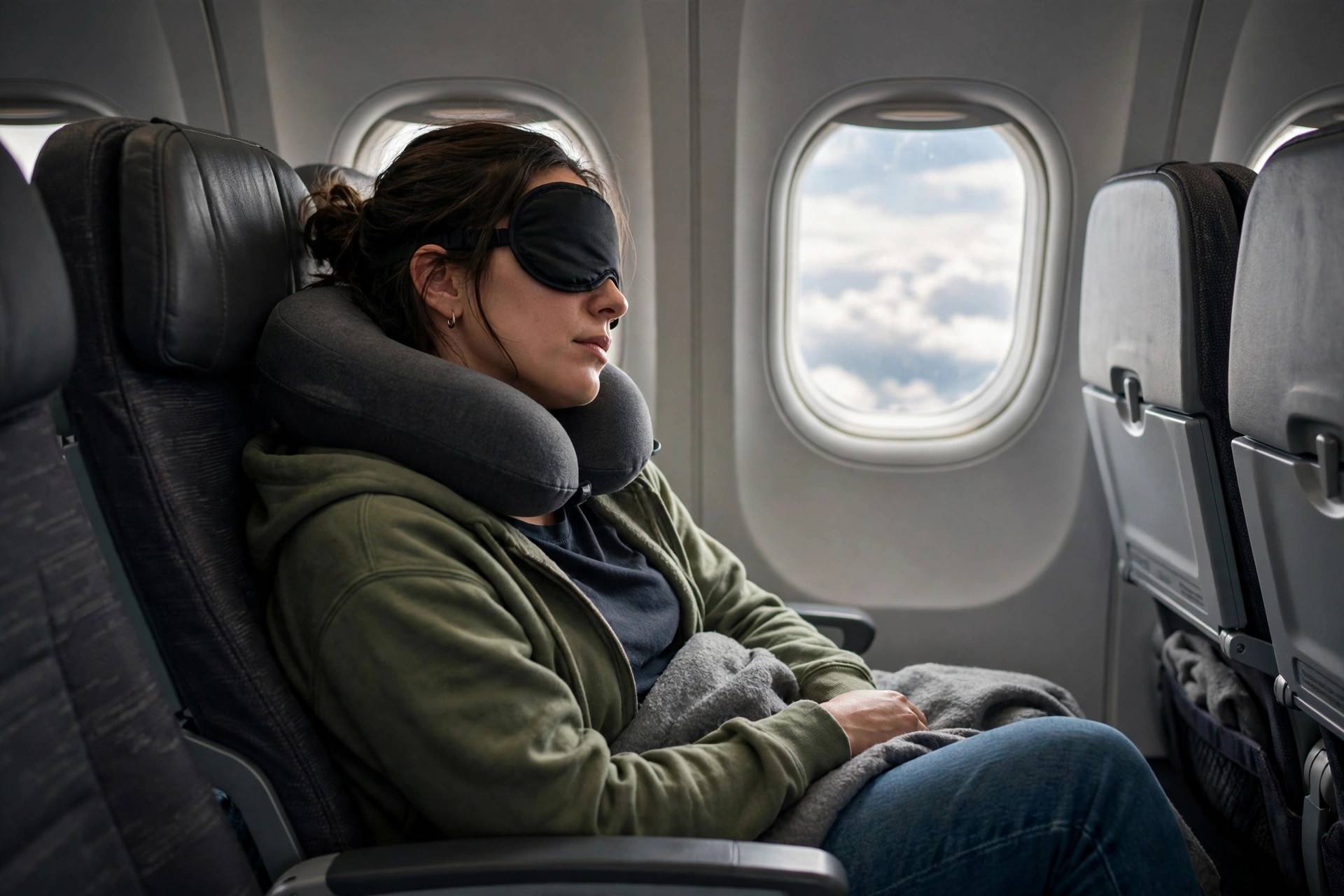
Here’s the setup that works for most people: window seat, leaned against the wall with your neck pillow supporting the window-side of your neck, seat slightly reclined, feet flat or on your bag under the seat in front. Tuck the blanket around your shoulders to block drafts.
If you’re stuck in a middle or aisle seat: lean slightly forward onto a pillow on the tray table (the “tray table nap” is underrated), or cross your arms and rest your head on the headrest wings pulled forward. It’s not the window-seat experience, but with a good mask and earplugs, it’s surprisingly workable.
The secret nobody mentions: stillness beats position. Pick a position and commit to it. Constant shifting keeps your brain half-awake. Settle, breathe slowly, and give yourself 20 minutes — most people who “can’t sleep on planes” just never give themselves a real chance to drift off.
A quick note on premium economy and business class, since the sleep math changes there: premium economy’s extra recline (usually a few more inches) genuinely helps — it’s the best value upgrade for sleep if the price gap is small. Business class lie-flat seats are obviously the dream, but here’s what nobody tells you: some people sleep worse in lie-flat seats the first time because the flat position feels unfamiliar and the cabin stays brighter and busier. Bring your mask and earplugs anyway. The seat is better; the sleep kit still matters.
And one thing that applies in every cabin: get up once on flights over six hours, even if you’re sleeping well. A two-minute walk to the galley and back prevents the stiffness that makes the second half of the flight miserable. Time it for a natural wake-up — after meal service or a bathroom trip — rather than setting an alarm.
For Long-Haul and Red-Eyes Specifically
On overnight flights, treat the cabin like a bedroom: as soon as meal service ends, it’s sleep time. Don’t watch “one more episode” — the blue light and engagement keep you wired. Mask on, earplugs in, recline, done.
On daytime long-hauls where you need to stay awake (because it’s daytime at your destination), do the opposite: keep the shade open, move around the cabin every couple of hours, stay hydrated, and save the sleep for destination nighttime. Fighting your body clock in the wrong direction just makes jet lag worse.
And when you land: sunlight is the most powerful jet lag cure there is. Get outside within an hour of arrival, even if you’re tired. Your circadian rhythm takes its cues from light, and morning sun at your destination is worth more than any supplement.
Flying With Kids: Sleep Strategies for the Whole Row
Everything above works for solo travelers. Add a four-year-old to the equation and the whole playbook changes — ask me how I know. (Nairobi to London, toddler, middle seats. We don’t talk about that flight.) Here’s what actually works when you’re trying to get kids to sleep on a plane.
Book around their sleep, not yours. A red-eye that lands at 6 a.m. sounds clever until your child treats the entire flight as a party and then melts down at baggage claim. For kids under six, daytime flights are often easier: they’re awake anyway, and you arrive with everyone functional. If you must fly overnight, board with them already in pajamas — the costume change signals bedtime more powerfully than anything you say.
Bring their sleep associations from home. The specific blanket, the specific stuffed animal, the white-noise app you use every night — pack all of it. Familiar sensory cues are what tell a kid’s brain it’s sleep time, and a plane cabin has zero familiar cues otherwise. I once watched a mom produce her daughter’s exact bedtime playlist on a phone speaker and the kid was out in ten minutes. Genius.
Feed them, then dim everything. A full belly and a dark environment do half the work. Ask the crew for the kids’ meal early if one’s coming, then create a little cave: blanket over the seat, screens off, lights low. And lower your own expectations — if you get three hours instead of six, that’s still a win. The goal is a rested-enough child, not a perfect sleeper.
FAQ
What is the best seat for sleeping on a plane?
The window seat — you get a wall to lean on, nobody climbs over you, and you control the window shade. Avoid the last row and rows in front of exits, where seats often don’t fully recline.
Should I take melatonin to sleep on a plane?
Many travelers find 0.5-1mg of melatonin timed to their destination’s bedtime helpful for resetting their body clock. It’s the most evidence-backed option, but try it at home first and talk to your doctor if you have health conditions.
Why can’t I fall asleep on planes?
The usual culprits are light, noise, an uncomfortable neck position, dehydration, and caffeine or alcohol timing. A contoured sleep mask, earplugs, a good neck pillow, and committing to stillness for 20 minutes solve most of it.
Is it better to sleep or stay awake on a long flight?
Follow your destination’s clock: sleep if it’s nighttime there, stay awake if it’s daytime. Set your watch to destination time at boarding and commit — it’s the single best jet lag strategy.
Does alcohol help you sleep on a plane?
It may help you doze off, but it fragments sleep quality and dehydrates you, so you wake up groggy. Limit alcohol and prioritize water if restful sleep is the goal.
What is the best thing to wear to sleep on a plane?
Soft, loose layers in breathable fabric — think joggers, a t-shirt, and a zip-up hoodie or cardigan you can add or remove as the cabin temperature swings. Avoid anything with a tight waistband, stiff denim, or complicated fastenings. Slip-on shoes are non-negotiable (you’ll thank yourself at security and on bathroom trips), and warm socks make a bigger comfort difference than most people expect.