How to Play Sudoku for Beginners: From Confused to Hooked

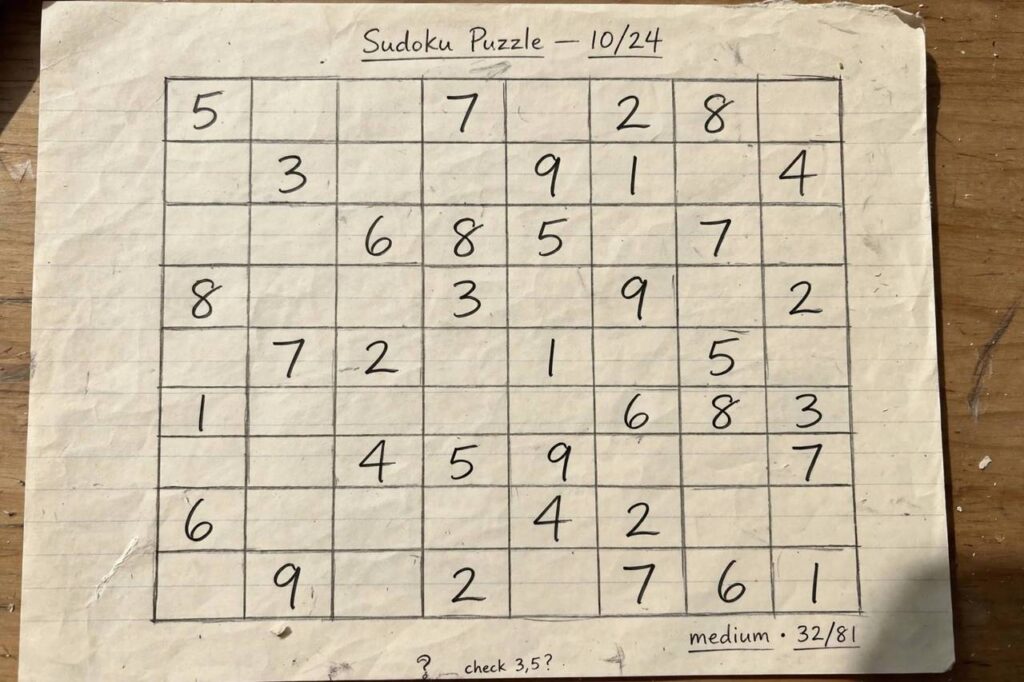
Sudoku looks intimidating the first time you see it — 81 little squares, a scattering of numbers, and absolutely no instructions. But here’s the secret that hooks millions of players: Sudoku has exactly one rule, it requires zero math, and once it clicks, you’ll wonder why it ever looked hard. I still remember my first solved puzzle — that rush of filling in the last number is genuinely addictive. Let me teach you to play, step by step, the way I wish someone had taught me. Here’s how to play Sudoku for beginners — from your first grid to your first solved puzzle.
The Only Rule You Need
Here it is, the entire game: every row, every column, and every 3×3 box must contain the digits 1 through 9, each exactly once.
That’s it. No arithmetic, no calculations — you’re not adding or multiplying anything. Sudoku is pure logic: given the numbers already placed, where can the missing ones go? Think of it as a placement puzzle, not a math problem. If you can spot patterns and eliminate possibilities, you can play Sudoku.
The grid starts with some numbers pre-filled (the “givens”). Your job is to fill every empty cell with the correct digit, following the one rule. Every properly constructed Sudoku has exactly one solution — so if you ever reach a point where a cell could be two different numbers with no way to decide, you’ve made an error somewhere upstream. That’s actually comforting: the puzzle is always solvable by logic alone, no guessing required (at least at beginner and intermediate levels).
Understanding the Grid
The 9×9 grid breaks down into three overlapping structures you must satisfy simultaneously:
- Rows: 9 horizontal lines, each must contain 1-9.
- Columns: 9 vertical lines, each must contain 1-9.
- Boxes: 9 boxes of 3×3 cells (outlined in bold), each must contain 1-9.
Every cell sits at the intersection of one row, one column, and one box — which means every number you place must satisfy all three constraints at once. This triple constraint is what makes Sudoku interesting: a number that fits the row might violate the column, and resolving those tensions is the whole game.
How to Play Sudoku for Beginners: Scanning (Your First Power Move)
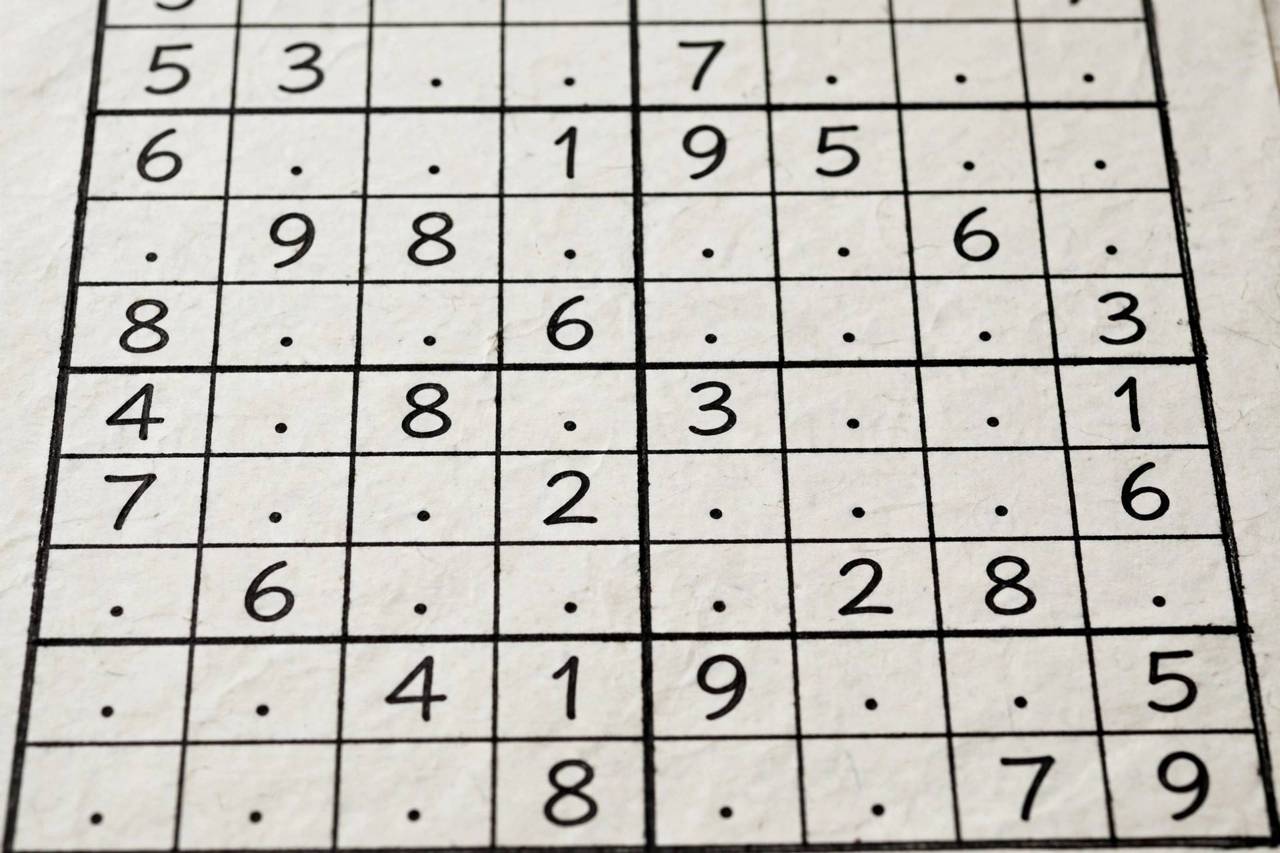
Scanning is where every beginner should start. Pick a number — let’s say 5 — and look at each 3×3 box. In boxes that already contain a 5, note which rows and columns that 5 “blocks” (a 5 elsewhere in the same row or column would violate the rule). In a box without a 5, use those blocked rows and columns to narrow down where the 5 must go.
Often you’ll find a box where only one cell remains possible for that number — that’s a placement. Fill it in, and move on. Then do the same for 6, 7, and so on. Work through all nine digits, then loop back to the start — each new placement unlocks information that helps with the next scan.
This technique alone solves most easy puzzles. It’s methodical, satisfying, and it trains your eyes to see the grid’s structure. Don’t rush it — scanning carefully beats scribbling guesses every time.
Technique 2: Single Candidates (Naked Singles)
Look at an empty cell and ask: considering its row, column, and box, which digits are still possible here? If only one digit is possible, that’s your answer — it’s called a “naked single,” and it’s a guaranteed placement.
To do this systematically, some players pencil in tiny candidate numbers in each cell (all digits 1-9 that could still go there). As you place numbers, you cross off candidates. When a cell is down to one candidate, fill it in bold. This “pencil marking” approach is the standard method for harder puzzles, and learning it early builds excellent habits.
Start by pencil-marking just a few cells that look promising rather than the whole grid — full-grid marking can feel overwhelming at first. As you get comfortable, you’ll naturally expand.

Technique 3: Hidden Singles
Sometimes a digit can only go in one cell within a row, column, or box — even though that cell has other candidates penciled in. That’s a “hidden single”: the digit is hiding among other possibilities, but logic reveals it’s the only home for that digit in that unit.
Example: in a particular row, the digit 3 appears as a candidate in three different cells — but in the columns and boxes, two of those cells are blocked for 3 by other constraints. The remaining cell must be 3. Spotting hidden singles is the skill that separates casual players from confident ones, and it comes with practice.
A Walkthrough: Your First Puzzle Strategy
Here’s the exact sequence to follow on every beginner puzzle:
- Scan for easy placements. Run through digits 1-9, looking for boxes/rows/columns where a digit has only one possible home. Fill in everything obvious.
- Pencil-mark the stuck areas. Where scanning stalls, lightly note candidates in the remaining empty cells of one region.
- Find naked and hidden singles. Cells with one candidate get filled; digits with one possible home get placed.
- Repeat. Every placement changes the puzzle. Loop back to scanning with fresh eyes.
- Check your work. If you get stuck with no logical move, review recent placements — a single error early on cascades. Erase back to where things felt certain and retry.
On easy puzzles, steps 1-2 often finish the job. The full loop becomes necessary as you graduate to medium difficulty — and by then, you’ll be doing it naturally.
Common Beginner Mistakes
- Guessing. The number one beginner trap. If you’re choosing between two numbers with no logical basis, stop — there’s a deduction you’re missing. Back up and look again. (Advanced puzzles occasionally require trial-and-error, but beginner puzzles never do.)
- Forgetting a constraint. You placed a 7 that works for the row but duplicates one in the box. Always check all three units — row, column, box — before committing.
- Messy pencil marks. Illegible candidates cause errors. Keep marks small, neat, and current — erase candidates the moment they’re eliminated.
- Staring instead of scanning. Passive staring rarely reveals the next move; systematic scanning does. Have a method and work it.
- Starting too hard. Jumping to “hard” puzzles before mastering easy ones teaches guessing, not logic. There’s no shame in easy — even experts warm up on them.
- Not taking breaks. A stuck puzzle often solves itself after a 10-minute break. Fresh eyes see what tired eyes miss — this is genuinely a neurological phenomenon, not just folk wisdom.
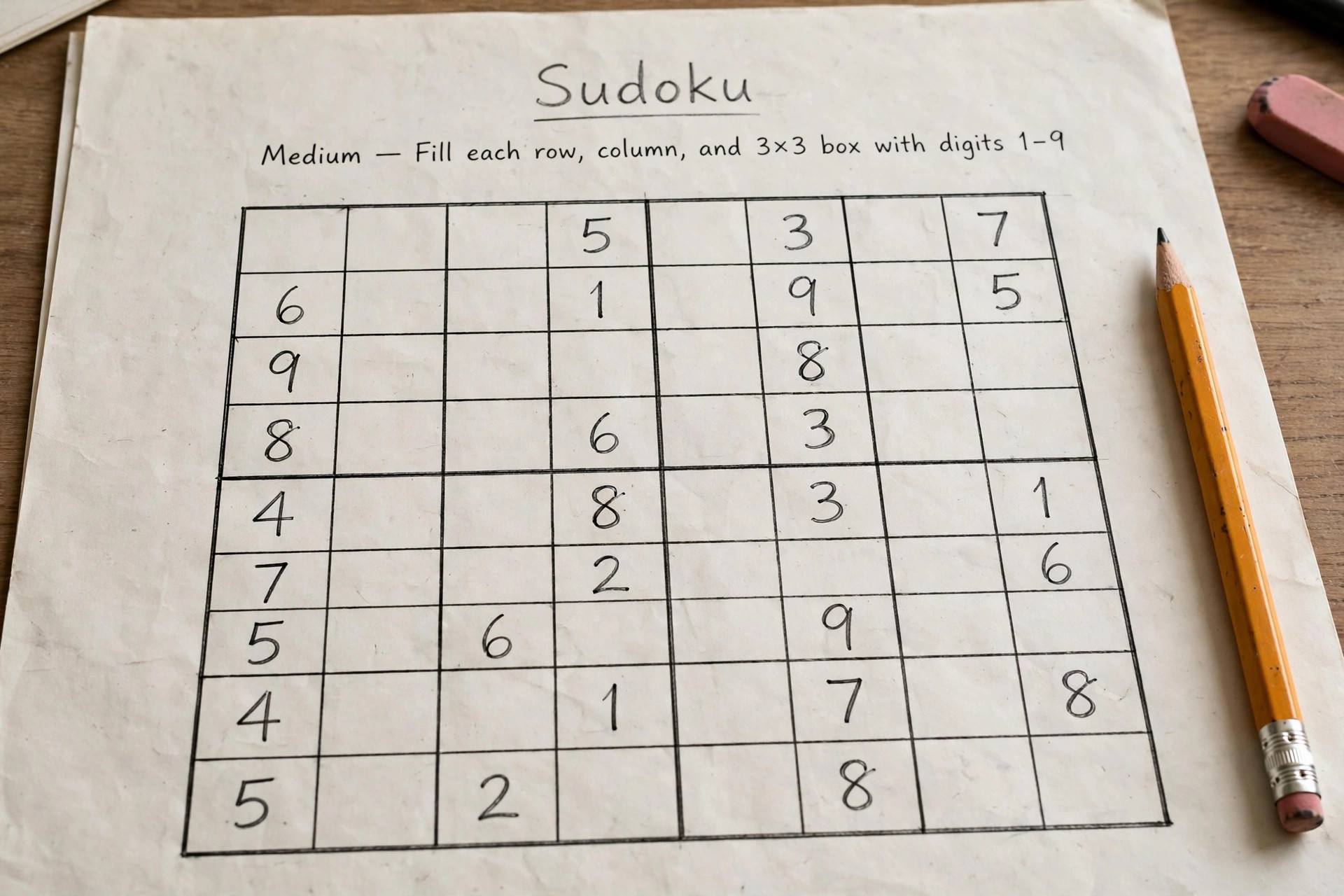
Choosing Your First Puzzles
Start with puzzles explicitly labeled “easy” or “beginner.” Newspaper puzzles, free puzzle apps (most have difficulty settings), and puzzle books marked for beginners are all excellent. A good beginner puzzle should be solvable with scanning and singles alone — if you need advanced techniques, the puzzle is above your current level, not a personal failing.
Solve one puzzle a day rather than ten in a sitting. Daily practice builds pattern recognition far more effectively than occasional marathons — your brain consolidates the skill between sessions. Within a few weeks of daily easy puzzles, you’ll notice yourself spotting placements almost automatically. That’s the moment to try medium difficulty.
Why Sudoku Is Worth Your Time
Beyond the fun, Sudoku is genuinely good mental exercise: it trains logical deduction, pattern recognition, sustained attention, and working memory. It’s a complete brain workout disguised as a quiet pastime — no screens required, playable anywhere, and endlessly varied. The puzzle you’ll solve tomorrow is never the same as today’s.
And there’s something deeply satisfying about the process: starting from chaos, applying pure reason, and arriving at a perfect, complete grid. In a world of noise and uncertainty, 81 cells of perfect logic is a small, beautiful thing. You now know how to play Sudoku for beginners. Welcome to the obsession — your first solved puzzle is closer than you think.
Beyond Classic: Fun Sudoku Variants to Try
Once classic 9×9 feels comfortable, a whole universe of variants awaits — each tweaking the formula just enough to feel fresh:
- Mini Sudoku (6×6 or 4×4): smaller grids with 2×3 or 2×2 boxes. Perfect for kids, quick coffee-break solves, or warming up.
- Killer Sudoku: adds “cages” with sum totals — now there IS math, as cage digits must add to the given total without repeating. A fantastic next challenge.
- Diagonal Sudoku (Sudoku X): both main diagonals must also contain 1-9, adding a delicious extra constraint.
- Irregular/Jigsaw Sudoku: the boxes are irregular shapes instead of 3×3 squares. Same rules, gloriously disorienting at first.
- Samurai Sudoku: five overlapping 9×9 grids in one giant puzzle. Not for the faint of heart — or for anyone short on time.
Variants are the perfect way to keep the hobby fresh for years. But master the classic first — every variant builds on the scanning and candidate skills you’re developing right now.
FAQ
Do you need to be good at math to play Sudoku?
Not at all. Sudoku uses the digits 1-9 as symbols — you could replace them with colors or shapes and the game would work identically. No arithmetic is involved; it’s pure logical deduction about where symbols can be placed.
What should I do when I’m stuck on a Sudoku?
First, re-scan systematically — the next move is usually something you overlooked. Check recent placements for errors (one wrong number cascades). Try pencil-marking candidates in the stuck region. And take a short break; fresh eyes solve stuck puzzles remarkably often.
Is guessing ever okay in Sudoku?
At beginner and intermediate levels, no — every puzzle is solvable by pure logic, and guessing teaches bad habits. Some very hard puzzles legitimately require trial-and-error (testing a candidate and backtracking), but that’s an advanced technique for when you’ve exhausted logical methods.
How long should a beginner Sudoku take?
An easy puzzle typically takes a beginner 15-30 minutes. Don’t race the clock — accuracy and learning the techniques matter far more than speed. As pattern recognition develops, your times will drop naturally.
What’s the difference between easy, medium, and hard Sudoku?
It’s about which techniques are required: easy puzzles solve with scanning and basic singles; medium puzzles need consistent pencil-marking and hidden singles; hard puzzles require advanced pattern techniques (pairs, triples, X-wings). The grid size never changes — only the logical depth.
Keep Reading
- How to Play Squash for Beginners: Grip, Stance and Your First Rallies
- How to Play Cricket for Beginners: Skills, Gear & First Steps
- How to Play Golf: A Beginner’s Guide to Rules, Scoring, and Etiquette