


I’m Ava. I’ve interviewed hundreds of actors — the famous ones and the working ones — and here’s what separates the people who make it from the people who quit: the ones who make it treated acting like a trade to learn, not a lottery to win. They trained, they worked small, they built slowly, and they understood the business side from the start.
This isn’t a “follow your dreams” pep talk. It’s the realistic roadmap: what to do first, what to skip, what it costs, and what nobody tells you.
In This Guide
- First: The Honest Realities
- Step 1: Train (Seriously)
- Step 2: Get Headshots That Work
- Step 3: Build Experience Anywhere You Can
- Step 4: Start Auditioning
- Step 5: Get an Agent (When You’re Ready)
- Step 6: Build Your Materials and Presence
- The Money: What It Actually Costs
- Frequently Asked Questions
First: The Honest Realities
Read this before anything else:
- It’s a marathon. Most working actors trained and hustled for 5–10 years before earning a living. Overnight success is a myth built on a decade of invisible work.
- Rejection is the job. Working actors get rejected from 95%+ of what they audition for. If you can’t handle “no” fifty times in a row, this isn’t for you.
- Talent is table stakes. Everyone at a professional audition can act. What books jobs: reliability, professionalism, type fit, relationships, and luck.
- You need a survival job. Almost every actor supports themselves another way for years. Plan for it proudly, not shamefully.
- Location matters enormously. Film/TV: Los Angeles, Atlanta, New York, London. Theater: New York, Chicago, London. Self-tapes changed some of this, but proximity to production still rules.
If that didn’t scare you off, you’re already ahead of most. Let’s build.
Step 1: Train (Seriously)
“I want to act” without training is like “I want to do surgery” without medical school — the analogy is dramatic but the point stands. Training is non-negotiable:
Acting classes. Start with a reputable beginner class in your area — Meisner, Stanislavski, or method-based, the specific technique matters less than a good teacher. Take class continuously; working actors never stop training.
Specific skills. Voice and speech work, movement, improvisation (hugely valuable for commercials and comedy), and on-camera technique (stage acting and screen acting are different crafts).
What to skip (for now): expensive “acting academies” promising industry connections, any program guaranteeing auditions or representation, and paying for “exposure.” Legitimate training teaches craft; scams sell dreams.
College programs (BFA/MFA) provide excellent training plus networks, but they’re expensive and not required. Many successful actors trained through private studios while working day jobs.
Step 2: Get Headshots That Work
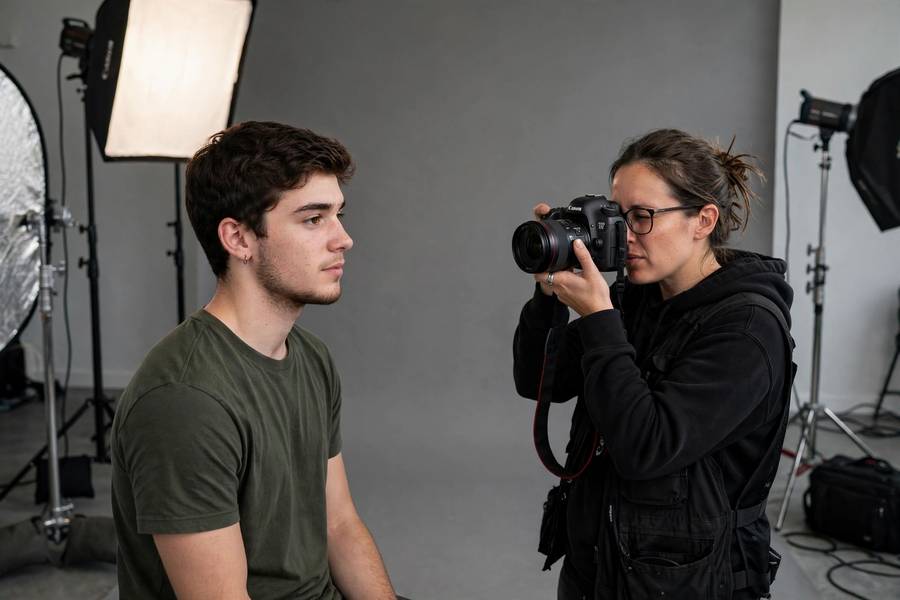
Your headshot is your business card, and bad headshots kill careers quietly — casting directors decide in seconds.
- Hire a specialist. Not a wedding photographer — an actor headshot photographer who knows the industry’s current look. $300–$800 is the normal range.
- Look like you on a good day. The cardinal rule: you must be recognizable from your headshot when you walk into the room. Over-retouching is lying, and casting directors hate it.
- Get the right types. Theatrical (dramatic, natural) and commercial (smiling, approachable) — two different looks for two different markets.
- Update every 1–2 years or whenever your look changes significantly.
Step 3: Build Experience Anywhere You Can
Credits before fame. Every working actor started here:
- Student films. Film schools constantly need actors — free, great for reels, and you work with future directors. Check local university film programs.
- Community and fringe theater. Stage experience builds the craft muscles that carry everything else.
- Background/extra work. Pays a little, teaches set etiquette, and demystifies production. Don’t stay here long, but don’t skip it either.
- Showcase and scene nights. Acting schools often run industry showcases — concentrated exposure to agents and casting directors.
- Create your own work. Short films, web series, sketches. The actors who generate their own material stop waiting for permission — and casting directors notice self-starters.
Every credit teaches you something and gives you something to put on the résumé. Momentum compounds.
Step 4: Start Auditioning
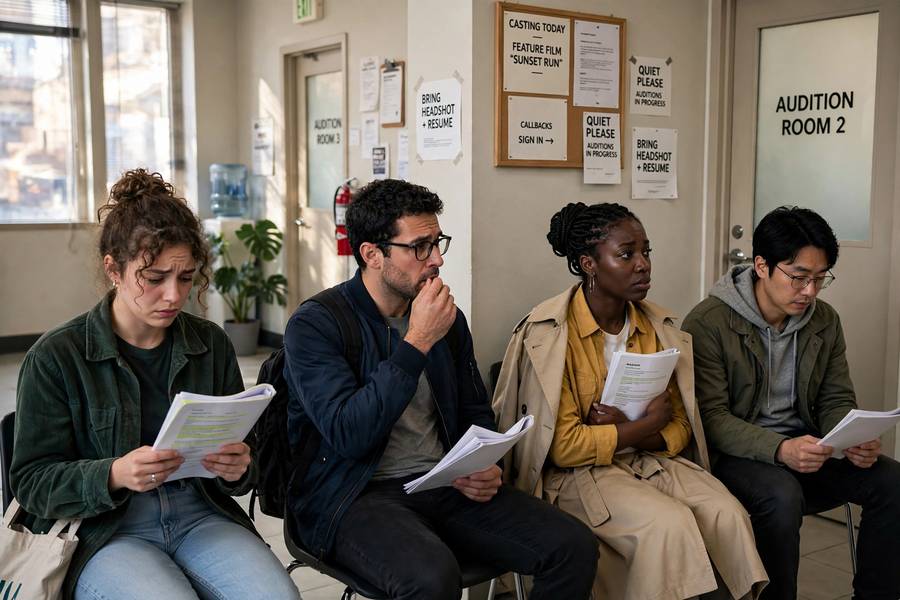
Auditions are a skill separate from acting — many brilliant actors are terrible auditioners until they practice.
- Where to find them: Actors Access, Backstage, Casting Networks, and local casting office mailing lists. Start with smaller markets and build up.
- Self-tapes are the norm now. Invest in decent lighting, a plain backdrop, and clear audio. Most first-round auditions are taped at home — your tape quality is part of the audition.
- Prepare like a professional: know the material cold, make strong choices, slate cleanly, follow instructions exactly. Casting directors see hundreds of tapes; professionalism stands out as much as talent.
- The numbers game: submit widely, expect silence. A 5% audition-to-booking ratio is healthy. Track submissions so you can see your own progress objectively.
For the specifics of film auditions, I have a dedicated walkthrough — but the foundation is always the same: preparation, professionalism, and volume.
Step 5: Get an Agent (When You’re Ready)
The classic catch-22: you need credits to get an agent, and an agent to get the auditions that build credits. The resolution: you don’t need an agent on day one. You need one when you’re booking enough that access to bigger rooms would change your trajectory — typically after 1–2 years of consistent work.
How agents work: they submit you for roles, negotiate contracts, and take 10–20% commission. They invest in you expecting returns — which is why they sign actors who are already working. My guide to how talent agents work explains the relationship in detail.
Getting signed: showcase performances, referrals from casting directors or fellow actors, and targeted submissions to boutique agencies that develop new talent. Never pay an agent upfront — legitimate agents earn commission only.
Managers vs. agents: managers (10–15%) guide careers more holistically; agents (10%) focus on bookings. Many actors eventually have both; beginners need neither until they’re working.
Step 6: Build Your Materials and Presence
The professional package:
- Résumé: credits, training, special skills. One page, honest, formatted to industry standard.
- Demo reel: 60–90 seconds of your best on-camera work. Quality over quantity — three strong clips beat ten mediocre ones. No reel is better than a bad reel.
- Online profiles: Actors Access, Casting Networks, IMDb (once you have credits). Keep them current.
- Social media: not required, but a professional, authentic presence helps — especially for commercial and influencer-adjacent work. Never buy followers; casting directors check engagement, not counts.
Understanding the production side makes you a better collaborator — my filmmaking tips and how to write a screenplay give actors valuable perspective on what happens beyond their performance.
The Money: What It Actually Costs
Honest first-two-year budget:
- Training/classes: $2,000–$6,000/year
- Headshots: $300–$800 (every 1–2 years)
- Casting site subscriptions: $200–$400/year
- Self-tape setup: $150–$300 one-time
- Union initiation (when eligible): SAG-AFTRA is ~$3,000 — worth it when you’re booking union work regularly
- Living costs in a production city: the real expense
Total: $5,000–$15,000/year before living costs. Anyone telling you it’s free is selling something. Anyone telling you to spend $50,000 is selling something more expensive.
Getting into acting is simple but not easy: train relentlessly, build credits anywhere, audition constantly, get representation when you’re ready, and treat it as a business from day one. The dream isn’t the problem — the lack of a plan is. Now you have the plan. The rest is work.

Frequently Asked Questions
Start with acting classes from a reputable teacher, get professional headshots, then build credits through student films, community theater, and background work. Submit for auditions on platforms like Actors Access and Backstage. Most working actors trained and hustled for 5–10 years before earning a living — treat it as a trade to learn, not a lottery.
For film and TV, proximity to production hubs (Los Angeles, Atlanta, New York, London) matters enormously, though self-tapes have made remote first-round auditions normal. For theater, New York, Chicago, and London are the centers. You can start training and building credits anywhere, but plan to be where the work is when you’re ready for professional auditions.
Expect $5,000–$15,000 per year before living costs: acting classes ($2,000–$6,000/year), headshots ($300–$800), casting site subscriptions, and a basic self-tape setup. SAG-AFTRA union initiation (~$3,000) comes later when you’re booking union work. Avoid any program guaranteeing auditions or charging large upfront fees.
After 1–2 years of consistent work and credits — when access to bigger audition rooms would actually change your trajectory. Agents invest in actors who are already booking; they earn 10–20% commission. Never pay an agent upfront — legitimate agents earn commission only on work they get you.
Absolutely — the industry needs actors of every age, and many successful actors started late. Your “type” and life experience are assets, not obstacles. The roadmap is the same: train, build credits, audition consistently. Character actors often work more steadily than ingenues.