

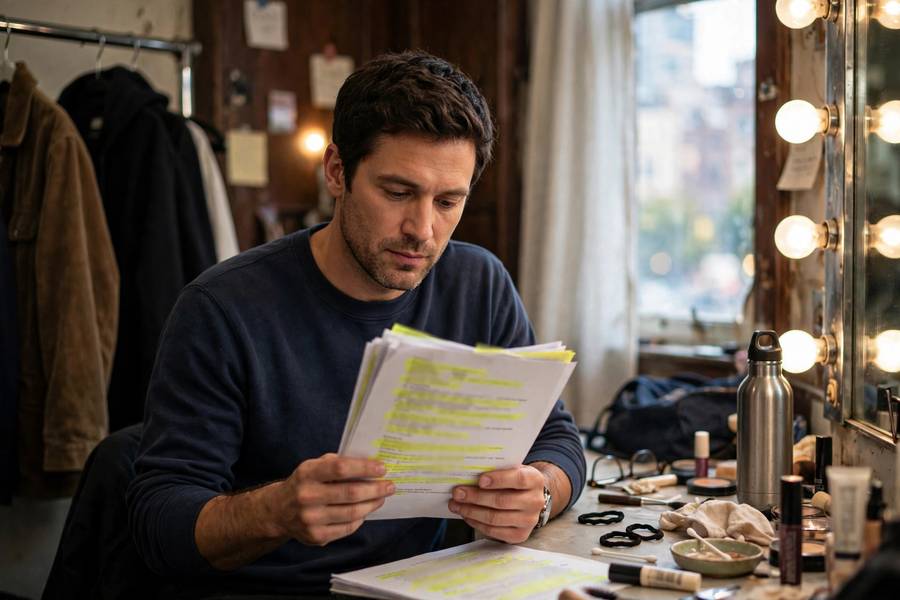
Audiences assume actors just… remember. Ninety pages of dialogue, blocking, emotional beats — and they make it look like the words are occurring to them for the first time. How?
The truth is less mysterious and more interesting: actors use specific, trainable techniques — and the best ones aren’t really “memorizing” at all. They’re building something sturdier than memory. I’ve talked to working actors about this for years, and the gap between what civilians imagine (photographic memory!) and what actually happens (reps, systems, and controlled panic) is delightful.
Table of Contents
- The Core Insight: It’s Not Memorization
- Technique 1: Repetition (The Unsexy Foundation)
- Technique 2: Chunking and Beating the Script
- Technique 3: Movement and Muscle Memory
- Technique 4: Recording and Listening
- Technique 5: The “Write It Out” Method
- Technique 6: Running Lines With a Partner
- Technique 7: Understanding Over Memorizing
- Technique 8: Sleep and Spacing
- Technique 9: The Paraphrase Safety Net
- What Happens When Actors Go Blank
- Frequently Asked Questions
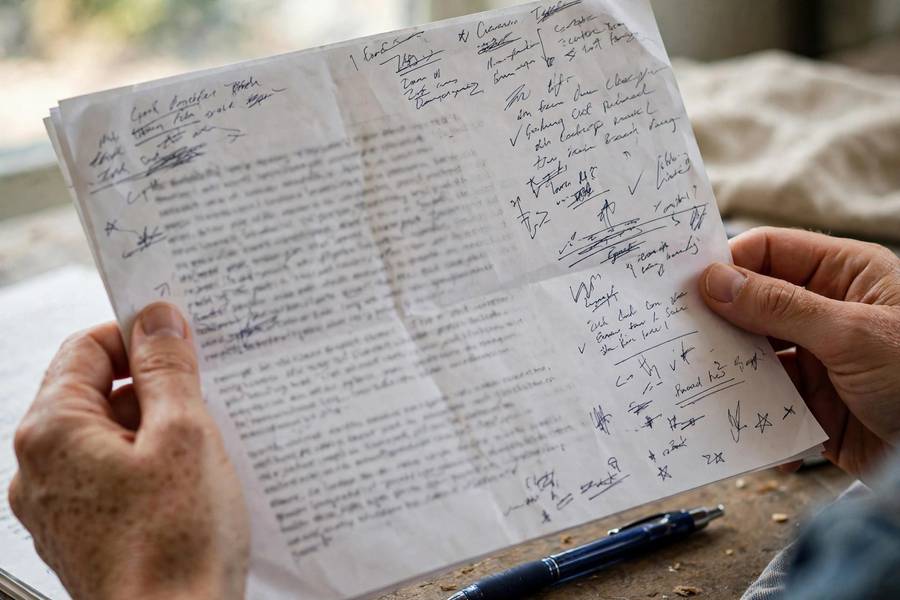
The Core Insight: It’s Not Memorization
Here’s what surprised me most: experienced actors will tell you they don’t “memorize lines” the way students memorize vocabulary. They learn the scene — the intentions, the turns, the emotional logic — and the words come along for the ride.
Think of it this way: you don’t memorize your side of a real argument. You remember what you meant, and the words follow. Good acting works the same way. The actor knows: “I’m trying to get her to stay, I’m losing, I switch to guilt” — and the dialogue is the vehicle for those intentions. When the intentions are solid, the exact words are much harder to lose.
Beginners memorize words. Professionals memorize meanings with words attached. That single shift explains most of the difference — and it’s why the techniques below all work better when combined with deep script analysis.
Technique 1: Repetition (The Unsexy Foundation)
No way around it: reps. Actors read scenes aloud dozens, sometimes hundreds of times. Not silently — aloud, because performance is vocal and physical, and silent reading builds the wrong neural pathways.
The professional version has structure:
– First pass: read for understanding, not memory. What’s happening? What does my character want?
– Second pass: read with a pencil — mark beats, underline key words, note the turns.
– Repetition passes: read aloud, over and over, until the words start coming without looking. Most actors report the “click” happening somewhere between the 20th and 50th repetition for a difficult scene.
Boring? Completely. Effective? Unmatched. Every fancy technique below supplements repetition; none replaces it.
Technique 2: Chunking and Beating the Script
Nobody memorizes 90 pages at once. Actors break scripts into beats — small units of action, usually a few lines each, defined by a shift in intention or tactic.
A two-page scene might have six beats: greeting → probing → deflecting → confronting → softening → leaving. You learn beat 1 cold, then beat 2, then run 1+2, then add 3. Cumulative building.
Chunking (the cognitive science term) works because working memory holds ~4 items. Six beats feel manageable; 200 individual lines feel impossible. Same material, different packaging.
Many actors literally number the beats in the margin. It’s the script’s skeleton — learn the skeleton and the flesh follows.
Technique 3: Movement and Muscle Memory
Blocking (planned movement) is a memory superpower. When your body knows “I cross to the window on that line,” the movement cues the line. Actors who learn lines sitting still, then add blocking later, often find lines “disappear” — because the lines were anchored to stillness.
Smart actors learn lines on their feet from the start, even before official blocking: walk the scene, gesture, move. The body becomes a second memory system, independent of verbal recall. On the night your brain blanks, your feet remember.
This is also why actors rehearse in the actual space when possible — spatial memory is powerful. The doorway, the chair, the window: each becomes a cue card you can’t drop.
Technique 4: Recording and Listening
The commuter’s technique, and genuinely effective:
- Record the other characters’ lines, leaving gaps for yours. (Apps exist for this; a voice memo works fine.)
- Listen on repeat — driving, walking, cooking.
- Speak your lines into the gaps.
Why it works: it trains cue recognition — you learn to fire your line off the other person’s last words, which is exactly how it works in performance. Many actors find they learn faster this way than staring at pages, because it mimics the real stimulus-response of acting.
Variations: record the whole scene and listen passively (osmosis helps more than skeptics admit), or have a friend read the other parts live over the phone.
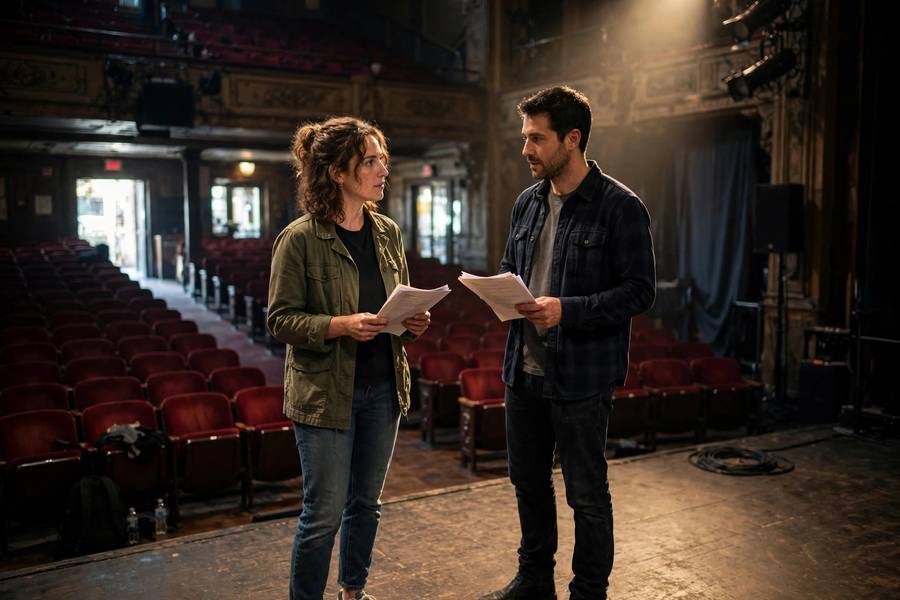
Technique 5: The “Write It Out” Method
Some actors hand-copy their lines — all of them, by hand. It’s slow, which is the point: writing forces processing. You can’t copy mindlessly the way you can read mindlessly.
The hardcore version: write the line, cover it, write it from memory, check. Repeat until clean. Actors with this habit swear by it for dense or technical dialogue (medical dramas, legal procedurals, Shakespeare).
The science backs it: the “generation effect” — material you produce is remembered better than material you merely receive. Writing is production.
Technique 6: Running Lines With a Partner
Running lines — rehearsing dialogue with another person — is the industry standard for a reason. A partner gives you:
- Real cues. Timing, tone, and energy you can’t get from a page.
- Error detection. They catch when you paraphrase or skip.
- Pressure inoculation. Performing for one person is easier than for 500, but it builds the tolerance progressively.
The protocol: partner reads everything except your lines, flat and neutral (no acting — it’s about your recall). You go until you blank; they feed you the first few words; you continue. Mark the spots where you blanked — those are your weak points, drill them specifically.
Actors preparing for a table read often run lines intensively beforehand — the table read is the first public test.
For a deeper dive, see our guide to a table read in acting.
Technique 7: Understanding Over Memorizing
The advanced technique that makes the others 10x more effective: know why every line exists.
For each line, the actor asks: What am I doing with this line? (Accusing? Pleading? Deflecting?) What just happened to provoke it? What do I want to happen next?
When you know the action beneath the words, you can reconstruct the line even if the exact phrasing slips. “I’m trying to make him feel guilty about leaving” will produce approximately the right words under pressure — and approximately right, delivered with true intention, beats word-perfect and dead every time.
Directors will forgive a paraphrased line. They won’t forgive a perfectly remembered line delivered with no understanding. The hierarchy is: intention first, words second.
Technique 8: Sleep and Spacing
The neuroscience, which actors discovered empirically centuries ago:
- Spaced repetition beats cramming. Three 20-minute sessions across three days beat one 3-hour session. Memory consolidates between sessions.
- Sleep is when it sticks. Lines rehearsed in the evening are measurably more solid the next morning. The brain rehearses during sleep — actors who run lines before bed aren’t being superstitious.
- Test, don’t just review. Covering the line and trying to recall (retrieval practice) builds stronger memory than re-reading. Every “running lines” session is retrieval practice.
The practical schedule working actors use: learn the scene over 3-4 days, sleep on each session, do a final run the morning of. Cramming the night before produces fragile memory that shatters under stage lights.
Technique 9: The Paraphrase Safety Net
Every experienced actor has a secret weapon: the ability to paraphrase in character. If the exact line vanishes, they produce the meaning in the character’s voice and keep going.
This isn’t sloppiness — it’s a trained skill. It requires deep understanding of the scene (Technique 7) and confidence. Beginners freeze because they believe only the exact words are acceptable. Professionals know the scene must continue, and the audience rarely notices a paraphrase delivered with full commitment.
Playwrights and screenwriters might object in principle. In practice, they’d rather have a living paraphrase than a dead stop.
What Happens When Actors Go Blank
It happens — to everyone, at every level. The recovery toolkit:
On stage: keep going. Paraphrase, stay in character, trust your partner to catch the thread. The audience doesn’t have the script; they only know something’s wrong if you show it. The golden rule: never break character to apologize — that’s what makes it visible.
On camera: call “line!” — someone off-camera feeds you the words, you pick up and continue. Takes get reset constantly anyway; a blown take is routine, not a crisis. This is why film actors can get away with less rock-solid memorization than stage actors: the safety net of retakes.
The mindset: professionals don’t aim for never blanking. They aim for recovery so smooth nobody notices. That’s a trainable skill like any other — and it’s why experienced actors look unflappable. They’ve blanked a hundred times. They know the way back.
For more on how the industry’s early processes work, see how talent agents really work for more behind-the-scenes coverage of the industry.

Frequently Asked Questions
Through structured repetition aloud, breaking scenes into small “beats,” learning lines with movement/blocking, recording and listening to cues, and — most importantly — understanding each line’s intention so the words follow the meaning. It’s trained technique, not photographic memory.
A typical film scene takes a few days of spaced sessions; a full stage play takes 4-8 weeks. Professionals spread learning over days (with sleep between sessions) rather than cramming, which produces far more reliable recall under pressure.
Yes, regularly — even veterans. They’re trained to recover invisibly: paraphrase in character, stay in the scene, and trust scene partners. Audiences don’t have scripts, so a smooth recovery is undetectable. Breaking character is what makes a blank visible.
Rehearsing dialogue with a partner who reads all the other parts, feeding you cues when you blank. It’s the industry-standard memorization method because it trains cue recognition and timing exactly as they’ll occur in performance.
No — they work scene by scene, often in shooting order for film (which is rarely chronological). Stage actors typically memorize sequentially as blocking is set, building the play cumulatively over the rehearsal period.