How to Fix a Running Toilet: A Step-by-Step DIY Guide

A running toilet is the most annoying sound in a house. That constant hiss or trickle, 24 hours a day, usually means water pouring straight down the drain and money with it. A toilet that will not stop running can waste up to 200 gallons a day. Here is the good news: this guide to how to fix a running toilet covers a repair you can do yourself in under 30 minutes with parts that cost less than a pizza. No plumber, no special skills. Let us get it done.
First: How a Toilet Tank Actually Works
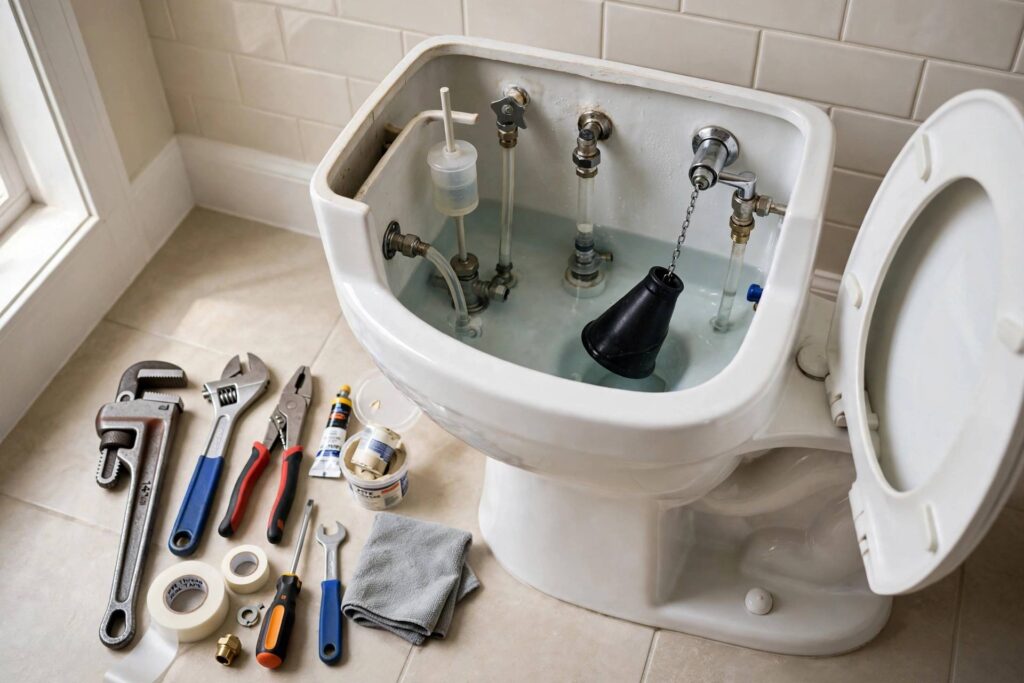
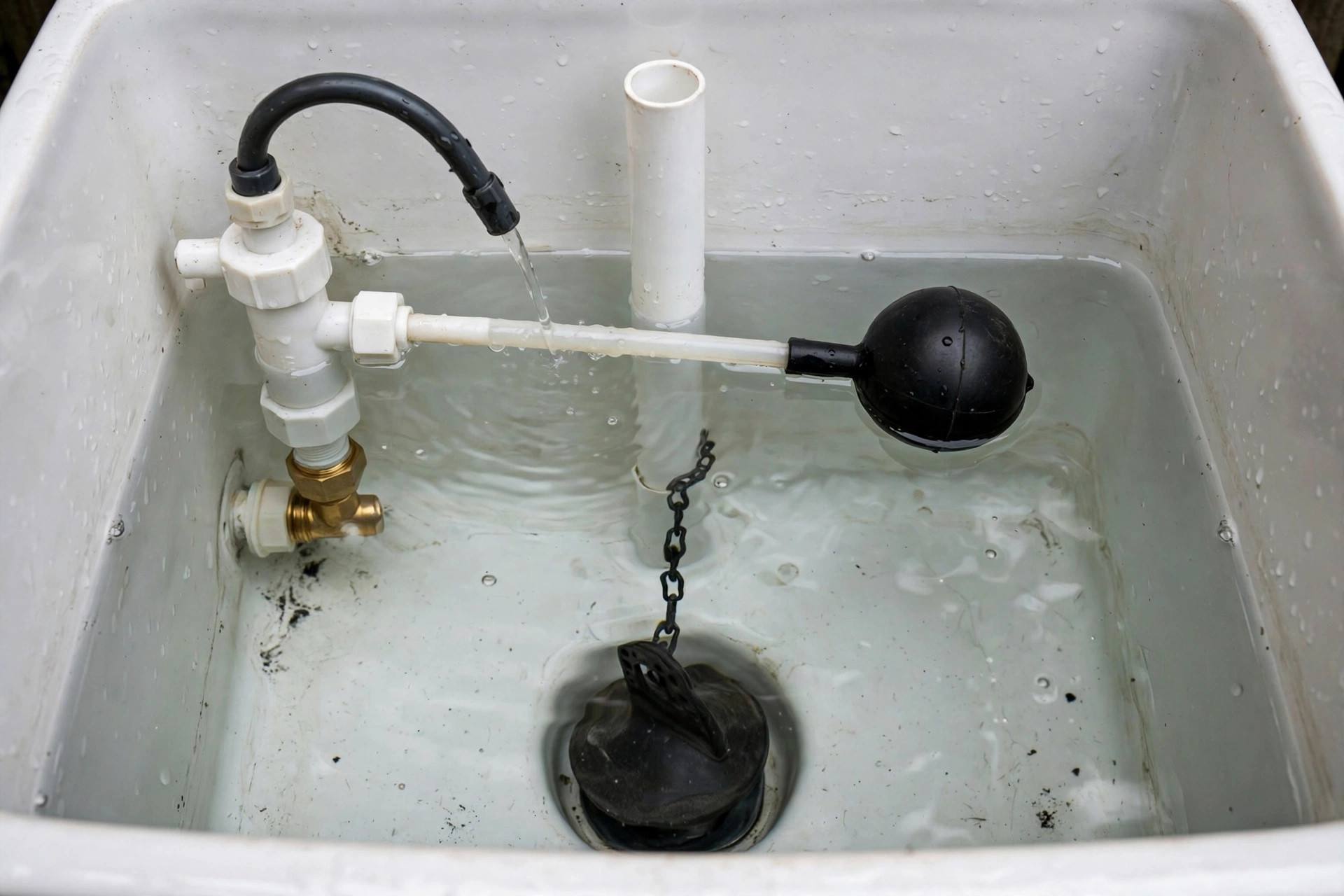
You cannot fix what you do not understand, so here is the 60-second version. Your toilet tank has two main jobs: fill with water, then dump it fast when you flush. Three parts do the work. The fill valve (the tall tower on the left) refills the tank after a flush and shuts off when the water hits the right level. The flapper (the rubber seal at the bottom) holds water in the tank until you flush, then lifts to release it. The float rides the water level and tells the fill valve when to stop.
A running toilet means one of these parts is failing. Water is either leaking past the flapper into the bowl, or the fill valve never shuts off and water pours down the overflow tube. Figure out which one, and the fix is straightforward.
How to Fix a Running Toilet: Diagnose the Problem in 2 Minutes
Take the tank lid off and set it somewhere safe (they crack if they fall). Now look and listen:
The food coloring test. Drop a few drops of food coloring into the tank water. Do not flush. Wait 15 minutes. If color appears in the bowl, water is leaking past the flapper. That is your culprit.
The water level check. Look at the water line in the tank. It should sit about an inch below the top of the overflow tube (the open pipe in the middle). If water is flowing into the overflow tube, the fill valve is not shutting off or the water level is set too high.
The chain check. Look at the chain connecting the flush handle to the flapper. If it is tangled, kinked, or too short, it can hold the flapper slightly open. If it is too long, it can get caught under the flapper. Either way, constant leak.
The listen test. A hissing fill valve that never goes quiet means the valve is stuck or worn. An intermittent “phantom flush” every few minutes, where the tank refills on its own, almost always means a slow flapper leak.
Tools and Parts You Will Need
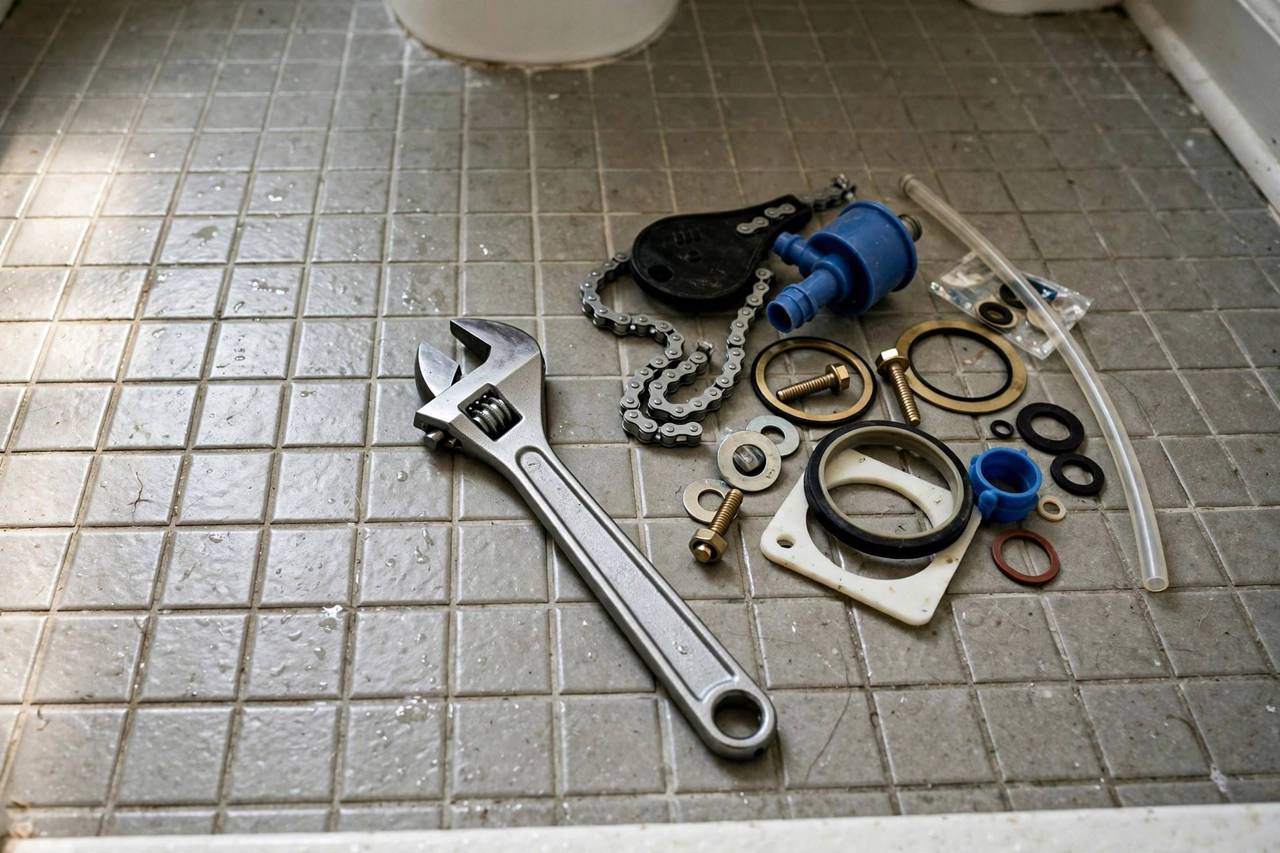
Keep it simple. You need an adjustable wrench or channel-lock pliers, a sponge or old towel, and possibly a replacement part. The most common parts: a universal flapper (about $5-10, fits most toilets), a fill valve (about $10-20), and sometimes a new flush chain. Take a phone photo of your tank’s insides before heading to the hardware store; showing the photo to staff gets you the right part in seconds.
Before you start any work, turn off the water supply. The shutoff valve is on the wall behind the toilet, usually on the left. Turn it clockwise until it stops. Then flush once to empty the tank. Keep a towel handy for the bit of water left in the bottom.
Fix 1: Replacing a Worn Flapper (Most Common)
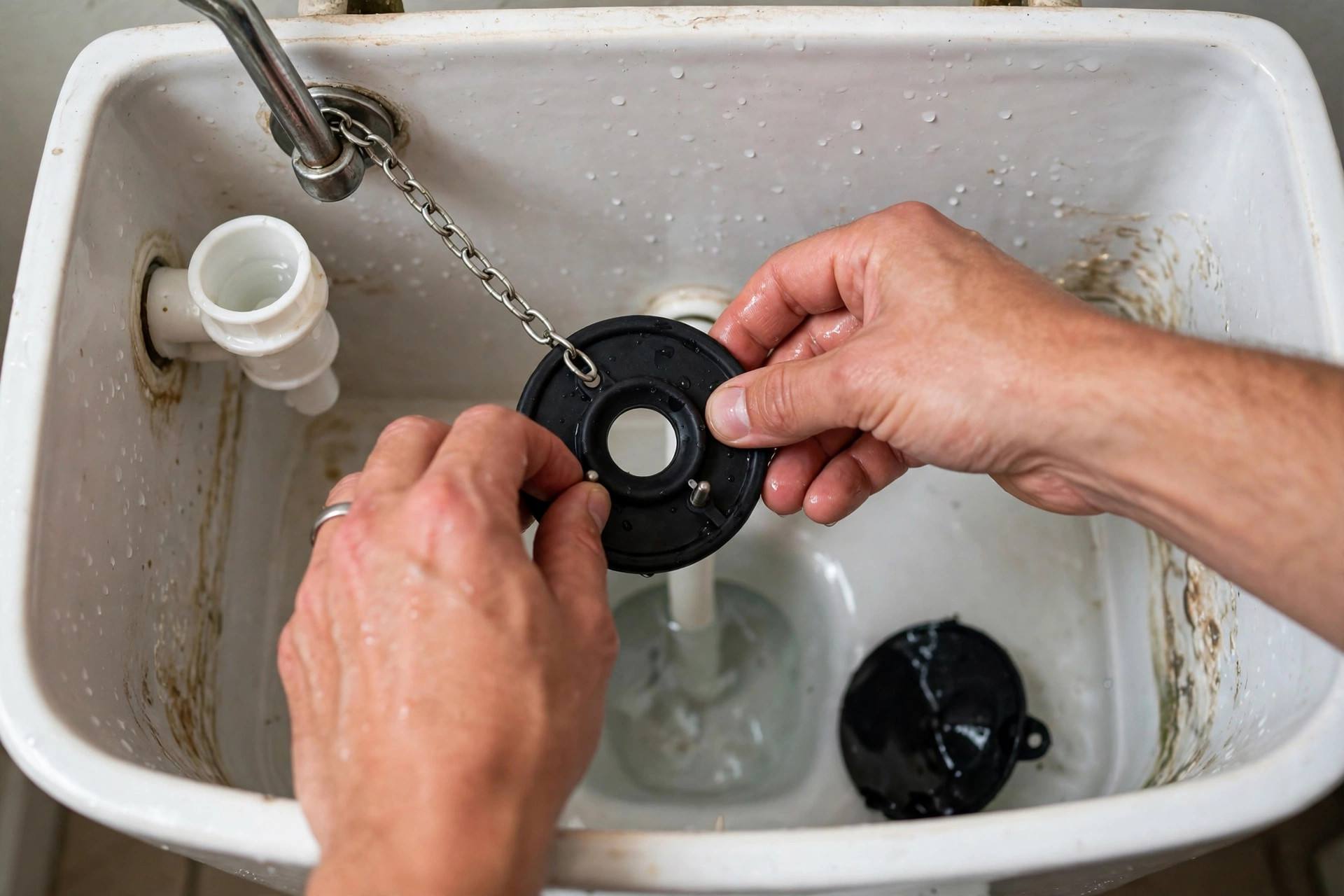
A degraded flapper causes the majority of running toilets. Rubber breaks down over years of sitting in chlorinated water, warping or growing mineral crust that prevents a seal.
Step 1: Water off, tank flushed. Unhook the chain from the flush lever arm.
Step 2: Unclip the old flapper from the pegs on the overflow tube (or slide it off if it is a ring-style). Note how it was attached.
Step 3: Wipe the flush valve seat, the rim the flapper seals against, with a cloth. Mineral buildup here ruins the seal of even a new flapper.
Step 4: Install the new flapper the same way the old one sat. Reconnect the chain with about half an inch of slack. Too tight and it lifts the flapper; too loose and it tangles.
Step 5: Turn the water back on, let the tank fill, and do the food coloring test again. No color in the bowl means victory.
Fix 2: Adjusting or Replacing the Fill Valve
If water runs into the overflow tube or the valve hisses nonstop, the fill valve is the problem. Start with the free fix: adjustment.
Adjusting the water level: Most modern fill valves have a float that slides on the valve body with a clip or screw. Lower the float so the water shuts off about an inch below the overflow tube’s top. Flush and watch it refill. If it now shuts off properly, you are done.
Replacing the fill valve: If adjustment fails, replacement takes 15 minutes. Water off, tank empty. Disconnect the water supply line from the bottom of the tank (have a towel ready). Unscrew the plastic lock nut under the tank holding the valve. Lift the old valve out. Set the new valve’s height to match, drop it in, tighten the nut by hand plus a quarter turn with pliers (do not overtighten plastic). Reconnect the supply line and the refill tube that clips to the overflow pipe. Water on, check the level, adjust the float.
Fix 3: Chain, Float, and Handle Issues
Sometimes the fix is even simpler. If the chain is tangled, untangle it and set proper slack. If the float is waterlogged (shake it; sloshing means it is taking on water), replace it. If the flush handle sticks in the down position, the nut holding it may be loose, tighten it, remembering that handle nuts are reverse-threaded. A handle that needs jiggling to stop the flush is telling you the flapper or chain needs attention, not that jiggling is a permanent solution.
Also check the refill tube. That small flexible tube should clip above the overflow pipe, sending a little water into it to refill the bowl. If it has slipped down inside the overflow tube, it siphons water continuously. Just re-clip it.
How Much Water (and Money) a Running Toilet Wastes
Let us talk motivation. A moderately running toilet wastes roughly 200 gallons per day. That is 6,000 gallons a month. Depending on your local water rates, that can add $50 to $100 or more to a monthly bill, every month, until fixed. A silent flapper leak wastes less but still adds up: even 30 gallons a day is nearly 1,000 gallons a month.
Compare that to the fix: a $7 flapper and 15 minutes of your time. There is no home repair with a better return on investment. If your water bill suddenly jumps for no apparent reason, the toilet is the first suspect. Check it before you call anyone.
When to Call a Plumber Instead
DIY has limits, and knowing them is part of being handy. Call a professional if the shutoff valve will not turn or starts leaking when you touch it, if the tank itself is cracked, if the toilet rocks on the floor (that is a wax ring issue, bigger job), or if you have replaced the flapper and fill valve and it still runs, which can indicate a cracked overflow tube or flush valve seat. Also call if water is leaking onto the floor from anywhere. Water damage costs far more than a service call.
Preventing Future Toilet Problems
A little maintenance prevents repeat performances. Skip the drop-in tank tablets with bleach; they degrade rubber flappers and void some warranties. Use in-bowl cleaners instead. Every year or two, run the food coloring test to catch slow flapper leaks early. Do not use the toilet as a trash can; cotton balls, wipes (even “flushable” ones), and dental floss cause clogs and strain the flush mechanism. And teach the household: if the handle needs jiggling, say something. Small problems are cheap. Ignored problems are not.
Toilet Tank Parts Glossary: Know What You Are Looking At
Hardware store trips go faster when you speak the language. Here is your cheat sheet. The fill valve (also called a ballcock on older toilets) is the tall assembly, usually on the left, that refills the tank. The flapper is the rubber disc or seal at the tank’s bottom covering the flush valve opening. The flush valve is the large opening and seat under the flapper, leading to the bowl. The overflow tube is the open-topped pipe in the center that prevents flooding by directing excess water to the bowl. The float (a ball on older models, a cup sliding on the valve on newer ones) rides the water level and shuts the fill valve. The refill tube is the small flexible hose sending water into the overflow tube to refill the bowl. The trip lever is the handle arm inside the tank, connected by the chain to the flapper.
When describing your problem at the store, point to your phone photo and use these names. “The flapper looks warped and the fill valve hisses constantly” gets you the right parts in one trip. “The thingy is broken” gets you a guessing game. Ten vocabulary words turn you from a confused customer into someone the staff takes seriously.
Key Takeaways
To fix a running toilet, start by diagnosing: food coloring in the tank reveals flapper leaks, water flowing into the overflow tube points to the fill valve. Most running toilets are fixed with a $5-10 flapper replacement or a fill valve adjustment, both 30-minute jobs. Always turn off the supply valve first, photograph the tank before buying parts, and set the water level an inch below the overflow tube. A running toilet can waste 200 gallons daily, so every day you wait costs real money. Handle the simple stuff yourself and call a plumber for cracked tanks, bad shutoff valves, or leaks onto the floor.
FAQ
Why does my toilet keep running after flushing?
Usually a worn flapper letting water leak into the bowl, or a fill valve that will not shut off. Run the food coloring test to check the flapper and verify the tank water level sits an inch below the overflow tube.
How much does it cost to fix a running toilet?
DIY costs $5-20 in parts and about 30 minutes. A plumber typically charges $100-250 for the same repair, which is why this is one of the best DIY repairs to learn.
Can a running toilet increase my water bill?
Dramatically. A running toilet can waste up to 200 gallons per day, potentially adding $50-100+ per month to your bill. Even a slow silent leak wastes significant water over time.
How do I know if the flapper or fill valve is bad?
Put food coloring in the tank without flushing. Color in the bowl after 15 minutes means a bad flapper. Water flowing into the overflow tube or a hissing valve that never stops means a fill valve problem.
Is it safe to fix a toilet myself?
Yes for flapper, fill valve, chain, and float repairs. Turn off the water supply first. Call a plumber for cracked tanks, leaking shutoff valves, water on the floor, or a toilet that rocks.
Keep Reading
- How to Stretch Before Running (The 8-Minute Warm-Up That Prevents Injury)
- How to Start Running as a Beginner: The Coach’s No-Burnout Guide
- How to Build Endurance Without Running: The Complete System