The Largest Volcano in the Solar System: Olympus Mons, Mars’s Monster Mountain

Earth’s largest volcano was settled, in our companion article, only after an argument about rulers — volume versus height, and a champion hiding under the sea. The solar system’s largest volcano needs no such argument. It is Olympus Mons, on Mars, and it wins by margins so wide that the interesting question is not which volcano it is. The interesting question is why Mars got to build one this big, and Earth did not.
All the Olympus Mons figures in this article come from one source — Lowell Observatory’s account — used consistently throughout, because published figures for this volcano vary between about 22 and 25 kilometers of height depending on the source, and mixing sets would give you a Frankenstein mountain. One source, one set of numbers: about 72,000 feet tall, and 374 miles wide.
The Short Answer
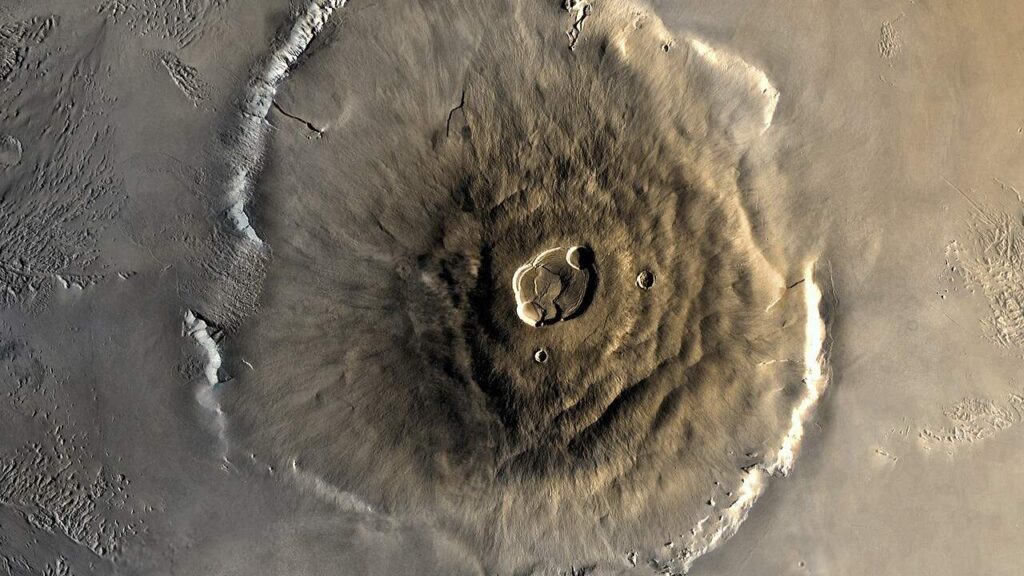
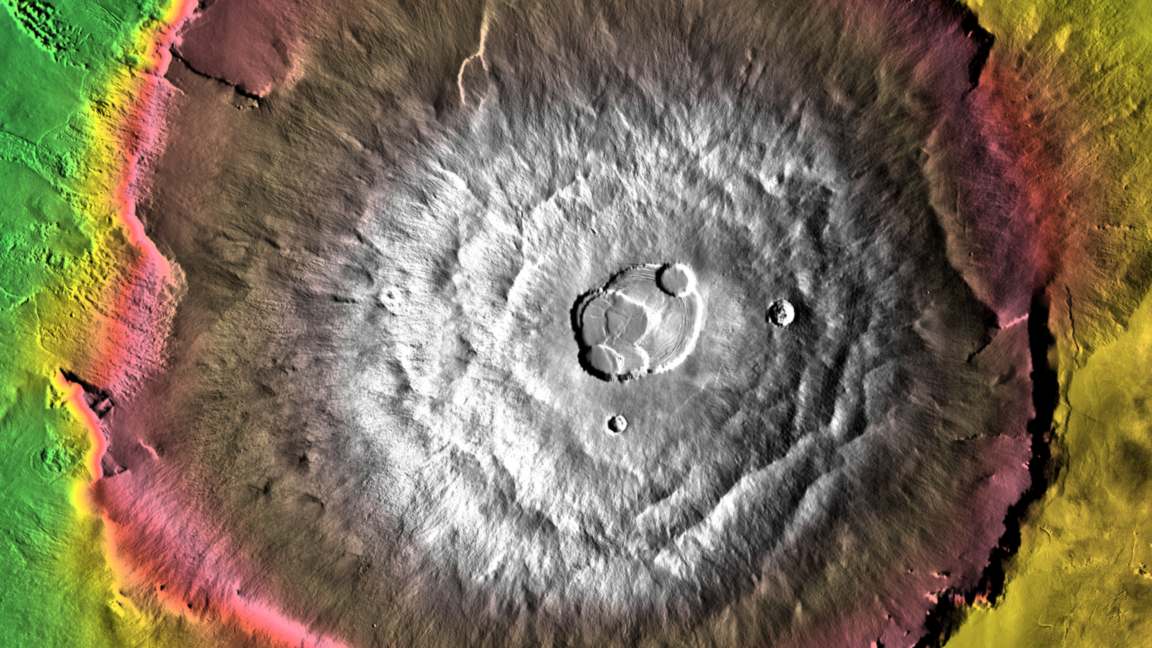
The largest volcano in the solar system is Olympus Mons, a shield volcano in Mars’s western hemisphere. It stands about 72,000 feet tall — about two and a half times the height of Mount Everest — and spans 374 miles wide, nearly the size of the state of Arizona. Mars’s atmosphere is so thin that the volcano’s peak actually pokes out above it: hike to the summit of Olympus Mons, in principle, and you would hike into space. No volcano on Earth — not the largest active one, not the largest by volume — is in this contest at all.
How Big Is Olympus Mons, Really?
Height first, with the comparison that makes it usable: about 72,000 feet, roughly two and a half times the height of Everest. Width next: 374 miles across — nearly the size of Arizona, on an edifice that is a single volcano, built flow by flow from its own eruptions. And because Olympus Mons is a shield volcano, like Hawaii’s, it shares the family shape: lava flowing slowly out of the ground and spreading, building a low, broad mountain rather than a steep cone.
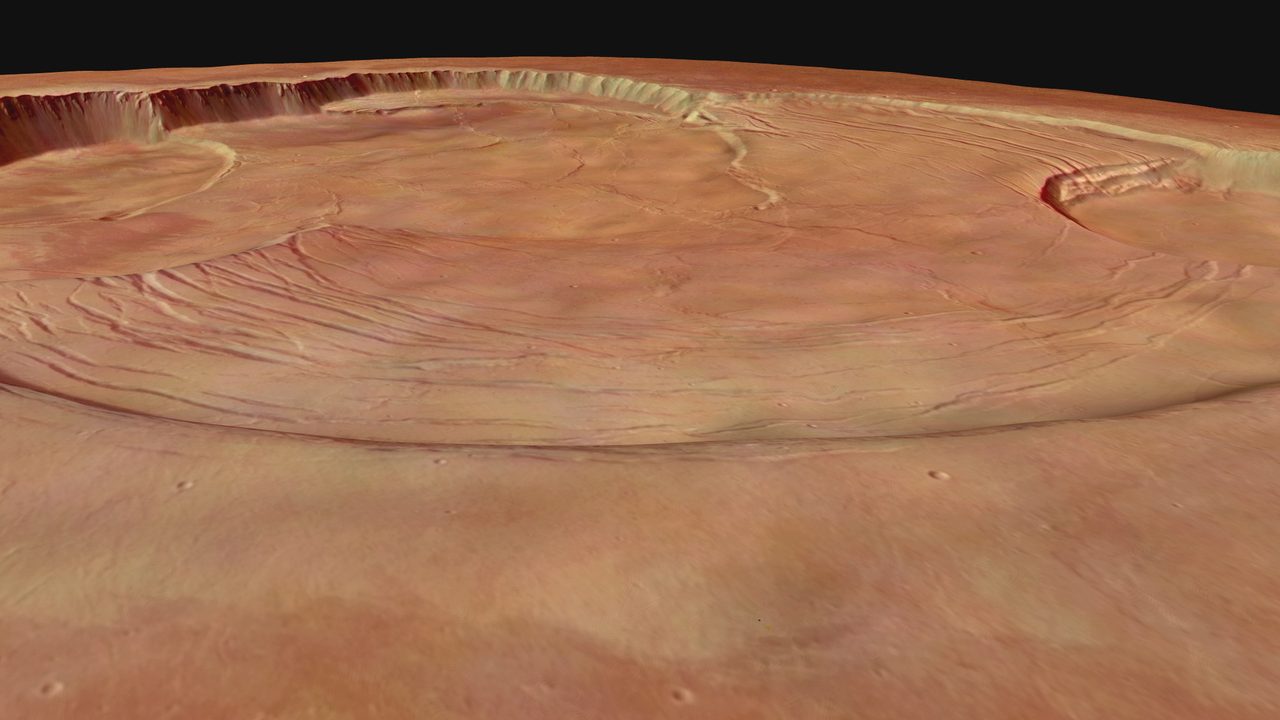
That shape produces the strangest consequence of its size. Shield volcanoes have an average slope of only about 5 percent, and Olympus Mons is no exception — its flanks rise so gently that the mountain defeats the usual visual cues. A volcano this wide, sloping this gradually, would not present itself to someone standing on it as a mountain at all in the ordinary way: no dramatic cone overhead, just terrain rising almost imperceptibly toward a summit caldera somewhere beyond the horizon. Its height is a surveyor’s fact before it is a traveler’s experience — which, on Mars, is just as well.
Earth’s Largest, for Comparison
| Volcano | Planet | Type | Headline size |
|---|---|---|---|
| Olympus Mons | Mars | Shield | ~72,000 ft tall · 374 miles wide |
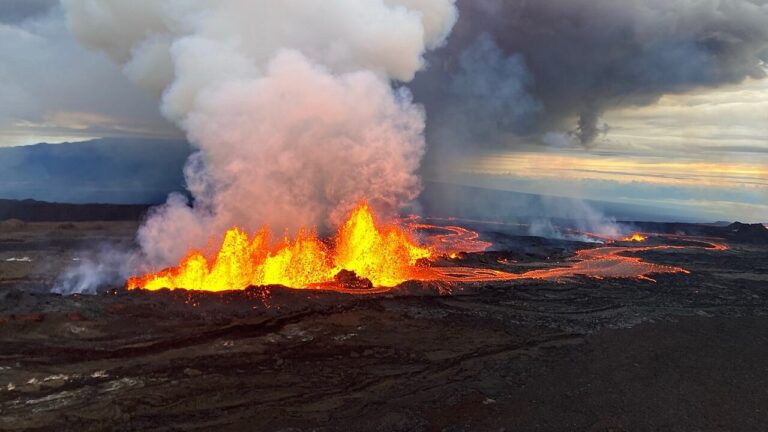
| Mauna Loa | Earth | Shield | ~17 km from its base to its summit · ~120 km long — Earth’s largest active volcano |
| Pūhāhonu | Earth | Shield | ~150,000 km³ by volume — Earth’s largest by volume, almost entirely under the sea |
Lay the three side by side and a pattern emerges that I make my students say out loud: every champion on the list is a shield. Given runny lava and enough time, the shield design is how nature builds big — wide first, tall as a by-product. Earth’s two titleholders split the crowns between them, one for activity and base-to-summit height, one for sheer volume; Olympus Mons takes the solar system title outright on height and width together.
Put the heights on one scale and the gap is plain: Mauna Loa’s full structure, seafloor base to summit, spans about 17 kilometers; Olympus Mons stands about 72,000 feet tall, which is roughly 22 kilometers — a fifth again as much vertical mountain, on a volcano 374 miles wide against Mauna Loa’s roughly 120-kilometer length. Earth builds its shields wide and comparatively low; Mars built one that is wider and taller than anything our planet has managed. For the full three-way argument about Earth’s winners, see the largest volcano on Earth, measured three ways.
Why Mars Could Build a Volcano This Big
Scientists believe Olympus Mons grew so much larger than any volcano on Earth because of Mars’s low gravity, its slow-moving tectonic plates, and its high volcanic activity. Take the plate point first, because it is the decisive one. On Earth, a plate drifts over the hotspot feeding it — the volcano gets carried away from its magma supply, stops growing, and a new volcano starts beside it, which is how Hawaii became a chain of modest-sized shields instead of one monster.
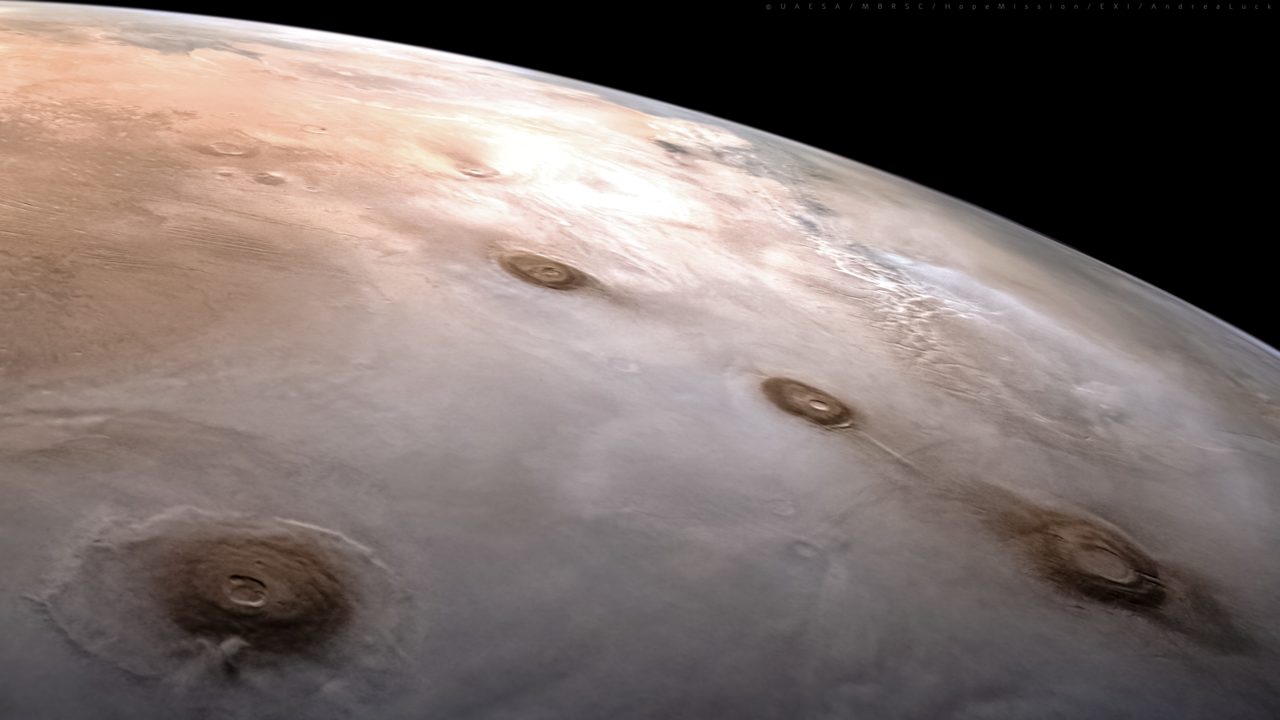
You can see the contrast with how volcanoes form where plates pull apart or collide on Earth: our volcanoes are built by a moving conveyor. On Mars, with plates moving slowly, the conveyor barely runs — one volcano can sit over its supply and keep accepting lava, flow upon flow, in the same place, for as long as the supply lasts.
Low gravity assists the same outcome: the growing edifice is not dragged down by its own weight the way an Earth mountain of that size would be. And Lowell’s third ingredient, high volcanic activity, is the supply side of the same story — a volcano can only grow as large as the magma it is fed, and Olympus Mons was evidently fed generously, for a very long time, in one place. Time, stillness, weak gravity, and abundant supply, compounding — that is the whole recipe, and not one of those ingredients is available on Earth in the same measure.
Is Olympus Mons Still Active?
Carefully — because this is an estimate, and it should be labeled as one. Scientists posit that Olympus Mons is still a fairly young volcano from a geologic standpoint, estimating it to be only a few million years old. On that basis, Lowell Observatory reports a good chance that it is still active and could erupt at some point in the future — in which case the largest volcano in the solar system, already the size of France by Lowell’s other comparison, could get even bigger as fresh lava reaches the surface and cools. What nobody can honestly give you is a date or a probability figure, and any source that offers one is guessing in print.
The contrast in timescales is worth pausing on, though. Earth’s largest active volcano keeps its record in human units — Mauna Loa’s documented history runs to 34 eruptions since 1843, counted one by one. Olympus Mons is assessed in geological units instead: an age estimated in millions of years, and an activity status that can only be phrased as a chance. That difference is not a gap in effort; it is the difference between a volcano we monitor daily and one we can only photograph from orbit. Young, probably not finished, possibly still active: that is the sourced state of knowledge, and it is interesting enough without decoration.
Frequently Asked Questions
It is the largest volcano in the solar system, and the tallest volcano — about 72,000 feet, roughly two and a half times Everest. Whether it is the tallest mountain of any kind is a separate argument: some of the solar system’s great peaks are not volcanoes at all but features raised by impacts, and craters such as Rheasilvia on the asteroid Vesta enter that different debate. Keep the titles separate: largest volcano — settled; tallest peak of every kind — a different contest.
374 miles wide — nearly the size of the state of Arizona, and Lowell Observatory also compares its overall size to France. Either way, the point is the same: this single volcano covers the area of a large country or state, with slopes averaging only about 5 percent.
Because it is a shield, and shields trade steepness for spread. Its lava flowed slowly out of the ground and spread out, as shield lava does, and shield volcanoes average a slope of only about 5 percent — so Olympus Mons accumulated its enormous height gradually, over a base 374 miles wide. Tall and flat are not opposites for this type of volcano; given enough lava and enough time, they are the same design decision.
Possibly — that is an estimate, not a prediction. Scientists consider it geologically young, only a few million years old, and there is considered to be a good chance it is still active and could erupt at some point in the future. If it did, fresh lava would add to the edifice, and the largest volcano in the solar system would grow larger still.