It’s 8:40 in the morning. You’re looking for your keys, which are not in the bowl, because the bowl is full of mail you haven’t opened, which is sitting on top of the permission slip you were supposed to sign last night. Meanwhile your laptop is at 4% because the charger is… somewhere. You are not a disorganized person. You are a person whose systems quietly stopped working, probably months ago.
I know this morning because I’ve lived it, more than once. And here’s what I learned each time: getting organized is not about becoming a different person. It’s about building a few small systems that catch things before they become 8:40 a.m. emergencies.
Table of Contents
- Forget Personality, Build Systems
- Start Where It Hurts Most
- The Landing Strip: Your Home’s Command Center
- Paper, Mail, and the Things That Pile Up
- Taming the Digital Mess
- Plan Tomorrow Tonight
- The Weekly Reset: One Hour That Changes Everything
- Keep It Going Without Burnout
- Frequently Asked Questions

Forget Personality, Build Systems
The biggest lie about organization is that it’s a trait — that some people are just “organized people” and the rest of us are doomed to chaos. Watch an organized person closely and you’ll see it’s never personality. It’s systems. Boring, invisible, repeatable systems.
A system is just a decision you made once so you don’t have to make it daily. Keys always go in the tray. Bills get opened on Sundays. The laundry gets folded before bed, not “later.” None of these require discipline in the moment — they require one moment of setup, and then they run on habit.
So stop trying to become organized. Start trying to build three or four systems. That’s the whole game.
Start Where It Hurts Most
Don’t organize your spice rack first. That’s procrastination wearing an apron.
Instead, ask: where does my life actually snag? The morning key hunt? The desk buried under paper? The closet where nothing matches? The phone with 4,000 unread emails? Pick the one that costs you the most time or stress, and start there. One area, done properly, teaches you the pattern for everything else.
For many people, the closet is the daily friction point — twenty minutes of nothing-to-wear in front of a full wardrobe. If that’s you, my guide on how to declutter your closet is the best first project: fewer, better clothes mean faster mornings immediately.
Resist the urge to do everything at once. A whole-house organizing blitz feels productive for a weekend and collapses by Wednesday. One system at a time, until each one is boring — boring means it’s working.
The Landing Strip: Your Home’s Command Center
If you build only one system, make it this one: a landing strip by your front door.
Everything you carry in and out of the house needs a home within arm’s reach of the door: keys, wallet, bag, sunglasses, the reusable shopping bags, the dog leash. A small tray for pocket contents. A hook for each person’s bag. A charging spot for the phone you always forget.
This single zone eliminates an astonishing amount of daily friction. No more morning searches. No more “where did I put—” while the taxi waits. The ten minutes it takes to set up pays for itself by Thursday.
The principle generalizes: things you use daily should live where you use them, visible and reachable. The scissors belong near the packages you open. The vitamins belong next to the coffee you drink every morning. Stop storing things by category and start storing them by moment of use.
Paper, Mail, and the Things That Pile Up
Paper is where good intentions go to die. The fix isn’t a fancy filing cabinet — it’s a ruthless, simple flow:
1. Touch it once. When mail or paper enters the house, decide immediately: act, file, or recycle. The pile on the counter exists because of deferred decisions, not because of paper.
2. One inbox tray. A single tray or basket where all incoming paper lands. Not three piles in three rooms — one place. Process it weekly.
3. File almost nothing. Most paper doesn’t need filing; it needs a bin. Keep one folder for each of: taxes, housing, medical, and “important.” Everything else gets scanned with your phone or recycled. Be honest: when did you last need a paper copy of anything?
4. Go paperless where it counts. Bank statements, bills, insurance — switch them to email. Every paperless switch is one less thing that can pile up.
The permission slip from the morning story? It lives on the fridge — the family’s shared inbox — until signed, then photographed and recycled. One rule, no pile.

Taming the Digital Mess
Physical clutter you can see. Digital clutter just quietly raises your background stress level — the 47 open tabs, the desktop covered in screenshots, the inbox with its own weather system.
Email: Unsubscribe ruthlessly (ten minutes, once). Then use the two-minute rule — if it takes less than two minutes, do it now; if not, it goes on tomorrow’s list or gets archived. Aim for an inbox you could read in one sitting, not inbox zero as a religion.
Phone: Delete apps you haven’t opened in a month. Turn off all notifications except calls, messages from real humans, and your calendar. Move social apps off the home screen. Your phone should be a tool you pick up on purpose, not a slot machine you check by reflex.
Files: One cloud folder structure, simple and shallow: Work, Home, Money, Photos. Name files so future-you can find them — “2026-10-electric-bill” beats “scan003.pdf” every time. Spend one rainy afternoon on this and never think about it again.
Passwords: Use a password manager. This isn’t just organization — it’s the single biggest favor you can do your future self. One strong master password, and never another sticky note again.
Plan Tomorrow Tonight
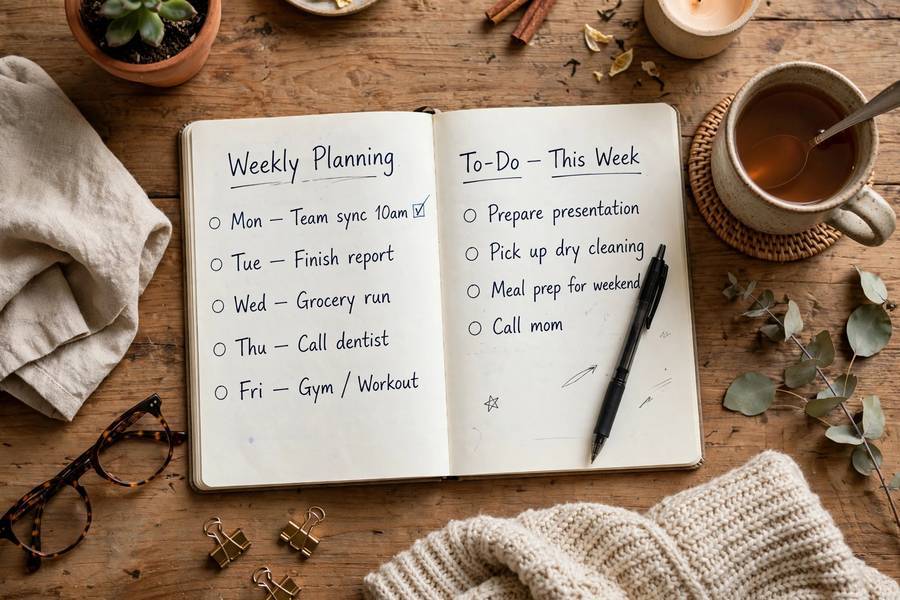
This is the highest-leverage five minutes in organization: before bed, write down tomorrow’s top three.
Not thirty items. Three. The three things that would make tomorrow feel like a win. Everything else is bonus. Write them on paper — a notebook by the bed, a sticky note on the laptop — somewhere you’ll see them before the day sweeps you up.
There’s a quieter benefit too. When tomorrow’s plan is written down, your brain stops rehearsing it at 1 a.m. People who plan the night before consistently report sleeping better, and it’s not mysterious: you’ve told your mind the plan is handled, so it stands down.
Pair this with laying out tomorrow’s essentials — bag packed, clothes chosen, keys in the tray — and mornings stop being emergencies. They become just… mornings.
If work keeps bleeding into your evenings and undoing all of this, the guide on how to balance work and personal life addresses the boundary side of staying organized.
The Weekly Reset: One Hour That Changes Everything
Systems maintain themselves if you give them one hour a week. Pick a time — Sunday evening works for most people — and make it a ritual, not a chore. Put on music. Make tea. Then:
- Process the inbox tray. All the week’s paper, decided and cleared.
- Walk through with a basket. Collect everything that’s migrated to the wrong room and return it.
- Check the calendar. Next week’s appointments, deadlines, birthdays — anything that needs prep gets on the list now.
- One small maintenance task. Clean out the fridge, wipe the bathroom mirror, sort one drawer. Rotate through them; nothing needs doing weekly, everything needs doing eventually.
- Review the money. Five minutes glancing at accounts. Catching a weird charge early beats discovering it in a statement.
An hour. That’s the maintenance cost of an organized life — less time than most people spend looking for things in a week.
Students can adapt this rhythm around study: the guide on how to study for final exams shows how the same weekly-review habit keeps coursework from avalanching.
Keep It Going Without Burnout
Here’s the part the organizing shows skip: maintenance is the whole thing. Anyone can organize a closet on a motivated Saturday. The skill is keeping it organized on an unmotivated Thursday in February.
Three things protect you from burnout:
Make it easy to put things back. Every system fails at the “return” step. If putting the scissors back takes effort, they won’t go back. Store things where the return trip is shortest — open bins beat lidded boxes, hooks beat drawers, trays beat filing.
Lower the bar on bad days. The full weekly reset is the ideal. On a hard week, the minimum viable version — keys in the tray, tomorrow’s three written down — keeps the system alive. Perfect weeks aren’t required; unbroken streaks are.
Audit twice a year. Systems drift. The tray that worked in winter overflows in summer. Spend an hour each spring and autumn asking what’s snagging now, and adjust. Organization isn’t a destination you arrive at — it’s a garden you tend.
You don’t need a new personality. You need a tray by the door, three things written down before bed, and one hour on Sundays. Start there, and watch the 8:40 a.m. emergencies quietly disappear.
Frequently Asked Questions
Stop trying to change your personality and build systems instead. A system is a decision made once — keys always in the tray, mail processed weekly — that runs on habit rather than willpower. Start with your single biggest friction point, build one system at a time, and make putting things back as effortless as possible.
Identify where your life snags most — the morning key hunt, the buried desk, the chaotic closet — and fix that one area first. Then set up a “landing strip” by your front door: a tray for keys and pocket items, hooks for bags, and a charging spot. This single zone eliminates a surprising amount of daily stress.
Use the five-minute nightly plan: write down tomorrow’s top three priorities before bed. Then protect one hour a week — Sunday evening works well — for a reset: process accumulated paper, return stray items to their homes, check the coming week’s calendar, and do one small maintenance task. Small, regular habits beat occasional big organizing sessions.
Use a single inbox tray for all incoming paper and process it weekly with a touch-it-once rule: act, file, or recycle immediately. Keep only four folders — taxes, housing, medical, important — and scan or recycle the rest. Switch bills and statements to paperless wherever possible to stop new piles from forming.
For email, unsubscribe ruthlessly and apply the two-minute rule: handle quick items immediately, schedule or archive the rest. For files, use one simple cloud folder structure (Work, Home, Money, Photos) with descriptive names like “2026-10-electric-bill.” On your phone, delete unused apps and turn off all non-essential notifications.
Make systems easy to maintain: store things where the return trip is shortest, accept a minimum-viable version on hard weeks (keys in tray, tomorrow’s three written down), and audit your systems twice a year to adjust for drift. Consistency at 80% beats perfection that collapses — the goal is systems that survive ordinary weeks, not just motivated ones.