How F1 Night Races Work: Floodlights, TV Timing and Every Race Under Lights

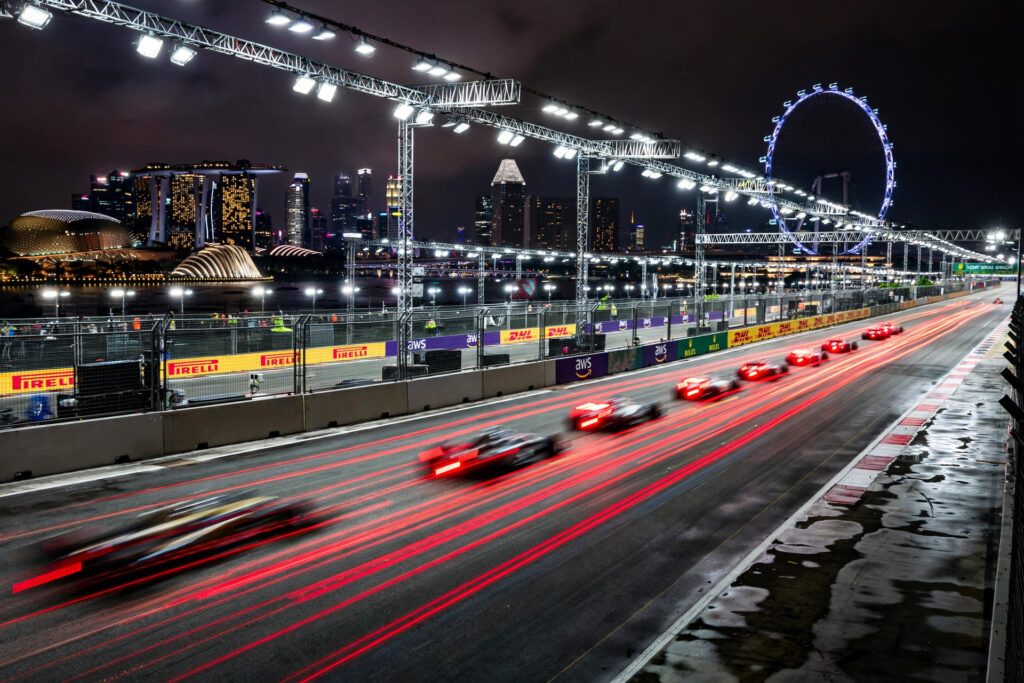
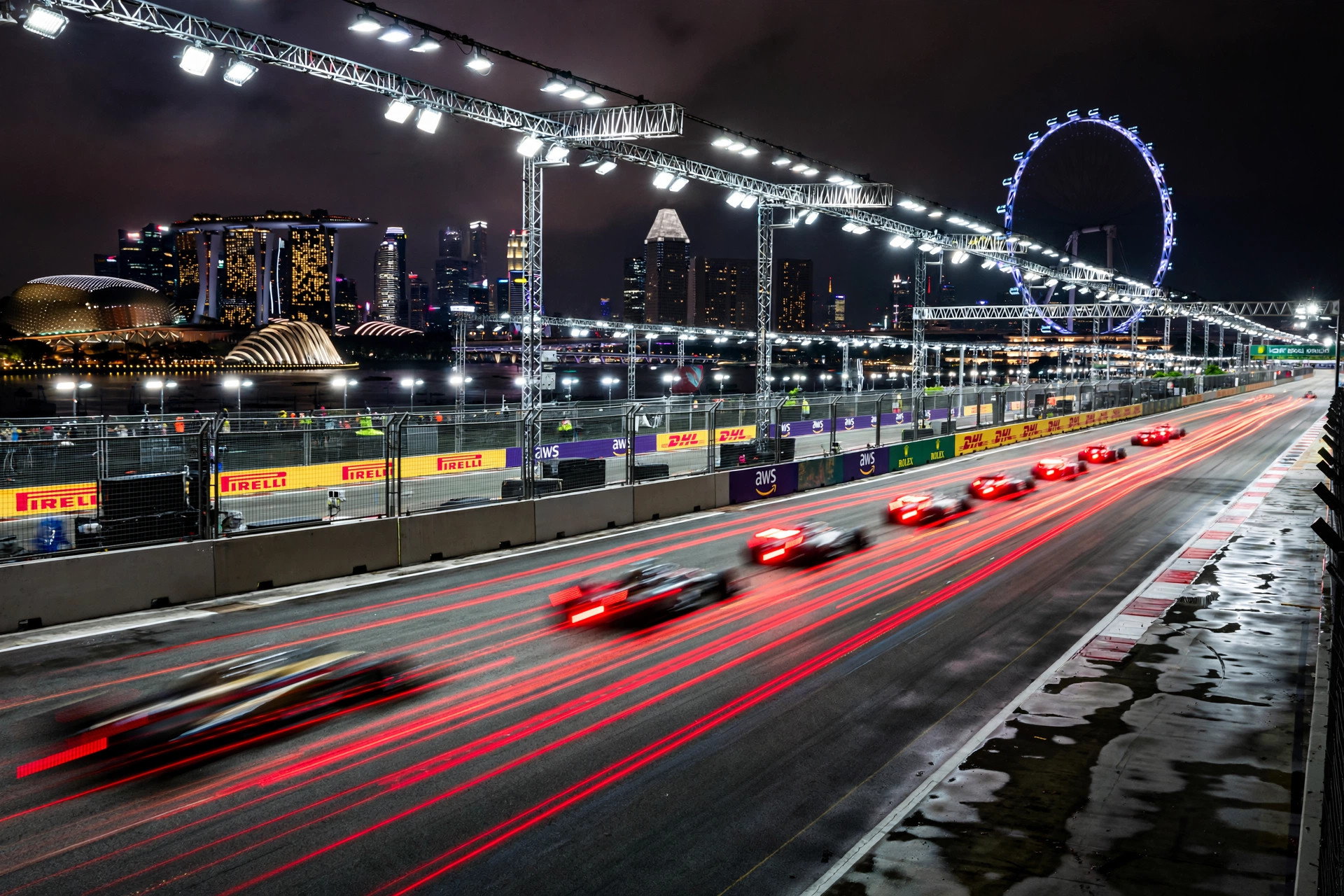
Nothing on the sporting calendar looks like it. Twenty cars, carbon-fibre glinting under artificial light, brake discs glowing orange into a corner, the whole track outlined like a runway. That’s the modern F1 night race. I’ve watched enough of them now to know they aren’t just day races with the lights flipped on. Everything changes under floodlights. The tyres behave differently. The teams live on a different clock. The strategy calls land differently.
And here’s the thing most fans miss: F1 night races weren’t invented for drama. They were invented for television. Everything else — the spectacle, the atmosphere, the cooler air — was a bonus that turned out to be the best part.
Which F1 Night Races Are on the Calendar?
Right now there are six full night races on the F1 calendar, and they read like a tour of the world’s hottest places. Singapore started it all in 2008 — the sport’s first-ever race run entirely after dark. Abu Dhabi joined the following year in 2009 as a twilight-to-night race, starting in the late afternoon sun and finishing under floodlights. Bahrain switched to full darkness in 2014, marking the 10th anniversary of its first Grand Prix. Qatar and Saudi Arabia both arrived as night races in 2021. Then came the showpiece: Las Vegas debuted as a Saturday night race in 2023, taking cars screaming down the actual Las Vegas Strip at 10pm local time.
Abu Dhabi technically counts as a twilight event rather than a true night race — it starts in daylight and crosses into night — but the floodlights do the heavy lifting by the chequered flag, so it gets grouped with the rest. If you want the origin story in detail, this piece on why Singapore became F1’s first night race explains the decision that kicked off the whole era.
Six of twenty-four races. A quarter of the calendar now runs after dark. That tells you how well the experiment worked.
Why F1 Schedules Races at Night
Two reasons, and they’re both about people who never set foot in the grandstands.
**Reason one: Europe watches on TV.** F1’s biggest television audience is still in Europe. An 8pm local start in Singapore puts the race at 1pm UK time and 2pm across most of continental Europe — prime Sunday afternoon viewing. Run the same race at 3pm local and the British audience is watching at 8am while half-asleep. The FIA pushed hard for the evening slot back in 2008 specifically to protect the European audience, and it’s been the commercial engine of every night race since. Las Vegas is the extreme version: a Saturday night in Nevada means a Sunday morning start in Europe, deliberately timed to grab eyeballs on both continents.
**Reason two: the heat is brutal.** Try running a Grand Prix in the Singapore afternoon and you’re asking drivers to survive 30°C-plus heat with tropical humidity inside a cockpit that adds another 30-40 degrees. Equipment melts. People melt.
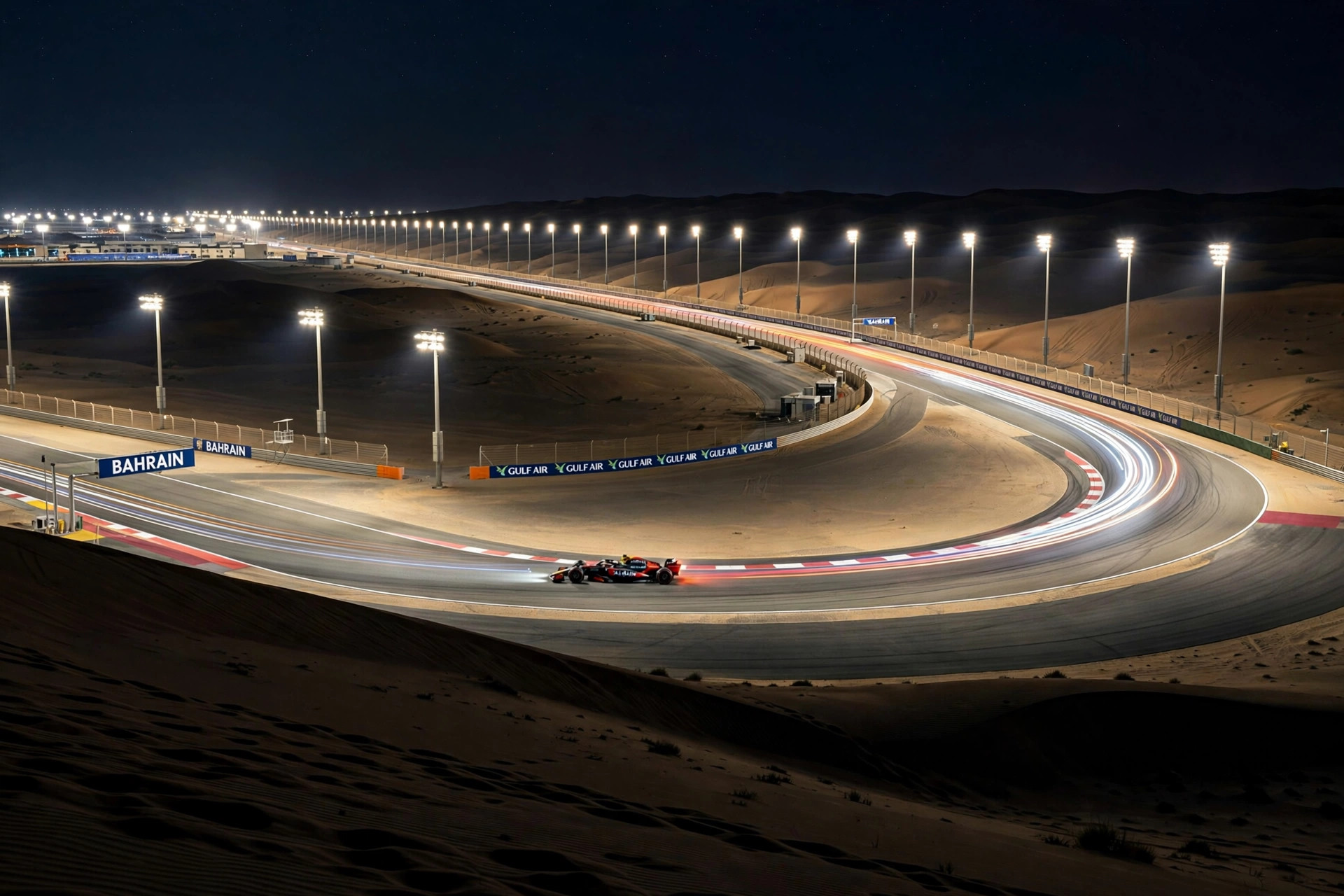
Lewis Hamilton once described testing in Bahrain in the middle of a spring day as the hottest he’d ever been in a car — “tyres and whole cars melting,” as he put it — and that memory is part of why Bahrain flipped to a night race. For fans in the grandstands, the difference between 3pm and 8pm in the Gulf is the difference between a health hazard and a great night out.
How the Floodlights Actually Work
Singapore wrote the blueprint, and it’s still the gold standard. Italian lighting specialists Valerio Maioli SpA designed a bespoke system: roughly 1,600 individual lighting projectors, mounted in clusters on trusses suspended 10 metres above the track surface, carried by 240 steel pylons spaced 32 metres apart around the circuit. Over 108,000 metres of cable. Twelve pairs of generators — 3.18 megawatts of power — each with its own engineer standing by in a soundproof container in case one fails.
The output is around 3,000 lux, roughly four times brighter than a standard football stadium. And the clever bit isn’t just brightness. The projectors are angled to kill glare and reflections off a wet surface, because a shiny night-time street circuit is basically a mirror if you light it wrong. The run-off areas are lit dimmer than the racing surface on purpose, so drivers can read exactly where the track edge is at 300 km/h without thinking about it.
Bahrain, Saudi Arabia, Qatar and Las Vegas use their own permanent or semi-permanent installations now. Permanent circuits have it easier — Qatar and Abu Dhabi run year-round floodlight systems that stay installed — while Singapore’s street circuit has to be built up from scratch every year and taken back down after the race. For Las Vegas’s 2023 debut, F1 actually called back the same company that engineered Singapore’s lighting to help light the Strip circuit. Same playbook, different desert.
How Drivers and Teams Adapt to the Dark
This is the part I love. Teams don’t just show up and race at night — they rewire their entire week. For Singapore, most teams stay on European time. Seriously. They eat dinner at what feels like 3am, sleep through the local morning, and walk into the paddock mid-afternoon like it’s 8am. The rhythm shifts: track sessions happen late, the debriefs run past midnight, and everyone gets home to the hotel as the city wakes up.
The cars care about the change too. Track temperature swings through the evening sessions, and tyre behaviour follows it. As the sun drops and the track cools, grip changes lap by lap, and engineers watch the data like hawks to predict where the rubber will be for qualifying and the race. Brake ducts, engine cooling, tyre pressures — everything gets tuned for the specific temperature window of a night race, and a gust of wind at 9pm can make Friday’s setup sheet irrelevant.
Visibility is the final hurdle. Drivers swear the floodlights are good enough that they forget they’re racing at night — until spray from a car ahead or a patch of glare off a wet kerb reminds them. Helmets with special visor coatings, slightly darker tear-offs, simulator work to learn how shadows fall differently under artificial light: the detail work is endless.
Why Night Races Feel Like a Different Sport
Here’s the honest truth: night races produce better television. Sparks off the floor under floodlights. Brake discs glowing. The car liveries pop harder. And the races themselves tend to be chaos-friendly — Singapore has a safety-car rate that borders on tradition, partly because a walled street circuit at night punishes the smallest mistake.
The fans know it too. There’s a reason Singapore’s race sells out year after year and draws hundreds of thousands of visitors to the city: the whole weekend is a festival built around the light show.
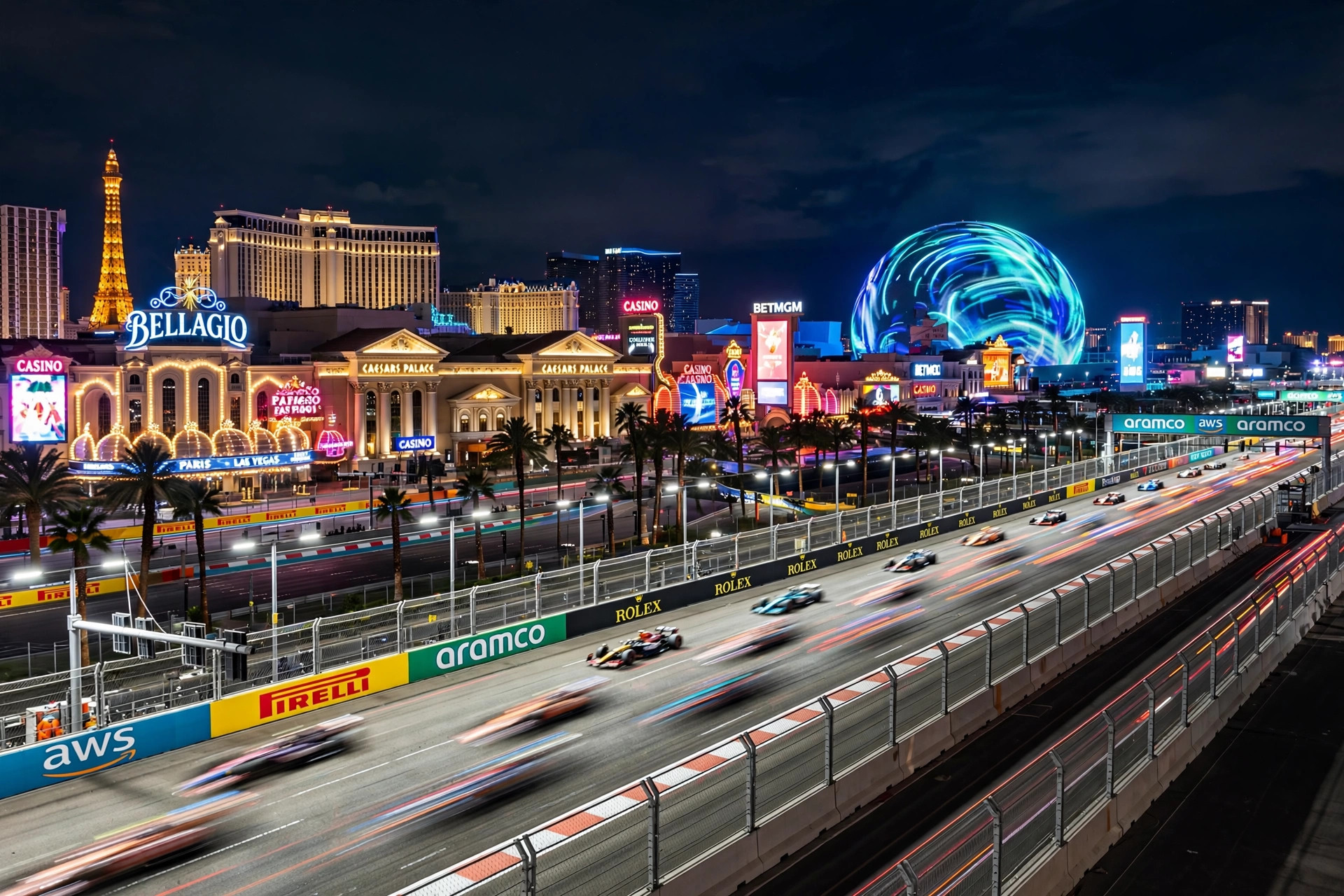
Abu Dhabi closes the season under lights with championship deciders. Las Vegas turned the whole thing into a neon fever dream. What started as a scheduling trick for European TV became the sport’s loudest, proudest identity. F1 worked out that racing in the dark isn’t a compromise. It’s an upgrade.
There are six on the current calendar: Singapore, Bahrain, Saudi Arabia, Qatar and Las Vegas run fully after dark, while Abu Dhabi starts in daylight twilight and finishes under floodlights. Singapore was the first, debuting as a night race in 2008.
The two big reasons are television and temperature. Night starts in Asia and the Middle East land the race in prime Sunday afternoon viewing time across Europe, F1’s biggest TV market. Night racing also avoids the brutal daytime heat of places like Singapore, Bahrain and Qatar, which is safer for drivers and far more comfortable for fans.
Singapore’s system produces around 3,000 lux — roughly four times brighter than a standard sports stadium — from about 1,600 projectors mounted 10 metres above the track on 240 steel pylons. The lighting is angled specifically to cut glare and wet-surface reflections so drivers can see braking points clearly.
Yes. Drivers consistently say visibility under the floodlights is excellent, often forgetting they’re racing at night at all. The challenges are edge cases: spray from cars ahead in the rain, glare off wet kerbs, and the slightly different way shadows fall under artificial light, which teams prepare for in the simulator.
The Singapore Grand Prix in 2008 was the first Formula 1 race ever held entirely at night, run on the Marina Bay street circuit on 28 September 2008. Bahrain followed as F1’s second night race in 2014, and Abu Dhabi has run as a twilight-to-night race since joining the calendar in 2009.
Completely. For the Singapore weekend most teams stay on European time — sleeping through the local morning and working late into the night — so their body clocks match the race schedule. Engineers also retune the cars for cooler evening track temperatures, since tyre grip changes as the circuit cools after sunset. —