How to Decorate a Small Rental (Without Losing Your Deposit)

Renting used to mean living in someone else’s beige box and waiting to ‘really’ decorate until you owned a place. I lived that way for years, and my apartments felt like waiting rooms. Then a landlord told me something that changed everything: ‘I don’t care what you do as long as you return it the way you found it.’ That single sentence opened the door to a decade of beautiful rentals, and I have never lost a deposit since. How to decorate a small rental is really about knowing which changes are truly reversible, mastering damage-free installation, and negotiating the gray areas with confidence. In this guide, I will show you the renter-friendly upgrades with the biggest payoff, how to hang anything without holes, and the exact script I use with landlords. For the broader design principles, my small apartment decorating ideas guide is the companion read.
Know Your Lease: What’s Actually Allowed
Before you change anything, read your lease’s alteration clause, the actual words, not your memory of them. Most leases prohibit ‘alterations’ but say nothing about nail holes, which courts in most places consider normal wear and tear. Painting is the most common gray area: many leases forbid it, but many landlords allow it if you repaint before moving out, and some allow any neutral color outright. The only way to know is to ask, in writing, and keep the answer.
My approach with every new landlord is a short, friendly email before I move in: I list the specific things I would like to do (hang curtains with brackets, use removable wallpaper on one wall, replace the shower head and store the original), and ask for written approval. Landlords almost always say yes to specific, reversible requests presented professionally. Vague asks get vague nos. Written approval protects your deposit and your relationship. I keep a folder with every approval email, and it has ended two move-out disputes before they started.
Damage-Free Hanging: Everything Stays Up, Nothing Leaves Marks
Modern adhesive and tension technology means you can hang nearly anything without a single hole. Heavy-duty adhesive strips hold frames up to large sizes; the trick is using enough of them, cleaning the wall with alcohol first, and waiting the full cure time before hanging. I have had a twelve-pound mirror up on adhesive strips for three years. For heavier items, French cleat-style adhesive hangers distribute weight brilliantly.
Tension rods are the renter’s best friend beyond curtains: they create closet space inside deep cabinets, hold cleaning supplies under sinks, and make instant room dividers with curtains in studios. Over-the-door hooks handle robes, towels, and bags with zero installation. Command-style hooks in various sizes manage everything from keys to lightweight shelving. And for curtains, which transform rentals more than anything, tension rods inside the window frame or adhesive curtain rod brackets avoid drilling entirely.
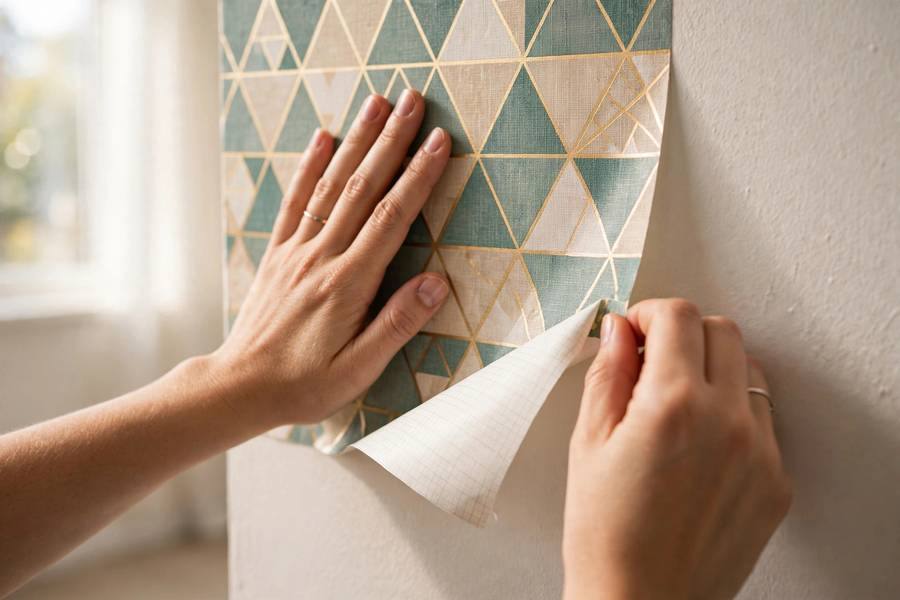
The removal technique matters as much as the product: pull adhesive strips slowly along the wall, never outward, and use a hair dryer to warm stubborn ones. Rushed removal is how paint comes off, not the product itself.
Temporary Upgrades With the Biggest Payoff
Peel-and-stick wallpaper has grown up. Modern versions apply smoothly, look genuinely good, and remove cleanly with heat. One accent wall in a bedroom or behind a sofa changes the entire personality of a rental for under sixty dollars and a Saturday afternoon. I have done it in three rentals and removal took under an hour each time with a hair dryer and patience.
Peel-and-stick floor tiles and vinyl planks transform ugly rental flooring, especially in kitchens and bathrooms. They lay directly over existing floors, handle moisture well, and peel up at move-out. Removable backsplash tiles do the same for dated kitchens. Swap the boob lights: most rental light fixtures unscrew in minutes, so replace them with something you love and store the originals in a labeled box for move-out day. The same goes for cabinet hardware, shower heads, and faucet aerators. These swaps take an afternoon, cost little, and make the place feel like yours. Just keep every original in one labeled ‘move-out box’ so nothing gets lost.
Furniture Strategies for Rental Life
Rental furniture should be beautiful, appropriately sized, and easy to move, because you will move it. I buy with the next apartment in mind: pieces that work in multiple layouts, nothing so large it only fits one specific room. Modular sofas, drop-leaf tables, and nesting tables adapt to whatever floor plan comes next. Avoid anything that must be assembled in the room because it cannot fit through the door; measure every doorway before buying.
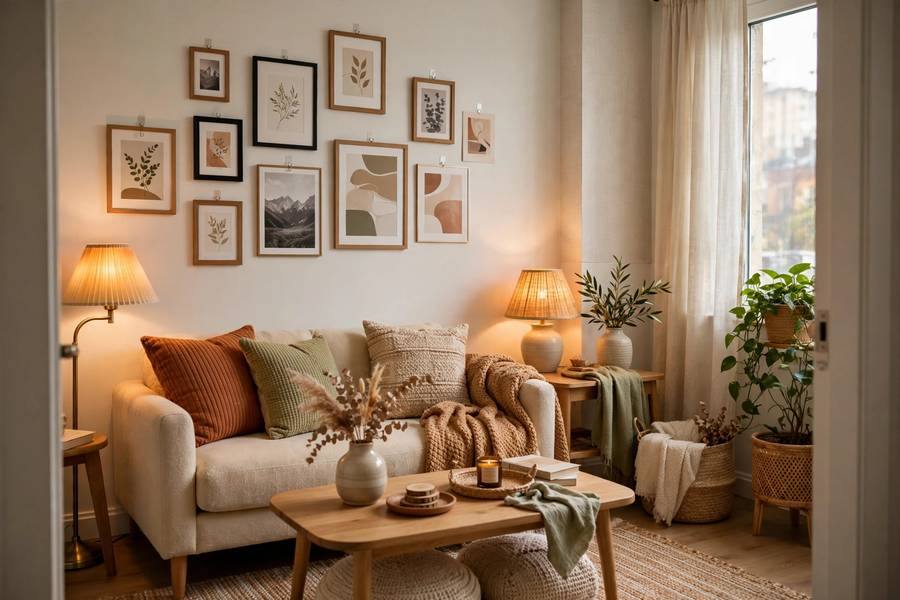
Area rugs are the rental essential: they cover ugly carpet or cold floors, define zones in open layouts, and roll up when you move. Layer lighting instead of fighting the overheads: floor lamps, table lamps, and string lights make rentals feel like homes. And invest in pieces you love rather than ‘for now’ furniture; I wasted years on disposable pieces I hated, and the good thrifted wood furniture I eventually bought cost the same and moved with me happily. For keeping rental clutter under control, my guide to organizing a small apartment covers the systems that work in small rentals.
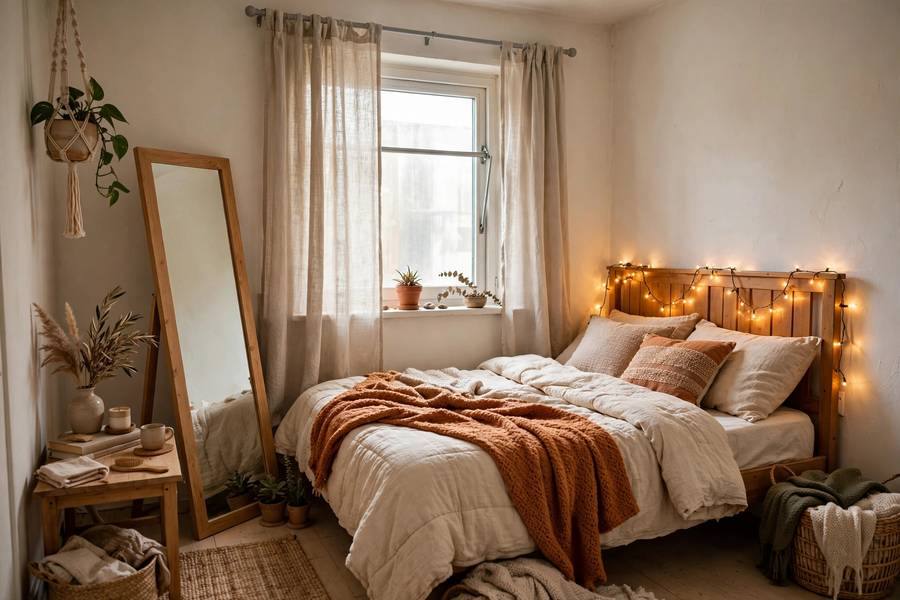
One more rental truth: vertical space is free square footage. Tall bookshelves, over-door organizers, and wall-mounted (adhesive-mounted) storage use the walls your landlord is not using.
The Landlord Conversation: Scripts That Work
Most renters never ask, assuming the answer is no. In my experience across five rentals, landlords say yes far more often than expected, especially when you make it easy for them. The script: ‘Hi [name], I’d love to [specific change]. It’s fully reversible; I’d [return it to original condition / repaint to the original color] before moving out. Would you be comfortable with that if I confirm in writing?’ Specific, reversible, and documented.
Offer things landlords value: improving the place at your expense, using neutral colors, hiring proper installation for anything complex. Get approvals in email, not verbally. And at move-out, do the reversal work properly: fill holes with spackle, touch up paint, rehang original fixtures, remove all adhesive products carefully. Photograph everything at move-in and move-out. I have received full deposits back from every rental using exactly this approach, including one where I had installed peel-and-stick backsplash, swapped light fixtures, and wallpapered an accent wall.
Move-Out Day: Getting Every Dollar Back
Start your move-out reversal two weeks before the date, not the night before. Work through your move-out box: reinstall original light fixtures, shower head, and cabinet hardware. Fill nail holes with lightweight spackle, sand smooth when dry, and touch up with the original paint color (ask the landlord for the color code at move-in; I keep it in my phone). Remove all adhesive products with heat and patience, peel up temporary wallpaper and floor tiles, and patch any residue.
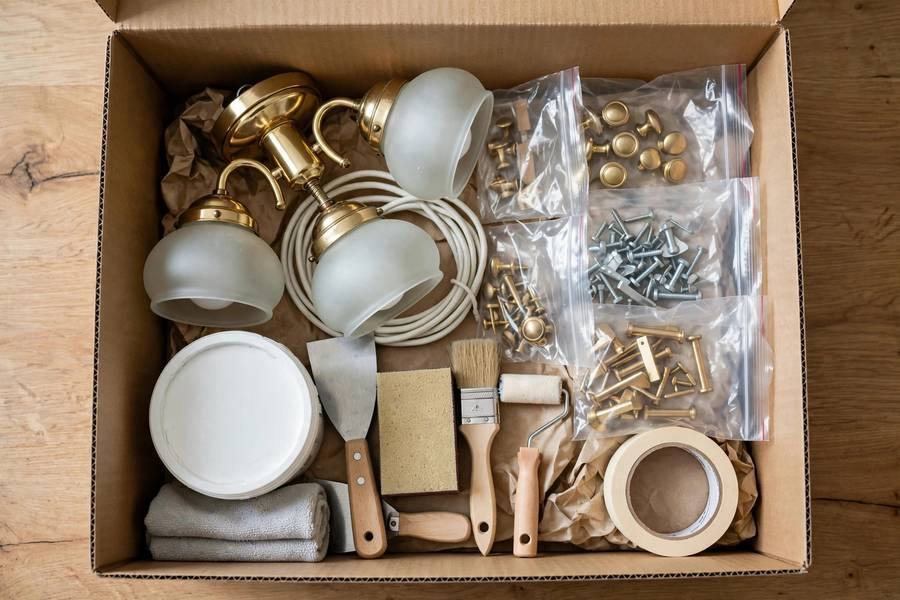
Clean like you are being inspected, because you are: inside appliances, window tracks, baseboards, and light fixtures. Do a walkthrough with your move-in photos side by side. Then take dated move-out photos of every room. This documentation has saved my deposit twice when new damage was alleged that my photos disproved. Decorate boldly during your tenancy with everything in this guide and my small apartment decorating ideas guide; restore meticulously at the end. That is the whole renter’s bargain, and it works.
Yes, by sticking to reversible changes: adhesive hooks and strips, tension rods, peel-and-stick wallpaper and tiles, swapped light fixtures and hardware (keep originals), and freestanding furniture. Get written landlord approval for gray areas, photograph everything at move-in and move-out, and restore the unit properly before leaving.
Use heavy-duty adhesive strips (clean wall with alcohol, use enough strips, wait full cure time), tension rods for curtains and dividers, over-door hooks, and adhesive French-cleat hangers for heavy mirrors. Remove by pulling slowly along the wall with heat from a hair dryer, never yanking outward.
Yes, modern peel-and-stick wallpaper applies smoothly and removes cleanly with heat, making it ideal for rentals. Test a small hidden area first, apply to clean smooth walls, and remove slowly with a hair dryer at move-out. One accent wall transforms a room for under $60.
Ask in writing about anything in a gray area (paint, wallpaper, fixture swaps). Present specific, reversible requests professionally; landlords approve these far more often than renters expect. Keep approval emails in a folder. Verbal approvals are worth nothing in a deposit dispute.
Start two weeks early: reinstall all original fixtures and hardware, fill and touch up holes, remove adhesive products and temporary wallpaper/tiles carefully, deep clean everything, and take dated photos of every room. Compare against move-in photos during your walkthrough.