Celebrities Who Had Their Walk of Fame Star Removed

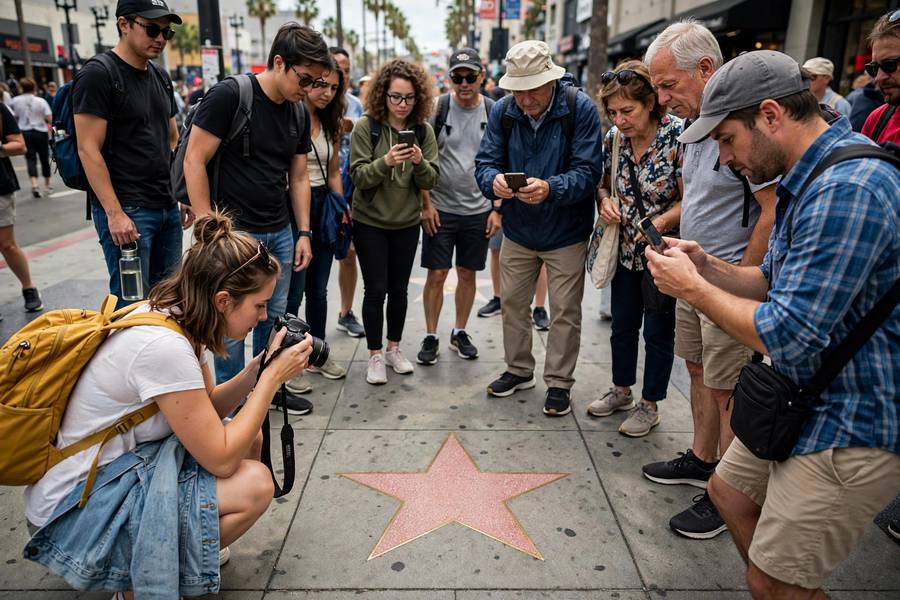
It’s one of my favorite questions to get at parties, because the person asking always leans in like they’re about to hear something delicious. “So which celebrities had their Walk of Fame stars removed?” And I get to watch their face fall when I tell them: none. Not one. Not ever. The Hollywood Chamber of Commerce has never removed a single star from the Walk of Fame, and it has said so, on the record, more than once, in language that leaves no wiggle room.
But here’s why the question keeps getting asked — and why the real story is more interesting than a simple “no.” Stars have been vandalized, petitioned against, protested over, and jackhammered into rubble. People routinely confuse “destroyed by a vandal” with “removed by the Chamber.” And the cases that sparked the removal debates are some of the most dramatic episodes in the Walk’s history. So let’s go through them properly: the policy, the controversies, and the stars everyone swears were taken away (they weren’t).
In this guide:
- The Official Policy: Stars Are Never Removed
- The Bill Cosby Case
- The Donald Trump Star Saga
- Vandalized Is Not Removed
- The Star That Was Never on the Ground: Muhammad Ali
- The Celebrities Who Refused a Star Entirely
In this article
The Official Policy: Stars Are Never Removed
The Hollywood Chamber of Commerce, which administers the Walk of Fame, has stated its position plainly and repeatedly. After a wave of removal demands, the Chamber’s then-president Leron Gubler put it in writing: the Walk of Fame is a registered historic landmark, and “once a star has been added to the Walk, it is considered a part of the historic fabric of the Hollywood Walk of Fame. Because of this, we have never removed a star from the Walk.”
The Chamber restated the policy in 2017 and clarified it again in 2024, noting that it doesn’t even consider itself to have the authority to remove stars. The logic is that the Walk honors professional contributions to entertainment at a moment in time — not the ongoing personal conduct of the honoree. You can argue with that logic (plenty of people do), but it is the logic, and it has held through every controversy thrown at it.
This is the crucial distinction the internet keeps blurring: the Chamber has never removed a star. Vandals have destroyed stars. Protesters have defaced them. City councils have passed resolutions asking for removal. But the institution itself? Zero removals in more than sixty years.
The Bill Cosby Case
The first great modern test of the policy came in 2015, when dozens of women accused Bill Cosby of sexual assault and the ensuing scandal dominated the news. Cosby’s star, dedicated in 1977 for television, became a flashpoint. Advocacy groups demanded its removal. Protesters showed up on Hollywood Boulevard. At one point the star was vandalized with the word “rapist” scrawled across it.
The Chamber’s answer was a flat no, delivered in Gubler’s statement quoted above. The star stayed. It has been vandalized multiple times since and repaired each time. Cosby’s case established the template the Chamber would follow for every subsequent controversy: acknowledge the outrage, cite the historic-landmark status, decline to act.
I’ve always found this case revealing, not because of what it says about Cosby, but because of what it says about the Walk’s self-image. The Chamber treats the sidewalk as a historical record — warts, crimes, and all — rather than an endorsement that can be revoked. Whether you find that principled or cowardly probably depends on how you feel about monuments in general.
The Donald Trump Star Saga
No star has generated more drama than Donald Trump’s. Dedicated in 2007 for his work on The Apprentice, it has been vandalized so many times it practically needs its own maintenance schedule. In October 2016, a man named James Otis took a pickaxe and sledgehammer to it on camera. In 2018, it was completely destroyed with a pickaxe again, reduced to rubble, and replaced. Each time, the Chamber repaired or replaced it.
In 2018, the West Hollywood City Council unanimously passed a resolution urging the removal of Trump’s star — the first time a government body had formally asked. The resolution went nowhere: West Hollywood doesn’t control the Walk (it’s in the city of Los Angeles, not West Hollywood), and the Chamber declined to act, citing the same policy.
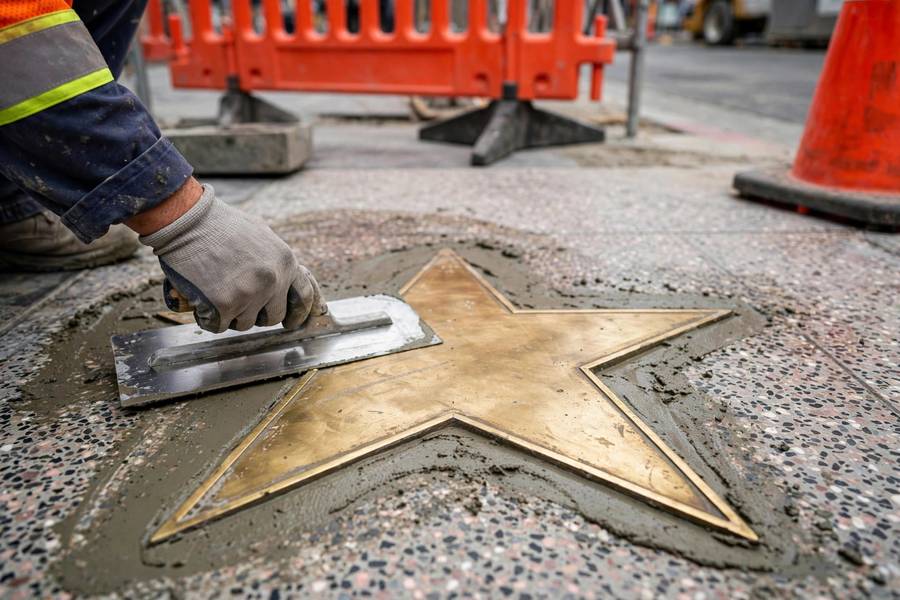
Trump’s star is the one people most often think was removed, because the photos of it smashed to pieces look like a removal. But look closely at those stories and you’ll always find the same ending: a fresh star, reinstalled, sometimes within weeks. Destruction is not removal. The Chamber replaces; it does not retract.
Vandalized Is Not Removed
Let’s be precise about the difference, because it matters. Removal would mean the Chamber deciding a star no longer belongs and taking it out permanently. What actually happens is vandalism — illegal destruction by private individuals — followed by repair or replacement at the Chamber’s expense.
Trump’s star is the famous case, but it’s not the only one. Stars have been defaced with paint, cracked with tools, and in at least one notorious case, stolen outright. Gregory Peck’s star was pried up and stolen in 2005; it was eventually recovered and reinstalled. Through all of it, the policy held: fix it, replace it, move on.
There’s a certain stubborn poetry to it. The Walk of Fame is one of the few honors in American life that genuinely cannot be taken back, no matter what the honoree does afterward. Awards can be rescinded. Memberships can be revoked. But a brass star in a Hollywood sidewalk? That’s forever, for better and for worse.
The Star That Was Never on the Ground: Muhammad Ali
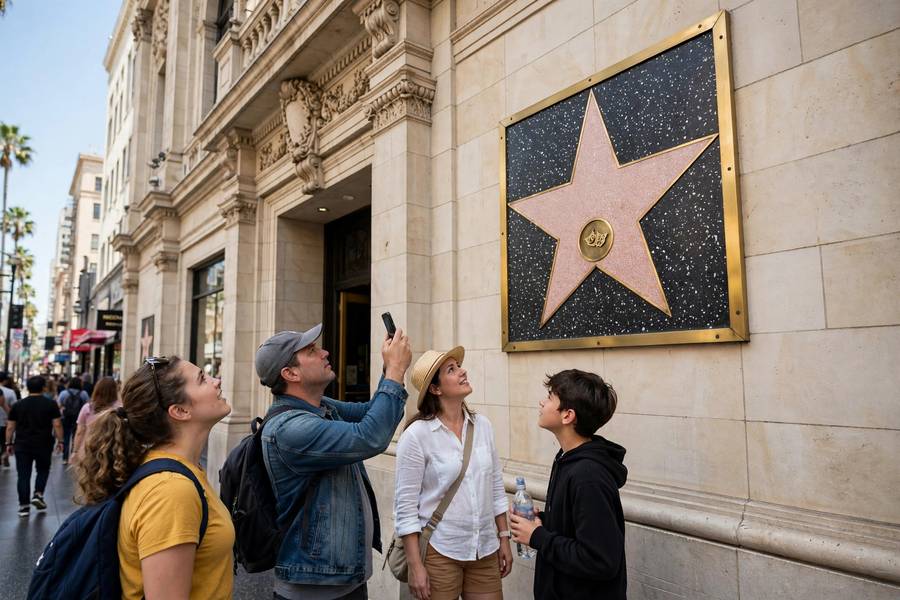
People sometimes point to Muhammad Ali’s star as “the one that’s different,” and they’re right — but not in the way they think. Ali’s star was never removed. It was never on the ground at all.
When Ali received his star in 2002, he declined the standard sidewalk placement. As a practicing Muslim, he did not want his name — which he shares with the Prophet Muhammad — to be walked on by tourists. Out of respect, the Chamber mounted his star on the wall of what is now the Dolby Theatre, at the Hollywood & Highland complex. It’s the only star on the Walk displayed vertically, and you can’t step on it no matter how hard you try.
I love this story because it’s the rare case where the Walk’s rigid traditions bent for a person rather than breaking for a controversy. Ali didn’t want the honor diminished; he wanted it elevated — literally. And the Chamber agreed.
The Celebrities Who Refused a Star Entirely
If no star has ever been removed, several were never installed because the honoree said no — which is arguably the more interesting list. The reported refusers over the years include Prince (who declined repeatedly during his lifetime, though he was honored posthumously), Julia Roberts, Denzel Washington, Clint Eastwood, George Clooney, Madonna, and Leonardo DiCaprio.
The reasons vary. Some object to the commercial nature of the process — remember, a sponsor has to write an $85,000 check. Some just value their privacy. Bruce Springsteen’s case is the most instructive: he was nominated and announced without his full consent, didn’t want it, and the resulting mess led the Chamber to require written agreement from every nominee before a selection is finalized. Insiders call it the Springsteen Clause.
There’s something delicious about the fact that the hardest thing to do with a Walk of Fame star isn’t getting one removed — it’s getting one at all while genuinely not wanting it. The Chamber will chase you with this honor. It will not take it back.
The whole episode says a lot about how fame works as an institution — the same machinery I write about when I cover celebrity interviews, where the performance of the person and the reality of the person are always two different shows. And if you want the full picture of how the Walk actually operates, start with what the Hollywood Walk of Fame is — the selection process, the categories, and the $85,000 question of who pays. For the bigger picture of the neighborhood that made all of this possible, what Hollywood is fills in the rest.
Frequently Asked Questions
No. In more than sixty years, the Hollywood Chamber of Commerce has never removed a single star. Its official policy is that the Walk is a historic landmark and each star is part of its “historic fabric” once installed.
It was vandalized and destroyed multiple times — including a 2018 incident that reduced it to rubble — but it was never removed by the Chamber. Each time it was repaired or replaced. A 2018 West Hollywood resolution urging removal had no legal force and was declined.
The Chamber’s position is that the Walk honors professional contributions to entertainment, not personal conduct, and that as a registered historic landmark, stars cannot be taken out once installed. Cosby’s star has been vandalized and repaired but remains in place.
Muhammad Ali’s. He asked that his star not be placed on the ground where people would walk on his name, so it was mounted on the wall of the Dolby Theatre (then the Kodak Theatre) in 2002. It’s the only vertical star on the Walk.
Yes — reported refusers include Prince, Julia Roberts, Denzel Washington, Clint Eastwood, George Clooney, Madonna, Leonardo DiCaprio, and Bruce Springsteen, whose case led to the rule requiring written consent from every nominee.