What Is the Hollywood Walk of Fame? The Complete Guide

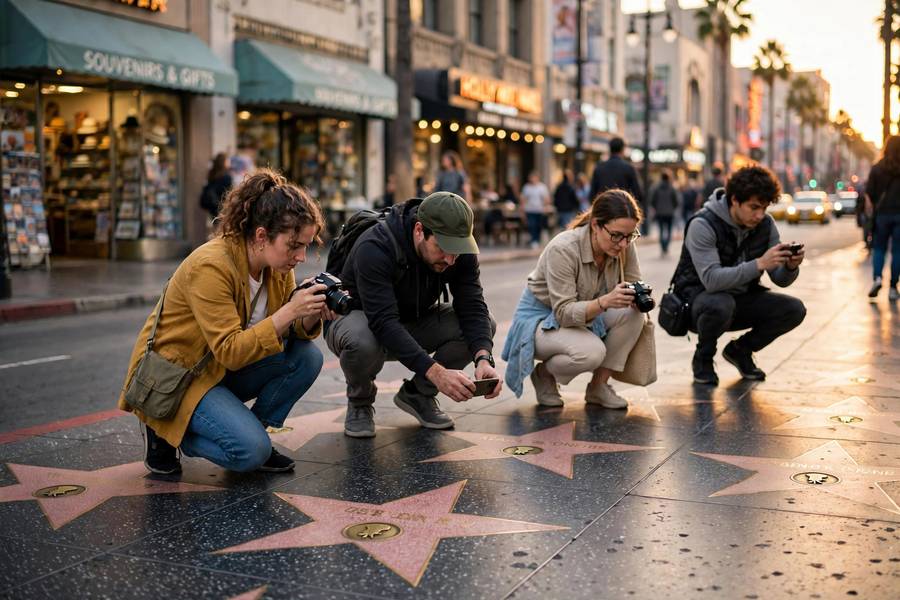
I’ve walked Hollywood Boulevard more times than I can count, and I’ll tell you something the postcards won’t: the first time you look down and realize you’re standing on a name you grew up with, it does something to you. For me it was a scuffed terrazzo star near the Chinese Theatre, and for about three seconds I forgot I was a grown woman on assignment and just stood there like a tourist with her mouth open. That’s the Walk of Fame’s whole trick. It’s a sidewalk. It’s also, somehow, the most famous sidewalk on the planet.
But what is the Hollywood Walk of Fame, really? Not the Instagram version — the actual thing. Who runs it, how a star gets there, what those little symbols mean, and whether it’s worth your afternoon. I’ve spent years covering celebrity culture, and this is the guide I wish someone had handed me before my first trip down the boulevard.
What the Walk of Fame Actually Is
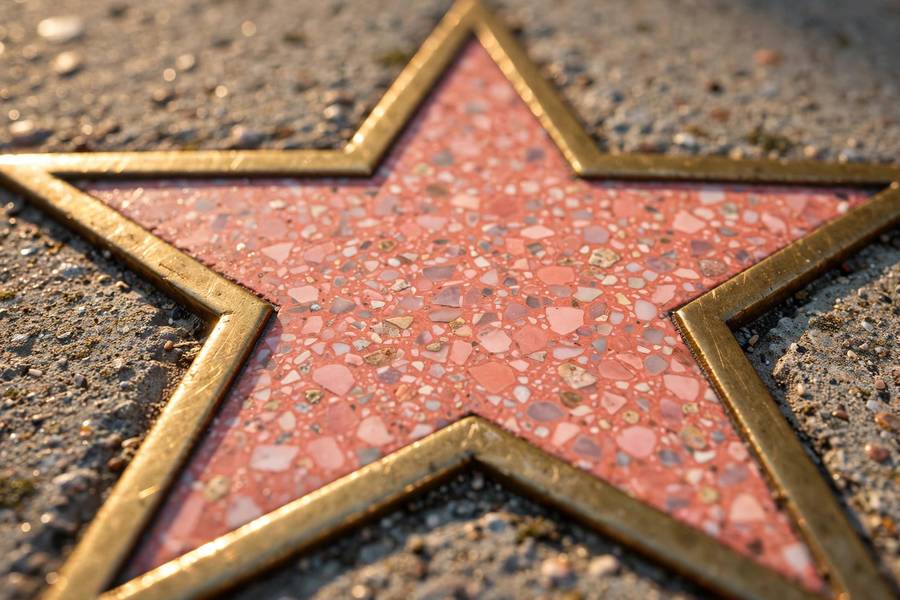
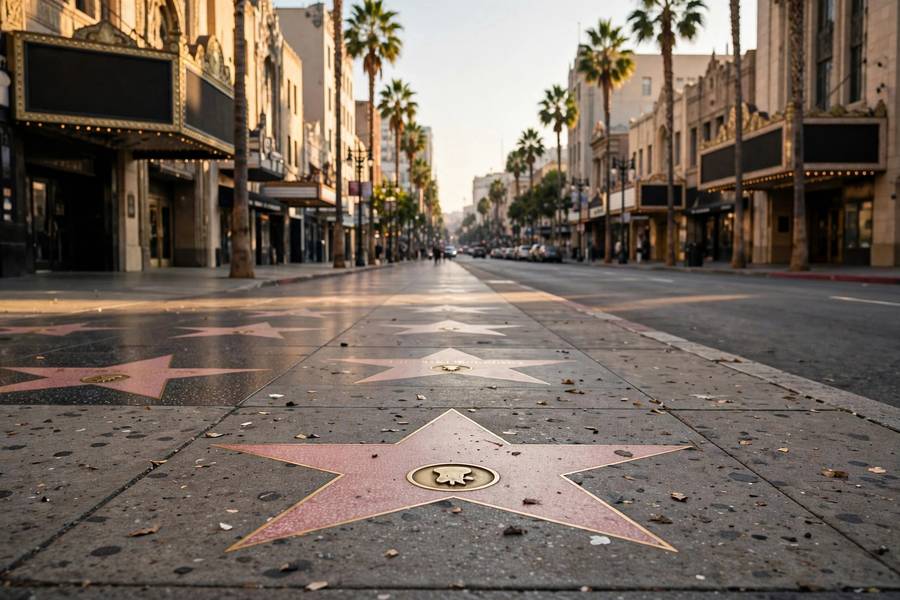
The Hollywood Walk of Fame is a stretch of sidewalk along Hollywood Boulevard and Vine Street in Los Angeles, embedded with more than 2,800 five-pointed stars honoring people (and a handful of fictional characters) for their contributions to entertainment. Each star is made of coral-pink terrazzo ringed in brass, with the honoree’s name and a small emblem showing which field they’re being honored in.
It runs about 1.3 miles in total — fifteen blocks of Hollywood Boulevard, roughly from Gower Street to La Brea Avenue, plus three blocks of Vine Street. That doesn’t sound like much until you’re actually walking it, dodging tour groups and costumed superheroes, realizing you’ve covered maybe a quarter mile and your feet already hurt.
Here’s what surprises most people: the Walk of Fame isn’t run by the city, or by some academy of film scholars. It’s administered by the Hollywood Chamber of Commerce, a business organization. The stars are paid for by sponsors — studios, record labels, networks, fan clubs — at a fee that currently sits at $85,000 per star as of 2026. Nobody just wakes up famous enough to get one for free. There’s a whole machine behind every name in that sidewalk, and honestly, understanding the machine makes the Walk more interesting, not less.
The Walk was designated a Los Angeles Historic-Cultural Monument in 1978, which is why the Chamber’s position is that stars can never be removed. Once you’re in, you’re in — controversial or not, vandalized or not. But that’s a story for another article.
The History: How a Sidewalk Became a Legend
The idea dates to 1953, when E. M. Stuart, the volunteer president of the Hollywood Chamber of Commerce, proposed a sidewalk tribute to give Hollywood’s fading glamour a permanent address. It took years of wrangling — over designs, over money, over who got to decide — before anything was actually built.
In 1958, to drum up excitement, the Chamber installed eight sample stars at the corner of Hollywood and Highland with names like Olive Borden, Ronald Colman, Burt Lancaster, and Joanne Woodward. Woodward is often cited as the first recipient, but the first star laid on the actual Walk went to director Stanley Kramer on March 28, 1960. Then things moved fast: some 1,558 stars were installed in the first year alone, which is why so many golden-age legends got theirs in that initial burst.
Then came the stall. Between 1962 and 1968, not a single new star was added while the Chamber sorted out the selection and financing system — the same basic framework that still runs the Walk today. The project was revived in large part thanks to Johnny Grant, the so-called Honorary Mayor of Hollywood, who turned the unveilings into televised media events and personally hosted more than 500 of them. Grant understood something essential: a star ceremony isn’t really about the sidewalk. It’s about the cameras.
Today the Walk adds roughly two dozen stars a year, and the count sits above 2,800. It has survived neighborhood decline, reinvention, and the entire internet era without losing its pull. Say what you like about it — and people say plenty — there’s no other place where you can stand on Marilyn Monroe’s name and then, four blocks later, on the spot honoring the guy who voiced a cartoon duck.
The Categories (and What Those Little Symbols Mean)
Every star carries one of six emblems, and once you know them, the whole sidewalk starts making more sense. Originally there were five categories; a sixth, for sports entertainment, was added in the 2020s.
Motion Pictures — the classic film camera
The biggest category by far. If someone’s star shows a little movie camera, they’re being honored for film work — actors, directors, producers. This is where you’ll find the golden-age giants and the modern box-office royalty alike.
Television — the TV set
Added when TV stopped being film’s embarrassing little sibling and became a legitimate empire. Talk show hosts, sitcom stars, news anchors — television’s hall of fame lives here.
Recording — the phonograph record
For musicians. Pop stars, rock legends, classical artists, and the occasional bandleader whose name your grandparents would recognize instantly.
Radio — the microphone
The smallest and oldest-feeling category, honoring the broadcasters and personalities of radio’s golden age. Walking this section feels like paging through a history book.
Live Performance / Live Theatre — the comedy and tragedy masks
For stage work — Broadway stars, comedians, theatrical legends. The twin masks are easy to spot once you’re looking.
Sports Entertainment — the newest addition
Yes, athletes can get stars now, provided their fame crosses into entertainment. This one still raises eyebrows among purists, which is exactly why it’s fun.
One person — and only one — has a star in every original category: Gene Autry, the singing cowboy, with five stars total. Bob Hope and Tony Martin each have four. More than thirty entertainers have three. The multi-star club is basically a map of an era when performers genuinely did everything: radio in the morning, film in the afternoon, records at night.
How Stars Get Chosen
This is the part that punctures the romance a little, so brace yourself. Stars are not awarded by popular vote, and they’re not handed out by some council of wise film elders. Here’s the actual process:
Anyone can nominate anyone — a fan, a studio, a publicist — during the annual application window, which usually runs from early April to mid-May. There’s a $250 application fee, and the nominee (or their representative) must sign a letter agreeing to accept. That last rule exists because of what insiders call the Springsteen Clause: Bruce Springsteen was once announced without his consent and didn’t want it, so now nobody gets surprised.
The Walk of Fame Selection Panel reviews hundreds of nominations and picks a class each June, which is then ratified by the Chamber’s board. The criteria are straightforward: at least five years of achievement in the field, recognizable awards or accomplishments, and a record of charitable or community work. Posthumous stars are allowed, but only for honorees who died at least five years earlier.
Then comes the money. The sponsor — studio, label, network, fan club — pays the $85,000 fee, which covers fabrication, installation, and long-term maintenance. The honoree then has two years to schedule the ceremony, or the selection expires and it’s back to square one. That’s why you’ll sometimes see a beloved star announced and then wait ages for the actual unveiling: scheduling, money, and egos all have to align.
What Happens at a Star Ceremony
Star ceremonies are free, public, and usually announced about ten days in advance on the Walk’s official site. If you’re in LA when one happens, go — it’s one of the great free shows in town.
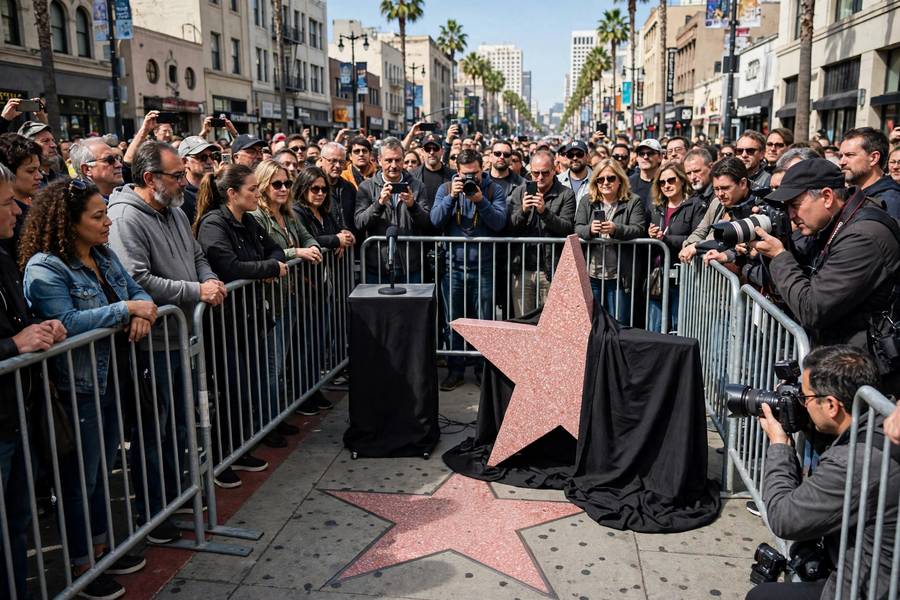
The format barely changes: a section of sidewalk gets closed off, a podium goes up, and the Chamber’s producer emcees the thing. Guest speakers — co-stars, directors, family — say nice things. Then comes the unveiling itself: the star has been sitting there under a drape, and the honoree pulls it off while cameras fire. There’s an acceptance speech, usually short and occasionally genuinely moving, and then the crowd disperses back into the boulevard’s beautiful chaos.
Ceremonies are often timed to a premiere, an album drop, or a show launch, because the industry long ago figured out that a star unveiling is also a press event. Nobody pretends otherwise. I’ve watched honorees cry real tears standing on their own name, and I’ve watched the whole thing function as a product launch. Sometimes both at once. That’s Hollywood.
Visiting: My Honest, Practical Tips
Should you go? Yes — once, properly, with comfortable shoes and realistic expectations. Here’s how I’d do it:
Go on a weekday morning. The boulevard is at its best before noon, when the crowds are thin and the light is good for photos. Weekends bring the full tourist crush, and while that’s its own kind of theater, you won’t actually be able to see the stars under the feet.
Start at the TCL Chinese Theatre end. The stretch around Hollywood and Highland is the densest with famous names and puts you right next to the theatre forecourt’s handprints and footprints. Walk west from there and you’ll hit the Dolby Theatre, the El Capitan, and a solid run of legends.
Use the star search. The official Walk of Fame site has a searchable directory. Pick five or six names you actually care about, note their addresses, and hunt them down. Wandering aimlessly works too, but having a hit list turns it into a treasure hunt.
Take the Metro. The B Line stops at Hollywood/Highland and Hollywood/Vine put you right on the Walk, and parking in Hollywood is a special kind of expensive misery. If you must drive, use a garage, not a meter — the meters are aggressively enforced.
Budget for the hustle. The costumed characters on the boulevard charge for photos — agree on a price first or walk past with a smile. The “tours” being sold on the street vary wildly in quality. The Walk itself, though, is completely free, always.
Combine it with the neighborhood. The Walk is a few hours, not a full day. Pair it with the Chinese Theatre, a movie at the El Capitan, or the view from the Hollywood & Highland complex. And if you’re wondering what Hollywood actually is beyond the boulevard — the industry, the neighborhood, the idea — it’s worth understanding before you go.
A lot of visitors come specifically to see stars honoring performers they grew up watching — the famous child actors who became fixtures of the boulevard are always a popular hunt. And if the whole machinery of fame fascinates you as much as it does me, the story of getting into acting explains how most of these careers actually started — rarely the way the movies make it look. For the fashion side of the fame machine, the best red carpet looks of all time are the natural companion piece: the sidewalk honors the career, the carpet shows you the costume.
Frequently Asked Questions
More than 2,800 as of 2026, and the number keeps growing — roughly two dozen new stars are added each year. The Walk covers fifteen blocks of Hollywood Boulevard and three blocks of Vine Street, about 1.3 miles in total.
No. A sponsor must pay the $85,000 fee, but only after the nominee has been selected by the Walk of Fame Selection Panel and ratified by the Chamber’s board. The money alone doesn’t get you in — you need five years of recognized achievement in entertainment plus a record of charitable work.
Never. The Hollywood Chamber of Commerce’s official position is that the Walk is a historic landmark and stars become part of its “historic fabric” once installed. Stars belonging to controversial figures have been vandalized and repaired, but none has ever been removed.
Gene Autry holds the record with five stars — one in each of the five original categories — and he remains the only person to achieve that. Bob Hope and Tony Martin each have four stars, and more than thirty entertainers have three.
Yes, completely. It’s a public sidewalk, open 24 hours a day. Star ceremonies are also free to attend. You’ll pay for parking, food, and the costumed characters’ photos — but the stars themselves cost you nothing but shoe leather.
Each star carries an emblem for its category: a film camera for motion pictures, a TV set for television, a phonograph record for recording, a microphone for radio, comedy/tragedy masks for live performance, and a newer emblem for sports entertainment.