How Long Is the Hollywood Walk of Fame?

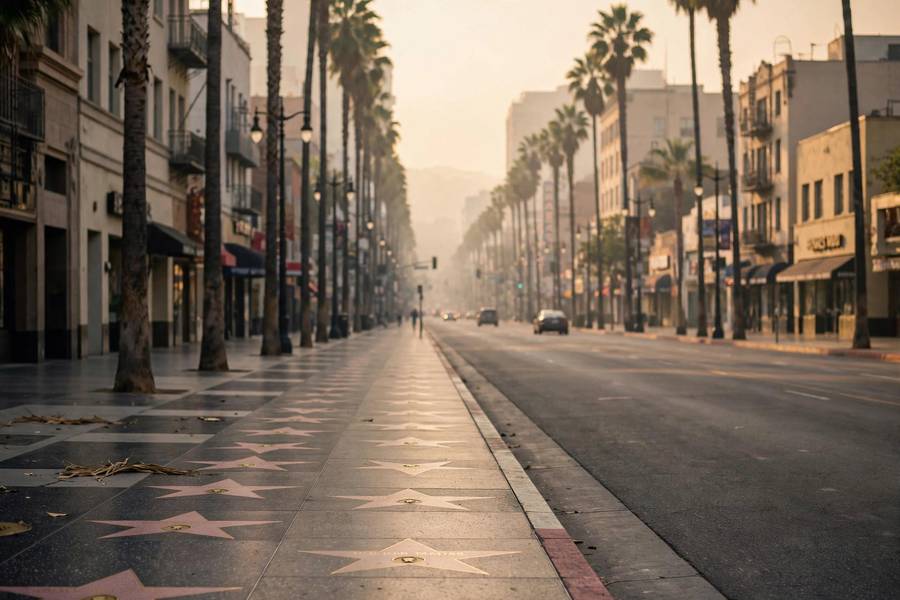
It’s the simplest question about the Hollywood Walk of Fame, and the answer is refreshingly specific: about 1.3 miles. Fifteen blocks of Hollywood Boulevard, three blocks of Vine Street, more than 2,800 stars. But “how long” turns out to be a more interesting question than it sounds — because the length tells you how the Walk grew, how long it takes to actually see it, and why your feet will hurt in ways you didn’t expect from a sidewalk.
In this article
In this guide:
The Number: 1.3 Miles
The Hollywood Walk of Fame stretches approximately 1.3 miles (about 2.1 kilometers) in total. That’s the official figure, and it accounts for both sections of the Walk: the long run along Hollywood Boulevard and the shorter leg down Vine Street.
For context, 1.3 miles is roughly 23 American football fields end to end, or about a 25-minute walk at a brisk pace if you didn’t stop — which you will, constantly, because stopping is the entire activity. Nobody speed-walks the Walk of Fame. That’s like speed-reading a menu.
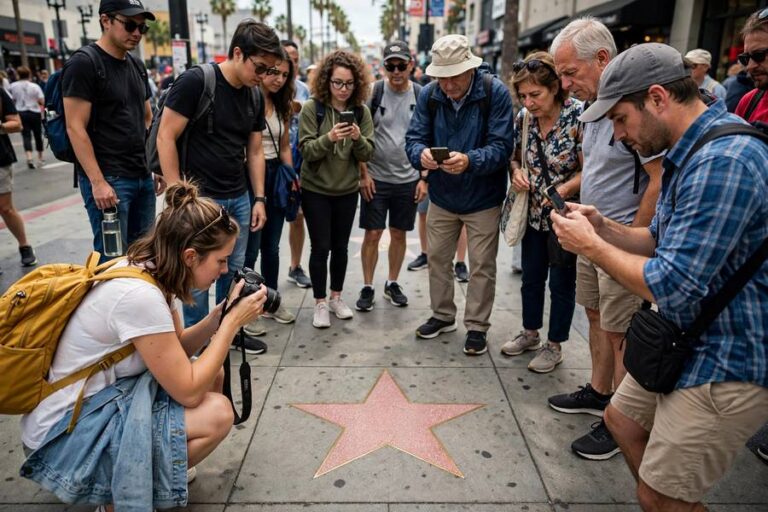
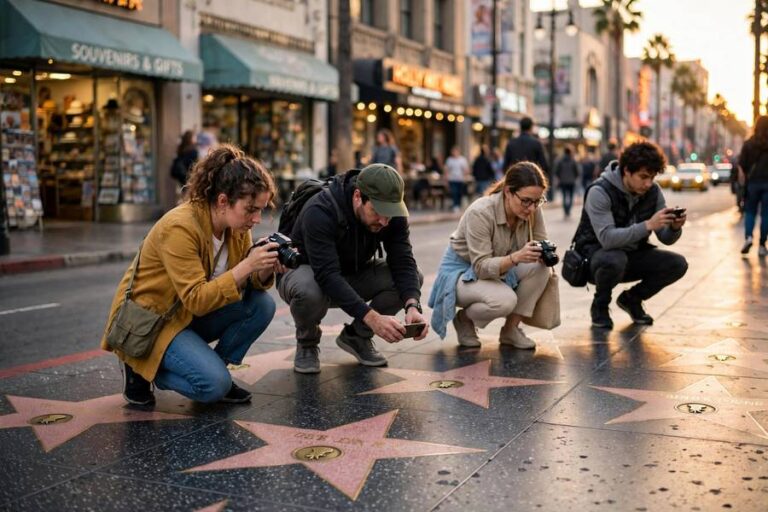
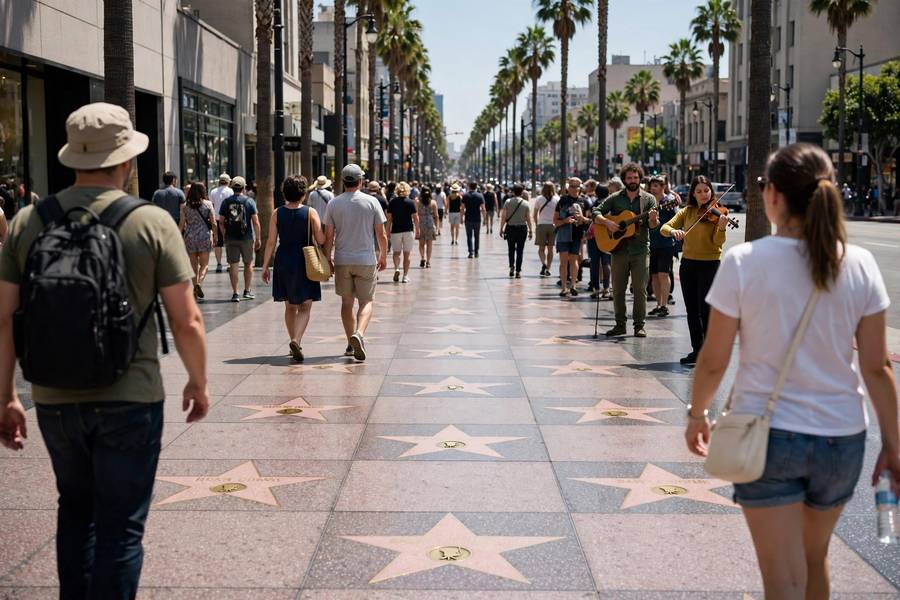
What surprises people is how the length feels in practice. A mile and a third sounds modest. But the Walk isn’t a park path; it’s a working city sidewalk lined with shops, crowds, street performers, and tour buses. You’ll zigzag between both sides of the street (the stars face both directions), backtrack for stars you missed, and stand in small clusters around the famous names. The real distance you cover is always more than 1.3 miles. Budget your feet accordingly.
Block by Block: Where the Miles Are
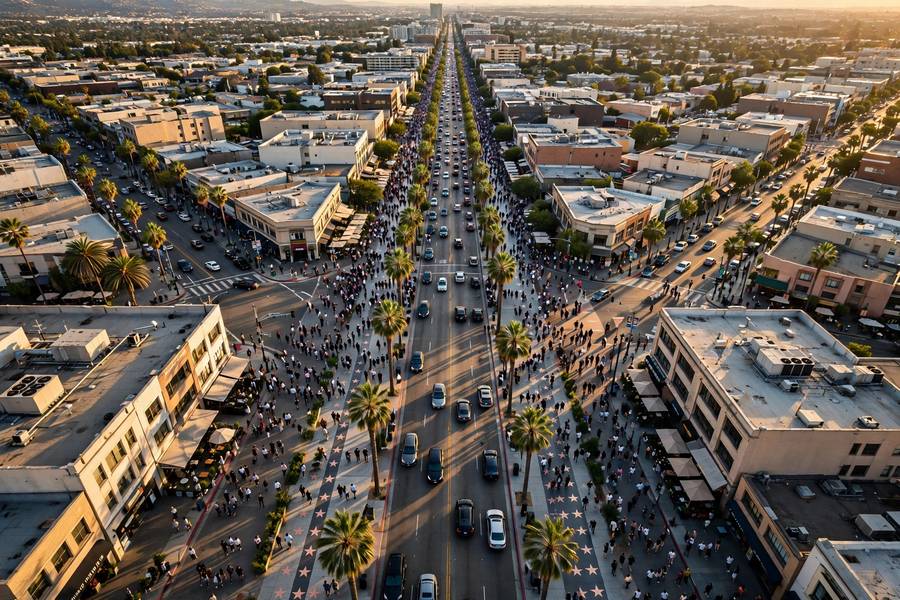
The boulevard section runs fifteen blocks along Hollywood Boulevard, roughly from Gower Street in the east to La Brea Avenue in the west — address range about 6200 to 7400 Hollywood Boulevard. This is the main event, the stretch with the densest concentration of famous names.
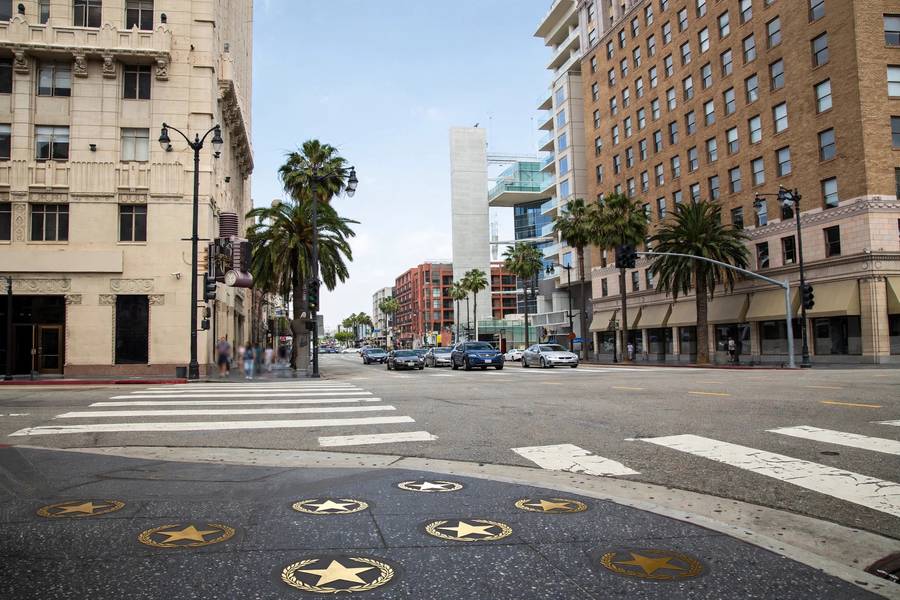
The Vine Street section adds three more blocks, running south from Hollywood Boulevard toward Sunset Boulevard. It’s quieter, less touristed, and rich in radio and recording stars from earlier eras — plus the four round Apollo 11 monuments at Hollywood and Vine, the Walk’s only non-entertainment honorees.
The golden zone — the blocks where the highest density of must-see stars sits — runs roughly from the 6700 block to the 7100 block of Hollywood Boulevard. That’s about four blocks, less than half a mile, containing an almost absurd concentration of legends. If you’re short on time or stamina, do just this stretch and you’ll see the heart of it.
How Long It Takes to Walk It
Here’s the honest math, based on many trips:
The speedrun (don’t do this): 25-30 minutes end to end at a steady clip, no stops. You will see stars the way you see highway signs — technically observed, spiritually missed.
The casual visit: 1.5 to 2 hours. This covers the golden zone at a wandering pace, with photo stops at the big names and a detour into the Chinese Theatre forecourt. This is what most visitors actually do, and it’s the right call.
The completist: 3 to 4 hours. The full 1.3 miles, both sides of the street, the Vine Street leg, hunting specific stars with the official directory. Bring water and real shoes. You will earn every blister.
The ceremony day: unpredictable. If a star dedication is happening, a section of sidewalk gets closed and crowds gather. It’s worth it — ceremonies are free and genuinely fun — but it will blow up your schedule in the best way.
My recommendation for first-timers: plan two hours, start at Hollywood & Highland, and let the boulevard set the pace. The Walk rewards dawdling. Some of the best moments — stumbling on a beloved character actor’s star, watching a kid lose it over Mickey Mouse — can’t be scheduled.
Why It’s This Long (and Not Longer)
The Walk’s footprint is essentially the 1960 original, when the first great construction blitz installed 1,558 stars along the boulevard. The fifteen-blocks-plus-Vine layout was the plan from the start — ambitious for 1960, when the neighborhood was already showing wear.
It hasn’t meaningfully expanded since, which is interesting. More than 2,800 stars now share the same 1.3 miles that held 1,558 in 1961, which means the stars have gotten denser over time. The boulevard is, in a very literal sense, running out of sidewalk — one reason newer stars sometimes land in slightly less prime positions than the golden-age originals.
Could it get longer? Theoretically, but the historic-landmark designation and the logistics of closing more city sidewalk make expansion unlikely. The Walk’s length is essentially fixed: 1.3 miles of terrazzo and brass, getting more crowded every year. There’s something fitting about fame’s most famous address having no room left to grow.
It also means every new star makes the existing mile slightly denser — the boulevard is a finite canvas with an infinite waiting list. When you walk it, you’re walking through a physical record of that tension: sixty-plus years of entertainment history, compressed into a distance you could jog in fifteen minutes, if jogging past Marilyn Monroe didn’t feel vaguely disrespectful.
Making the Most of the Mile
A few hard-won tips for covering the distance well:
Start east, walk west. Begin around the 6200-6700 blocks and work toward the 7000s. You’ll hit the golden-age cluster first and finish in the prestige zone near the Chinese Theatre, which is the natural place to stop for a break.
Zigzag deliberately. Walk one side of the street going west, cross over, and walk the other side coming back east. The stars face both directions, and single-side walking misses roughly half of them.
Use the Metro. The B Line’s Hollywood/Highland and Hollywood/Vine stations put you on the Walk without parking drama. Your feet will thank you for not adding a parking-garage hike to the 1.3 miles.
Go on a weekday morning. Fewer crowds means you can actually see the stars instead of the backs of other tourists’ heads. The light is better for photos, too.
Know when to stop. The full 1.3 miles is a commitment. There’s no shame in doing the golden zone and calling it a day — four blocks of the Walk contains more fame per square foot than anywhere else on earth.
For the full story of what you’re walking on — the history, the categories, how stars get chosen — see what the Hollywood Walk of Fame is. For the practicalities of the visit — Metro, parking, timing — go on a weekday morning, when the boulevard is at its best. And for the neighborhood that made the boulevard famous, what Hollywood is — plus where the celebrities actually live once they leave the sidewalk.
The Walk in Sections: What Each Stretch Feels Like
The 1.3 miles aren’t uniform — each section has its own character, and knowing the geography helps you spend your time wisely.
The eastern blocks (6200–6700): Quieter, grittier, and rich in golden-age history. This is where you’ll find the 1960 originals with minimal crowds — the connoisseur’s stretch. The boulevard here feels more like a real neighborhood and less like a theme park, which I consider a feature.
The golden zone (6700–7100): The densest, most famous, most crowded four blocks. Hollywood & Highland, the TCL Chinese Theatre, the Dolby Theatre — the landmarks stack up here, and so do the tourists. This is where the highest concentration of must-see stars lives, and where you’ll do most of your zigzagging between sidewalks.
The western blocks (7100–7400): Slightly calmer, with prestige names (Disney, Hanks, Streep territory) and better photo conditions. The crowds thin out, the light gets good, and you can actually hear yourself think.
Vine Street (3 blocks south): The quiet coda. Radio and recording legends, the Apollo 11 circles, and hardly any tour groups. Most visitors skip it. Don’t be most visitors — the Vine stretch is where the Walk feels most like a monument and least like a mall.
If you only have an hour, do the golden zone. If you have two, add the western blocks. If you have three, do it all, finish on Vine, and take the Metro home like a local.
Frequently Asked Questions
About 1.3 miles (2.1 km) total — fifteen blocks of Hollywood Boulevard plus three blocks of Vine Street, holding more than 2,800 stars.
30-40 minutes at a steady pace with no stops, but plan 2-3 hours for a real visit with photo stops, zigzagging both sides of the street, and the Vine Street section.
The densest cluster of must-see stars runs roughly from the 6700 to the 7100 blocks of Hollywood Boulevard, around Hollywood & Highland and the TCL Chinese Theatre.
No — the 1.3-mile footprint is essentially fixed. New stars (about two dozen a year) are added within the existing blocks, making the stars denser over time.