Dropshipping vs Print on Demand for Beginners: Which to Start?


Every beginner ecommerce forum has the same thread: ‘Should I start with dropshipping or print on demand?’ The answers are usually tribal — dropshippers trashing POD margins, POD sellers trashing dropshipping quality. Both sides are selling you something.
I’ve run the numbers on both models for clients, and the honest answer is less exciting than the tribal war: they’re cousins, not rivals. Both let you sell without inventory. Both live or die on marketing. But they differ in the ways that determine whether YOU specifically will succeed.
This guide compares dropshipping vs print on demand across the dimensions that actually matter for beginners — startup cost, profit margins, effort, risk, and scalability — so you can pick based on your situation, not someone else’s course. LLC formation guide
How Each Model Actually Works
Dropshipping: You list existing products from suppliers (usually via AliExpress, CJ Dropshipping, or private agents). When a customer orders, the supplier ships it. You never touch the product. Your job is finding winning products and marketing them.
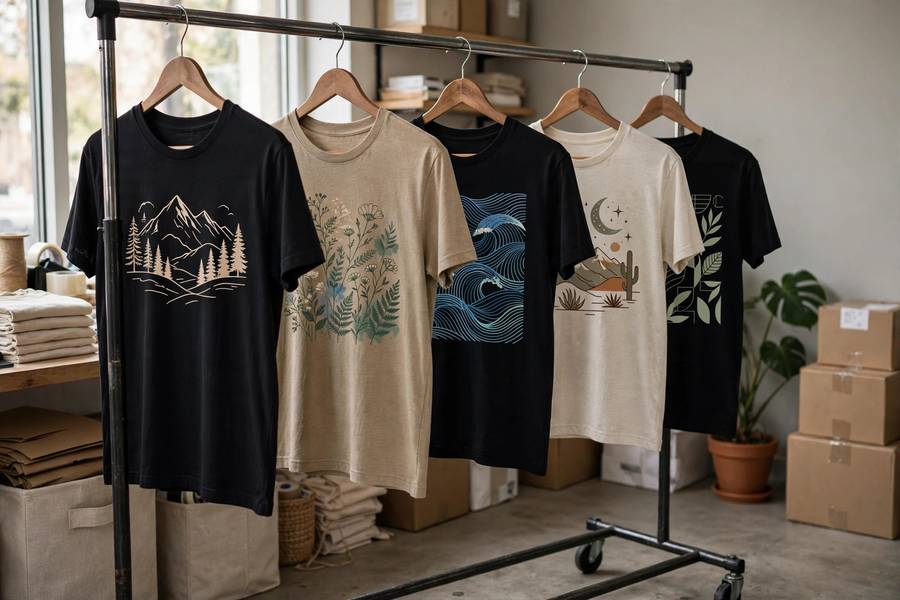
Print on demand: You create designs, which get printed onto blank products (t-shirts, mugs, posters, hoodies) only when ordered. Companies like Printful and Printify handle printing, packing, and shipping. You never touch the product either — but you created the design that makes it sell.
The structural difference: dropshipping sells other people’s products with your marketing; POD sells your designs on other people’s blank products. In dropshipping, product selection is the skill. In POD, design and niche branding is the skill.
Both models share the same economics of ‘no inventory’ — and the same vulnerability: you’re dependent on a third party for fulfillment quality. For the full picture on the dropshipping side, my dropshipping guide covers the model in depth.
Startup Costs Compared
Dropshipping startup: $500–$1,000 realistic. Shopify ($39/mo), domain ($15/yr), and crucially, ad budget ($300–$500 minimum to test products). The product testing phase is where the money goes — expect to test 5–10 products before finding a winner, at $20–$50 in ad spend per test.
POD startup: $200–$500 realistic. Same platform costs, but lower ad testing costs because you’re testing designs, not products. A design can be tested with $10–$20 in ads, and organic TikTok/Instagram works better for POD — a clever design video can go viral in a way a generic gadget rarely does.
The hidden cost difference: design. If you can’t design, POD requires either learning (time) or hiring designers ($25–$100 per design on Upwork, or $300+/mo for unlimited services). Dropshipping requires no creative skill — just product research ability. Factor in what YOU bring to the table.
Profit Margins: The Real Math
Dropshipping margins: 15–30% net is typical for beginners. Sell a $30 product sourced at $8: after shipping ($4), ads ($8–$12 to acquire the customer), and fees ($2), you keep $4–$8. The math only works with volume or higher-ticket products ($50+).
POD margins: 20–40% net is typical. A t-shirt selling at $24.99 costs ~$12–$14 all-in (blank + print + shipping) through Printful. After ads and fees, you keep $5–$8 per shirt. Similar per-unit profit to dropshipping — but with a critical advantage: your designs are unique, so you’re not competing on price with 500 sellers of the same AliExpress gadget.
The margin winner depends on execution. Branded POD stores with loyal niches (pet lovers, professions, hobbies) command premium prices and repeat buyers. Dropshipping winners rely on finding underpriced attention — a harder game that gets harder as ad costs rise.
Effort and Skill Requirements
Dropshipping demands: product research (2–3 hours daily when starting), ad management (Facebook/TikTok ads skill is non-negotiable), supplier management, and customer service for shipping issues. It’s an 80% marketing, 20% operations business. starting an online business
POD demands: design creation or curation (the core skill), niche research (finding passionate micro-audiences), and the same ad management. It’s 50% creative, 50% marketing. Customer service is lighter — POD fulfillment is more reliable than AliExpress shipping, so fewer ‘where’s my order’ tickets.
Be honest about your strengths. Good at design or willing to learn? POD plays to you. Good at data, testing, and paid ads? Dropshipping fits better. Hate both? Neither model will save you — pick the one where the required work feels least like torture, because you’ll be doing it daily for months.
Risk and Failure Modes
Dropshipping’s biggest risk is ad account dependence. When your entire business is ‘find product → run ads → profit,’ a banned ad account or rising CPMs can kill you overnight. Diversification into organic and email is essential but rarely done by beginners.
POD’s biggest risk is the ‘design treadmill.’ You need constant new designs to stay relevant, and most designs flop. Successful POD sellers treat it as a volume game — 100+ designs live, with 10% driving 90% of sales. If you hate creating, you’ll burn out.
Both share platform risk (Shopify, payment processors) and the fundamental risk of building on someone else’s fulfillment. Neither model gives you a defensible moat except brand — which is why the winners in both models eventually build brands, not just stores.
Scalability: What Happens When You Win
Dropshipping scales through product portfolio: winners get scaled with ad spend, losers get killed fast. A successful dropshipper might test 100 products a year to find 5 winners. The operation stays lean — often one person with VAs — even at seven figures. The constraint is ad account stability and supplier reliability at volume.
POD scales through design library and niche expansion. A winning design gets extended across products (shirt → hoodie → mug → poster) and into adjacent niches. The operation is similarly lean. The constraint is creative output — you can’t scale what you can’t design (or commission).
Both models hit the same ceiling: at real scale, the smart move is transitioning toward private label or owned inventory for your winners. The no-inventory models are the proving ground, not the destination. Plan for that evolution from day one.
Which Should You Choose?
Choose dropshipping if: you’re good with data and paid ads, you want the lowest creative barrier, you’re excited by product hunting, and you can stomach the customer service load. It’s the better pure-marketing play.
Choose POD if: you have design skills (or budget to hire), you want a brand moat from day one, you prefer organic/social marketing, and you want fewer fulfillment headaches. It’s the better creative play.
Choose neither yet if: you can’t commit $500 and 10+ hours a week for three months. Both models punish dabblers. The beginners who succeed treat it as a real business from day one — because it is one.
My take after watching hundreds of beginners: POD has a slightly higher success rate for true beginners, because unique designs face less direct competition than commodity gadgets. But the ceiling is similar, and the best choice is the one matching your skills. Pick one, commit for 90 days, and judge by data — not by forum opinions.
Key Takeaways
Dropshipping and print on demand are both no-inventory models that live or die on marketing. Dropshipping needs product research and ad skills with $500–$1,000 to start; POD needs design ability with $200–$500 to start. Margins are comparable (15–40% net), but POD offers better differentiation through unique designs.
Choose based on your strengths: data and ads → dropshipping; design and branding → POD. Either way, commit 90 days and real effort — both models punish dabblers and reward operators who treat them as real businesses.

The Hybrid Approach: Running Both
Here’s what the tribal debate misses: the most successful small ecommerce operators I know run both models in one store. The POD designs build the brand and attract the passionate niche audience; the dropshipping products monetize that audience with complementary gadgets at higher volume.
The classic combo: a POD brand for dog lovers sells custom breed t-shirts (high margin, brand-building, organic social traction), then adds dropshipped dog gadgets — LED collars, grooming tools, car seat covers — to the same store. The audience trusts the brand from the POD side; the dropshipping side monetizes that trust with products you’d never design yourself.
Operationally, this works because the skill sets overlap more than people admit. Both need a Shopify store, both need ad management, both need email marketing. The incremental cost of adding the second model to an existing store is low — you’re reusing the traffic, the brand, and the systems.
The sequencing matters though. Start with ONE — whichever matches your skills — and get it to $5K/month before adding the second. The hybrid is a scaling strategy, not a starting strategy. Beginners who try both from day one split their learning across two skill sets and master neither. Nail one model, systematize it, then bolt on the second for growth.
For most beginners, slightly yes — unique designs face less price competition than commodity dropshipping products. But both models succeed or fail on marketing execution, not on the model choice itself.
$200–$500 realistic: platform, domain, and design costs (or your time if you design yourself). Ad testing is cheaper than dropshipping since designs test faster than products.
Yes, and many stores do — POD for branded designs, dropshipping for complementary gadgets. But master one first; splitting focus as a beginner usually means failing at both.
Both scale similarly through portfolio expansion (more products/designs). At real scale, winners in both models typically transition top products to private label for better margins and control.