
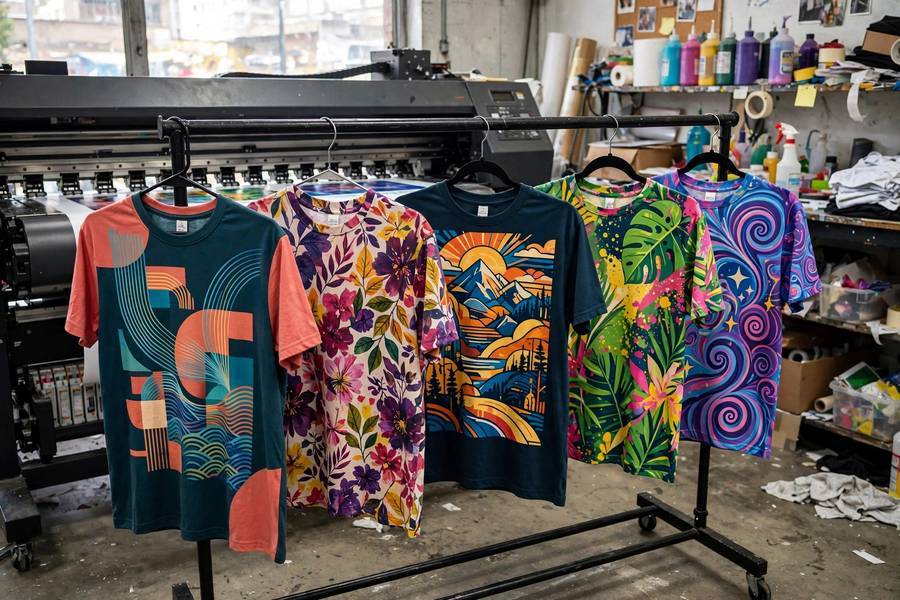
Print on demand (POD) is a fulfillment model where products — t-shirts, mugs, posters, books — are printed only after a customer orders them. You upload designs; a POD company prints, packs, and ships. You never touch inventory.
It sounds like free money: no inventory, no upfront costs, infinite products. And that’s exactly why the space is drowning in competition. I’ve watched the POD gold rush from the sidelines for years. The winners exist, but they’re designers and marketers who treat it as a real business — not people uploading 500 low-effort designs hoping the algorithm smiles.
Table of Contents
- How Print on Demand Actually Works
- POD vs Traditional Inventory: The Real Trade-Off
- What You Can Sell (And What Actually Sells)
- The Main POD Platforms, Ranked Honestly
- The Math: Real POD Profit Margins
- Why 95% of POD Stores Make Nothing
- How to Actually Win at POD
- Frequently Asked Questions
How Print on Demand Actually Works
The sequence, stripped of hype:
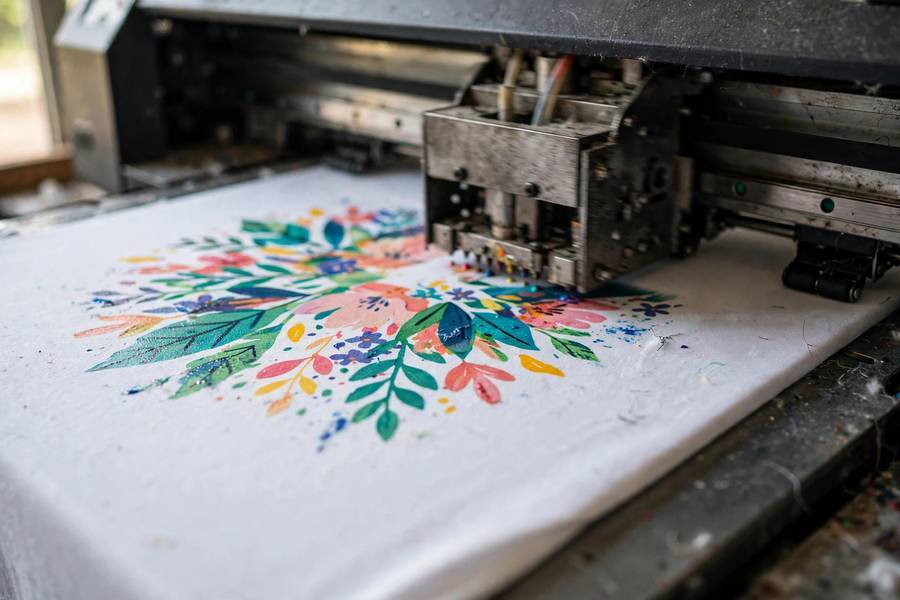
- You create designs. Original artwork, text designs, niche graphics. This is the actual product — everything else is logistics.
- You list products. Upload designs to a POD platform or your own store connected to a POD supplier. Mockup generators show your design on shirts, mugs, hoodies.
- Customer orders. Someone buys a $24.99 t-shirt from your store.
- The POD company fulfills. They print that single shirt, pack it, and ship it directly to your customer — with your branding on the packing slip (on good platforms).
- You keep the spread. The POD company charges you a base cost ($9-12 for a tee); you keep the difference minus platform/marketplace fees.
You never buy blank shirts. You never own a printer. Your job is design, listing, and driving traffic. That’s the entire model — elegant in theory, brutal in practice because everyone can do steps 1-2 in an afternoon.
POD vs Traditional Inventory: The Real Trade-Off
POD advantages:
– Zero inventory risk. No boxes of unsold XXL shirts in your garage.
– Near-zero startup cost. A store can launch for under $100.
– Infinite catalog. Test 200 designs; keep the 10 that sell.
– No fulfillment labor. No packing, no post office runs.
POD disadvantages:
– Thin margins. Base costs are high because you’re paying retail-ish for one-off production. A $25 shirt might net you $6-8 after all fees.
– No quality control. You rarely see the product before the customer does. Print misalignments happen, and your reputation eats it.
– Slow shipping. 3-7 day production + shipping time, versus Amazon’s 2-day expectation. Customers notice.
– No differentiation on product. Anyone can sell the same Bella+Canvas tee. Your only moat is design and brand.
– Platform dependence. Marketplace algorithm changes can zero your traffic overnight.
The honest summary: POD removes the capital barrier but not the competition barrier. In some ways it makes competition worse — when anyone can launch in a day, everyone does.
What You Can Sell (And What Actually Sells)
The POD catalog is huge: t-shirts, hoodies, sweatshirts, tank tops, mugs, posters, canvas prints, phone cases, tote bags, stickers, notebooks, blankets, leggings, hats.
What actually moves:
– T-shirts and hoodies — 70%+ of most POD stores’ revenue. Apparel is the game.
– Niche designs — the riches are in specific audiences: professions (nurses, electricians), hobbies (fishing, gaming), identities, humor for defined groups.
– Evergreen over trendy — trend-chasing (“viral meme shirt”) has a 3-week shelf life. Evergreen niche designs sell for years.
What doesn’t: generic “Live Laugh Love” style designs (buried under 100,000 identical listings), copyrighted characters or logos (that’s infringement — platforms will ban you and rights holders do sue), and AI-generated slop with no human curation (customers can smell it).

The Main POD Platforms, Ranked Honestly
Printful. The quality leader. Best print consistency, most product options, integrates with Shopify/Etsy/your own store. Higher base costs, but fewer quality complaints. My default recommendation for serious stores.
Printify. A network of print providers — you choose based on price/location/ratings. Cheaper base costs than Printful, but quality varies by provider. Good if you’ll actively manage and test providers.
Merch by Amazon. Amazon handles everything; you just upload designs. Massive built-in traffic, but invite/tiered system limits how many designs you can list, royalties are fixed and modest, and you’re 100% platform-dependent.
Redbubble / TeeSpring (Spring) / Zazzle. Marketplaces where you upload and they handle traffic too. Easiest start, lowest control, thinnest margins. Fine for testing designs; hard to build a real brand.
Gooten / Apliiq / others. Niche players with specific strengths (Apliiq for premium private-label apparel). Worth exploring once you have traction.
My take: start on a marketplace (Redbubble/Merch) to test which designs sell with zero cost, then migrate winners to your own Shopify + Printful store where you control margins and customer relationships. For the bigger picture on turning a side hustle into a real business, see how to become an entrepreneur — POD is one low-cost way to start.
The Math: Real POD Profit Margins
Let’s do a t-shirt, the POD staple:
- Retail price: $24.99
- Printful base cost (standard tee): ~$12.95
- Shipping (customer-paid or baked in): ~$4.50
- Etsy fees (if marketplace): ~$2.50 (listing + transaction + payment)
- Your gross profit: roughly $5-7 per shirt on marketplace; $8-12 on your own Shopify store (no marketplace fees, but you pay for traffic)
Now the killer question: customer acquisition cost. If you’re running ads at $0.80/click with a 2% conversion rate, that’s $40 to acquire a customer who nets you $7. You do the math — it’s negative.
This is why POD only works with: organic traffic (SEO, social following, niche communities), repeat buyers, or designs so good people share them. Paid ads on thin POD margins is lighting money on fire, slowly.
Why 95% of POD Stores Make Nothing
Design spam. Uploading 1,000 mediocre designs isn’t a strategy — it’s lottery tickets with worse odds. Ten excellent designs outperform a thousand forgettable ones.
No niche. “Funny t-shirts” is not a niche. “Funny t-shirts for ICU nurses” is. Specificity is what makes someone buy your shirt instead of the 50,000 others.
Trademark roulette. Using band names, sports teams, cartoon characters, or celebrity likenesses. Platforms use automated detection now; bans are swift and permanent. And rights holders absolutely do pursue sellers.
Ignoring the brand layer. The POD winners — the ones doing real numbers — built brands: consistent style, a voice, a community. The product is the design; the business is the brand. Our guide on what branding actually means applies double here, because in POD the product itself is nearly commoditized.
Quitting at design #30. Like all content businesses, POD compounds. Design #200 teaches you what design #20 couldn’t. Most people quit in the flat part of the curve.
How to Actually Win at POD
The playbook, if you’re serious:
- Pick ONE niche audience you understand deeply. Not “dog lovers” — “veterinary technicians with dark humor.”
- Make 50 genuinely good designs for them. Study what sells in the niche first. Iterate.
- Test free first — marketplace listings cost nothing. Let data pick winners.
- Build the brand store around proven designs (Shopify + Printful).
- Drive organic traffic — niche SEO (“funny vet tech shirts”), Pinterest, TikTok/IG content, community presence.
- Expand winners — winning design goes on hoodies, mugs, stickers. Milk proven demand.
- Email list from day one — repeat buyers are the entire margin story.
It’s real work. But unlike the hype suggests, it’s honest work — make things people want, find the people, keep the spread. More operational breakdowns in our Business guides.
Frequently Asked Questions
Print on demand (POD) is a fulfillment model where products like t-shirts, mugs, and posters are printed only after a customer orders. You upload designs; a POD company prints, packs, and ships — you never hold inventory.
It can be, with realistic margins of $5-12 per t-shirt. But profitability depends on organic traffic — paid ads usually cost more than the thin per-unit margin supports. Winners have strong niches, good designs, and repeat buyers.
Under $100 to start on a marketplace (Redbubble, Merch by Amazon). A branded Shopify + Printful store runs $30-100/month plus design costs. The real investment is time: designs, listings, and traffic-building.
Printful for quality and reliability, Printify for lower base costs, Merch by Amazon for built-in traffic, Redbubble for zero-effort testing. Most serious sellers test on marketplaces, then build their own store with Printful.
Yes — using copyrighted characters, band names, sports logos, or celebrity likenesses without permission is infringement. Platforms ban infringing sellers automatically, and rights holders do pursue legal action. Always use original designs.