Dropshipping is the only business model where you can sell products you’ve never touched, from a warehouse you’ve never visited, to customers you’ll never meet. That sentence excites some people and should worry others. After years of advising founders on ecommerce, I can tell you both reactions are correct — the model is genuinely low-risk to start, and genuinely hard to make real money with.
This guide is the honest version. Not the rented-Lamborghini version. You’ll learn exactly how dropshipping works, what it actually costs to start, where beginners go wrong, and whether it’s still worth doing in 2026.
Table of Contents
- What Dropshipping Actually Is
- How Dropshipping Works, Step by Step
- The Real Startup Costs
- Dropshipping Pros: What’s Genuinely Good
- Dropshipping Cons: The Parts Gurus Skip
- How to Choose a Dropshipping Niche
- Finding Reliable Suppliers
- Setting Up Your Store
- The Mistakes That Kill Beginners
- Is Dropshipping Still Profitable in 2026?
- Your First 30 Days: A Checklist
What Dropshipping Actually Is
Strip away the hype and dropshipping is simple: you sell a product on your website, and when someone buys it, your supplier ships it directly to the customer. You never hold inventory. You never pack a box.
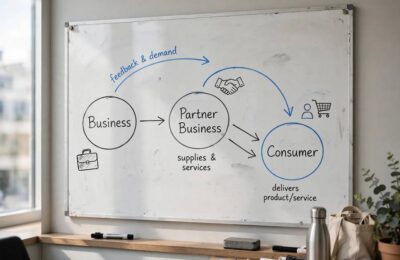
You’re the storefront and the marketer. The supplier is the warehouse and the shipper. Your profit is the gap between your retail price and the supplier’s wholesale price, minus your costs.
That’s it. No magic. The reason this model gets so much attention is the low barrier to entry — you can technically launch with a laptop and a few hundred dollars. The reason most stores fail is that low barriers cut both ways: if it’s easy for you, it’s easy for ten thousand competitors selling the same product.
How Dropshipping Works, Step by Step
Here’s the actual order flow, because understanding this exposes every weak point in the model:
1. You list a supplier’s product on your store. You import the product details, photos, and pricing into your ecommerce platform. Most beginners use Shopify with an app like DSers or Zendrop that connects to supplier catalogs.
2. A customer orders from you. They pay your retail price — say $39.99 for a product your supplier sells for $12.
3. You forward the order to the supplier. Manually at first, automatically once you set up the integration. You pay the supplier their $12 plus shipping.
4. The supplier ships directly to your customer. The package arrives with your branding (if you set that up) or neutral packaging. You never see it.
5. You keep the difference. $39.99 minus $12 minus shipping minus your ad cost minus platform fees. That remainder is your actual profit — usually thinner than beginners expect.
The critical insight: steps 3 and 4 are entirely outside your control. Shipping speed, packaging quality, product accuracy — all supplier-dependent. Your reputation rides on someone else’s operations. Choose suppliers accordingly.
The Real Startup Costs
Anyone telling you dropshipping is “free to start” is selling a course. Here’s what it actually costs to launch properly:
Ecommerce platform: ~$29–$39/month. Shopify’s basic plan is the standard choice. There are cheaper options, but Shopify’s app ecosystem for dropshipping is unmatched.
Domain name: ~$15/year. Non-negotiable. A store on a subdomain looks temporary because it is.
Initial ad budget: $300–$500 minimum. This is the cost beginners underestimate most. Organic traffic takes months; paid ads are how you test products. Budget to lose your first few hundred dollars learning what works — consider it tuition.
Apps and tools: $0–$50/month. Product import apps, review apps, email capture. Start free, add paid tools only when revenue justifies them.
Business formation (optional but smart): ~$50–$300. Once you’re making consistent sales, forming an LLC separates your personal assets from the business. My LLC formation guide walks through the options, and here’s advice on naming your LLC without the usual mistakes.
Realistic total to launch: $500–$1,000. Anyone starting with less is either exceptionally skilled at organic marketing or about to learn an expensive lesson about ad costs.
Dropshipping Pros: What’s Genuinely Good
Credit where it’s due — the model has real advantages:
Minimal upfront investment. Compared to traditional retail (lease, inventory, staff), dropshipping’s startup cost is trivial. You can test product ideas for the cost of ad spend.
No inventory risk. Unsold inventory is what kills most retail businesses. You can’t get stuck with a garage full of fidget spinners if you never bought them.
Location independence. The entire business runs from a laptop. This is genuinely valuable if you want flexibility.
Easy to test and pivot. A product flops? Remove the listing and test another. Traditional retailers can’t pivot this fast.
Scalable operations. Going from 10 orders a day to 100 doesn’t require a bigger warehouse — your supplier absorbs the volume. (Customer service, however, scales linearly with complaints. Keep that in mind.)
Dropshipping Cons: The Parts Gurus Skip
Now the honest half:
Razor-thin margins. After product cost, shipping, ad spend, and platform fees, many beginners net 10–15% per order. Sell a $30 product and you might keep $4. You need volume or high-ticket products to make real money.
You don’t control fulfillment. Slow shipping, wrong items, damaged goods — the customer blames you, and you can’t fix the root cause. Your supplier selection IS your quality control.
Brutal competition. Low barriers mean saturated niches. If you’re selling the same AliExpress product as 500 other stores, you’re competing purely on ads and branding.
Customer service burden. “Where’s my order?” emails scale with revenue. Expect to spend real hours on support, especially with overseas suppliers and long shipping times.
Platform risk. Your store, your ad accounts, your payment processor — any of them can restrict you. Diversify traffic sources as soon as you can.
How to Choose a Dropshipping Niche
Niche selection is where most beginners fail before they start. The classic mistake: picking whatever’s trending on TikTok this week. Trends are where margins go to die — by the time you see the trend, suppliers have raised prices and competitors have flooded in.
What actually works:
Solve a specific problem. Products that fix an annoyance outsell products that are merely interesting. Back pain, pet messes, kitchen frustrations — boring problems, reliable demand.
Target passionate hobbies. Hobbyists spend disproportionately. Fishing, crafting, home fitness — people who identify with a hobby buy more and complain less about price.
Aim for the $25–$75 price band. Below $25, margins vanish after ad costs. Above $75, impulse buying drops and you need serious trust-building. The sweet spot converts on impulse while leaving margin room.
Avoid fragile, oversized, or regulated products. Glass breaks in shipping. Furniture costs a fortune to ship. Supplements invite regulatory headaches. Beginners should sell none of these.
Check competition honestly. Search your product idea on Amazon and count the established sellers with thousands of reviews. If the first page is locked up, pick a narrower angle or a different product.
Finding Reliable Suppliers
Your supplier is your business partner in everything but name. Vet them like it.
Start with domestic suppliers when possible. US or EU-based suppliers cost more per unit but ship in days instead of weeks. Faster shipping is the single biggest lever on customer satisfaction and repeat purchases. Directories like Spocket and SaleHoo list vetted domestic options.
For overseas sourcing, use platforms with buyer protection. AliExpress is the default starting point — huge catalog, trade assurance on many orders. But treat it as a testing ground, not a long-term partner.
Order samples. Always. Before you sell a single unit, buy the product yourself. Check quality, packaging, and actual shipping time. The $20 you spend on samples saves hundreds in refunds and chargebacks.
Test communication. Message the supplier with a question before committing. Slow, vague, or copy-paste responses now mean slow, vague responses when your customer has a problem later.
Have a backup. Suppliers disappear, raise prices, or run out of stock. For every winning product, identify a second source before you scale ad spend.
Setting Up Your Store
Keep it simple. Beginners overbuild stores and underinvest in product testing.
Platform: Shopify. Not because it’s perfect, but because the dropshipping app ecosystem (DSers, Zendrop, AutoDS) is built for it.
Theme: Clean and fast. One product-focused theme beats a flashy multi-category maze. Mobile-first — most of your traffic is on phones.
https://www.wedlockcross.com/wp-content/uploads/2026/10/dropshipping-4.jpg
Essential pages: Homepage with a clear value proposition, product pages with real descriptions (rewrite the supplier’s copy — everyone’s using the same text), About page with an actual story, FAQ page answering shipping/returns questions, and clear shipping and returns policies.
Trust signals: Customer reviews (import or collect from day one), secure checkout badges, clear contact information. A store with no reviews, no about page, and no contact info converts like a store with no reviews, no about page, and no contact info.
Payment: Enable Shop Pay, PayPal, and standard cards at minimum. Every missing payment option is an abandoned cart.
If you’re starting the broader entrepreneurial journey, my guide on how to start a business covers the foundations beyond the store itself.
The Mistakes That Kill Beginners
I’ve watched enough dropshipping stores die to spot the patterns:
1. Copying the supplier’s product descriptions. Everyone selling that product uses identical copy. Write your own — speak to the customer’s problem, not the product’s features.
2. No niche, just “general store.” A store selling phone cases, dog toys, and kitchen gadgets trusts no one. Pick a lane.
3. Ignoring unit economics. If your product costs $12, ships for $5, and your customer acquisition cost is $15, you’re losing money on every $30 sale. Do this math BEFORE scaling ads, not after.
4. One winning product, no plan. A single viral product is luck. A testing system that finds winners repeatedly is a business. Build the system.
5. Treating customer service as optional. In dropshipping, service IS your differentiation — it’s the one thing competitors selling the same product can’t copy from a catalog. Answer fast, refund cheerfully, and watch repeat purchase rates.
6. Scaling broken fulfillment. If your supplier ships in 20 days, don’t scale to 500 orders a day. You’ll scale your refund queue instead.
Is Dropshipping Still Profitable in 2026?
The short answer: yes, but not the way it was in 2018.
The era of slapping AliExpress products on a Shopify store and printing money is over. Ad costs are higher, customers are savvier, and Amazon has trained everyone to expect fast shipping.
What works now:
Branded dropshipping. Build an actual brand around your products — custom packaging, real content, a voice. Stores that look like brands convert like brands and survive like brands.
High-ticket or bundled products. Higher average order values absorb ad costs. Bundling related products lifts margins without raising acquisition costs proportionally.
Hybrid models. Many successful “dropshippers” now hold inventory of their winners domestically while dropshipping the long tail. Best of both worlds: fast shipping on proven products, zero inventory risk on tests.
Content and community. Stores with YouTube channels, TikTok presence, or email lists don’t live and die by ad costs. Audience is the moat.
The model isn’t dead. The lazy version of it is.
Your First 30 Days: A Checklist
Week 1: Pick your niche using the criteria above. Set up Shopify, domain, and basic pages. Order samples of 5–10 candidate products.
Week 2: While samples ship, write real product descriptions and build your store. Set up email capture and basic analytics. Research competitors’ ads for positioning ideas.
Week 3: Samples arrive — kill the duds, keep 3–5 winners. List them properly. Launch small-budget test ads ($10–$20/day per product).
Week 4: Read the data ruthlessly. Kill losers fast, double down on anything with traction. Set up abandoned cart emails and basic customer service templates.
One month won’t make you rich. But it’ll teach you more about ecommerce than a year of watching gurus. Start small, measure everything, and let the numbers — not the hype — tell you what to do next.
For the bigger picture on building something real, browse the business section — and when the sales start coming in consistently, revisit the question of formalizing things properly.
Dropshipping is a retail model where you sell products without holding inventory. When a customer orders from your store, you purchase the item from a supplier who ships it directly to the customer. Your profit is the difference between your retail price and the supplier’s cost, minus expenses like ads and platform fees.
A realistic starting budget is $500–$1,000: roughly $29–$39/month for an ecommerce platform, $15/year for a domain, and $300–$500 for initial ad testing. Starting with less is possible only if you’re skilled at free organic marketing.
Yes, but the easy wins are gone. Profitable stores in 2026 focus on branded dropshipping, higher-ticket or bundled products, and building an audience — not reselling generic AliExpress products with no differentiation. Expect 10–20% net margins on well-run stores.
Not on day one, but once you’re making consistent sales, an LLC separates your personal assets from business liability and looks more professional to suppliers and payment processors. Many founders form one after their first few months of traction.
The most common killers: copying supplier product descriptions verbatim, running a directionless general store instead of a niche, ignoring unit economics before scaling ads, relying on a single viral product with no testing system, and neglecting customer service — which is the main differentiator when everyone sells the same products.
Start with domestic supplier directories like Spocket or SaleHoo for faster shipping, use AliExpress with buyer protection for product testing, always order samples before selling, test supplier communication responsiveness, and line up a backup supplier for any winning product before scaling.