Best Social Media Platforms for Small Business (Where to Actually Spend Time)


“Should my business be on TikTok?” I get some version of this question weekly, and my answer is always the same annoying one: it depends on where your customers are. The best social media platforms for small business aren’t the trendiest ones — they’re the ones where your specific buyers already spend time and actually make buying decisions.
I’ve watched founders burn ten hours a week on platforms their customers never visit, while ignoring the one network that would have paid their rent. This article fixes that: an honest breakdown of each major platform for small business use, who it’s actually for, and — just as important — where you should not bother. Pair this with our how to grow a small business guide for the bigger growth picture.
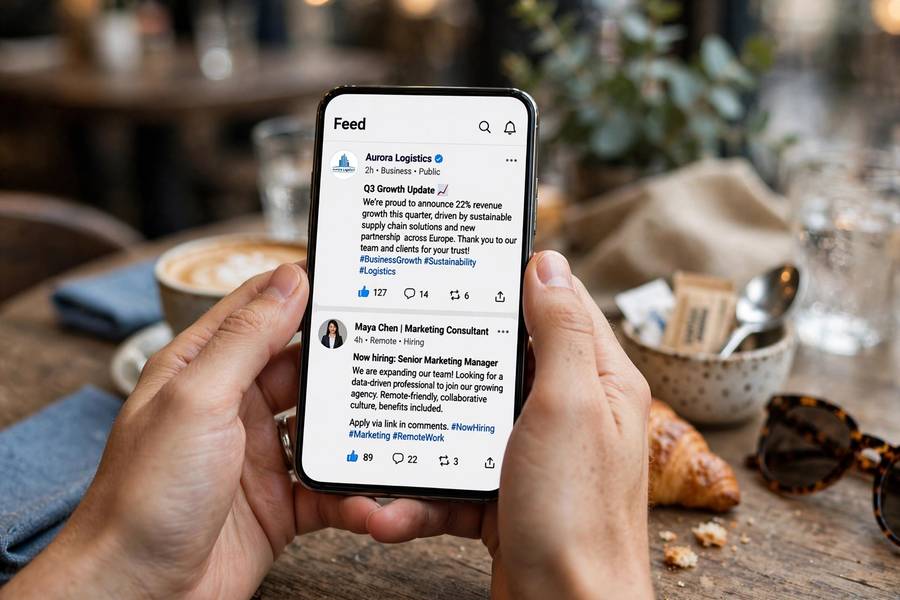
The One Platform Rule
Pick one primary platform. Master it. Ignore the rest until the first one produces customers.
I know this feels wrong. Every marketing blog screams “omnichannel presence.” But you’re not a marketing department — you’re an owner with limited hours. One platform done well (consistent posting, real engagement, actual strategy) outperforms five platforms done badly. Every time. I’ve never seen the reverse.
How to choose: ask your best customers where they spend time online. Not a survey of the internet — ask your customers, the ones who already pay you. Their answer is your answer. If you don’t have customers yet, look at where your closest competitors get engagement — not where they merely have accounts, but where people actually comment, share, and tag.
Commit for 90 days. Post consistently (3–5 times per week minimum on most platforms), engage genuinely with others’ content, and track whether it produces inquiries. Then decide with data, not feelings.
Facebook Still the Local Workhorse
Unfashionable, undeniably effective. Facebook remains the highest-ROI social platform for most local small businesses, and it’s not close.
Why it works: the user base skews toward people with money to spend (25–55+), local community groups are incredibly active, and the advertising platform offers the best small-budget targeting in existence. A $10/day Facebook ad targeted to a 10-mile radius around your business will outperform most other paid options dollar for dollar.
Best for: local services, restaurants, retail, home services, anything community-oriented, businesses targeting 30+ demographics.
How to use it: a complete business page (hours, services, photos, reviews enabled), active participation in local community groups (as a helpful member, not a spammer), customer reviews actively requested, and modest paid boosts on your best organic posts. Facebook Events for anything in-person — workshops, sales, openings.
The catch: organic reach for business pages is minimal — single-digit percentages of your followers see posts. Treat the page as a credibility landing pad and use groups plus paid for actual reach. Don’t take it personally; it’s the business model.
Instagram for Visual Businesses
If your product or service is visual, Instagram is probably your platform. If it isn’t, Instagram is probably a time sink.
Why it works: it’s where discovery happens for visual categories — people browse Instagram the way they used to browse magazines. Reels get meaningful organic reach (unlike Facebook page posts), Stories build behind-the-scenes connection, and the shopping features shorten the path from seeing to buying.
Best for: food and beverage, fashion, beauty, fitness, home decor, photography, travel, handmade goods, restaurants — anything where a photo sells.
How to use it: Reels 3–4x per week (short, authentic, showing process/results/transformation), Stories daily (polls, questions, behind-the-scenes — the casual stuff builds trust), a grid that looks intentional when someone checks you out, and location tags plus relevant hashtags on every post. Respond to every comment and DM quickly — responsiveness converts followers to customers.
The catch: it’s a content treadmill. The algorithm rewards volume and consistency, which means real ongoing effort. Product businesses can batch-create content; service businesses need to get comfortable on camera. If you won’t post video, skip Instagram — static posts alone won’t carry you anymore.
TikTok Reach With a Catch
TikTok offers something no other platform does: genuine organic reach for unknown accounts. A first-time poster can hit 10,000 views. That doesn’t happen on Instagram or Facebook anymore.
Why it works: the algorithm shows content based on interest, not follower count. Good content gets distributed regardless of account size. For businesses that can make entertaining or educational short video, the growth ceiling is the highest of any platform.
Best for: businesses targeting under-35 customers, products with visual appeal or satisfying processes, founders comfortable on camera, local businesses doing creative content (restaurant kitchens, salon transformations, workshop builds).
How to use it: post 1–2x daily if serious (the volume game is real here), hook in the first 2 seconds, show process/transformation/results, use trending sounds where natural, and always include a clear next step. Educational “how it’s done” content consistently outperforms pure promotion.
The catch: the audience skews young with less spending power, views don’t equal customers (viral videos from across the country don’t help a local shop), and the content demand is relentless. Also factor in the platform’s uncertain regulatory future in some markets — don’t build your only marketing asset on rented land with political risk.
My honest take: TikTok is the best reach tool and a mediocre sales tool for most small businesses. Use it for awareness if your demographic fits; don’t expect it to carry revenue alone.
LinkedIn for B2B
If you sell to businesses, LinkedIn isn’t optional — it’s where your buyers are, in professional mode, thinking about work problems.
Why it works: it’s the only major platform where business content is the point, not an interruption. Decision-makers actually read posts, join discussions, and respond to thoughtful outreach. Organic reach for personal profiles (not company pages) remains genuinely good.
Best for: B2B services, consultants, agencies, coaches, commercial services, anyone selling to professionals or business owners.
How to use it: post from your personal profile 3–5x per week (insights, lessons, contrarian takes on your industry — not company announcements), engage thoughtfully on prospects’ and peers’ posts, use direct messages for warm outreach after engaging publicly first, and keep the company page as a credibility placeholder. LinkedIn’s publishing/newsletter features extend reach further.
The catch: it’s slow. LinkedIn rewards consistency over months, not viral moments. And the “broetry” style — overwrought personal stories with line breaks — is played out; straightforward professional insight performs better now. Also: company pages get minimal reach, so the founder’s personal profile does the heavy lifting.

YouTube the Slow Compounding Giant
YouTube is the tortoise: slowest to start, most durable once built. Videos rank in Google search, get suggested for years, and build deeper trust than any short-form content.
Why it works: it’s the world’s second-largest search engine. “How to” and “best” searches with buying intent land on YouTube constantly. A video answering “how much does X cost” or “X vs Y” can generate leads for years after posting. No other social platform offers that longevity.
Best for: businesses with educational content potential — home services (“how to fix”), professional services (“explained”), products needing demonstration, local experts building authority.
How to use it: answer customer questions on camera, 5–15 minutes, clear titles matching search phrases. Optimize titles and descriptions for search, not just browse. Consistency matters more than production quality — a phone camera and good information beats a studio and fluff.
The catch: expect 6–12 months before meaningful traction. The algorithm needs data, and production takes longer than other platforms. This is a long game — start it as your second channel while a faster platform handles immediate needs.
Pinterest the Quiet Sales Driver
Pinterest gets ignored in most “best platforms” lists, which is exactly why it’s an opportunity. It’s not social media — it’s a visual search engine where users plan purchases.
Why it works: users come with buying intent — planning weddings, renovations, wardrobes, holidays. Content has an extraordinarily long shelf life (pins drive traffic for years), and the audience skews toward household purchase decision-makers.
Best for: wedding industry, home decor and renovation, fashion, food/recipe businesses, DIY and crafts, event planning, real estate staging — anything people plan and pin.
How to use it: create vertical pins linking to your site (blog posts, product pages, galleries), keyword-optimize pin titles and descriptions like search, pin consistently (tools can schedule), and enable rich pins for products. Think SEO with pictures.
The catch: it’s useless for services without visual output and for B2B. And like YouTube, it compounds slowly — give it 4–6 months.
X and the Rest
X (Twitter): still relevant for tech, media, finance, and real-time commentary businesses. For most local small businesses, skip it — the audience isn’t there in buying mode and the effort-to-return ratio is poor.
Threads: Meta’s text platform — early days, uncertain business value. Watch, don’t invest yet.
Snapchat: relevant only if your customers are under 25 and local. Niche, but real for certain youth-oriented businesses.
Nextdoor: underrated for hyperlocal services — plumbers, electricians, lawn care, babysitters. Neighbors recommending neighbors is powerful. Claim your business page and encourage reviews; it’s low effort for real local visibility.
The pattern: most businesses need exactly one primary platform plus maybe one secondary. The rest is noise.
Where Not to Bother
Just as important as where to be:
Don’t be where your customers aren’t. A B2B consultancy on TikTok, a plumber perfecting Instagram aesthetics while ignoring Google reviews — mismatch is the most common social media waste I see.
Don’t be everywhere thinly. Five dead accounts look worse than one active one. Prospects check your socials before buying; an abandoned profile with the last post from 2023 signals a dead business.
Don’t do social instead of fundamentals. A beautiful Instagram with no Google reviews, no email list, and no website conversion path is decoration. Social amplifies a working business; it doesn’t substitute for one.
Don’t outsource your voice too early. Agencies can execute, but your authentic voice — the founder’s perspective — is the actual asset on social. Keep it personal until the channel is proven, then systematize.
Metrics That Matter vs Vanity Numbers
Track these: profile visits, website clicks, DMs/inquiries, and customers attributed. That’s the funnel from social to revenue. Ask every new customer how they found you and log it.
Ignore these: follower count, likes, impressions, reach, engagement rate in isolation. A million views from the wrong audience is worth less than a hundred views from buyers. I’ve seen accounts with 200 followers generating real revenue and accounts with 200,000 generating nothing.
The 90-day test: after three months of consistent effort on one platform, you should be able to point to specific customers or qualified inquiries it produced. If you can’t, either the platform is wrong for your business or the execution is wrong — diagnose honestly, then switch platforms or fix execution. Don’t just keep posting hopefully.
Social media is a tool, not a strategy. Pick the one platform where your buyers are, show up consistently with genuinely useful content, measure customers not followers, and give it a real 90 days. That’s the whole game — and it’s winnable.
Social posts work hardest inside a real content system — see what content marketing actually covers beyond the buzzword.
Frequently Asked Questions
It depends on your customers: Facebook for local businesses and 30+ demographics, Instagram for visual products, LinkedIn for B2B, TikTok for under-35 reach, YouTube for long-term search traffic, Pinterest for planning-driven purchases. Pick one where your buyers already are.
Start with one. Master it for 90 days, then consider adding a second. One platform done well consistently outperforms five done badly — and abandoned profiles actively hurt credibility with prospects who check them.
TikTok offers unmatched organic reach, but views don’t equal customers — especially for local businesses whose viral audience is nationwide. It’s a strong awareness tool if your customers are under 35, but a weak primary sales channel for most small businesses.
Aim for 3–5 quality posts per week on most platforms, daily Stories on Instagram, and 1–2x daily on TikTok if you’re serious there. Consistency over 90 days matters far more than any specific frequency — the algorithm rewards reliability.
Track the funnel to revenue: profile visits, website clicks, DMs and inquiries, and customers attributed per platform. Ask every new customer how they found you. Ignore vanity metrics like followers and likes — they don’t pay rent.