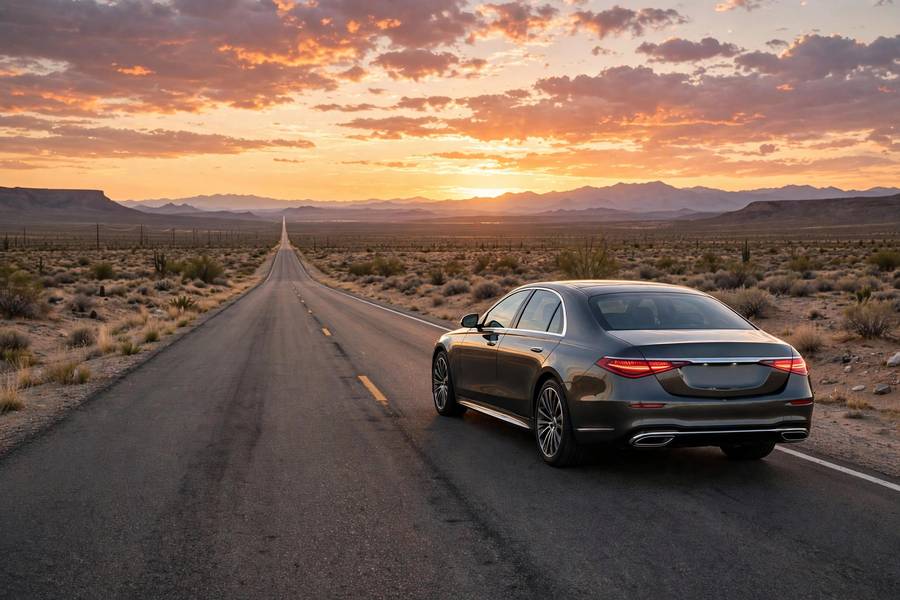
The most comfortable luxury cars for long drives aren’t decided by 20-minute test drives — they’re decided at hour six, when your back either thanks you or files a complaint. I’ve done enough long hauls (and heard enough customer road-trip reports) to know that comfort is a science: seats, ride, noise, ergonomics, and driver assistance all compound over distance.
Here’s what actually matters on long drives, and the cars that do it best.
Contents
- What Causes Fatigue on Long Drives
- The 5 Pillars of Long-Drive Comfort
- 1 Mercedes-Benz S-Class
- 2 Rolls-Royce Phantom and Ghost
- 3 BMW 7 Series (i7 Especially)
- 4 Genesis G90
- 5 Lexus LS 500h
- 6 Range Rover Autobiography
- 7 Audi A8 L
- 8 Cadillac Escalade (Super Cruise)
- SUV vs Sedan for Long Drives
- How to Make Any Car More Comfortable on Road Trips
What Causes Fatigue on Long Drives
Before the cars, the physiology — because comfort features only make sense when you know what they’re fighting:
- Vibration. Constant micro-vibration from road and engine tires muscles and dulls nerves. The quieter and smoother the car, the later fatigue sets in.
- Noise. Wind and road noise force your brain to work harder — it’s low-grade stress for hours. Studies show noise significantly increases driver fatigue.
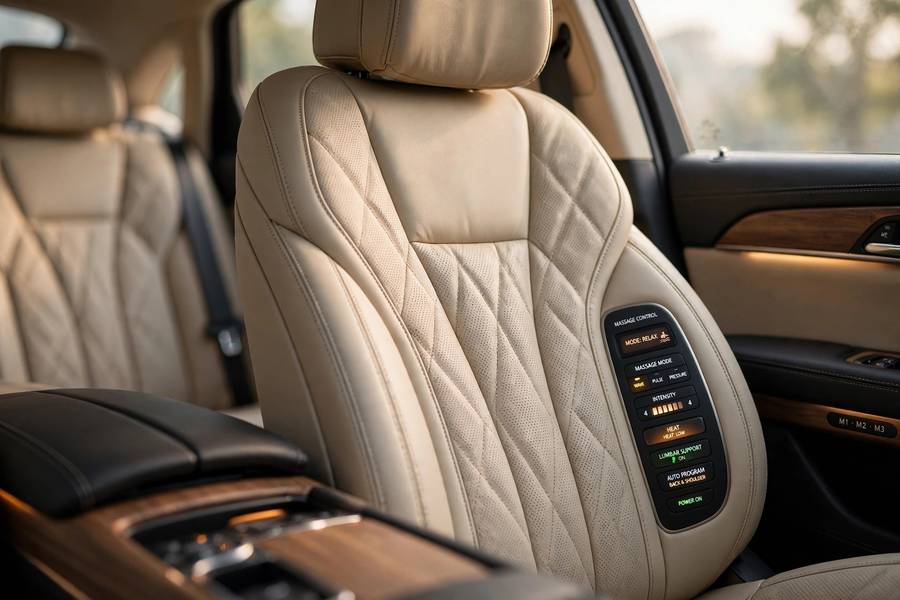
- Poor seating. Pressure points cut circulation; bad lumbar support strains the lower back; wrong seat angle loads the neck. After 4+ hours, small seat flaws become big pain.
- Mental load. Constant steering corrections, speed management, and traffic awareness drain you. Good driver assists offload this dramatically.
- Climate and air quality. Stuffy cabins, bad temperature control, and poor air filtration cause drowsiness and headaches.
The best long-drive cars attack all five simultaneously. That’s what separates them from cars that are merely “comfortable” around town.
The 5 Pillars of Long-Drive Comfort
My scoring framework:
- Seats — support, adjustability, massage, ventilation. The #1 factor.
- Ride and isolation — how well the car erases the road.
- Quietness — sustained low noise levels.
- Driver assistance — adaptive cruise, lane centering, and how naturally they work.
- Ergonomics and space — driving position, visibility, stretch room.
1 Mercedes-Benz S-Class
The S-Class is the long-drive benchmark — it has been for decades, and the current car extends the lead.
Seats: The Executive Rear Seat and multicontour front seats offer more adjustments than you’ll ever use, hot-stone-style massage, and ventilation that actually works. The seat kinematics — the way the bolsters and lumbar move with you — prevent the pressure-point fatigue that ruins long drives.
Ride: E-Active Body Control scans the road and prepares the suspension. Expansion joints, broken pavement, speed humps — all erased. It’s the closest thing to not driving at all.
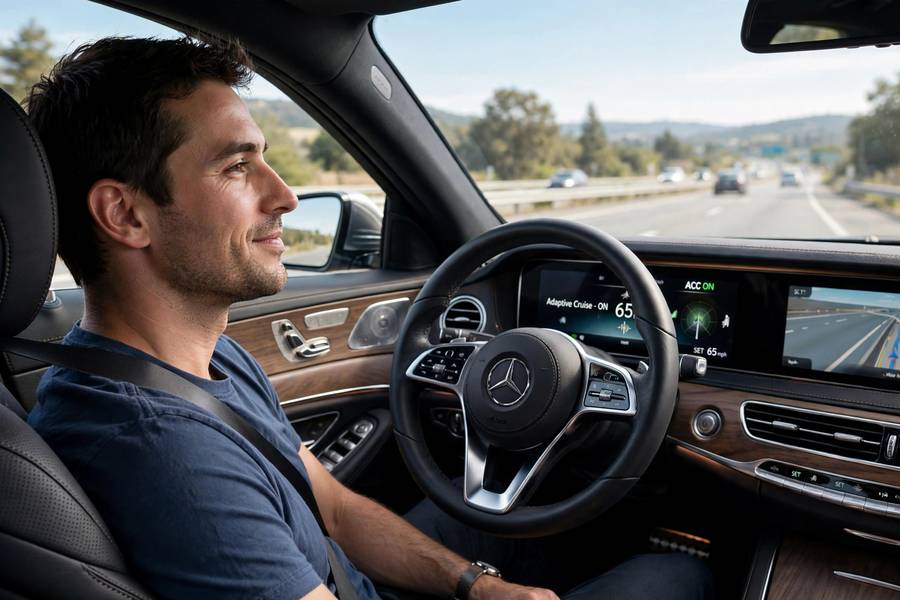
Assistance: Distronic adaptive cruise with lane centering is the most natural in the business — smooth, confident, and trustworthy enough that you genuinely relax. Drive Pilot (where legal) goes further.
The verdict: At hour eight, the S-Class driver is fresher than any other car’s driver. It’s not close.
2 Rolls-Royce Phantom and Ghost
The Phantom is the most serene long-drive car — silence so complete it’s almost disorienting, seats like armchairs, and a ride that makes highways feel like they were repaved overnight.
Why #2 and not #1? Two reasons: the driver assistance tech lags Mercedes (Rolls doesn’t chase autonomy), and the Phantom’s sheer size makes it less effortless in traffic and tight spots. On an open highway, nothing beats it. In the real world of construction zones and rest stops, the S-Class’s tech advantage matters.
The Ghost is the driver’s alternative — 90% of the Phantom’s serenity in a more manageable package.
3 BMW 7 Series (i7 Especially)
The i7 xDrive60 might be the best long-drive EV on sale. Electric silence + BMW’s excellent seats + a genuinely good highway ride + the theater screen for passengers = a superb road-trip machine.
The Executive Lounge rear seating (reclining with footrest) transforms the back into a first-class cabin. The standard 7 Series is excellent too, but the i7’s electric refinement — no engine vibration, no gearshifts, near-silent running — gives it the edge for distance comfort.
BMW’s Highway Assistant (hands-free at highway speeds) is very good — not quite Mercedes-natural, but close enough that fatigue reduction is real.
4 Genesis G90
The value pick that embarrasses cars costing twice as much. The G90’s seats — quilted Nappa, 22-way adjustment, massage — are genuinely excellent, not “excellent for the price.” The ride on the air suspension is serene, the cabin is quiet, and the Highway Driving Assist 2 is competent.
What you give up vs. the S-Class: the last 10% of ride sophistication, the ultimate seat adjustability, and the most polished driver assists. What you keep: $30,000+ and 90% of the comfort. For the money, it’s the smartest long-drive buy here.
5 Lexus LS 500h
The hybrid LS is the relaxing choice. The hybrid powertrain is whisper-quiet in EV mode around town and smooth on the highway, the seats are superb (Lexus understands long-distance ergonomics), and the cabin is library-quiet.
It’s less technologically advanced than the Germans — the driver assists are competent but not class-leading — but the fundamental comfort (seats, quiet, ride) is outstanding. And the knowledge that it’ll do this for 200,000 miles without drama is its own kind of comfort.
6 Range Rover Autobiography
The best long-drive SUV here. The commanding driving position reduces fatigue in itself (better visibility = less mental load), the air suspension ride is superb, and the Autobiography’s executive rear seating is first-class.
SUVs inherently have more wind noise and a higher center of gravity than sedans, so it can’t match the S-Class’s serenity. But for drivers who prefer the SUV position — easier entry/exit, better view — the Range Rover is the comfort king of the segment.
7 Audi A8 L
The A8 L’s long wheelbase gives it limousine rear space, the cabin is beautifully quiet, and the available foot massage for rear passengers is unique and wonderful on long trips.
It ranks here on fundamentals rather than tech — the driver assists and infotainment are aging. But the core comfort (space, quiet, seats, ride) remains excellent, and used A8 Ls are outstanding value — depreciation has been kind to buyers.
8 Cadillac Escalade (Super Cruise)
The wildcard. The Escalade isn’t the quietest or smoothest here, but Super Cruise — GM’s hands-free highway driving system — is the best in America for long highway stretches. On mapped highways, you genuinely drive hands-free for hours, and the fatigue reduction is enormous.
Combined with the massive interior, excellent AKG audio, and magnetic ride control, the Escalade is the best American road-trip vehicle. It’s not European-serene, but for cross-country highway cruising with Super Cruise engaged, it’s deeply compelling — and far cheaper than the Europeans.
SUV vs Sedan for Long Drives
The eternal question:
Sedans win on: quietness (lower, sleeker = less wind noise), ride sophistication, fuel efficiency, and ease of driving (lower center of gravity = less body motion).
SUVs win on: seating position (easier entry/exit, better visibility), interior space, and versatility (cargo for the trip).
My take: For pure comfort on long highway drives, a luxury sedan beats a luxury SUV at the same price. The physics favor it. But if you have mobility issues, carry lots of gear, or just prefer sitting high, the comfort gap is small enough that preference wins — get the Range Rover or Escalade and enjoy the view.
How to Make Any Car More Comfortable on Road Trips
Whatever you drive, these help enormously:
- Tire pressure to spec — wrong pressure ruins ride and increases noise. Check cold before the trip.
- Good tires matter more than you think — touring tires (not sport tires) transform highway comfort. Quieter, smoother, longer-lasting.
- Lumbar support — if your car lacks adjustable lumbar, a $30 cushion is the best comfort investment possible.
- Stop every 2 hours — walk for 5 minutes. No car defeats biology; circulation needs movement.
- Sunglasses and sunshade — eye strain is sneaky fatigue. Polarized lenses for day driving.
- Audiobooks/podcasts over music — engaged listening keeps the brain alert better than background music on very long drives.
- Climate at 68–72°F — too warm causes drowsiness; too cold causes tension.
- Seat position check — most people sit too far from the pedals or recline too much. Slight bend in the knees, back supported, wheel close enough that shoulders stay on the seatback.
The car matters enormously — but the driver setup matters too. The most comfortable luxury sedan with a bad seating position still hurts at hour six.
For the complete luxury picture, see most luxurious cars and most luxurious sedans 2026 for the sedan rankings. The mechanical side — including how drivetrains affect highway cruising — is in AWD vs 4WD explained.
Frequently Asked Questions
The Mercedes-Benz S-Class — best seats, E-Active Body Control ride, superb quietness, and the most natural driver assists. The Rolls-Royce Phantom is more serene but less technologically assisted; the BMW i7 is the best electric option.
Sedans — lower wind noise, better ride sophistication, and less body motion favor sedans at the same price. SUVs win on seating position, visibility, and space. For pure highway comfort, choose the sedan; for versatility, the SUV gap is small.
Seats (support, adjustability, massage) matter most, followed by ride quality, cabin quietness, driver assistance (adaptive cruise + lane centering), and ergonomics. Good tires and correct pressure matter more than most buyers realize.
Yes — excellent seats, serene air-suspension ride, quiet cabin, and competent highway assist at $30,000+ less than German rivals. It delivers about 90% of the S-Class long-drive experience for significantly less money.
Stop every 2 hours to walk, set tire pressure correctly, use lumbar support, keep the cabin cool (68–72°F), wear polarized sunglasses, and use adaptive cruise/lane centering to reduce mental load. No car defeats biology — movement breaks are essential.