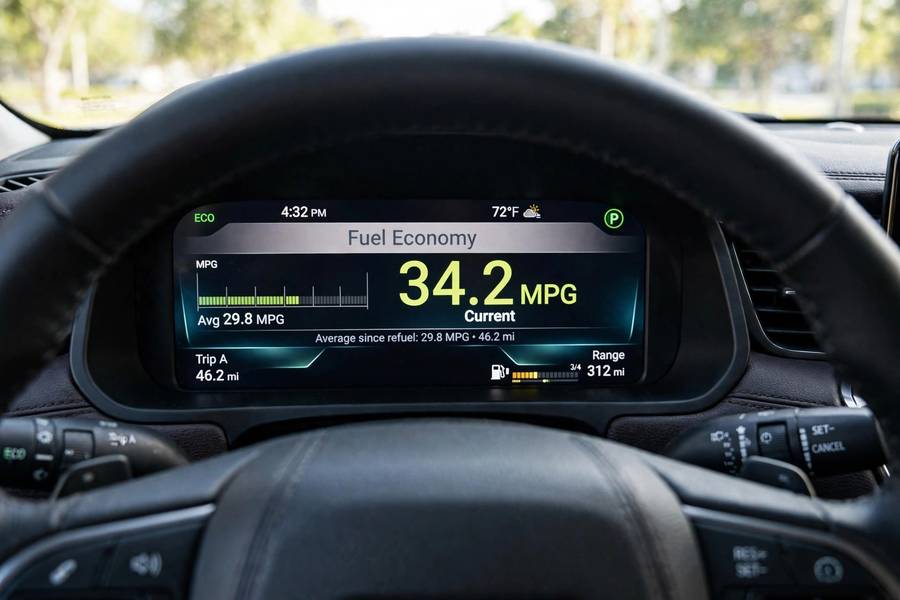
Every few months, a customer slides a printout across my counter — some forum thread claiming a miracle spark plug gained them 4 MPG. And every few months, I give the same answer, which I’ll give you straight: no spark plug on the market will improve your fuel economy beyond what your engine got with fresh factory plugs. Not iridium, not ruthenium, not the ones with the fancy box.
But here’s the part the miracle-plug crowd accidentally gets right: worn-out plugs absolutely destroy your fuel economy. The “best spark plug for fuel economy” isn’t a product — it’s a fresh, correctly-gapped, manufacturer-spec plug, installed on time. Let me show you the math and the mechanics, because the real story is more useful than the myth.
Contents
- The Honest Answer First
- How Worn Plugs Steal Your MPG
- What a Fresh Set Actually Recovers
- The “Right Plug” Rule for Economy
- Gapping: The Free MPG You’re Probably Missing
- What Moves the MPG Needle More Than Plugs
- My Shop Verdict

The Honest Answer First
Your engine was calibrated — fuel maps, ignition timing, everything — around a specific spark plug firing a specific way. When that plug is fresh and correct, combustion is as complete as the engineers could make it. There is no headroom for a “better” plug to improve on. The spark either ignites the mixture reliably or it doesn’t; there’s no “extra reliable” that burns fuel the engineers left on the table.
This is why every legitimate back-to-back test shows the same thing: fresh premium plugs vs. fresh standard plugs on a healthy stock engine produce no measurable MPG difference. The EPA doesn’t test with magic plugs. Fleet operators — who track fuel costs to the penny across thousands of vehicles — buy standard-spec plugs, not miracle plugs. If a $14 plug genuinely saved fuel, every taxi company on earth would run them.
So when someone reports big MPG gains from new plugs, what actually happened? Their old plugs were worn out. The gain came from replacing dead parts, and any fresh plug — the cheapest copper plug in the aisle — would have done the same thing.
How Worn Plugs Steal Your MPG
Here’s the mechanism, because it’s genuinely interesting. As electrodes erode, two things happen: the gap widens and the edges round off. Both make the spark’s job harder. The coil has to build higher voltage to jump the wider gap, and the rounded edges don’t concentrate the electric field as sharply.
The result is a weaker, less consistent spark. Some combustion cycles get a late or partial burn; under load, some cycles misfire outright. Every misfire is fuel that went in and came out unburned — straight out the exhaust, doing zero work. Your oxygen sensors see the unburned oxygen, the computer gets confused about the mixture, fuel trims drift, and the whole system runs slightly off.
The numbers: the U.S. Department of Energy has cited that a single misfiring spark plug can measurably cut fuel economy, and fleet data consistently shows worn plugs costing 2–5% in MPG — sometimes more on engines with wide plug gaps or weak coils. On a car getting 30 MPG, that’s 1–2 MPG vanishing into thin air. Over a year of driving, that’s real money — far more than the cost of the plugs themselves.
The cruel part is how gradual it is. Plugs don’t fail overnight; they degrade over tens of thousands of miles. You don’t notice losing half an MPG this month and half next month. You just vaguely feel the car isn’t as peppy as it used to be, and you blame the gas, the weather, the tires. Then you change the plugs and suddenly the car feels new — and you credit the plug brand instead of the simple fact that they’re fresh.
What a Fresh Set Actually Recovers
Let me set expectations honestly. If your plugs are at 100,000 miles on a 100,000-mile interval, a fresh set typically recovers 1–3 MPG — basically, it gives you back what erosion stole. If your plugs were genuinely misfiring, the recovery can be dramatic: I’ve seen cars gain 4+ MPG when a dead plug was replaced, because a dead cylinder is catastrophic for economy.
But if your plugs were changed 20,000 miles ago and running fine, new plugs will do nothing for your MPG. Zero. The engine is already combusting properly; there’s nothing to recover. Anyone selling you plugs as a fuel-economy upgrade for a well-maintained car is selling you a feeling, not fuel savings.
The real economy play is interval discipline: change plugs on schedule, before wear costs you money. A $50 set of plugs that prevents a year of 3% worse economy pays for itself several times over in fuel alone — and that’s before you count the ignition coils you’re saving from overwork.

The “Right Plug” Rule for Economy
If you want the best fuel economy your engine can deliver, the answer is the plug your manufacturer specified. Full stop.
I’ve diagnosed economy complaints caused by “upgraded” plugs more than once. The typical story: someone installs fancy multi-electrode plugs, the engine’s computer can’t quite adapt to the different spark characteristics, fuel trims drift, and MPG drops 1–2. They come in complaining about economy, I put the factory plugs back in, and the numbers recover. The expensive plugs were the problem.
There’s one nuance worth knowing: some engines specify different plugs for different markets or model years, and the “economy” calibration is part of that spec. If your manual lists a specific plug, that’s the one the economy figures were achieved with. Deviating is gambling against the engineers.
Gapping: The Free MPG You’re Probably Missing
If there’s one free fuel-economy move in the spark plug world, it’s this: check the gap on every new plug, even “pre-gapped” ones. I’ve measured enough out-of-spec new plugs to never trust the box.
An over-wide gap forces the coil to work harder and causes misfires under load — the exact mechanism that wastes fuel. An under-size gap gives a smaller, weaker flame kernel and slightly less complete combustion. Either way, you’re leaving economy on the table for want of a thirty-second check with a $5 gauge.
The spec is in your owner’s manual or on the under-hood emissions sticker — typically 0.028″ to 0.060″ depending on the engine. Slide the correct wire gauge between the electrodes; it should drag slightly. Adjust by carefully bending the ground electrode — never the center. Do it for every plug, every time. This single habit matters more for your MPG than the brand or material of the plug.
What Moves the MPG Needle More Than Plugs
Since we’re being honest about what actually saves fuel, here’s where the real gains live — each of these matters more than plug brand:
Tire pressure. The single biggest free gain. Under-inflated tires can cost 2–3% in economy, and most cars on the road are running low. Check monthly.
Air filter. A clogged filter chokes the engine and forces rich running. It’s a $15 part and a fifteen-minute job — how to change your engine air filter walks through it. I check the filter every time I see sooty plugs, because the two problems travel together.
Engine oil. Thicker, degraded oil increases internal friction. Fresh oil of the correct grade is worth a small but real amount — know how often to change your engine oil and don’t stretch it.
Driving habits. Smooth acceleration, steady speeds, and coasting to stops beat every part ever sold. Aggressive driving can cost 15–30% in economy. No plug fixes a heavy foot.
Weight and drag. Roof racks, open windows at highway speed, a trunk full of stuff you don’t need — all measurable.
Fresh plugs are on this list too — they’re just not at the top of it, and their contribution is “restore what was lost,” not “gain something new.” Keep perspective.
My Shop Verdict
The best spark plug for fuel economy is a fresh, correctly-gapped, manufacturer-spec plug, changed on schedule. That’s the entire secret. Everything else is marketing.
If your car is due for plugs, do the job — you’ll likely recover 1–3 MPG you didn’t know you’d lost, and you’ll protect your coils and catalytic converter in the bargain. If your plugs are fresh and you’re chasing better economy, look at your tires, your air filter, and your right foot before you look at the plug aisle.
And when you do the job, do it right: cold engine, hand-thread every plug, check every gap, torque to spec. The procedure is in my guide to how to change spark plugs — every lesson from ten years of doing this daily, including the mistakes that turn a $50 job into a $500 one.
Your engine’s best economy was engineered in at the factory. Fresh plugs just let it do what it was designed to do.

Frequently Asked Questions
New plugs restore fuel economy lost to worn plugs — typically 1–3 MPG — but no plug improves economy beyond what fresh factory-spec plugs deliver. Reported “gains” from premium plugs come from replacing worn parts; any fresh plug of the correct spec would do the same.
Yes. Worn electrodes and wide gaps produce weak, inconsistent sparks, causing partial burns and misfires — fuel that goes in unburned and out the exhaust. Worn plugs commonly cost 2–5% in fuel economy, sometimes more, and the loss is so gradual most drivers never notice it happening.
No — on a healthy stock engine, fresh iridium and fresh copper plugs of the correct spec deliver identical fuel economy. Iridium’s advantage is longevity (80,000–120,000 miles vs 20,000–30,000), not efficiency. Buy whatever your manufacturer specifies.
Yes. An over-wide gap causes misfires under load and wastes fuel; an under-size gap gives weaker combustion. Always check the gap on new plugs with a wire gauge — even “pre-gapped” plugs frequently arrive out of spec — and set it to your engine’s specified value.
Proper tire pressure, a clean air filter, fresh engine oil of the correct grade, and smooth driving habits each matter more than plug brand. Roof racks, excess weight, and aggressive driving cost far more fuel than any plug choice. Plugs restore lost economy; these items create real gains.