CVT vs DCT: Which Transmission Is Better for You?

Neither a CVT nor a DCT is objectively better — a CVT is the better pick if you want smoothness and fuel economy, while a DCT wins on shift speed and driver involvement. It’s a culture clash: one engineered for efficiency, the other for speed. Which kind of driver you are decides it. Here’s the full breakdown, updated for October 2026 with the latest reliability developments.
Quick refresher on the CVT side: my guide to what a CVT transmission is and how it works covers the belt-and-pulley system. The DCT — dual-clutch transmission — is a different animal entirely, and understanding both will make you a smarter car shopper.
How Does a DCT Actually Work?
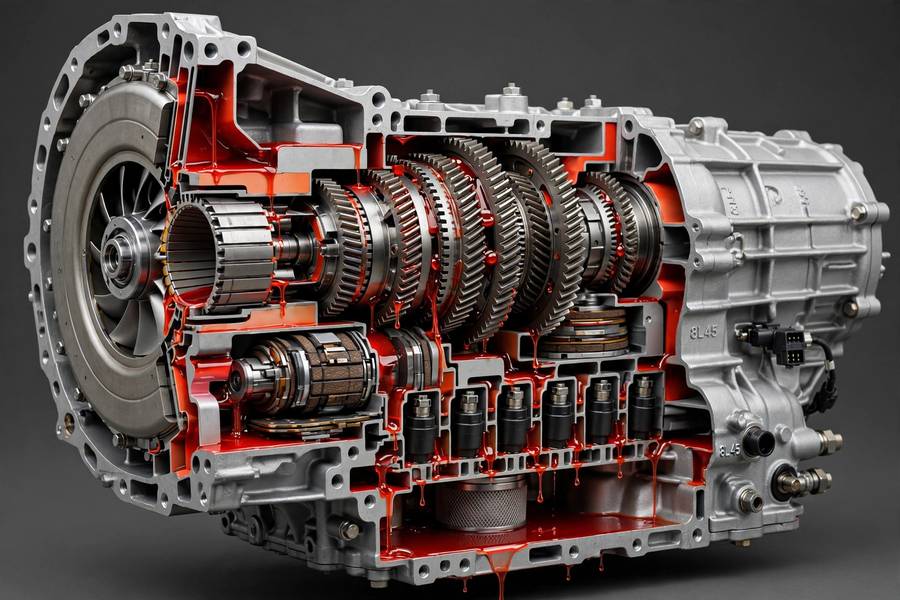
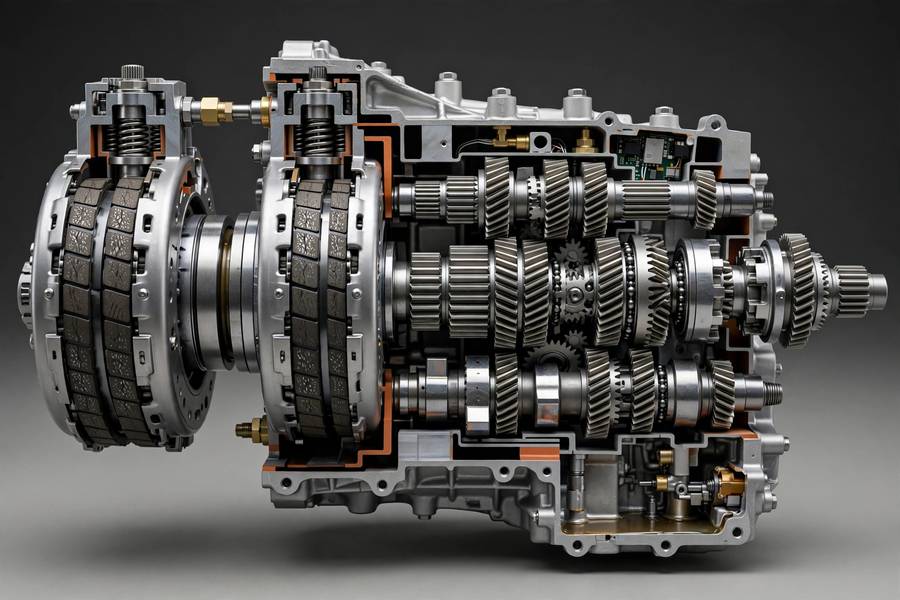
A dual-clutch transmission is essentially two manual gearboxes in one case. One clutch handles the odd gears (1, 3, 5, 7), the other handles the evens (2, 4, 6). While you’re accelerating in 3rd, 4th is already pre-selected on the other clutch — so the “shift” is just one clutch opening as the other closes. The result: gear changes in milliseconds, faster than any human with a manual and faster than most conventional automatics.
Unlike a CVT’s belt gliding through infinite ratios, a DCT has real, fixed gears — usually 6 to 8 of them. And unlike a conventional automatic’s torque converter, the DCT’s clutches give a direct mechanical connection, which is why it feels so responsive. Volkswagen’s DSG, Porsche’s PDK, Ford’s PowerShift (infamous), and Hyundai’s dry-clutch units are all DCTs.
So the philosophical difference: the CVT eliminates gears to be smooth; the DCT perfects gears to be fast.
How Do CVT and DCT Feel Different to Drive?
This is where the two couldn’t be more different.
The CVT is the appliance. You press the gas, the engine finds its efficient RPM, and the car glides. It’s calm, quiet, and utterly undramatic. In traffic, it’s wonderful. On a fun road, it’s forgettable.
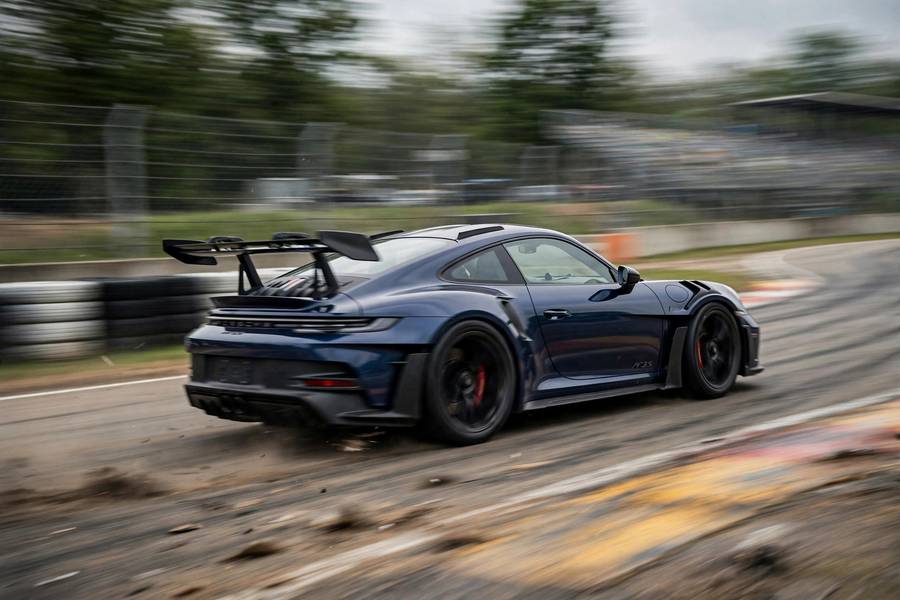
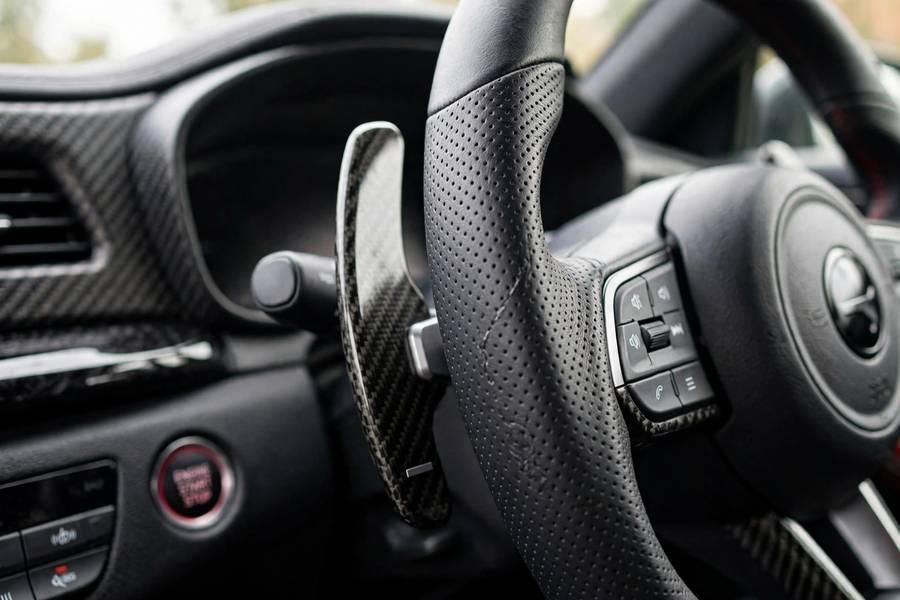
The DCT is the athlete. Shifts crack off with rifle-bolt speed, the engine note rises and falls through real gears, and paddle shifters give you genuine control — not the fake stepped ratios of a CVT’s sport mode. A good DCT (Porsche PDK, VW DSG) is one of the great driving experiences available in a modern car.
I’ll be honest about my bias: I find DCTs vastly more fun. But fun isn’t the only metric. My daily commute isn’t a racetrack, and there are days I wish my project car’s gearbox would just shut up and glide me through traffic. Different tools, different jobs.
Which Shifts Faster: CVT or DCT?
There’s no contest here. A good DCT shifts in 8–20 milliseconds. A CVT doesn’t shift at all — which is technically “faster” but misses the point. The DCT’s party trick is delivering the engagement of gear changes at speeds no human or conventional automatic can match.
This matters for performance driving: track days, mountain roads, anywhere you’re working the gearbox. The DCT keeps the engine in its power band with zero interruption to acceleration. A CVT in the same scenario just drones at peak-power RPM — effective, but joyless.
For normal driving, though, shift speed is irrelevant. Your commute doesn’t care whether gears change in 10 milliseconds or whether there are no gears at all.
Which Is More Fuel-Efficient: CVT or DCT?
The CVT wins on efficiency — but the gap is smaller than the marketing suggests. Here’s why:
- The CVT’s advantage is the infinite-ratio trick: always at the ideal engine RPM. Real-world gain over a conventional automatic: 5–10%.
- The DCT’s advantage is mechanical efficiency: the direct clutch connection wastes less energy than a torque converter. A DCT is typically 3–5% more efficient than an equivalent torque-converter automatic.
- Net result: the CVT usually beats the DCT by a few percent in mixed driving. On the highway, where both are locked in their tallest ratio, the difference nearly vanishes.
If you’re choosing between these two for fuel savings, the CVT wins — but we’re talking 1–2 mpg in most real-world comparisons, not a revolution.
Which Is More Reliable: CVT or DCT?
This is where it gets interesting, because both have checkered pasts:
CVT reliability is brand-dependent. Honda and Toyota CVTs are excellent; early Nissan Jatco units were terrible. The maintenance demand is consistent though: fluid changes every 30,000–50,000 miles, no exceptions.
DCT reliability is design-dependent. Wet-clutch DCTs (VW DSG with wet clutches, Porsche PDK) are generally robust — the oil bath keeps the clutches cool and happy. Dry-clutch DCTs are the problem children: Ford’s PowerShift fiasco (shuddering, lawsuits, buybacks) and early Hyundai/Kia dry-clutch units showed that dry clutches in stop-and-go traffic overheat and wear prematurely.
The maintenance picture: DCTs need their own specialized fluid and filter services (typically every 40,000 miles for DSG-type units), and clutch pack replacement on a worn DCT is expensive — often $2,000–$4,000. CVT fluid services are cheaper per visit but needed slightly more often.
My take: a wet-clutch DCT from a good manufacturer is as reliable as a good CVT. A dry-clutch DCT in heavy traffic is the least reliable option on this page. Know which type you’re buying.
Which Costs More to Buy and Repair: CVT or DCT?
- Purchase price: DCTs typically appear in sportier, pricier models — you’re paying for performance hardware. CVTs appear in mainstream economy cars. The transmission itself isn’t the whole price difference, but DCT-equipped cars generally cost more.
- Routine maintenance: Comparable. DCT fluid service runs $300–$500 at a dealer; CVT drain-and-fill runs $150–$400. Both need it regularly.
- Major repair: A DCT clutch pack job: $2,000–$4,000. A full DCT replacement: $4,000–$8,000+. A CVT replacement: $3,500–$7,500. Nobody wins here — both are expensive when they fail.
- The used-market angle: Used cars with questionable DCTs (early Ford PowerShift, I’m looking at you) sell at steep discounts for a reason. Same logic as risky CVTs: the market prices in the risk.
How Do CVT and DCT Behave in Traffic?
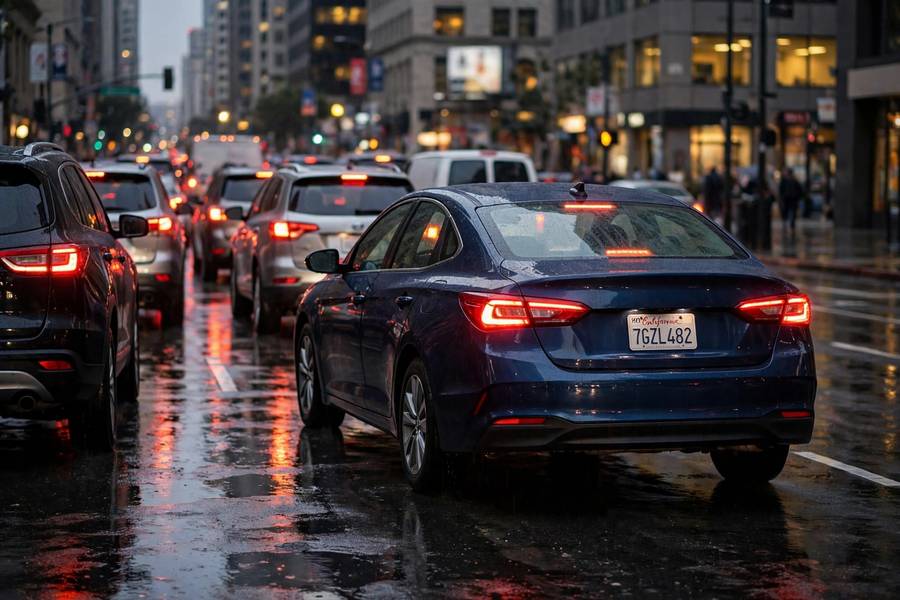
Here’s the DCT’s dirty secret: at parking-lot speeds, many DCTs are jerky, hesitant, and unpleasant. The clutches that shift brilliantly at speed struggle with the creep-and-stop of traffic — slipping a clutch at 3 mph is inherently awkward. Dry-clutch DCTs are worst; wet-clutch units are better but still not as smooth as a torque converter.
The CVT, meanwhile, is in its element at low speed. No clutches to slip, no gears to hunt — just smooth, stepless creep. If your life is 80% traffic jams, the CVT isn’t just more comfortable, it’s dramatically so.
This single factor decides the comparison for a huge number of buyers. Be honest about your driving: how much of it is stop-and-go?
CVT vs DCT in 2026: What’s New
The reliability picture kept moving in 2026. Hyundai dropped its 8-speed dual-clutch from the 2026 Santa Fe — switching to a conventional 8-speed automatic — after control-unit issues, while Kia kept the same DCT in the Sorento. On the CVT side, Nissan’s July 2026 recalls (campaigns PD198/PD199) covered 2026 Rogue CVT control-valve switches, and Honda is making CVTs feel more traditional: the 2026 Civic hybrid’s S+ Shift simulates gear changes over its e-CVT powertrain. Meanwhile DCTs are expanding in hybrids — the 2026 Hyundai Elantra Hybrid and the Kia Seltos Hybrid both pair electrified powertrains with a 6-speed DCT. The lesson of 2026: execution matters more than the technology badge. Check the specific model year’s record, not just the transmission type.
CVT or DCT: Which One Should You Choose?
Choose the CVT if: you prioritize fuel economy and comfort, your driving is mostly commuting and traffic, you want the smoothest possible experience, and you’re buying a mainstream sedan, compact SUV, or hybrid. Pair it with diligent fluid maintenance and it’ll serve you well.
Choose the DCT if: you enjoy driving and want engagement, you drive winding roads or do track days, shift speed and responsiveness matter to you, and you’re buying something sporty — a GTI, a Veloster N, a Porsche. Just make sure it’s a wet-clutch design if you’ll see traffic.
Avoid the DCT if: your commute is pure stop-and-go and you’re looking at a dry-clutch unit. That’s the worst combination in this entire comparison.
And if you’re cross-shopping performance cars generally, my roundup of the most affordable sports cars you can buy will give you a sense of what’s out there with each transmission type.
What I Tell Customers at Test-Drive Time
Spec sheets don’t tell you which transmission you’ll still like in year three. Your right foot does. When a customer asks me to settle a CVT-vs-DCT choice between two cars, I give them my ten-minute test-drive script — it’s never failed to produce a verdict.
Minutes one to three: the parking-lot crawl. Inch forward at traffic speed, stop, creep again. This is where the DCT shows its cards. If the car lurches or hesitates off the line, ask yourself: am I willing to feel this at every stoplight for five years? A CVT will be boring here. Boring is underrated.
Minute four: the merge ramp. Foot flat, up to highway speed. The CVT will hold high RPMs and sound like it’s thinking about it — the famous rubber-band drone. Some people tune it out in a week; some want to set the car on fire by month two. You need to know which one you are, and there’s no other way to find out.
Minutes five to eight: rolling stops and hill starts. DCT cars can roll back on hills and stutter through rolling stops in a way that feels like a mistake. The DCT’s shifts should feel snappy and mechanical when you’re actually moving — that’s what you’re paying for. If the paddles feel disconnected or the shifts feel lazy, that particular DCT isn’t the good kind.
Last two minutes: your actual commute. Literally drive a stretch of your daily route. Nobody buys a transmission — they buy how the car feels on a Tuesday morning. The right choice is the one you stopped thinking about by minute nine. If you’re still annoyed at minute ten, no spec sheet will fix that.
Frequently Asked Questions
What is the difference between CVT and DCT?
A CVT uses a belt and variable pulleys for infinite gear ratios with no shifting. A DCT uses two clutches and fixed gears for lightning-fast shifts. CVTs prioritize smoothness and efficiency; DCTs prioritize speed and driver engagement.
Is DCT better than CVT?
For driving enjoyment and shift speed, yes — a good DCT is far more engaging. For comfort, smoothness in traffic, and fuel economy, the CVT wins. Neither is universally better; they serve different drivers.
Which lasts longer, CVT or DCT?
Both can last 150,000–200,000 miles with proper maintenance. Wet-clutch DCTs and Honda/Toyota CVTs are the most durable variants. Dry-clutch DCTs in heavy traffic and neglected CVTs are the least durable.
Do DCT transmissions have problems in traffic?
Many do — especially dry-clutch designs, which can shudder, hesitate, and overheat in stop-and-go traffic. Wet-clutch DCTs handle traffic better but still aren’t as smooth at crawling speeds as a CVT or torque-converter automatic.
Is a CVT or DCT better for fuel economy?
The CVT is slightly better — usually by 1–2 mpg in real-world driving — because it always holds the engine at its ideal RPM. The DCT is still efficient thanks to its direct clutch connection, just not quite as efficient as the CVT.