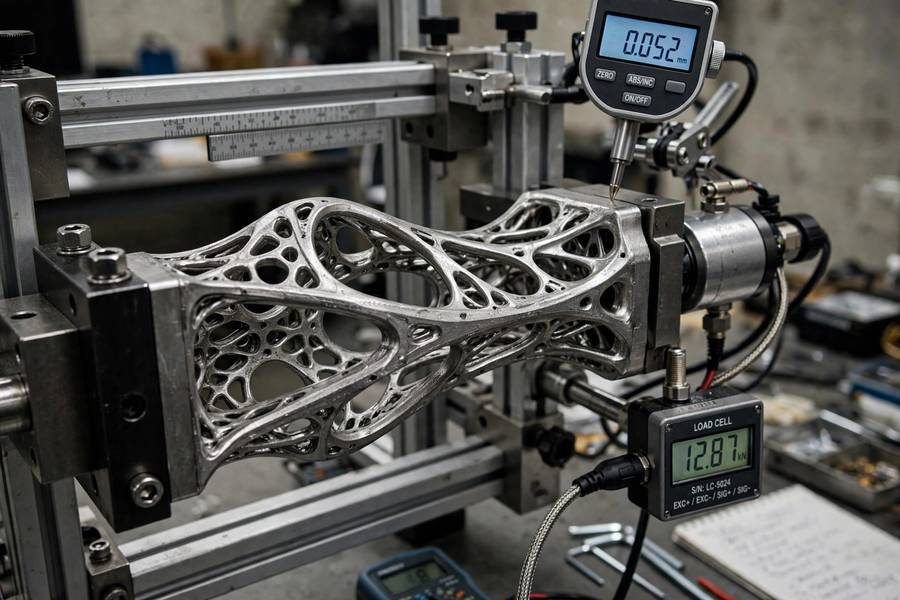
Examples tell you what’s possible. Case studies tell you what it cost. I’ve collected five projects — each with real numbers, real constraints, and at least one thing that went wrong — because the gap between the brochure and the build is where all the useful knowledge lives. These are the stories I’d tell a team before their first generative study, the ones that calibrate expectations. New to the field? Start with what generative design is.
Table of Contents
- Case 1: The Seat Bracket and the Forty Percent
- Case 2: The Partition That Paid for Itself
- Case 3: The Bridge That Had to Be Believed
- Case 4: The Office That Optimized People
- Case 5: The Study That Failed Honestly
- The Patterns Across All Five
- What I Tell Teams Before Their First Study
- Frequently Asked Questions
Case 1: The Seat Bracket and the Forty Percent
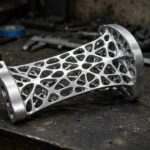
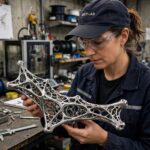
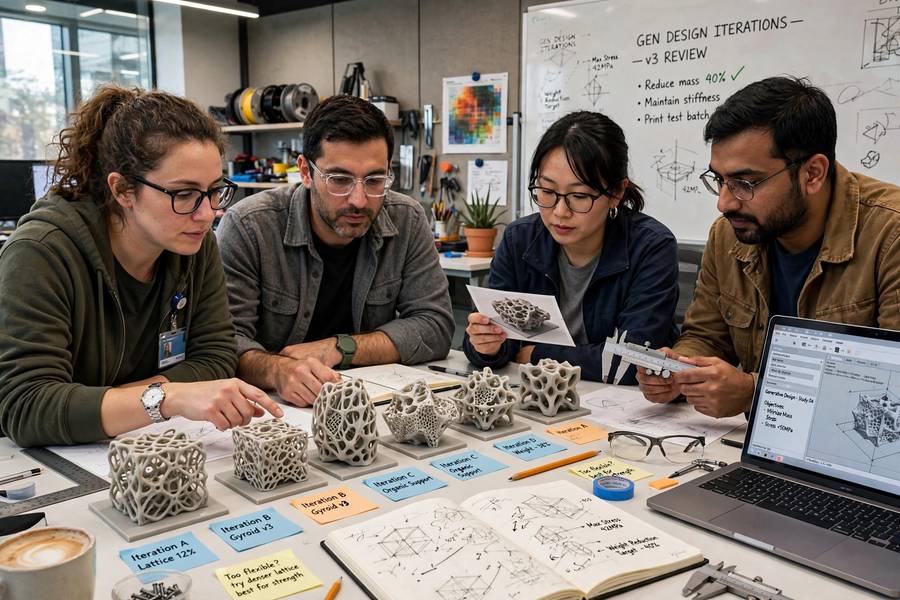
The project: a seat bracket for a production vehicle, redesigned with generative methods by Autodesk in collaboration with an automaker. The brief was straightforward — same loads, same attachment points, lighter and ideally cheaper. The study explored multiple materials and manufacturing methods, including additive manufacturing and casting.
The numbers: 40 percent lighter, 20 percent stronger than the original part. Those figures held up under physical testing, not just simulation. The optimized form was a single organic structure replacing a multi-piece assembly, which also reduced part count.
The lesson: the study succeeded because the problem was perfectly scoped. The loads were well understood, the interfaces were fixed, the manufacturing options were real. Nothing about the brief was vague, so nothing about the result was accidental. When people ask why this case gets cited everywhere, it’s not the percentages — it’s the discipline. This is what a generative study looks like when the inputs are honest.
The wrinkle: getting from the study result to a producible part took serious downstream work — rebuilding the geometry, validating the manufacturing process, qualifying the part. The 40 percent number describes the optimized concept. The shipped part kept most of it, but “most of it” required months of engineering nobody puts in the press release.
Case 2: The Partition That Paid for Itself
The project: the cabin partition in a commercial aircraft, separating passengers from crew rest areas. Airbus ran generative studies on this structure with a simple, brutal objective: lose weight without compromising safety or certification.
The numbers: 45 kilograms saved per aircraft. In aviation, weight is fuel burned every flight for decades. At fleet scale, 45 kilograms per plane translates into fuel savings that dwarf the engineering cost of the study within the first year of service. The business case didn’t need a spreadsheet debate; it was self-evident.
The lesson: the best generative design business cases are the ones where the objective function is money. Weight in aviation, material in high-volume manufacturing, energy in buildings — when the optimization target maps directly to dollars, nobody has to argue about ROI. The projects that struggle to justify themselves are the ones optimizing abstract “performance” with no price tag attached.
The wrinkle: certification. Aircraft parts live under the strictest regulatory regime in engineering. Every generative result had to survive scrutiny that conventional parts also face but that novel forms attract more of. The certification path was longer and more expensive than for a conventional redesign. It was worth it — 45 kilograms is 45 kilograms — but the regulatory overhead is a real cost that belongs in every aerospace generative business case.
Case 3: The Bridge That Had to Be Believed
The project: a pedestrian bridge in Amsterdam, designed with computational and generative methods and 3D printed by robotic arms. A real bridge, over a real canal, carrying real people, in one of the world’s most photographed cities.
The numbers: the bridge spans its canal, supports pedestrian loads with appropriate safety factors, and carries embedded sensors streaming structural data — strain, vibration, temperature — making it a living experiment in how generative structures age. The data feed is arguably as valuable as the bridge: long-term performance data on a novel structural form.
The lesson: public trust is a design constraint. A bracket can be weird-looking; nobody sees it. A bridge over a canal is a civic object, and its novel form had to be believed by engineers, regulators, and the public. The project succeeded partly because the team treated trust as a deliverable — extensive testing, transparent data, conservative safety margins. The technology was ready before the trust was; building the trust was the actual project.
The wrinkle: cost and time. A conventional pedestrian bridge would have been cheaper and faster. The MX3D bridge was a research project wearing a bridge costume, and its economics don’t generalize. Anyone citing it as proof that generative bridges are cost-competitive is misreading the case. It’s proof that they’re possible and that the public will walk on them — which is valuable, but different.
Case 4: The Office That Optimized People
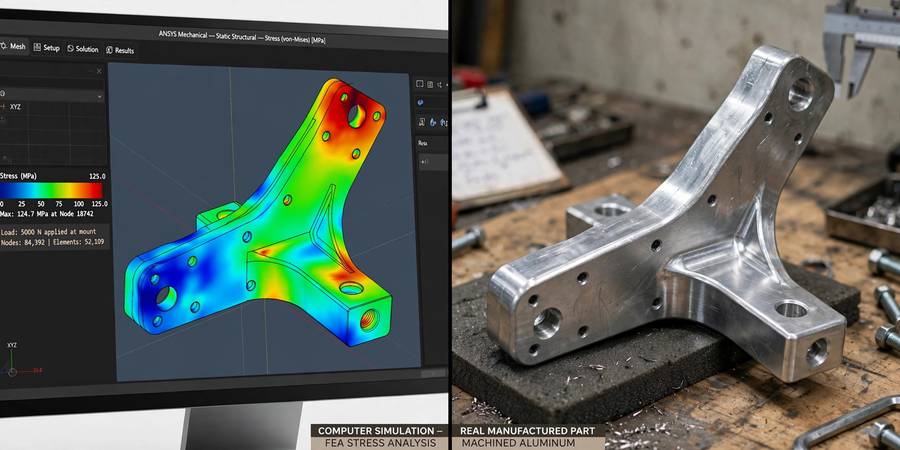
The project: Autodesk’s Toronto office layout, designed with generative methods. The inputs: floor plan, headcount, team adjacencies, daylight access, noise sensitivity, amenity locations. The algorithm generated thousands of layouts and ranked them against the combined objectives.
The numbers: the study evaluated layout options against quantified goals — daylight exposure per desk, walking distances between collaborating teams, noise zone separation — and the selected layout measurably outperformed the human-designed baseline on the combined score. The office got built, people moved in, and the post-occupancy feedback was positive.
The lesson: generative methods shine on problems with competing objectives that humans can’t hold in their heads simultaneously. Nobody can manually optimize a 500-person office for daylight, adjacency, noise, and circulation at once. The algorithm doesn’t replace the architect’s judgment about what a good workplace feels like — but it guarantees the options on the table are strong on the measurable dimensions, freeing the humans to judge the immeasurable ones.
The wrinkle: the immeasurable ones mattered. Some highly-ranked layouts felt wrong — sterile, or socially awkward in ways the objectives didn’t capture. The team had to add qualitative curation on top of the quantitative ranking, which is the honest version of every generative workflow: the algorithm handles what can be measured, and humans handle the rest. The case is a success, but it’s a success of the hybrid, not of the algorithm alone.
Case 5: The Study That Failed Honestly
The project: I won’t name the company, but the pattern is common enough to describe generically. A manufacturer ran a generative study on a structural component with an exciting brief — significant weight reduction, novel manufacturing, the full vision. The study produced beautiful results: dramatic weight savings, striking organic forms, a gallery of options that looked like the future.
The numbers: on paper, 50 percent weight reduction. In reality, zero — because the load cases were wrong. The study had been set up with simplified loading that didn’t capture the component’s actual service conditions: vibration modes, off-axis loads, fatigue cycles. The “optimized” designs were optimized for a fantasy. When the real loads were applied in validation, the designs failed, and the project was scrapped.
The lesson: this is the canonical generative design failure, and it has nothing to do with the algorithm. The algorithm did exactly what it was asked to do, brilliantly. The humans asked the wrong question. Every experienced practitioner has a version of this story, and the field’s dirty secret is that more studies fail this way than anyone admits publicly. The published case studies are the survivors.
The wrinkle that isn’t a wrinkle: this failure was actually valuable. The team learned to front-load load-case validation, to involve the testing engineers before the study rather than after, and to treat the problem definition as the real work. Their next study succeeded. Failure, honestly examined, is the tuition for competence in this field.
The Patterns Across All Five
Five cases, five patterns. First: problem definition quality predicts outcome quality, every time, without exception. Second: the best business cases optimize something with a price tag — weight in aviation, material at volume, energy over decades. Third: manufacturing reality must be in the study from the start, not bolted on after. Fourth: certification and trust are costs, not afterthoughts — budget for them. Fifth: the published cases are survivors; the failure rate is higher than the literature suggests, and the failures are almost always about inputs, not algorithms.
There’s a meta-pattern too. Each of these cases moved the field forward not just technically but culturally: the bracket proved the method to automakers, the partition proved the economics to aviation, the bridge proved the trust to the public, the office proved the breadth to skeptics, and the failure proved the discipline to practitioners. Case studies are how a field learns. The brochures are how it sells. You need both, but don’t confuse them.
What I Tell Teams Before Their First Study
If you’re about to run your first generative study, here’s the distilled advice from all five cases: spend more time on the problem definition than you think is reasonable, then spend more. Validate your load cases with the testing team before you start. Include manufacturing constraints from day one. Define “better” in terms someone can put a dollar value on. Plan the curation — who’s choosing, from how many options, by what criteria. Budget for the downstream work: rebuild, validation, certification. And run a small pilot before the big study, because your first problem definition will be wrong and it’s cheaper to discover that on a bracket than on a bridge.
The technology works. These cases prove it, with numbers. But it works the way a good tool works: in skilled hands, on well-defined problems, with honest expectations. The history of artificial intelligence is littered with powerful methods misapplied by overconfident beginners. Generative design doesn’t have to join that list — the case studies above are the curriculum for avoiding it.
Frequently Asked Questions
The most cited is the GM seat bracket redesigned with Autodesk: 40% lighter and 20% stronger than the original. The Airbus A320 partition (45kg saved per aircraft) and the MX3D 3D-printed bridge in Amsterdam are other landmark cases.
The most common failure is wrong problem definition: incorrect load cases, vague objectives, or missing manufacturing constraints. The algorithm optimizes exactly what it is asked to optimize, so flawed inputs produce confidently wrong designs that fail in validation.
Typical published results show 30-50% weight reduction on structural components like brackets and mounts, with equal or better performance. Results vary by application; the gains are largest on parts that were previously over-designed with generous safety margins.
It is most cost-effective when the optimization target has a clear price: weight in aviation (fuel savings), material at high manufacturing volumes, or energy over a building’s lifetime. Certification and downstream engineering add real costs that belong in the business case.
Invest heavily in problem definition, validate load cases with testing engineers first, include manufacturing constraints from day one, define success in measurable terms, plan the curation process, and run a small pilot before committing to a large study.
Keep reading: